

TL;DR:
- Automation improves insurance outreach efficiency and consistency, saving agency time and increasing renewal rates.
- Modern AI tools enable personalized messaging at scale, enhancing client engagement without losing human touch.
- Proper strategy and integration are essential to avoid pitfalls and maximize automation benefits.
Most insurance professionals assume that picking up the phone and making a personal call is always more effective than letting software handle client communication. That assumption costs agencies thousands of hours every year. The reality is that manual outreach is inconsistent, easy to forget, and nearly impossible to scale across a growing book of business. Automation in outreach can enhance marketing efforts and efficiency in ways no individual agent can match alone. This article walks you through what outreach automation is, the direct benefits for insurance agencies, honest challenges to expect, and a clear roadmap for getting started.
Table of Contents
- What is outreach automation and how does it work?
- Top benefits of automating your insurance outreach
- Common challenges and pitfalls in outreach automation
- Getting started: Actionable steps for implementing outreach automation
- Our take: Why true client relationships and automation aren’t opposites
- Ready to transform your insurance outreach?
- Frequently asked questions
Key Takeaways
| Point | Details |
|---|---|
| Automation saves time | AI-powered outreach cuts manual work and ensures consistent follow-ups with all clients. |
| Boosts client engagement | Personalized automation increases renewals, cross-sells, and overall satisfaction for insurance agencies. |
| Integrates with your workflow | Smart automation tools work seamlessly with your CRM and current processes. |
| Avoid over-automation pitfalls | Balance efficiency with the personal touch to maintain genuine relationships. |
What is outreach automation and how does it work?
Outreach automation means using software and AI to manage client communications without requiring your team to manually send every email, text, or follow-up call reminder. Instead of relying on someone to remember to reach out after a quote, the system does it automatically based on rules and triggers you set in advance.
For insurance professionals, this looks like a few core capabilities:
- Scheduled emails and texts sent automatically after a client submits a quote request
- Renewal reminders triggered 60, 30, and 7 days before a policy expires
- Follow-up sequences that activate when a lead goes cold after an initial contact
- Behavior-based messaging that adjusts what a client receives based on how they interact with your emails or landing pages
- AI-driven lead scoring that flags which prospects are most likely to convert
One of the most persistent myths about automation is that it strips out personalization and makes your communication feel robotic. That was true for early email blasts in the 2000s. Today, AI tools pull in client data, such as name, policy type, renewal date, and past interactions, to tailor each message. A client who just filed a claim gets a different follow-up than someone who requested a home insurance quote last week. The system reads context and responds accordingly.
Another misconception is that automation replaces your agents. It does not. What it does is remove repetitive, low-value tasks from their plates so they can focus on conversations that actually require human judgment, like handling a complicated claim or closing a high-value commercial account. Think of it as automating lead generation so your team spends time on people who are ready to buy, not chasing cold contacts.
The AI benefits in marketing are well documented, and the insurance industry is catching up fast. Agencies using automation are building systems that work around the clock, even when your office is closed.
Pro Tip: Start with a single outreach channel before expanding. Email automation is the easiest entry point, and mastering it first gives your team confidence before you add SMS or automated call scheduling.
For deeper context on how these systems fit into modern insurance marketing, the AI automation insights on CallBack CRM’s blog offer a solid starting point.
Top benefits of automating your insurance outreach
With a foundational understanding of automation, let’s look at the concrete advantages insurance agencies gain when they put these tools into practice.
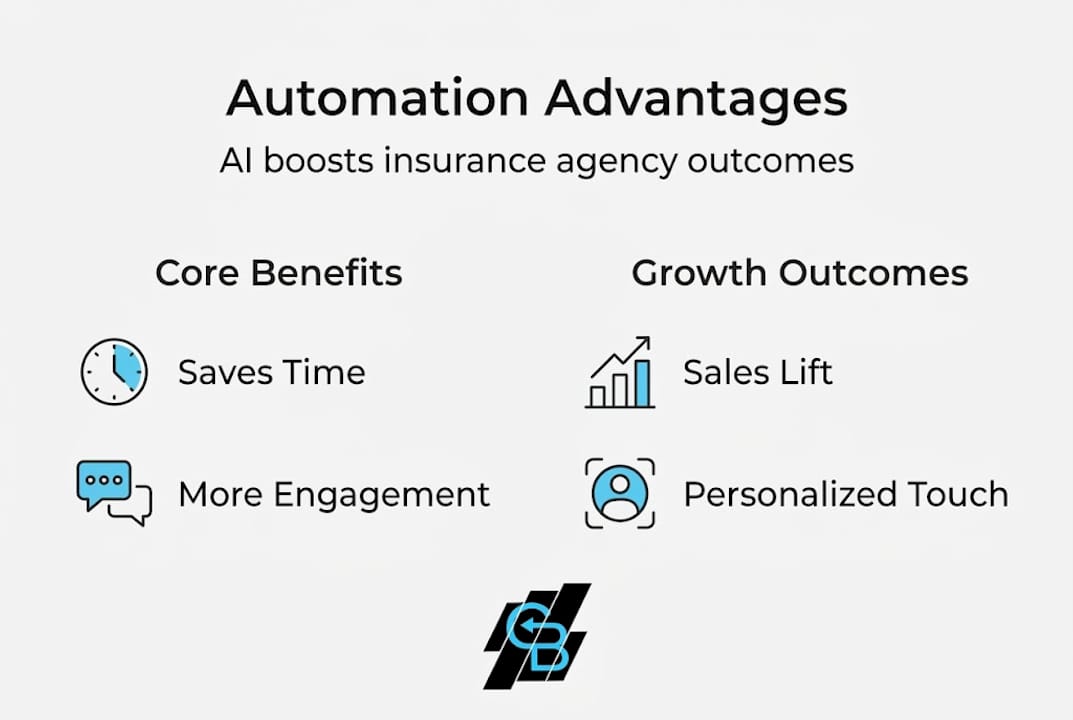
The most immediate win is time. When renewal reminders, follow-up emails, and onboarding sequences run automatically, your team stops spending hours each week on tasks that software can handle in seconds. That time shifts toward revenue-generating activities.
| Benefit | Manual outreach | Automated outreach |
|---|---|---|
| Follow-up consistency | Depends on staff memory | 100% triggered, never missed |
| Personalization at scale | Limited to small client lists | AI-driven for thousands |
| Renewal contact rate | Variable | Scheduled and predictable |
| Performance tracking | Spreadsheet-based | Real-time dashboard metrics |
| Cost per contact | High (staff time) | Low (system handles volume) |
Here are the top outcomes insurance agencies consistently report after implementing automation:
- Higher policy renewal rates because every client gets contacted at the right time, not just when someone remembers
- More cross-sell opportunities surfaced automatically when a client’s profile suggests they may need additional coverage
- Faster lead response times which directly improves conversion, since leads contacted within minutes are far more likely to convert than those contacted hours later
- Better data on what works because every automated campaign tracks opens, clicks, and replies so you know which messages drive action
- Reduced client churn through consistent touchpoints that keep your agency top of mind year-round
Agencies that boost insurance sales with automation workflows consistently report growth exceeding 30% in sales productivity. That is not from hiring more people. It is from making better use of the team already in place.
AI personalization in marketing also plays a role here. Clients who receive relevant, timely communication are significantly more likely to respond and stay loyal. A blanket email blast gets ignored. A message that references their specific policy and upcoming renewal date gets opened.

Pro Tip: Set up automated renewal reminders at 60, 30, and 7 days out. Each message can include a soft cross-sell prompt for a product that complements their existing policy. You never miss an upsell opportunity, and you did not have to lift a finger.
Pairing automation with a solid lead funnel optimization strategy compounds these benefits even further.
Common challenges and pitfalls in outreach automation
While the benefits are substantial, understanding the typical obstacles can help you achieve success with fewer headaches.
The most common mistake agencies make is expecting automation to fix a broken process. If your current outreach strategy is disorganized, automation will scale that disorganization. Garbage in, garbage out. Before you automate anything, your client data needs to be clean, your messaging needs to be intentional, and your team needs to understand what the system is doing and why.
A second risk is over-automation. Some agencies get excited and automate every single touchpoint, which can make clients feel like they are interacting with a machine rather than a trusted advisor. Consider this perspective:
“Automation should handle the routine so that humans can handle the relationship. The agencies that win are those who use technology to show up more consistently, not to disappear entirely from their clients’ lives.”
Here is a comparison that clarifies where automation helps and where it can hurt if misused:
| Scenario | Manual approach | Automated approach |
|---|---|---|
| Renewal reminder at 30 days | Agent remembers (sometimes) | Triggered automatically, every time |
| Complex claim follow-up | Human empathy and judgment | Should remain human-led |
| New lead drip campaign | Inconsistent, depends on bandwidth | Consistent, personalized sequence |
| VIP client check-in | Personal call or note | Automation flags it, human delivers |
Other real challenges include:
- Integration friction when new tools do not connect cleanly with existing CRM data
- Compliance risk if automated messages do not meet insurance industry regulations around communication disclosures
- Team resistance from agents who fear automation threatens their jobs rather than supports them
- Lack of strategy where agencies automate tasks without a clear goal tied to business outcomes
Successfully implementing outreach automation requires strategic planning and integration from the start, not as an afterthought. Building your lead generation workflow with compliance and team alignment baked in from day one prevents costly rework later. For more on the broader picture of what editorial automation means for professional communication, that context helps frame why thoughtful design matters so much.
Getting started: Actionable steps for implementing outreach automation
Now that you recognize the challenges, here is how to confidently move forward with automation in your insurance agency.
-
Audit your current outreach process. Map out every client touchpoint: initial contact, quote follow-up, onboarding, renewal, cross-sell, and lapse recovery. Identify where leads fall through the cracks and where your team spends the most repetitive time.
-
Research and select AI-powered tools. Look for platforms built specifically for insurance agencies, not generic marketing software. You want tools that understand renewal cycles, policy types, and compliance requirements. Reviewing AI lead gen tools designed for insurance agents gives you a shortlist to evaluate.
-
Integrate with your CRM and compliance framework. Any automation platform you choose must sync with your existing client data. If your CRM holds policy details, that information should flow into your automated messages so they stay relevant and accurate. Confirm that all automated communications meet your state’s insurance advertising regulations.
-
Roll out in phases. Start with email and renewal reminders. Once those sequences run cleanly and your team is comfortable, add SMS follow-ups. Then layer in lead scoring and behavior-based triggers. The lead workflow success tutorial walks through this phased approach with practical examples.
-
Measure, optimize, and refine. Track open rates, click rates, conversion rates, and client retention month over month. Use that data to test different subject lines, send times, and message lengths. Automating outreach processes streamlines lead generation, but performance data is what makes your sequences sharper over time.
Cost and speed of results both improve when you build systems that learn from real engagement data. Resources on content automation efficiency reinforce why iterative refinement, not a set-it-and-forget-it mindset, is what separates high-performing agencies from average ones.
Pro Tip: Schedule a monthly 30-minute review of your active automation sequences. Check if any messages reference outdated offers, incorrect dates, or policy terms that have changed. Keeping sequences current is what keeps clients trusting your communication.
Our take: Why true client relationships and automation aren’t opposites
Here is the uncomfortable truth that most automation vendors will not say out loud: technology does not build trust. People do. But technology can create the space and consistency that makes trust-building possible at scale.
The agencies thriving right now are not the ones who automated everything. They are the ones who automated the routine and freed their best agents to do what no software can, which is listen, empathize, and advise. A renewal reminder sent at exactly the right time earns a reply. The agent who follows up on that reply earns the relationship.
Most competitors are using automation as a crutch, blasting generic sequences and calling it strategy. The real opportunity is in strategic, thoughtful design. That means using automation to advance your lead funnel intelligently while preserving room for genuine human moments. Automation scales trust when it shows clients you remember them, value their time, and show up consistently. That is what separates a transactional agency from one clients recommend to their neighbors.
Ready to transform your insurance outreach?
If you’ve read this far and you are ready to stop losing leads to missed follow-ups and inconsistent communication, the next step is finding a platform built for exactly what you do.
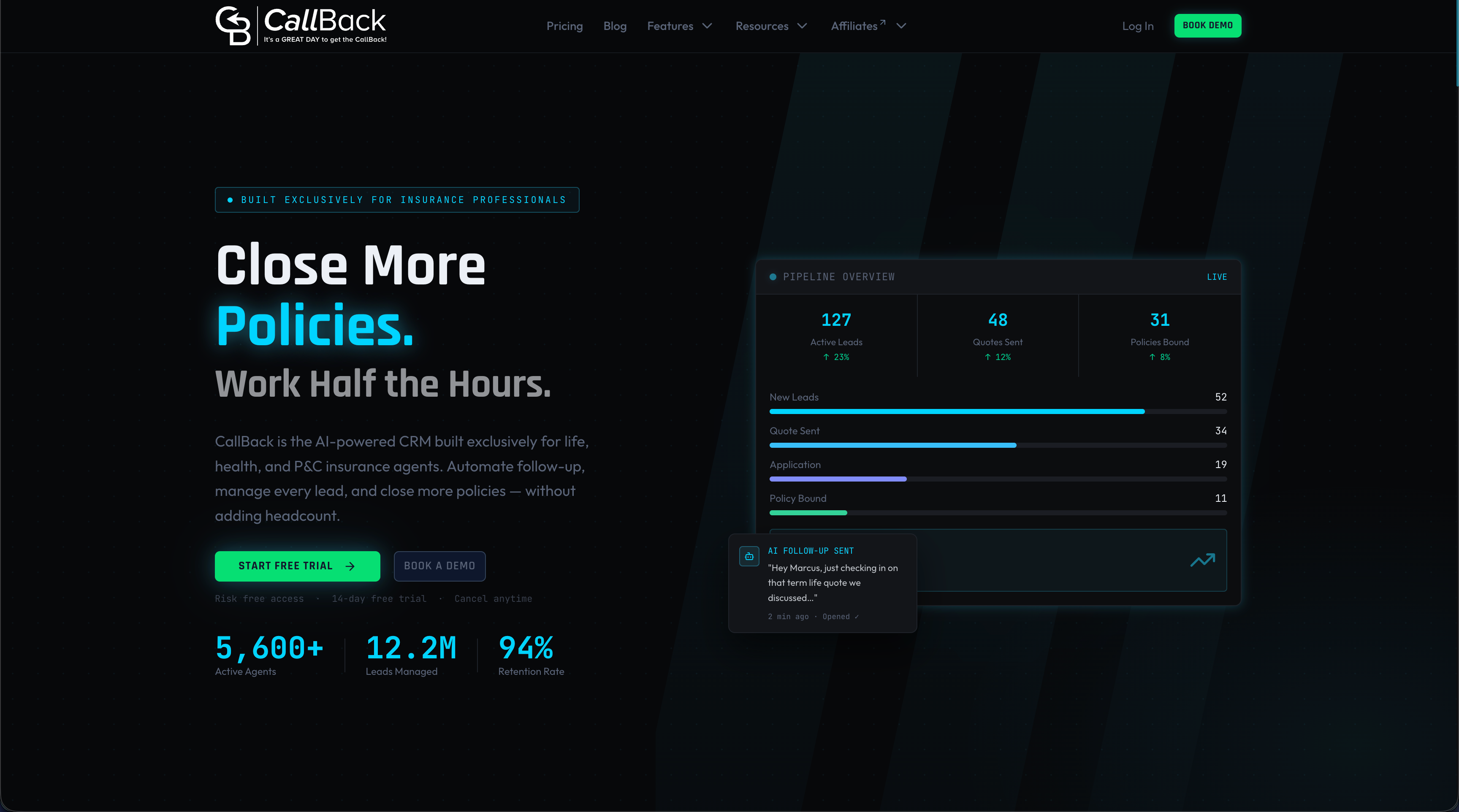
CallBack CRM brings together AI-powered automation, CRM management, email and SMS marketing, and compliance-ready workflows in one place designed for insurance agencies and IMOs. It is not a generic marketing tool adapted for insurance. It was built for your workflows from the start. Explore the full suite of AI-powered outreach features and see how agencies are driving measurable growth without hiring more staff. Visit CallBack CRM to schedule a demo and see the platform in action.
Frequently asked questions
How quickly can insurance agencies see results from automating outreach?
Many agencies notice improved engagement and time savings within the first few weeks of implementation. Automation delivers results and efficiency improvements that show up in renewal rates and response times almost immediately.
Is outreach automation suitable for small insurance agencies?
Yes, automation scales for agencies of any size and can especially help small teams compete more effectively. Automation increases efficiency for insurance agencies regardless of how many agents are on staff.
Does automation risk making outreach less personal?
Modern tools use AI to personalize communication so clients still feel valued and engaged. AI enables tailored messages based on client data, making automated outreach feel relevant rather than generic.
Which outreach channels are best to automate first?
Email and renewal reminders are the simplest and most effective channels to automate initially. Email and renewal reminders give you quick wins with low implementation complexity.
How does automation integrate with existing CRM systems?
Most automation platforms offer seamless CRM integration to ensure all client data is synced and actionable. Successful automation requires integration with current systems so nothing gets lost between platforms.