

Manual lead qualification and endless follow-ups trap insurance agents in a cycle of inefficiency. AI-powered customer engagement automates these repetitive tasks, enabling faster responses and personalized outreach that close more policies. This guide reveals practical strategies to implement AI successfully in your insurance agency for measurable sales growth and operational efficiency.
Table of Contents
- Understanding AI-Powered Customer Engagement In Insurance
- Prerequisites: What You Need Before Starting An AI-Powered Engagement Process
- Implementing AI-Driven Lead Scoring And Prioritization
- Automating Customer Communications And Workflow Integration
- Enhancing Customer Personalization With AI
- Common Mistakes And Troubleshooting In AI Adoption
- Measuring Success: Metrics And Expected Outcomes With AI Engagement
- Unlock AI-Powered Efficiency With CallBack CRM
- Frequently Asked Questions
Key takeaways
| Point | Details |
|---|---|
| AI automates lead scoring and outreach | Intelligent systems prioritize high-value prospects and personalize communications without manual effort. |
| Start with high-impact processes | Focus on lead qualification and follow-ups first to see quick ROI and build momentum. |
| Training and compliance are essential | Staff readiness and regulatory adherence prevent costly mistakes and ensure successful adoption. |
| Personalization drives retention | Behavior-based messaging increases policy renewals and strengthens customer relationships. |
| Monitor and iterate continuously | Track conversion rates and efficiency gains to refine AI performance over time. |
Understanding AI-powered customer engagement in insurance
AI-powered customer engagement uses artificial intelligence to automate and personalize interactions with insurance clients throughout their journey. Modern customers expect instant, tailored responses that traditional manual processes simply cannot deliver at scale. Agentic AI tools automate lead prioritization by analyzing behavioral, demographic, and contextual data to identify high-value insurance prospects with greater accuracy than manual methods.
The ROI difference is dramatic. Insurance firms embedding AI deeply report threefold higher returns compared to slow adopters, primarily from automation of repetitive tasks and improved customer engagement. This shift fundamentally changes how agents allocate their time and energy.
AI capabilities transforming insurance sales include:
- Intelligent lead scoring that ranks prospects by conversion probability
- Automated email and SMS outreach with personalized timing and content
- Document processing that extracts policy information instantly
- Chatbots handling routine questions 24/7 without agent involvement
- Predictive analytics identifying renewal risks before they materialize
These tools free agents from administrative burden to focus on advisory roles where human expertise creates the most value. The benefits of sales automation extend beyond time savings to fundamentally improve customer experience and satisfaction.
Pro Tip: Start by tracking how much time your team currently spends on manual lead qualification and follow-ups. This baseline measurement helps you calculate ROI accurately after implementing AI tools.
Insurance agencies exploring lead generation tips for insurance discover that AI amplifies every strategy by executing faster and more consistently than humanly possible. The AI advantage for small business levels the playing field against larger competitors with bigger sales teams.
Prerequisites: What you need before starting an AI-powered engagement process
Successful AI adoption requires foundational infrastructure and organizational readiness. Jumping in without proper preparation wastes resources and frustrates your team.
Your technology stack must include a reliable CRM or agency management system capable of AI integration. Legacy systems without API access create barriers that delay implementation and limit functionality. Modern platforms enable seamless data flow between AI tools and your core business systems.
Data quality determines AI accuracy. Clean, structured customer and prospect data feeds AI algorithms that score leads and personalize outreach. Incomplete records, duplicate entries, and outdated information produce poor AI recommendations that damage credibility. Invest time in data cleansing before connecting AI tools.
Staff training prevents resistance and maximizes adoption. Team members need to understand:
- How AI tools enhance rather than replace their roles
- Practical workflows for using AI recommendations effectively
- Data privacy laws and compliance requirements for automated communications
- Troubleshooting common issues without IT intervention
Compliance readiness protects your agency from regulatory violations. Ignoring regulatory compliance in AI-powered engagement risks data privacy breaches and potential fines; compliance must be built into AI tool selection and deployment from the start. Verify that vendors meet insurance industry security standards and offer audit trails for automated communications.
Establish clear business goals before selecting AI tools. Vague objectives like “improve efficiency” make it impossible to measure success. Specific targets such as “reduce lead response time to under 5 minutes” or “increase renewal rate by 10%” guide tool selection and implementation priorities.
Phased adoption plans reduce risk and build organizational confidence. Pilot projects on a single workflow or team segment provide proof of value before company-wide rollout. Integrating CRM and marketing systems systematically creates a foundation for scaling AI capabilities across departments.
Pro Tip: Create a compliance checklist covering data storage, communication consent, and opt-out mechanisms before evaluating AI vendors. This prevents costly rework later when regulatory gaps emerge.
Understanding sales automation basics helps you identify which manual processes deliver the highest ROI when automated first.
Implementing AI-driven lead scoring and prioritization
AI transforms lead scoring from guesswork into data-driven precision. Traditional methods rely on basic demographic filters that miss behavioral signals indicating purchase intent.
Agentic AI analyzes behavioral, demographic, and contextual data to identify high-value insurance prospects with accuracy that manual scoring cannot match. This multi-dimensional approach considers website activity, email engagement, social media interactions, and external data sources simultaneously.
Implement AI lead scoring through these steps:
- Prepare your data by consolidating customer touchpoints into your CRM
- Select an AI tool that integrates with your existing technology stack
- Configure scoring criteria based on your historical conversion patterns
- Train your sales team to interpret AI scores and prioritize outreach accordingly
- Run a 30-day pilot with a subset of leads to validate accuracy
- Review results and adjust scoring weights based on actual outcomes
- Scale to your full lead database once performance meets targets
The performance difference between manual and AI scoring is substantial:
| Method | Speed | Accuracy | Scalability | Resource Cost |
|---|---|---|---|---|
| Manual scoring | Hours per lead | 60-70% accurate | Limited by staff time | High labor cost |
| Basic rule-based | Minutes per lead | 70-75% accurate | Moderate | Medium setup cost |
| AI-powered scoring | Seconds per lead | 85-90% accurate | Unlimited | Low ongoing cost |
Agencies implementing AI lead scoring typically see 20-30% conversion rate improvements within the first quarter. Time savings compound as agents focus exclusively on hot prospects instead of chasing cold leads that rarely convert.
Prioritize outreach based on AI scores by segmenting leads into hot, warm, and cold categories. Hot leads scoring above 80 receive immediate personal outreach from senior agents. Warm leads between 50-80 enter automated nurture sequences with periodic agent check-ins. Cold leads below 50 receive educational content until their engagement increases.
Pro Tip: Review misclassified leads monthly to retrain your AI model. Leads the AI scored high but didn’t convert reveal gaps in scoring criteria that need adjustment.
An effective insurance lead generation workflow integrates AI scoring at every stage to maximize efficiency and conversion rates.
Automating customer communications and workflow integration
AI chatbots and virtual assistants handle routine customer communications without human intervention. This automation responds to common questions instantly, improving satisfaction while reducing agent workload.
Implement AI chatbots to answer frequently asked questions about policy coverage, premium payments, claims status, and renewal dates. These bots operate 24/7, capturing leads and serving customers outside business hours when competitors go silent. AI-powered chatbots improve customer engagement by automating responses to common queries and freeing agents to focus on high-value interactions, boosting satisfaction and retention.
Integrate AI with email and SMS campaigns for personalized outreach at scale. AI systems analyze customer behavior to determine optimal send times, subject lines, and message content for each recipient. This personalization increases open rates by 15-25% compared to generic batch campaigns.
Automation workflows eliminate manual follow-up tasks that consume agent time:
- Triggered welcome sequences for new leads with educational content
- Renewal reminders sent automatically 30, 15, and 5 days before expiration
- Birthday and anniversary messages that strengthen relationships
- Post-claim satisfaction surveys that identify service issues early
- Referral requests sent after positive customer interactions
These workflows run continuously without supervision, ensuring no customer falls through the cracks due to agent oversight or capacity constraints. Response times improve from hours or days to minutes, meeting modern customer expectations for instant service.
“AI allows insurance agents to shift from reactive firefighting to proactive relationship building. Routine tasks happen automatically while agents focus their expertise on complex situations requiring human judgment and empathy.”
The Callback AI-powered sales solution demonstrates how integrated automation workflows connect lead capture, scoring, communication, and conversion tracking in a single platform.
Enhancing customer personalization with AI
AI personalization adapts communication timing and content based on individual customer behavior patterns. Generic messaging treats all customers identically, missing opportunities to address specific needs and preferences.

Use AI to analyze how customers interact with your communications. Open rates, click patterns, website visits, and response times reveal preferences that inform future outreach. Customers who consistently engage with emails in the evening receive future messages at that time. Those who prefer text over email get SMS updates.
Behavior-based segmentation groups customers by actions rather than demographics. Segments might include:
- Active researchers visiting comparison pages multiple times
- Price-sensitive customers clicking discount offers
- Service-focused clients reading claim process articles
- Convenience seekers engaging with mobile app features
Each segment receives messaging emphasizing the benefits they value most. Active researchers get detailed policy comparison guides. Price-sensitive customers see competitive rate information. Service-focused clients receive case studies about claim experiences.
Customize renewal reminders based on individual policy types, claim history, and engagement patterns. AI-driven personalization increases policy renewal rates by up to 15% by adapting communication based on customer behavior. Customers with clean claim records receive messages emphasizing loyalty discounts. Those with recent claims get reassurance about continued coverage and support.
Personalization benefits extend beyond renewals to overall relationship quality:
- Higher email open rates from relevant subject lines
- Increased customer lifetime value through cross-selling appropriate products
- Stronger loyalty from customers who feel understood
- Better engagement metrics across all communication channels
Exploring AI personalization strategies reveals advanced techniques for tailoring every customer touchpoint without manual effort.
Common mistakes and troubleshooting in AI adoption
Insurance agencies commonly sabotage their AI initiatives through predictable implementation errors. Awareness prevents these pitfalls.
Avoid automating too many workflows simultaneously. Common implementation mistakes include trying to automate too many workflows simultaneously, neglecting staff training, and failing to monitor AI outputs regularly, leading to poor results and wasted investment. Start with one high-impact process like lead scoring or renewal reminders. Master that workflow before expanding to additional use cases.
Insufficient staff training creates resistance and undermines adoption. Team members who don’t understand AI capabilities revert to manual processes or ignore AI recommendations entirely. Invest in comprehensive onboarding that includes:
- Hands-on practice with actual customer scenarios
- Clear documentation of new workflows and responsibilities
- Regular coaching sessions to address questions and concerns
- Success stories highlighting early wins and productivity gains
Neglecting to monitor AI outputs allows quality problems to compound unnoticed. AI systems occasionally misclassify leads, generate awkward message variations, or miss important customer signals. Weekly reviews of AI recommendations and communications catch issues before they damage customer relationships.
Ignoring compliance requirements exposes your agency to regulatory penalties. Automated communications must honor opt-out requests, respect contact preferences, and maintain audit trails. Build compliance checks into every automated workflow from the start rather than retrofitting later.
Unrealistic timeline expectations frustrate stakeholders when immediate results don’t materialize. AI tools require configuration, training data, and optimization cycles before delivering peak performance. Set expectations for gradual improvement over 60-90 days rather than overnight transformation.
Pro Tip: Launch AI pilots with your most tech-savvy team members who provide constructive feedback. Their success stories convince skeptical colleagues more effectively than management mandates.
Learning from AI adoption pitfalls and solutions helps you anticipate obstacles and implement countermeasures proactively.
Measuring success: Metrics and expected outcomes with AI engagement
Tracking the right metrics validates AI investment and identifies optimization opportunities. Vanity metrics like total automation hours mean nothing without corresponding business impact.
Monitor lead conversion rate increases as your primary sales metric. Agencies implementing AI lead scoring and automated follow-up typically see 20-30% conversion improvements within the first quarter. Calculate this by comparing conversion rates before and after AI adoption across similar lead volumes.
Track time saved on manual follow-ups to quantify efficiency gains. Survey your team weekly during the first month to measure hours previously spent on tasks AI now handles. Multiply time savings by average hourly cost to calculate direct labor savings.
Measure renewal rate increases resulting from AI personalization. AI-driven personalization increases policy renewals by up to 15% through behavior-based communication timing and content. Compare renewal rates year-over-year, controlling for seasonality and market conditions.
Customer satisfaction and retention scores indicate engagement quality. Monthly surveys asking customers to rate communication helpfulness and responsiveness reveal whether AI enhances or degrades experience. Net Promoter Score (NPS) provides a standardized benchmark for comparing performance over time.
| Metric | Baseline | 3-Month Target | 6-Month Target | Timeline to Impact |
|---|---|---|---|---|
| Lead conversion rate | 8-12% | 10-15% | 12-18% | 4-8 weeks |
| Response time | 2-4 hours | Under 30 minutes | Under 5 minutes | 1-2 weeks |
| Renewal rate | 75-80% | 80-85% | 85-90% | 3-6 months |
| Customer satisfaction | 7.5/10 | 8.0/10 | 8.5/10 | 6-12 weeks |
| Agent productivity | 20 touches/day | 30 touches/day | 40 touches/day | 2-4 weeks |
Expected timelines vary by implementation scope and organizational readiness. Small agencies with focused use cases see measurable benefits within weeks. Larger organizations with complex workflows require 2-3 months for full optimization.
AI tools handle lead qualification, renewal follow-ups, policy processing, and communication drafting, making them essential for workflow efficiency. Understanding benefits of sales automation through concrete metrics justifies continued investment and expansion.
Pro Tip: Create a simple dashboard tracking your top three metrics updated weekly. Share it with your team to maintain focus and celebrate progress.
Unlock AI-powered efficiency with CallBack CRM
Ready to transform your insurance agency with AI automation? CallBack CRM delivers the complete toolkit for modern customer engagement without the complexity of stitching together multiple vendors.
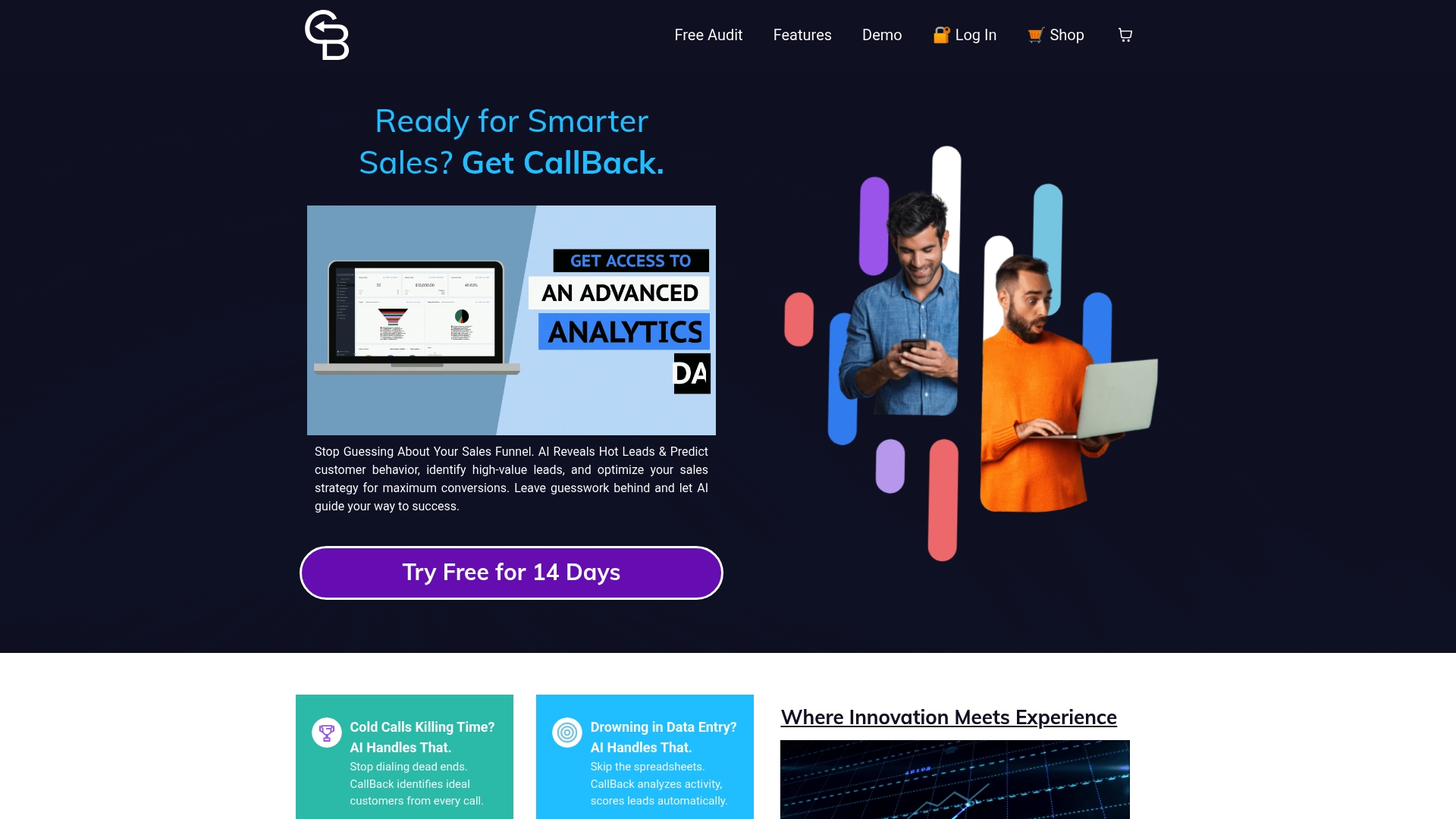
Our platform combines intelligent AI-powered automation with robust lead and customer management that adapts to your specific workflows. Automated lead scoring identifies your hottest prospects while AI chatbots handle routine questions 24/7. Personalized SMS marketing and email campaigns nurture relationships without manual effort.
Insurance agents using CallBack CRM report 30-40% productivity gains within the first 60 days. Our AI assistant drafts policy summaries, generates follow-up messages, and suggests optimal contact times based on customer behavior patterns. Everything integrates seamlessly with your existing systems through our comprehensive API.
Explore our free demo to see how AI automation eliminates the manual tasks limiting your growth. Join forward-thinking agencies already using CallBack to close more policies while delivering exceptional customer experiences.
Frequently asked questions
What is an AI-powered customer engagement process in insurance?
AI-powered customer engagement uses artificial intelligence to automate and personalize interactions with insurance clients throughout their entire journey. These systems handle lead scoring, communication timing, content personalization, and follow-up workflows without manual intervention. The technology analyzes customer behavior, demographics, and contextual data to deliver relevant messages at optimal times, increasing conversion rates and satisfaction while reducing agent workload.
How can insurance agents prepare their agency for AI adoption?
Ensure you have a reliable CRM system capable of AI integration, clean customer data, and comprehensive staff training before implementing AI tools. Set clear, measurable goals for AI performance such as specific conversion rate targets or time savings objectives. Start with a phased approach that pilots AI on one workflow before expanding company-wide, allowing your team to build confidence and expertise gradually.
What are common mistakes to avoid when implementing AI for customer engagement?
Avoid trying to automate too many processes simultaneously, which overwhelms teams and dilutes focus from high-impact opportunities. Invest in comprehensive staff training to prevent resistance and ensure effective use of AI recommendations. Monitor AI outputs regularly for quality issues and build compliance requirements into your implementation from the start rather than addressing them as an afterthought.
How soon can insurance agencies expect results from AI-powered engagement?
Small agencies typically see measurable benefits within 4-8 weeks when focusing on high-impact use cases like lead scoring and automated follow-ups. Lead conversion improvements and operational efficiency gains emerge earliest as AI immediately improves response times and prioritization. Renewal rate increases and customer retention improvements develop over 3-6 months as personalized communication strengthens relationships and loyalty over time.
Which insurance workflows benefit most from AI automation?
Lead qualification and scoring deliver the highest immediate ROI by directing agent attention to prospects most likely to convert. Renewal reminders and follow-ups prevent policy lapses through timely, personalized outreach without manual tracking. Routine customer inquiries about coverage details, payment status, and policy changes consume significant agent time that AI chatbots handle instantly, freeing agents for complex advisory conversations requiring human expertise.