

Insurance agents spend countless hours manually sorting leads, chasing unqualified prospects, and struggling to respond quickly enough to beat competitors. Traditional CRM scoring systems fail to capture genuine buyer intent, while email parsing tools stumble over inconsistent formats from different lead sources. AI-powered automation transforms this chaotic process into a streamlined system that qualifies leads accurately, responds instantly, and prioritizes your highest-value opportunities. This guide walks you through preparing your agency, building intelligent automation systems, and accelerating your sales pipeline with AI tools designed specifically for insurance professionals.
Table of Contents
- Identifying Challenges And Preparing For Automation
- Building And Integrating AI-Powered Lead Pre-Qualification Systems
- Automating Engagement And Accelerating The Sales Pipeline With AI
- Explore CallBack CRM’s AI-Powered Lead Generation Tools
- Frequently Asked Questions About Automating Lead Generation For Insurance Agents
Key takeaways
| Point | Details |
|---|---|
| AI improves accuracy | Automated systems analyze lead intent from unstructured text better than manual scoring methods |
| Integration is essential | Connecting AI tools with your agency management system ensures seamless data flow and reduces duplicate entry |
| Speed wins deals | Instant lead response through automation gives you a competitive edge over slower manual processes |
| Preparation drives success | Auditing current lead sources and defining qualification criteria sets the foundation for effective automation |
Identifying challenges and preparing for automation
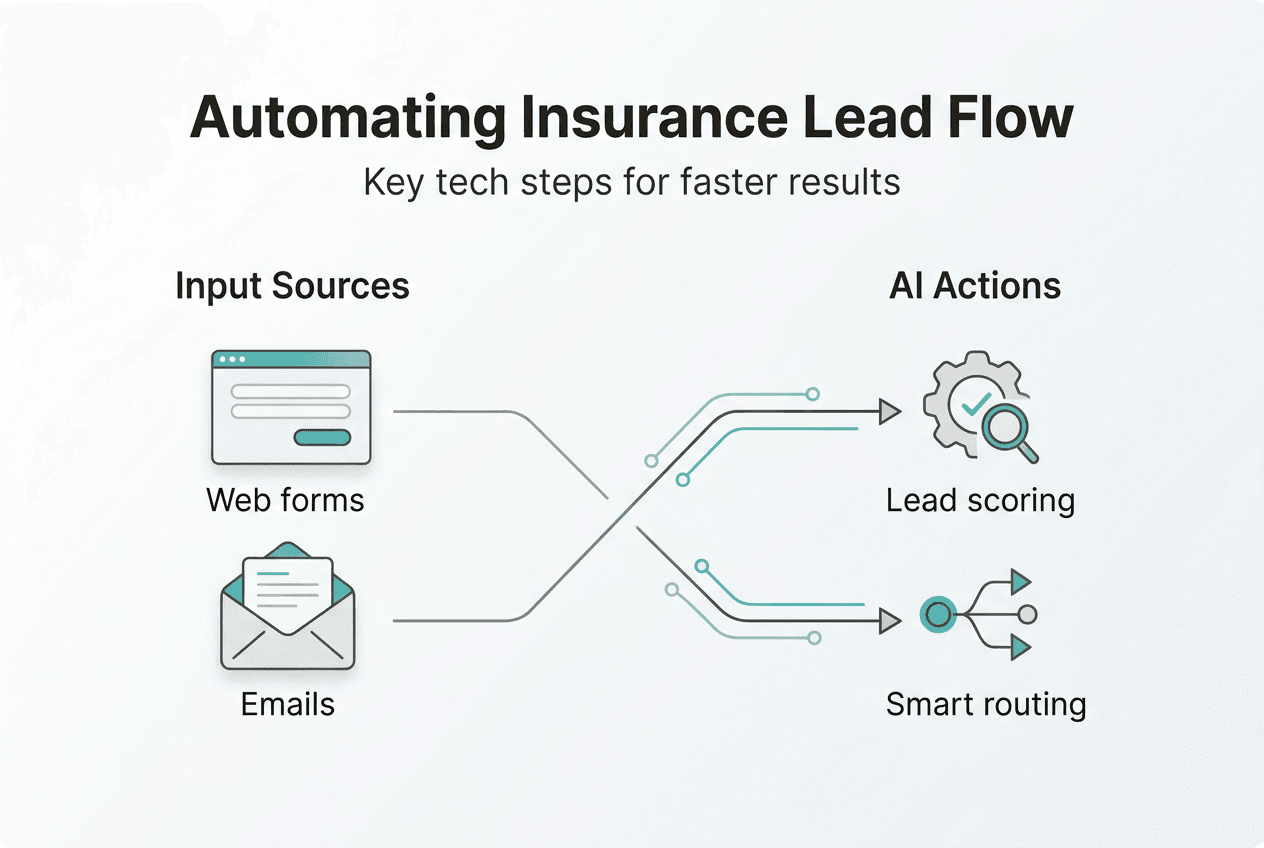
Your agency likely faces a familiar problem. Leads arrive from multiple channels including web forms, email inquiries, referral partners, and aggregator sites, each with different formats and quality levels. Most agencies start with their CRM’s built-in scoring, which cannot interpret intent from free text, leaving agents to manually review every submission. This creates bottlenecks that slow response times and waste valuable selling hours on prospects who will never convert.
Email parsing tools promise relief but struggle with real world complexity. A commercial auto inquiry might arrive as a forwarded email chain with policy details buried in the conversation, while a workers compensation lead comes through a structured form. Traditional automation cannot extract meaning from these varied formats, forcing your team back into manual review mode.
Successful automation starts with honest assessment of your current state. Audit every lead source your agency uses and document the format, volume, and conversion rate for each channel. This reveals which sources deserve automation investment and which might need elimination. You will likely discover that 80% of your quality leads come from 20% of your sources, allowing you to focus automation efforts where they matter most.
Next, define the specific qualification criteria that separate good leads from time wasters for your agency. Commercial lines might require business type, employee count, current coverage limits, and renewal date. Personal lines could focus on household income, current carrier, policy types needed, and timeline. Document these criteria clearly because your AI system will use them to score every incoming lead.
Understanding your agency management system’s capabilities is crucial before building automation. Most modern AMS platforms offer APIs that allow external tools to read and write data, but integration complexity varies widely. Contact your AMS provider to understand what endpoints are available, what authentication methods they support, and whether they charge additional fees for API access. This technical groundwork prevents costly surprises during implementation.
Pro Tip: Create a spreadsheet mapping each lead source to its format, monthly volume, conversion rate, and integration difficulty. This visual reference helps prioritize which automation projects deliver the fastest ROI for your agency.
Explore proven strategies in our guide on 7 tips for lead generation insurance agents to complement your automation efforts.
Building and integrating AI-powered lead pre-qualification systems
The build complexity of an AI lead pre-qualification system depends on lead sources and AMS integration, but the core process follows a consistent pattern. Start by connecting to each lead source through APIs, webhooks, or email forwarding rules. Web forms typically offer the cleanest integration through webhooks that push structured data to your automation system in real time. Email leads require more sophisticated handling since the information arrives in unstructured text.
Syntora uses Claude API to extract key lead data points from unstructured documents, demonstrating how modern AI can parse complex insurance inquiries. Your system should extract standardized fields regardless of how the information arrives. For commercial auto, this might include fleet size, vehicle types, driver count, loss history, and coverage needs. Personal lines extraction focuses on household details, current policies, and specific coverage gaps.
Follow this systematic approach to build your AI lead qualification system:
- Configure data ingestion from each lead source using the most reliable connection method available
- Design prompts that instruct the AI to extract your predefined qualification fields from incoming text
- Create scoring rules that assign point values based on fit, urgency, and potential premium size
- Build integration logic that writes qualified leads directly into your AMS with proper categorization
- Establish alert workflows that notify the right agent immediately for high priority opportunities
- Implement logging and monitoring to track system performance and catch errors quickly
Integration complexity varies significantly based on your lead sources and technology stack:
| Lead Source Type | Integration Difficulty | Key Challenge |
|---|---|---|
| Native web forms | Low | Direct API connection with structured fields |
| Third party aggregators | Medium | Variable data formats requiring field mapping |
| Email inquiries | High | Unstructured text needing AI extraction |
| Referral partners | Medium | Manual forwarding often requires email parsing |
| Social media messages | High | Platform API restrictions and informal language |
Lead scoring should reflect both qualification fit and urgency to help agents prioritize effectively. A commercial auto lead requesting quotes for 50 vehicles with a 30 day renewal deserves immediate attention. A personal auto inquiry with no current policy and vague timeline can wait. Build your scoring model to weight factors like policy size, renewal proximity, and decision authority heavily.
Testing is not optional. Run your AI system in parallel with manual processing for at least two weeks, comparing the extracted data and scores against human judgment. This validation period reveals edge cases where the AI misinterprets information or assigns incorrect scores. Adjust your prompts and scoring rules based on these findings before fully automating lead routing.
Pro Tip: Start with your highest volume, most standardized lead source for your first automation project. Success here builds momentum and provides a template for more complex sources later.
Discover advanced techniques in our article on AI lead generation insurance professionals 2026 to maximize your automation results.
Automating engagement and accelerating the sales pipeline with AI
Qualifying leads is only half the battle. Speed to engagement determines whether you win or lose deals in the competitive insurance market. AI systems can accelerate quoting by classifying policies and extracting data instantly from complex documents that would take agents hours to analyze manually. This capability transforms your quoting timeline from days to minutes.

Consider a commercial property lead who submits a 50 page loss run and current policy declaration. Traditional processing requires an agent to manually review each document, extract relevant details, and input data into your rating system. AI automation can classify document types, extract key data points like coverage limits and claim history, and populate your quoting tool automatically. The agent simply reviews the extracted information and generates a quote.
Continuous engagement keeps your agency top of mind throughout the decision process. Automated systems can trigger personalized SMS messages, emails, and even voicemail drops based on lead behavior and timeline. A prospect who opens your quote email three times but does not respond might receive a text message offering to answer questions. Someone approaching their renewal date gets increasingly urgent reminders with clear calls to action.
The contrast between traditional and AI-powered approaches reveals dramatic efficiency gains:
| Process Step | Traditional Method | AI-Powered Method |
|---|---|---|
| Lead receipt to first contact | 4-24 hours | Under 2 minutes |
| Document review for quoting | 30-90 minutes | 2-5 minutes |
| Follow up consistency | Sporadic, manual | Automated, systematic |
| Lead prioritization | Gut feel, first come | Data driven scoring |
| Engagement personalization | Generic templates | Behavior triggered |
Behavior based automation delivers the most powerful engagement results. Track which prospects open emails, click links, download documents, or visit your website multiple times. These signals indicate genuine interest and should trigger immediate human outreach. Someone who views your commercial auto quote three times in one day is likely comparing your offer against competitors and needs a timely call to close the deal.
AI excels at managing the long game for leads not ready to buy immediately. A prospect requesting quotes six months before renewal enters a nurture sequence with educational content, market updates, and periodic check ins. The system tracks engagement over time and alerts an agent when behavior indicates increased buying intent. This systematic approach ensures no opportunity falls through the cracks due to poor follow up.
Scale becomes possible when automation handles repetitive engagement tasks. Your team can focus on high value conversations with qualified, engaged prospects while AI manages the broader pipeline. This division of labor increases both productivity and job satisfaction since agents spend time actually selling instead of chasing cold leads.
Pro Tip: Map your ideal customer journey from initial inquiry to policy bind, then identify which touchpoints can be automated and which require human interaction. This blueprint guides your automation build and ensures you maintain the personal touch where it matters most.
Learn how to maximize engagement impact in our comprehensive guide on ai powered customer engagement process insurance for insurance professionals.
Explore CallBack CRM’s AI-powered lead generation tools
Building custom AI automation from scratch requires significant technical expertise and ongoing maintenance. CallBack CRM eliminates this complexity with purpose built tools designed specifically for insurance agents seeking to automate lead generation and engagement. The platform combines intelligent lead scoring, automated follow up sequences, and seamless CRM integration in one system that works out of the box.
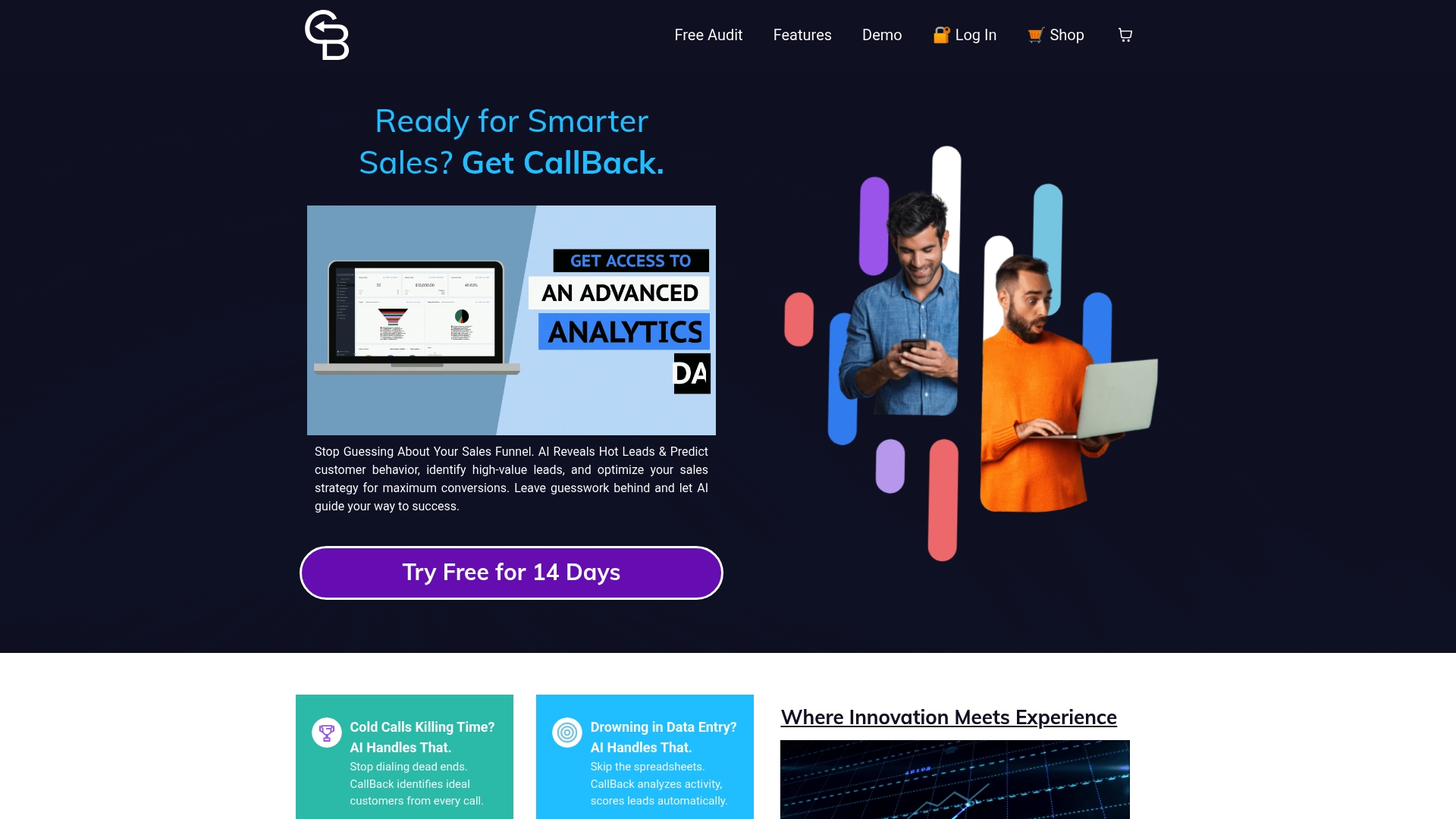
Manage your entire sales pipeline with CallBack CRM lead management features that automatically capture, score, and route leads based on your qualification criteria. AI assistants handle routine tasks like data entry and initial outreach, freeing your team to focus on closing deals. Explore the complete suite of features all in one AI tool to see how automation can transform your agency’s growth trajectory. Request a free marketing audit to identify specific opportunities where AI automation can improve your lead generation results and increase conversion rates.
Frequently asked questions about automating lead generation for insurance agents
What are the main benefits of automating lead generation for insurance agents?
Automation dramatically reduces response time, allowing you to contact leads within minutes instead of hours or days. This speed advantage helps you beat competitors who still rely on manual processes. AI-powered systems also improve qualification accuracy by analyzing unstructured text for genuine buying intent, ensuring your agents focus only on prospects worth pursuing.
How difficult is it to integrate AI automation with existing agency systems?
Integration complexity depends primarily on your agency management system’s API capabilities and the variety of lead sources you use. Modern AMS platforms typically offer straightforward API access that allows automation tools to read and write data seamlessly. The initial setup requires technical knowledge, but platforms like CallBack CRM handle the integration complexity for you, making implementation much simpler than building custom solutions.
Can AI automation handle complex insurance policy documents for quotes?
Yes, modern AI systems excel at extracting data from complex documents including loss runs, current policy declarations, and commercial applications. The technology can classify document types, identify relevant data points, and populate your rating systems automatically. This capability reduces quoting time from hours to minutes while maintaining accuracy through validation rules and agent review.
What common mistakes should agents avoid during AI lead automation?
The biggest mistake is automating without first auditing your current lead sources and defining clear qualification criteria. Poor preparation leads to systems that score leads incorrectly or miss important data points. Another common error is fully automating customer communication without maintaining human touchpoints at critical decision moments. Balance automation efficiency with personal engagement where it drives conversions.
How does AI improve customer engagement after lead qualification?
AI tracks prospect behavior across email opens, link clicks, website visits, and document downloads to identify buying signals that trigger timely human outreach. Automated nurture sequences maintain consistent communication with leads not ready to buy immediately, ensuring your agency stays top of mind throughout their decision process. This systematic approach prevents promising opportunities from being lost due to inconsistent follow up. Discover advanced strategies in our email automation guide insurance agents 2026 to maximize engagement results.