

Many insurance agents waste hours on manual outreach that yields poor results. AI-driven email automation boosts engagement by up to 35%, transforming how you connect with prospects and policyholders. This guide explains what email automation is, how AI enhances it, and practical steps to implement it in your insurance workflow for better lead generation and customer retention.
Table of Contents
- Understanding Email Automation: Basics And Mechanics
- How AI Enhances Email Automation For Insurance Lead Generation
- Benefits Of Email Automation For Insurance Agents And Agencies
- Common Misconceptions And Pitfalls About Email Automation In Insurance
- Choosing The Right Email Automation Tools For Insurance Professionals
- Implementing Email Automation Successfully In Insurance Workflows
- Frequently Asked Questions About Email Automation For Insurance Agents
Key takeaways
| Point | Details |
|---|---|
| AI personalizes and times emails effectively | Email automation leverages AI to deliver personalized messages at optimal engagement moments, increasing open and conversion rates. |
| Insurance agents achieve measurable results | Agents using automation see 25-35% higher engagement, reduced sales cycles, and over 70% time savings on manual outreach tasks. |
| Right tool and CRM integration matter most | Successful automation requires AI-driven platforms with seamless CRM integration, lead scoring, and workflow customization for insurance. |
| Common myths about depersonalization are false | AI enables hyper-personalization at scale, and small agencies benefit as much as large ones with properly designed workflows. |
| Ongoing optimization drives sustained success | Regular testing, metric analysis, and workflow refinement prevent message fatigue and maintain high campaign performance over time. |
Understanding email automation: basics and mechanics
Email automation uses software to send targeted messages automatically based on predefined triggers and customer behaviors. For insurance agents, this means personalized policy reminders, renewal notices, and lead nurture sequences delivered without manual intervention. Email automation integrates AI components like triggers and segmentation to personalize outreach beyond generic mass emails.
The workflow operates through three core mechanisms. First, triggers activate email sequences when prospects complete actions like downloading a quote calculator or visiting your policy comparison page. Second, segmentation groups contacts by demographics, policy interest, or engagement history so you send relevant content to each audience. Third, automation sequences deliver a series of timed messages that guide prospects from awareness to purchase without manual follow up.
AI enhances these mechanics by analyzing behavioral patterns to predict which prospects need immediate attention and which require longer nurture cycles. Your system learns from past interactions to refine message timing, subject lines, and content recommendations. This creates a responsive communication engine that adapts to individual customer journeys while you focus on closing deals and serving clients.
Key components of effective email automation include:
- Trigger-based workflows that respond to specific prospect actions or milestones
- Dynamic segmentation using behavioral data and policy interest categories
- Personalization tokens that insert names, policy details, and customized recommendations
- A/B testing capabilities to optimize subject lines, content, and send times
- Analytics dashboards tracking opens, clicks, conversions, and revenue attribution
Understanding these foundations helps you build campaigns that feel personal while operating at scale. The benefits of sales automation extend beyond time savings to measurable improvements in customer experience and conversion rates.
How AI enhances email automation for insurance lead generation
AI transforms basic automation into intelligent systems that predict customer needs and optimize engagement strategies. AI improves lead scoring accuracy and predictive sending patterns, increasing open rates by 20-35% compared to manual scheduling methods. This means your most promising prospects receive timely messages when they’re most likely to engage.
Lead scoring algorithms analyze dozens of behavioral signals to rank prospects by conversion probability. AI evaluates website visits, email engagement, quote requests, and demographic data to identify which leads deserve immediate outreach versus automated nurture sequences. This precision prevents wasting time on low-intent prospects while ensuring hot leads get rapid personal attention.
Behavioral data analysis enables smarter customer segmentation beyond basic demographics. AI identifies patterns like “prospects who engage with life insurance content on mobile devices during evening hours” or “small business owners researching commercial policies after tax season.” These insights let you craft hyper-targeted messages that resonate with specific audience needs and timing preferences.

Predictive analytics optimize when emails land in inboxes for maximum impact. Rather than sending all messages at 9 AM, AI determines that some prospects engage better at lunch while others respond to evening sends. The system continuously learns from engagement data to refine delivery timing for each contact, boosting open rates without extra effort.
AI-powered enhancements for insurance email automation include:
- Predictive lead scoring that prioritizes high-intent prospects automatically
- Behavioral trigger optimization that identifies the perfect moment to send specific messages
- Content recommendation engines suggesting policy types based on browsing and engagement history
- Churn prediction alerts that trigger retention campaigns before policyholders consider switching
- Natural language processing that personalizes message tone and complexity to reader preferences
These capabilities transform email from a broadcast channel into a strategic lead generation for insurance agents tool. The AI advantage for small businesses levels the playing field, letting independent agents compete with larger agencies through intelligent automation. Check out this lead generation workflow tutorial for practical implementation examples.
Benefits of email automation for insurance agents and agencies
Email automation delivers measurable business outcomes that justify the technology investment. Email automation increases customer engagement rates by 25-35% and saves over 70% time on manual outreach compared to traditional methods. These improvements translate directly to more policy sales and higher revenue per agent.
Higher customer engagement stems from personalized, timely communication that addresses specific policyholder needs. Automated renewal reminders with personalized coverage recommendations see response rates triple compared to generic notices. Lead nurture sequences that deliver educational content based on prospect interests convert 40% better than cold outreach attempts.
Significant time and cost savings come from eliminating repetitive manual tasks. Agents spend less time drafting individual emails, following up on quotes, or remembering policy renewal dates. Automation handles these workflows while you focus on consultative conversations and relationship building that require human expertise.
Email automation reduces insurance sales cycles by 30-45% compared to manual follow up processes, helping agents close more policies in less time.
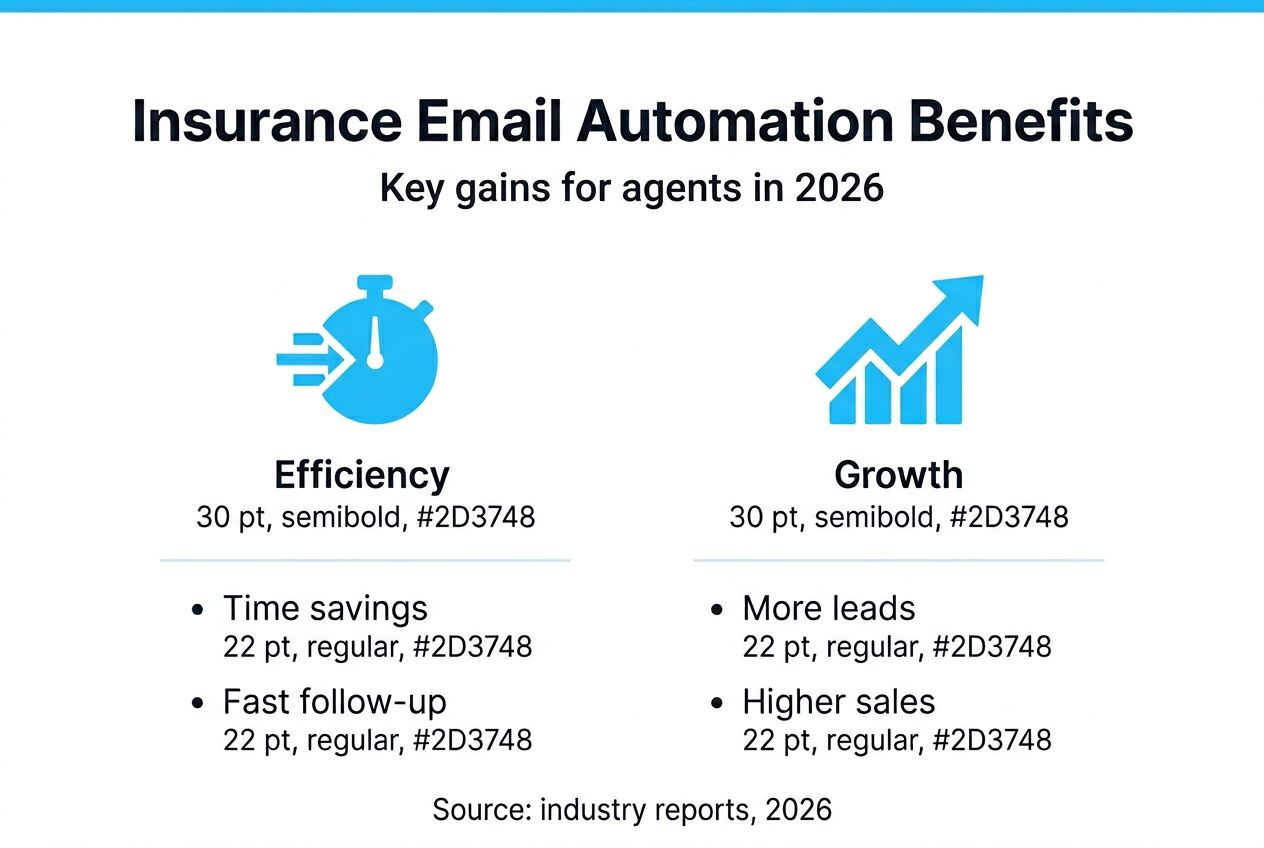
Sales cycle reduction occurs because automated sequences maintain consistent prospect engagement without delays. When a lead requests a quote, automation immediately delivers educational content, testimonials, and policy comparisons over the next two weeks. This keeps your agency top of mind while prospects evaluate options, reducing the time from initial contact to signed policy.
Tangible advantages of implementing email automation include:
- Consistent lead nurture that prevents prospects from falling through communication gaps
- Improved ROI compared to cold calling, with email costing 90% less per contact
- Scalable outreach that grows with your book of business without proportional time increases
- Data-driven insights revealing which messages and sequences drive the highest conversions
- Enhanced customer retention through automated policy reviews, birthday messages, and coverage updates
The benefits of sales automation compound over time as your system learns which approaches work best for different audience segments. Agents who implement email automation typically see positive ROI within three to six months, with results improving as workflows mature.
Common misconceptions and pitfalls about email automation in insurance
Several myths prevent insurance professionals from adopting email automation despite its proven benefits. The most persistent misconception is that automation depersonalizes communication and makes customers feel like numbers rather than individuals. In reality, AI enables hyper-personalization at scale that manual processes cannot match. Automated systems insert specific policy details, reference past conversations, and tailor recommendations based on individual customer data, creating more personalized experiences than generic manual emails.
Another widespread belief suggests only large agencies benefit from email automation because of implementation complexity and cost. This assumption ignores how modern platforms offer customized workflows specifically designed for independent agents and small agencies. Automation scales to any business size, and smaller agencies often see faster ROI because efficiency gains have more dramatic impact on limited resources.
The myth of immediate ROI without proper planning leads many agents to abandon automation prematurely. Email automation requires strategic setup, audience segmentation, and message design before delivering results. Expecting instant conversions without investing in workflow optimization sets unrealistic expectations that doom otherwise viable implementations.
Common pitfalls that undermine email automation success include:
- Poor CRM integration causing data silos and incomplete customer profiles that limit personalization
- Over-automation that bombards prospects with excessive messages, triggering unsubscribes and damaging relationships
- Generic message templates that fail to address specific insurance product benefits or customer pain points
- Neglecting mobile optimization when 60% of insurance emails are opened on smartphones
- Failing to test subject lines, send times, and content variations before launching full campaigns
- Ignoring compliance requirements for insurance marketing communications and privacy regulations
Pro Tip: Start with one high-value workflow like policy renewal reminders rather than trying to automate everything simultaneously. Master that process, measure results, and expand gradually to other use cases for sustainable implementation success.
Understanding these misconceptions helps you set realistic expectations and avoid common mistakes that waste time and resources. Successful automation balances efficiency with genuine personalization, maintains appropriate message frequency, and continuously optimizes based on performance data.
Choosing the right email automation tools for insurance professionals
Selecting an appropriate email automation platform requires evaluating features against your specific insurance workflow needs. The right tool integrates seamlessly with your existing systems while providing AI capabilities that enhance lead generation and customer engagement. Generic marketing platforms often lack insurance-specific features like policy trigger workflows and compliance-ready templates.
Key features to prioritize when comparing email automation tools:
- AI-powered lead scoring that ranks prospects by conversion probability and policy interest
- Native CRM integration that syncs contact data, policy information, and interaction history automatically
- Multichannel support enabling coordinated email, SMS, and social media campaigns from one platform
- Workflow customization allowing you to build insurance-specific sequences for quotes, renewals, and cross-sells
- Compliance features ensuring messages meet insurance marketing regulations and privacy requirements
- Analytics dashboards tracking email performance, conversion attribution, and revenue impact
Specialized insurance-focused platforms offer pre-built workflows designed around common agent needs like lead nurture, policy renewal, and referral generation. These tools understand insurance sales cycles and include templates optimized for different policy types. Generic marketing automation platforms provide more flexibility but require significant customization to address insurance-specific use cases.
| Feature | Insurance-Focused Platform | Generic Marketing Tool |
|---|---|---|
| Pre-built insurance workflows | Included with policy-specific templates | Requires custom building from scratch |
| CRM integration | Native insurance CRM compatibility | May need third-party connectors |
| Compliance features | Built-in insurance regulation compliance | Manual compliance implementation required |
| AI lead scoring | Trained on insurance conversion patterns | Generic lead scoring requiring customization |
| Implementation time | 2-4 weeks with guided setup | 6-12 weeks for full customization |
| Cost structure | Typically per-agent pricing | Often requires enterprise plans for full features |
Data security becomes critical when handling sensitive policyholder information and financial data. Verify that platforms use enterprise-grade encryption, maintain SOC 2 compliance, and offer granular permission controls. Cloud-based solutions should clearly document data storage locations and backup procedures to meet insurance industry standards.
Pro Tip: Request a demo focused on your specific workflows rather than generic features. Ask vendors to show how their platform handles policy renewal sequences, quote follow-ups, and cross-sell campaigns using your actual customer data scenarios.
Assess vendor support quality and integration ease before committing to annual contracts. Platforms offering dedicated onboarding, responsive technical support, and extensive training resources deliver faster time to value. The best tools grow with your agency, supporting expanding contact databases and increasingly sophisticated automation strategies without requiring platform migrations.
Implementing email automation successfully in insurance workflows
Successful implementation follows a structured approach that builds momentum through quick wins while establishing sustainable long-term processes. Starting small and expanding strategically prevents overwhelm and allows you to demonstrate ROI before investing heavily in complex workflows.
Follow these steps to integrate email automation into your insurance practice:
-
Assess current repetitive outreach tasks that consume significant time without requiring personalized expertise, like initial quote follow-ups, policy renewal reminders, birthday greetings, and educational content distribution.
-
Select AI-driven tools compatible with your existing CRM and workflow, prioritizing platforms offering insurance-specific templates and native integrations that minimize technical complexity during setup.
-
Integrate automation with your CRM and marketing platforms to ensure contact data, policy information, and interaction history flow seamlessly between systems without manual data entry.
-
Design personalized, triggered email sequences that address specific customer journey stages, using dynamic content that references policy types, coverage amounts, and individual circumstances rather than generic messages.
-
Continuously test, monitor, and optimize campaigns by running A/B tests on subject lines, send times, and content variations while tracking opens, clicks, conversions, and unsubscribe rates to refine performance.
-
Scale successful workflows gradually by expanding automation to additional use cases once initial campaigns demonstrate consistent positive results and your team masters the platform capabilities.
Best practices for maximizing email automation effectiveness include segmenting your contact database by policy type, customer lifecycle stage, and engagement level before launching campaigns. This precision targeting ensures messages reach receptive audiences with relevant content. Start with three to five core segments rather than dozens of micro-segments that create management complexity.
Design mobile-responsive templates since most insurance emails are now opened on smartphones during commutes and evening hours. Test every message on multiple devices and email clients before sending to full lists. Poor mobile formatting destroys credibility and triggers immediate deletions regardless of content quality.
Pro Tip: Schedule monthly workflow audits reviewing performance metrics, customer feedback, and market changes that might require message updates. Regular optimization prevents campaigns from becoming stale and maintains high engagement as your audience evolves.
Monitor key performance indicators including open rates, click-through rates, conversion rates, unsubscribe rates, and revenue attribution. Set benchmarks based on your initial campaigns and aim for continuous incremental improvements rather than dramatic overnight transformations. Email automation delivers compounding returns as your system learns and refines over time.
Explore CallBack CRM: your AI email automation partner
Ready to transform your insurance outreach with intelligent email automation? CallBack CRM provides comprehensive AI-powered tools specifically designed for insurance agents seeking to modernize lead generation and customer engagement. Our platform combines advanced email automation with seamless CRM integration, letting you build personalized workflows that convert more prospects while saving hours each week.
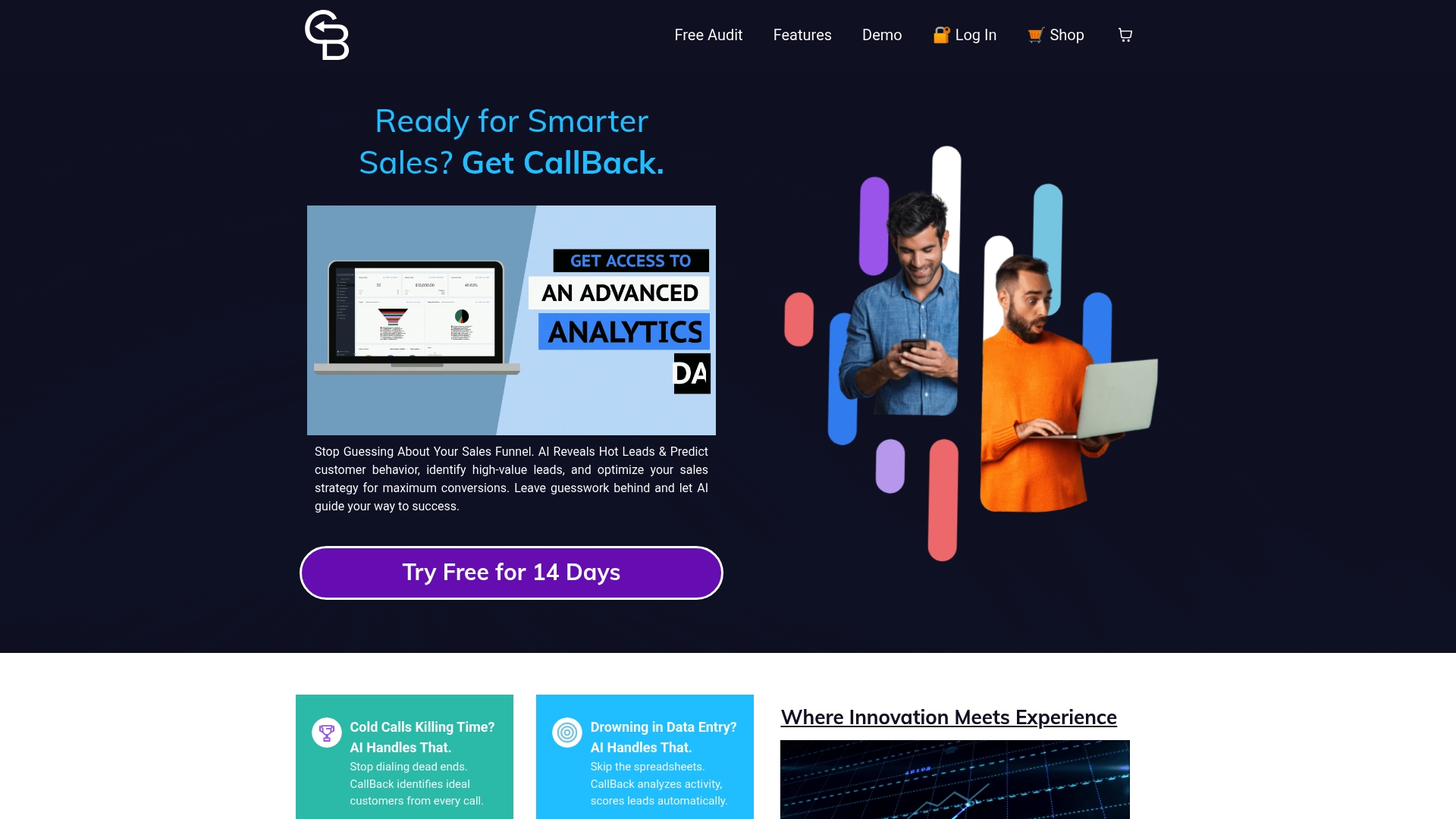
Discover pre-built email marketing automation templates tailored for insurance workflows including quote follow-ups, policy renewals, and referral requests. Leverage powerful AI business automation features that optimize send times, score leads, and personalize content at scale. Manage every prospect and policyholder relationship through our intuitive lead and customer management CRM that syncs with your automation campaigns automatically. Start your free trial today and see how CallBack CRM helps insurance professionals close more policies with less manual effort.
Frequently asked questions about email automation for insurance agents
What data do I need to start email automation?
You need basic contact information including names, email addresses, phone numbers, and policy interests or current coverage details. Behavioral data like website visits, email engagement history, and quote requests enhances personalization but is not required initially. Most agents start with their existing contact database and enrich profiles over time as automation captures interaction data.
How long before seeing ROI from email automation?
Most insurance agents see measurable improvements in engagement and time savings within 30 to 60 days of launching automated workflows. Full ROI typically materializes in three to six months as workflows mature and you optimize based on performance data. Quick wins like automated renewal reminders often show immediate impact, while complex lead nurture sequences require longer runway to demonstrate conversion improvements.
Can small insurance agencies benefit from AI email automation?
Absolutely. Small agencies often gain more dramatic benefits because automation multiplies limited resources more effectively than in large organizations. Modern platforms scale to any agency size with pricing models that fit independent agent budgets. The efficiency gains from eliminating manual follow-ups and repetitive outreach tasks have proportionally larger impact when you have fewer team members.
How do I measure success of automated email campaigns?
Track open rates, click-through rates, conversion rates, and revenue attribution to evaluate campaign effectiveness. Compare these metrics against baseline performance from manual outreach to quantify improvements. Monitor secondary indicators like time saved, cost per acquisition, and customer retention rates to capture full automation impact beyond direct email metrics.
What are common mistakes to avoid when automating emails?
Avoid over-automation that bombards contacts with excessive messages, which drives unsubscribes and damages relationships. Do not neglect mobile optimization or fail to test campaigns before launching to full lists. Skipping proper segmentation results in irrelevant messages that tank engagement rates. Finally, failing to regularly review and update workflows causes campaigns to become stale and lose effectiveness over time.