

Many insurance agencies still rely on time-consuming manual processes that can slow growth and frustrate clients. For insurance agents and brokers, adapting to customer expectations means finding smarter ways to engage prospects and handle repetitive tasks. By tapping into the power of agentic automation, professionals can transform lead management, strengthen customer relationships, and free up valuable time for high-impact conversations with clients.
Table of Contents
- Sales Automation Defined For Insurance Agencies
- Types Of Automation In Insurance Sales
- How Ai-Powered Sales Tools Transform Workflow
- Key Benefits Of Automating Insurance Sales
- Common Pitfalls And How To Avoid Them
Key Takeaways
| Point | Details |
|---|---|
| Sales Automation Enhances Efficiency | Automating sales processes significantly improves operational efficiency and streamlines workflows for insurance agencies. |
| Personalized Customer Interactions | Leveraging AI technologies enables more personalized and timely communication with customers, enhancing overall satisfaction. |
| Various Levels of Automation | Insurance automation can be categorized into rule-based, robotic process, and intelligent automation, each serving distinct operational improvements. |
| Addressing Common Pitfalls | Successful implementation of automation requires careful planning, employee training, and maintaining a balance between automation and personal interaction. |
Sales Automation Defined for Insurance Agencies
Sales automation for insurance agencies represents a strategic technological approach that transforms traditional sales processes through intelligent digital tools. At its core, agentic automation enables insurance professionals to streamline complex workflows, enhance customer interactions, and optimize lead management using advanced AI technologies.
According to PwC research, agentic automation in insurance goes beyond simple task replacement by creating smarter, more responsive systems. This innovative approach focuses on augmenting human capabilities rather than completely replacing them. The key objectives include:
- Improving operational accuracy
- Enhancing compliance management
- Reducing manual administrative tasks
- Enabling more personalized customer interactions
- Accelerating decision-making processes
The fundamental components of sales automation for insurance agencies typically involve sophisticated technologies that integrate multiple functions. These systems leverage artificial intelligence and machine learning to:
- Automatically score and prioritize potential leads
- Track customer interactions across multiple channels
- Generate personalized communication sequences
- Predict customer behavior and potential opportunities
- Streamline proposal and contract management
Machine learning algorithms play a critical role in this transformation, enabling agencies to move from reactive to predictive sales strategies. By analyzing historical data and real-time interactions, these intelligent systems can identify patterns and opportunities that human agents might overlook.
Pro tip: Start by identifying three repetitive sales processes in your agency that consume significant time, and research automation solutions specifically designed to streamline those exact workflows.
Types of Automation in Insurance Sales
Insurance sales automation encompasses several sophisticated technological approaches designed to streamline and enhance sales processes. Intelligent automation techniques have transformed how insurance agencies manage their sales workflows, offering multiple strategies to improve efficiency and customer engagement.
The primary types of automation in insurance sales can be categorized into three distinct levels:
- Rule-Based Automation: Handles simple, predictable tasks with predefined logic
- Robotic Process Automation (RPA): Manages repetitive manual administrative tasks
- Intelligent Automation: Incorporates advanced AI and machine learning for complex decision-making
Each automation type serves a unique purpose within insurance sales operations. Rule-based automation focuses on executing straightforward tasks with clear, predetermined parameters. These systems excel at:

Here’s a side-by-side comparison of the main automation types used in insurance sales:
| Automation Type | Distinguishing Feature | Impact on Business |
|---|---|---|
| Rule-Based Automation | Follows set logic and rules | Ensures consistent outcomes |
| Robotic Process Automation (RPA) | Imitates manual digital tasks | Boosts administrative speed |
| Intelligent Automation | Uses AI to adapt and learn | Enables predictive insights |
- Processing standard documents
- Generating routine communications
- Implementing basic compliance checks
- Routing standard customer inquiries
- Managing preliminary data entry tasks
Robotic Process Automation (RPA) represents a more advanced approach, designed to mimic human actions across digital systems. RPA tools can perform more complex sequences of tasks, such as:
- Extracting data from multiple sources
- Populating standard forms automatically
- Reconciling customer information across platforms
- Triggering workflow notifications
- Conducting initial lead qualification processes
Intelligent automation represents the most sophisticated level of sales technology. By leveraging artificial intelligence and machine learning, these systems can:
- Predict customer behavior
- Generate personalized sales recommendations
- Analyze complex data patterns
- Make nuanced decision-support recommendations
- Adapt and learn from ongoing interactions
Pro tip: Evaluate your current sales processes and identify three repetitive tasks that consume significant time, then research specific automation solutions tailored to streamline those exact workflows.
How AI-Powered Sales Tools Transform Workflow
AI-powered sales tools are revolutionizing insurance workflows by fundamentally reimagining how agents interact with customers and manage complex sales processes. Generative AI technologies enable insurance professionals to automate personalized interactions while dramatically accelerating traditional sales cycles.
These advanced tools dramatically transform workflow through several key mechanisms:
- Intelligent lead qualification
- Automated customer communication
- Predictive risk assessment
- Compliance monitoring
- Real-time decision support
Workflow Automation represents a critical breakthrough in insurance sales technology. By leveraging artificial intelligence, these tools can:
- Automatically prioritize high-potential leads
- Generate personalized communication sequences
- Predict customer acquisition probability
- Reduce manual data entry
- Provide instant compliance checks
Vertical AI Systems are specifically designed to address unique insurance industry challenges. These sophisticated platforms incorporate deep domain knowledge to:
- Understand complex policy language
- Analyze risk factors with unprecedented accuracy
- Generate intelligent recommendations
- Support nuanced underwriting decisions
- Streamline document processing
Proactive AI Agents are transforming operational efficiency by consolidating fragmented processes into interconnected, intelligent systems. These advanced technologies enable insurance professionals to:
Below is a summary of how AI-powered sales tools address key insurance sales challenges:
| Challenge | AI-Powered Solution | Resulting Benefit |
|---|---|---|
| Lead prioritization | Predictive scoring algorithms | Focus on highest-value prospects |
| Compliance monitoring | Real-time AI checks | Minimizes regulatory risk |
| Customer engagement | Automated multi-channel tools | Greater satisfaction and loyalty |
| Data processing efficiency | Smart workflow automation | Shorter sales cycle times |
- Automate repetitive administrative tasks
- Enhance customer engagement strategies
- Minimize human error
- Accelerate response times
- Provide 24/7 customer support capabilities
AI-powered sales tools don’t replace insurance agents - they empower them to focus on complex, high-value interactions that require human expertise and empathy.
Pro tip: Conduct a comprehensive audit of your current sales workflow to identify three repetitive tasks most ripe for AI-driven automation, then research targeted solutions that can immediately enhance your operational efficiency.
Key Benefits of Automating Insurance Sales
Sales automation has emerged as a transformative strategy for insurance agents seeking to optimize their workflow and enhance customer interactions. Insurance sales automation delivers substantial benefits by systematically addressing traditional inefficiencies in sales processes, enabling agents to work smarter and more strategically.
The key benefits of automation can be categorized into several critical performance domains:
- Operational efficiency
- Customer experience enhancement
- Error reduction
- Lead management optimization
- Resource allocation
Time Management represents one of the most significant advantages of sales automation. By eliminating repetitive administrative tasks, insurance agents can redirect their energy towards high-value activities:
- Reduce manual data entry
- Automate follow-up communications
- Schedule appointments automatically
- Generate instant quotes
- Streamline document processing
Lead Qualification becomes dramatically more sophisticated with automated systems. Advanced algorithms can now:
- Score potential prospects in real-time
- Identify high-conversion opportunities
- Prioritize leads based on engagement metrics
- Track interaction history
- Predict customer acquisition probability
Customer Experience receives a substantial upgrade through intelligent automation technologies. These tools enable:
- Personalized communication sequences
- 24/7 instant response capabilities
- Tailored product recommendations
- Consistent engagement tracking
- Seamless multi-channel interactions
Automation doesn’t replace human connection - it amplifies an agent’s ability to build meaningful relationships by eliminating administrative friction.
Pro tip: Conduct a comprehensive audit of your current sales workflow, identifying three repetitive tasks that consume the most time, then research targeted automation solutions to immediately enhance your operational efficiency.
Common Pitfalls and How to Avoid Them
Navigating the complex landscape of sales automation requires a strategic approach to prevent potential missteps. Insurance automation challenges can derail even the most well-intentioned technological implementations if not carefully managed and thoughtfully executed.
Insurance agents must be aware of the most critical pitfalls that can compromise their automation efforts:
- Overautomating customer interactions
- Neglecting human oversight
- Implementing inflexible technologies
- Failing to train staff
- Ignoring compliance requirements
Over-Automation Risks represent a significant challenge for insurance professionals. Automated systems can inadvertently create distance between agents and clients if not carefully designed:
- Maintain personal touchpoints
- Use automation for routine tasks
- Preserve complex interactions for human agents
- Customize automated communications
- Monitor customer satisfaction metrics
Technology Integration Challenges often emerge when agents adopt automation without comprehensive strategy. Key considerations include:
- Selecting flexible platforms
- Ensuring seamless system compatibility
- Maintaining data integrity
- Supporting continuous learning
- Protecting client information
Employee Engagement plays a crucial role in successful automation adoption. Strategies to mitigate resistance and ensure smooth implementation include:
- Providing comprehensive training
- Demonstrating technology benefits
- Involving staff in selection processes
- Creating feedback mechanisms
- Addressing technological anxieties
Successful automation enhances human capabilities, not replaces them - technology should be a supportive tool, not a standalone solution.
Pro tip: Conduct a comprehensive technology assessment, involving your entire team in identifying automation opportunities that genuinely improve workflow without compromising personal client relationships.
Unlock the Full Potential of Sales Automation for Your Insurance Agency
The article highlights the challenges insurance agents face with repetitive tasks like manual data entry, lead qualification, and customer communication. These pain points often slow down sales cycles and limit the personal touch needed to build trust. If your goal is to enhance operational efficiency, reduce costly errors, and create personalized experiences that set you apart you need to embrace intelligent automation that works with you—not against you.
CallBack CRM offers an all-in-one solution designed specifically with insurance agents and agencies in mind. Its AI-powered platform automates lead scoring, customer outreach, and workflow management to eliminate the mundane while helping you focus on what truly matters: building relationships and closing more deals. With features like email and SMS marketing, proposal tools, and seamless CRM management, you can finally say goodbye to outdated sales practices and hello to scalable growth.
Experience how automation can transform your sales process today with CallBack CRM.
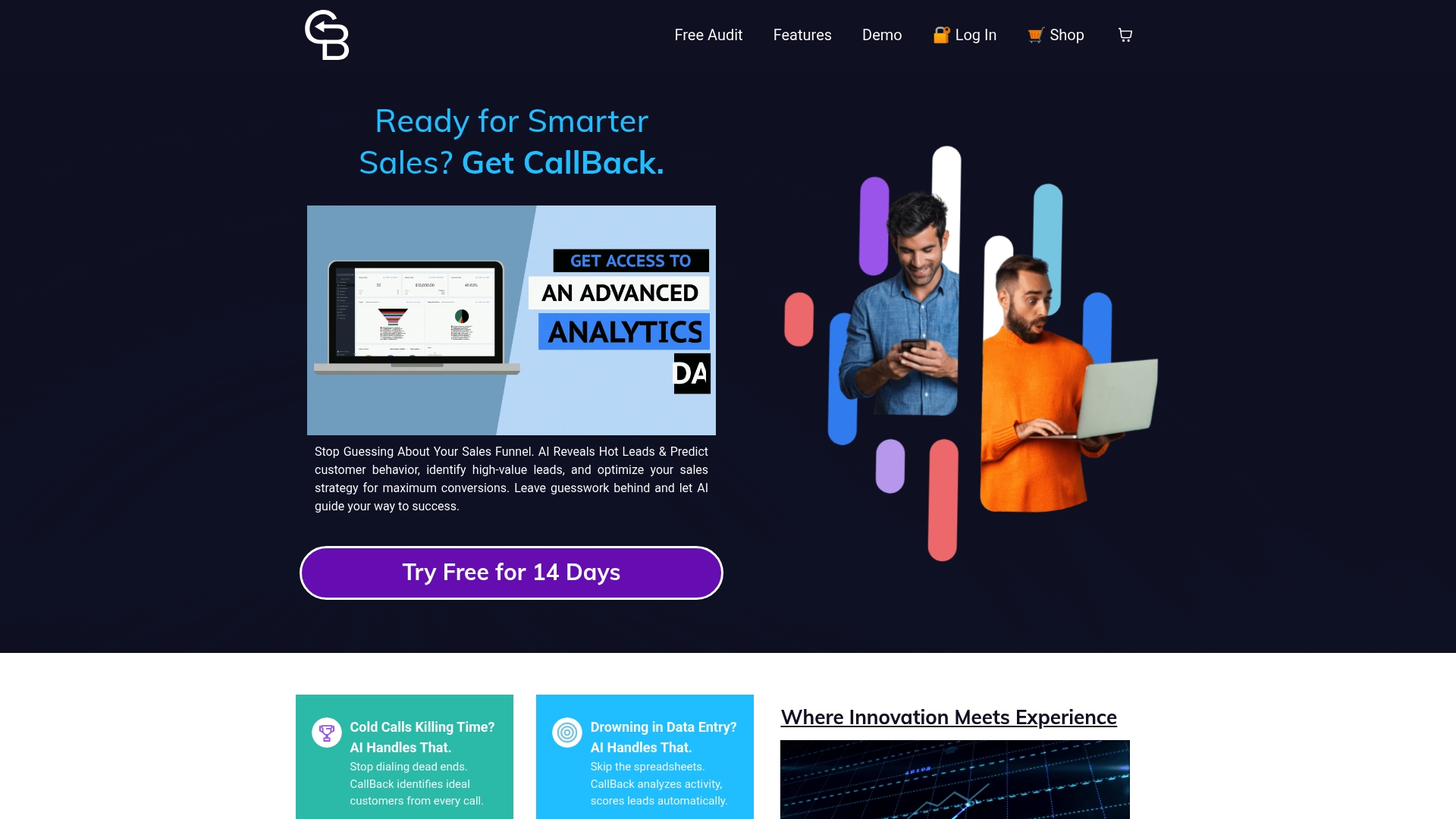
Ready to stop wasting time on manual tasks? Visit CallBack CRM now to explore how our intelligent automation and AI assistants can help you identify high-value leads, predict customer needs, and personalize your outreach effortlessly. Take the first step toward modernizing your insurance sales workflow and achieving greater success.
Frequently Asked Questions
What are the main benefits of sales automation for insurance agents?
Sales automation improves operational efficiency, enhances customer experience, reduces errors, optimizes lead management, and allows better resource allocation. It helps agents work smarter and focus more on high-value interactions.
How does sales automation impact lead qualification for insurance agents?
Sales automation systems use advanced algorithms to score potential leads in real-time, prioritize high-conversion opportunities, and track interaction history, making lead qualification dramatically more sophisticated.
Can sales automation enhance customer experience?
Yes, intelligent automation technologies facilitate personalized communication, provide 24/7 response capabilities, and allow for seamless multi-channel interactions, all of which greatly enhance the overall customer experience.
What common pitfalls should insurance agents avoid when implementing sales automation?
Agents should be cautious of over-automating customer interactions, neglecting human oversight, implementing inflexible technologies, failing to train staff, and ignoring compliance requirements to ensure successful automation adoption.