

Finding qualified insurance leads feels tougher than ever, especially when old referral tactics no longer bring the results you want. Many agents struggle to identify high-value prospects or waste hours chasing leads that rarely convert. What if there were smarter, tech-driven ways to fill your pipeline with people who genuinely want your services?
This list reveals practical strategies combining artificial intelligence, automation, and proven digital marketing techniques designed for insurance professionals. You will discover actionable insights that help you attract better leads, convert more clients, and grow your business with less effort. Ready to see which methods are changing how successful agents build their client base?
Table of Contents
- 1. Use AI to Identify High-Value Prospects
- 2. Automate and Personalize Outreach Efforts
- 3. Optimize Funnel and Website Conversions
- 4. Leverage Email and SMS Marketing Automation
- 5. Integrate CRM for Seamless Data Management
- 6. Engage Leads with Interactive Webinars
- 7. Monitor Results and Adjust Strategies with Analytics
Quick Summary
| Takeaway | Explanation |
|---|---|
| 1. Leverage AI for Targeting Clients | Use AI to precisely identify and prioritize high-value prospects while reducing time spent on unqualified leads. |
| 2. Automate Personalized Outreach | Implement intelligent automation for tailored communication strategies that enhance client engagement through personalized messaging. |
| 3. Optimize Your Conversion Funnel | Focus on creating a seamless user experience to improve website conversion rates and client acquisition efficiently. |
| 4. Use Data Analytics for Decisions | Analyze performance metrics regularly to adapt marketing strategies based on data-driven insights, enhancing overall effectiveness. |
| 5. Incorporate Webinars for Engagement | Host interactive webinars to build trust and educate potential clients, transforming passive interest into active engagement. |
1. Use AI to Identify High-Value Prospects
The insurance landscape is transforming with artificial intelligence enabling agents to pinpoint and engage the most promising clients more efficiently than ever before. By leveraging advanced AI technologies, insurance professionals can now move beyond traditional lead generation methods and target prospects with unprecedented precision.
AI-powered lead generation represents a quantum leap in how insurance agents discover potential customers. These intelligent systems analyze vast datasets including demographic information, online behavior, social media interactions, and historical insurance purchasing patterns to identify high-intent prospects with remarkable accuracy.
Key benefits of AI-driven prospect identification include:
- Predictive targeting that goes beyond basic demographics
- Real-time lead scoring to prioritize most valuable potential clients
- Automated prospect profiling using complex behavioral algorithms
- Reduced time spent on unqualified leads
Machine learning models can now predict customer needs before the customer even realizes them. By analyzing complex data patterns, AI systems help insurance agents understand:
- Potential life changes signaling insurance requirements
- Financial transitions indicating higher likelihood of purchasing coverage
- Risk profiles matching specific insurance product offerings
AI transforms prospecting from a manual, time-consuming process into an intelligent, data-driven strategy.
Insurance agents can implement AI prospect identification by:
- Integrating AI-powered CRM platforms
- Utilizing predictive analytics tools
- Connecting digital marketing campaigns with AI lead scoring
- Training on interpreting AI-generated prospect insights
Pro tip: Start with one AI tool and incrementally expand your digital prospecting capabilities to avoid overwhelming your current workflow.
2. Automate and Personalize Outreach Efforts
Modern insurance agents are discovering that successful lead generation is no longer about volume but precision. Automation combined with personalized communication represents the new frontier of client engagement.
Artificial intelligence enables insurance professionals to transform their outreach strategy by optimizing marketing campaigns through intelligent segmentation and targeting. Machine learning algorithms analyze complex behavioral data to create highly customized communication pathways.
Key automation strategies include:
- Intelligent email sequencing
- Behavior-triggered messaging
- Dynamic client segmentation
- Personalized communication workflows
Machine learning models can dynamically adjust outreach strategies based on real-time client interactions. This means your communication becomes progressively more refined and effective with each engagement.
Personalized automation turns generic marketing into meaningful client conversations.
Practical implementation steps for agents:
- Select an AI-powered CRM platform
- Map existing client communication patterns
- Create segmented communication templates
- Establish automated follow-up sequences
- Continuously refine messaging based on interaction data
By integrating smart communication technologies, insurance agents can dramatically reduce manual outreach time while simultaneously improving client connection quality.
Pro tip: Design your automated communication sequences to feel personal and conversational, avoiding robotic or overly generic messaging.
3. Optimize Funnel and Website Conversions
Successful insurance lead generation hinges on creating a seamless journey from initial website visit to final policy purchase. Strategic optimization of your digital sales funnel can dramatically improve conversion rates and client acquisition.
Understanding how to streamline customer conversion paths requires a nuanced approach to digital marketing and user experience design.
Key conversion optimization strategies include:
- Clear and compelling website design
- Strategic call-to-action placement
- Mobile-responsive interfaces
- Simplified quote request processes
- Trust-building content elements
Funnel analytics reveal critical insights about customer behavior and potential drop-off points. By mapping the entire customer journey, insurance agents can identify and eliminate friction that prevents potential clients from completing their purchase.
Effective conversion optimization transforms website visitors into committed clients.
Practical implementation steps:
- Conduct comprehensive website user experience audit
- Create targeted landing pages for specific insurance products
- Implement clear and concise navigation
- Use persuasive microcopy in form fields
- Add trust signals like testimonials and security badges
Website conversion is about removing barriers and creating a smooth, intuitive path to purchasing insurance. Every click and interaction should feel effortless and trustworthy.
Pro tip: Continuously A/B test your website elements to incrementally improve conversion rates, focusing on one component at a time.
4. Leverage Email and SMS Marketing Automation
Modern insurance agents are discovering that personalized communication is the key to transforming leads into loyal clients. Marketing automation provides the sophisticated toolkit needed to deliver targeted messages at precisely the right moment.
Insurance professionals can streamline communication workflows through intelligent automated messaging platforms that adapt to individual client behaviors and preferences.
Key automation strategies include:
- Dynamic segmentation of contact lists
- Personalized trigger-based messaging
- Automated follow-up sequences
- Multi-channel communication tracking
- Intelligent scheduling of communications
Behavioral analytics enable insurance agents to craft messages that resonate with specific client segments. By understanding individual customer journeys, agents can create more meaningful interactions that feel personal rather than generic.
Effective marketing automation transforms mass communication into targeted conversations.
Practical implementation steps:
- Map out comprehensive customer communication journeys
- Design segmented email and SMS templates
- Establish behavior-triggered message workflows
- Integrate analytics to measure engagement
- Continuously refine messaging based on interaction data
Successful automation balances technological efficiency with genuine human connection. The goal is not just sending messages but creating meaningful client relationships.
Pro tip: Start with one communication channel and gradually expand your automation strategy to prevent overwhelming your existing workflow.
5. Integrate CRM for Seamless Data Management
Modern insurance agents are discovering that customer relationship management is far more than just a database. It is the central nervous system of a successful insurance business that transforms fragmented information into strategic insights.
By consolidating customer interaction data into a single platform, insurance professionals can create more personalized and efficient client experiences.
Key CRM integration benefits include:
- Centralized client information
- Automated workflow management
- Comprehensive interaction tracking
- Predictive client behavior analysis
- Compliance and documentation support
Intelligent data mapping allows insurance agents to understand client needs before the client articulates them. This proactive approach transforms traditional reactive service models into anticipatory client engagement strategies.
A well-integrated CRM turns data into your most powerful sales tool.
Practical implementation steps:
- Evaluate current data management processes
- Select an insurance-specific CRM platform
- Migrate existing client data systematically
- Train team on comprehensive system usage
- Establish data integrity protocols
Successful CRM integration means creating a unified view of each client that enables more meaningful and targeted interactions. Your data becomes a strategic asset rather than an administrative burden.
Pro tip: Prioritize data quality over quantity and invest time in regular system maintenance and team training to maximize your CRM’s potential.
6. Engage Leads with Interactive Webinars
Webinars have emerged as a powerful tool for insurance agents to connect with potential clients in a dynamic and engaging digital environment. These online interactive sessions transform traditional sales pitches into meaningful educational experiences that build trust and demonstrate expertise.
Insurance professionals can transform prospect engagement through webinars by creating targeted, value-driven content that addresses specific client needs.
Key webinar engagement strategies include:
- Interactive polling features
- Live Q&A sessions
- Real-time problem solving
- Expert panel discussions
- On-demand replay options
Audience interaction mechanics enable insurance agents to understand client concerns in real-time and provide immediate, personalized insights. This approach shifts the conversation from transactional to consultative.
Webinars convert passive viewers into active participants in their insurance journey.
Practical webinar implementation steps:
- Identify specific client pain points
- Design compelling presentation content
- Select appropriate webinar platform
- Promote event through multiple channels
- Follow up with personalized communication
Successful webinars are not about selling but about educating and building genuine connections with potential clients.
Pro tip: Record your webinars and create short, shareable clips to extend their marketing reach and provide value to prospects who could not attend live.
7. Monitor Results and Adjust Strategies with Analytics
In the competitive insurance landscape, data is the compass that guides successful marketing strategies. Analytics transform raw numbers into actionable insights that can dramatically improve lead generation and conversion rates.
Insurance professionals can gain competitive advantage through strategic analytics by understanding and interpreting their performance metrics with precision.
Key analytics tracking elements include:
- Conversion rate measurements
- Lead source performance
- Campaign engagement metrics
- Customer acquisition costs
- Retention rate indicators
Performance tracking technologies enable insurance agents to move beyond guesswork and make data-driven decisions that directly impact business growth. Understanding these metrics helps agents continuously refine their approach.
Analytics transform intuition into intelligent strategy.
Practical analytics implementation steps:
- Select comprehensive tracking tools
- Define key performance indicators
- Create regular reporting schedules
- Analyze data across multiple dimensions
- Develop adaptive marketing strategies
Successful analytics integration means viewing data as a dynamic, living resource that guides strategic decision making rather than a static historical record.
Pro tip: Schedule monthly analytics review sessions and be prepared to pivot strategies quickly based on emerging performance trends.
Below is a comprehensive table summarizing the key strategies, implementation techniques, and benefits outlined in the article regarding insurance prospecting and lead generation.
Transform Your Insurance Lead Generation with AI-Powered Automation
Insurance agents face the ongoing challenge of identifying high-value prospects and personalizing outreach without wasting precious time on unqualified leads. As the article highlights, effective lead generation requires smarter strategies like AI-driven prospect identification, personalized automated messaging, and optimized conversion funnel management. Combining these smart tips with a powerful digital platform can elevate your sales process while reducing tedious manual work.
CallBack CRM is designed specifically to address these pain points by offering an all-in-one solution that integrates AI-powered lead scoring, intelligent email and SMS automation, seamless CRM management, and website funnel optimization. This platform lets you harness predictive analytics to find the right clients faster and engage them meaningfully through personalized communication workflows.
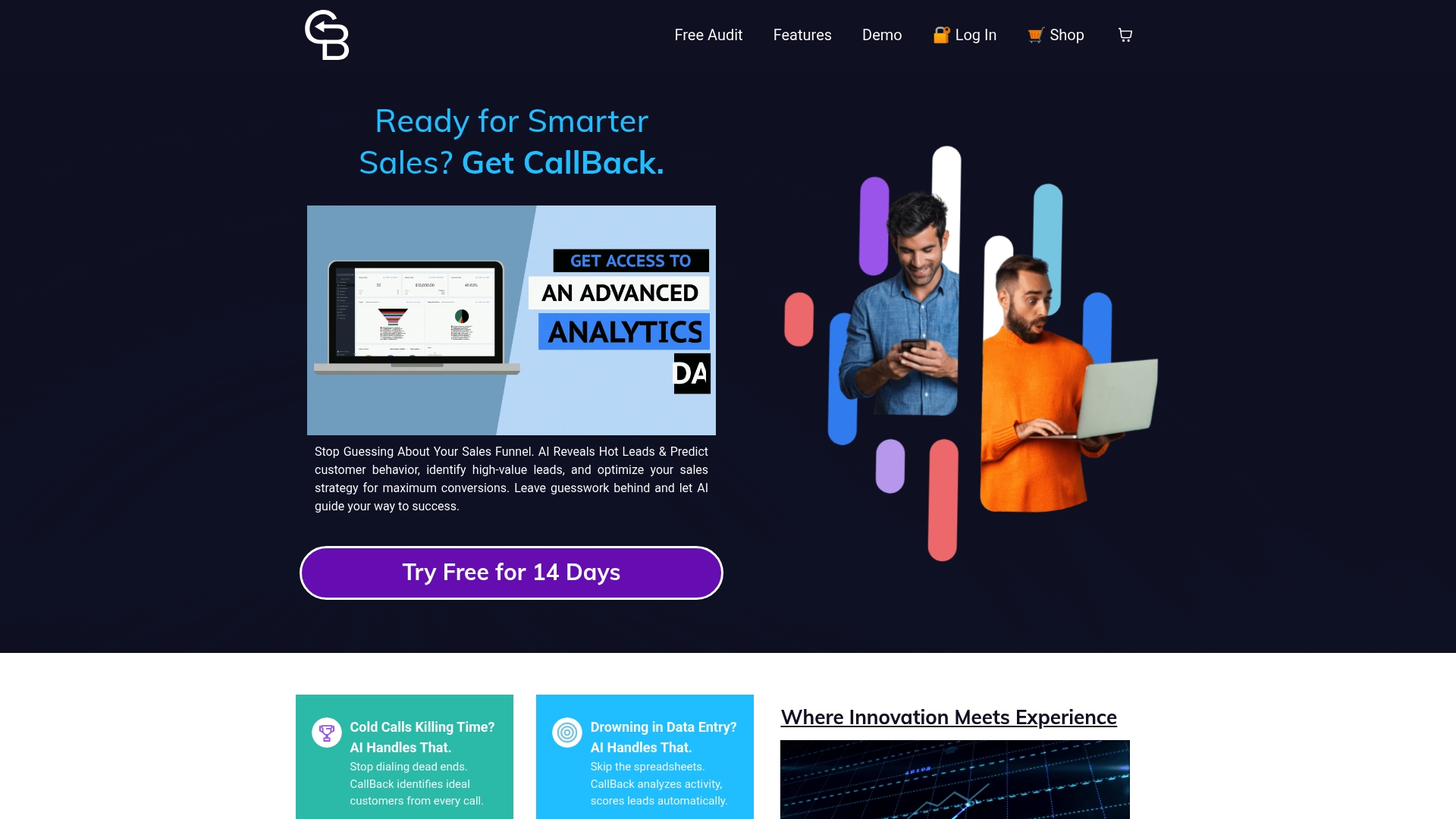
Ready to stop struggling with outdated prospecting methods? Experience how CallBack CRM transforms your insurance business into a lead-generating powerhouse. Start streamlining your workflow and increasing client conversions today by exploring the comprehensive features available on CallBack CRM. Take your first step toward smarter insurance sales now.
Frequently Asked Questions
How can I use AI to identify high-value prospects for my insurance business?
To identify high-value prospects, integrate AI-powered lead generation tools that analyze demographic data, online behavior, and historical purchasing patterns. Start by implementing a simple AI tool to enhance your prospect targeting within 30 days.
What are effective ways to automate and personalize my outreach efforts?
Automate and personalize outreach by using intelligent email sequencing, trigger-based messaging, and dynamic segmentation of your client list. Create customized templates for different segments to ensure your messages resonate, and aim for a 20% increase in engagement rates.
How can I optimize my website for better lead conversions?
You can optimize website conversions by enhancing your site’s design, strategically placing calls to action, and simplifying quote request processes. Conduct a comprehensive user experience audit to identify friction points and improve conversion rates over the next 60 days.
What steps should I take to integrate CRM for better data management?
To effectively integrate CRM, evaluate your current data processes, select an appropriate insurance-specific CRM platform, and migrate your existing client data. Ensure your team receives thorough training to maximize efficiency and work towards data integrity.
How do I use analytics to monitor lead generation results?
Utilize analytics to track key performance indicators such as conversion rates and lead source performance. Set up a regular reporting schedule to analyze this data and adjust your strategies quickly, ideally conducting reviews every month for continual improvement.
What are the benefits of engaging leads through interactive webinars?
Hosting interactive webinars allows you to educate and connect with potential clients while demonstrating your expertise. Focus on creating value-driven content and incorporate live Q&A sessions to engage participants effectively.