

TL;DR:
- Most insurance agents lose business due to slow follow-up rather than lack of motivation.
- Automated, multi-channel workflows and quick responses significantly increase lead conversion rates.
- Regularly measuring and optimizing key metrics is essential for sustained lead generation success.
Most insurance agents don’t lose business because they lack drive. They lose it because quality leads slip through the cracks while they’re buried in manual tasks. You spend real money attracting prospects, then a slow follow-up or a missed touchpoint kills the deal before it ever starts. This guide walks you through a proven, step-by-step lead generation process built specifically for insurance agencies. From setting up the right tools to automating instant follow-up, you’ll find practical, evidence-backed strategies to capture more leads, qualify them faster, and convert at a higher rate without burning out your team.
Table of Contents
- What you need to start: Tools, data, and must-knows
- Map your step-by-step lead generation process
- Automate key actions for speed-to-lead and higher conversions
- Troubleshoot, measure, and optimize: Avoid common lead gen mistakes
- What most insurance agents get wrong about lead generation
- Automate, scale, and win more policies with CallBack CRM
- Frequently asked questions
Key Takeaways
| Point | Details |
|---|---|
| Speed matters most | Responding to leads in under a minute boosts conversions more than any other tactic. |
| Automate core steps | Save time and capture more sales by automating lead capture, scoring, and rapid follow-up. |
| Multi-channel wins | Mix referrals, ads, and digital tools so leads are four times more likely to convert. |
| Measure & adapt | Track every stage, spot your bottlenecks, and keep improving process and response. |
What you need to start: Tools, data, and must-knows
Before you build any lead generation system, you need the right foundation. Jumping straight into buying leads or running ads without the proper setup is one of the fastest ways to waste your budget.
The first concept to nail down is the difference between exclusive and shared leads. Exclusive leads go only to you, while shared leads are sold to multiple agents simultaneously. Exclusive leads convert 50-100% higher than shared ones, and buying your own leads typically delivers better ROI than relying on vendors. That said, exclusive leads cost more upfront, so your choice should match your current budget and capacity.
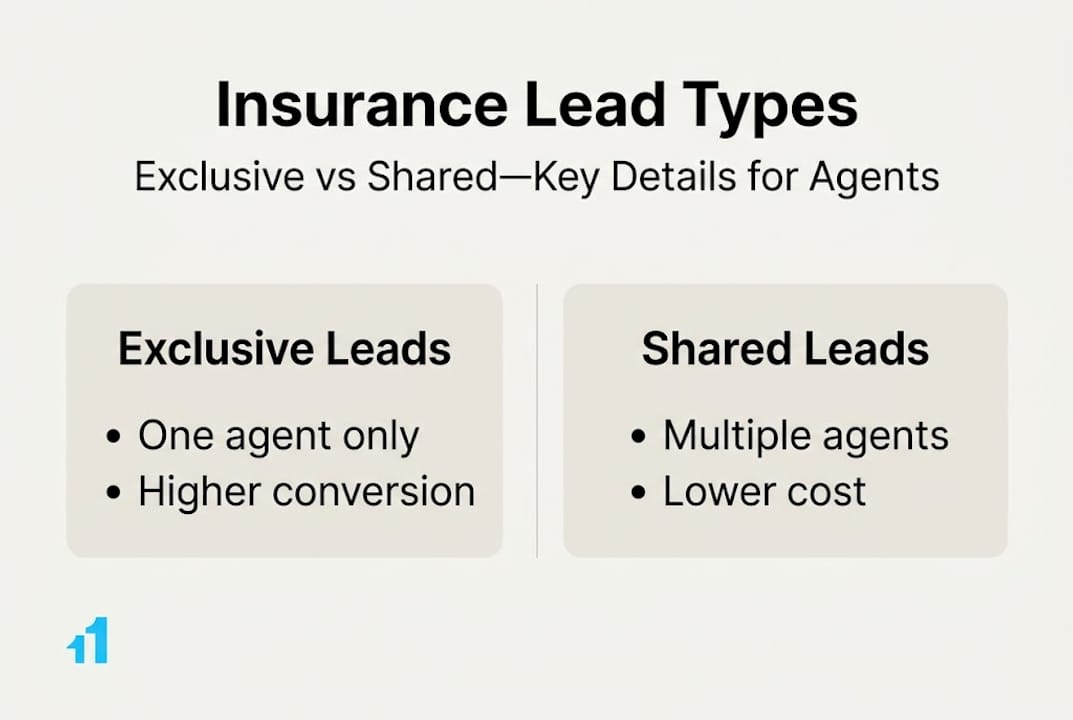
Here’s a quick comparison to guide your decision:
| Lead type | Cost | Competition | Conversion potential |
|---|---|---|---|
| Exclusive | Higher | None | High |
| Shared | Lower | Multiple agents | Lower |
| Inbound (owned) | Variable | None | Highest |
Beyond lead type, you’ll need a core technology stack. At minimum, that means:
- A CRM to store, track, and manage every lead
- Landing pages optimized for your insurance niche
- Automation tools for follow-up, reminders, and lead scoring
- Tracking metrics like contact rate, lead-to-quote conversion, and cost-per-lead (CPL)
Different insurance lines also have distinct lead journeys. Commercial leads often involve longer sales cycles and multiple decision-makers, as shown by commercial lead benchmarks. Auto and home leads tend to move faster. Life insurance sits in the middle. Understanding the lead generation types that apply to your niche helps you build the right process from day one.
Pro Tip: Write your follow-up scripts and set up your automation sequences before your first lead ever arrives. Waiting until leads come in to figure out your response plan costs you conversions every single time.
Map your step-by-step lead generation process
With your tools and data at hand, you’re ready to follow a proven, repeatable lead generation process. Think of this as your playbook, not a one-time setup.
Step 1: Attract your ideal leads. Use targeted ads, referral programs, and strategic partnerships to reach the right audience. Multi-channel strategies that include referrals produce leads 4x more likely to buy than single-channel approaches. Don’t rely on just one source.
Step 2: Capture leads with purpose. Landing pages, embedded forms, and inbound call tracking are your primary capture tools. Every form should ask only what you need to qualify the lead, nothing more.
Step 3: Qualify and score leads. Not every lead deserves equal attention. Use data points like coverage type, budget range, and timeline to score leads and prioritize your team’s effort. A lead workflow tutorial can help you map out exactly how scoring fits into your process.
Step 4: Follow up immediately and personally. Speed and personalization together drive conversions. Conversion benchmarks by insurance line put the stakes in perspective:

| Insurance line | Typical conversion rate |
|---|---|
| Auto | 4-9% |
| Home | 18-24% |
| Life | 12-18% |
These numbers tell you where the biggest opportunities and gaps exist. Home insurance converts at nearly three times the rate of auto, which means your follow-up cadence should reflect that difference.
Common pitfalls at this stage include relying on a single channel, waiting more than a few minutes to respond, and skipping lead scoring altogether. If you want to optimize your lead funnel, every step needs to be intentional.
Pro Tip: Automate your initial response so that every new lead gets an SMS or email within 60 seconds of submitting a form, even at 11 PM on a Sunday.
Automate key actions for speed-to-lead and higher conversions
Once you understand the full process, the next step is making it both effortless and significantly more effective using automation. Speed is where most agencies quietly lose business they never even knew they had.
The data here is striking. Responding within a minute can deliver a 391% higher conversion rate compared to slower response times. Even extending that window to five minutes drops your odds dramatically. And according to speed-to-lead research, responding within 5 to 60 minutes is associated with a 21x to 400% conversion boost over delayed responses.
Those numbers aren’t theoretical. They reflect what happens when a prospect is still in buying mode versus when they’ve already moved on to a competitor.
Here’s what you should automate right now:
- Lead assignment: Route new leads to the right agent instantly based on line of business or territory
- Initial outreach: Trigger an SMS and email within 60 seconds of a form submission
- Lead scoring: Flag high-value prospects automatically so your best closer gets them first
- Follow-up reminders: Schedule task alerts so no lead sits untouched for more than 24 hours
- Drip campaigns: Enroll unresponsive leads in a nurture sequence that keeps your agency top of mind
The tools that power this kind of automation for insurance leads don’t require a tech background. Modern platforms handle the logic for you once you configure the triggers.
Pro Tip: Use lead scoring with AI to automatically rank leads by conversion probability. Direct your top-scored leads to your highest-performing closer and watch your close rate climb without adding headcount.
Troubleshoot, measure, and optimize: Avoid common lead gen mistakes
You’ve built and automated your workflow. Now ensure it’s actually delivering the results you need and not falling into common traps.
Start by reviewing three core metrics every week:
- Contact rate: Are you actually reaching the leads you’re paying for?
- Lead-to-quote conversion rate: How many contacts turn into real opportunities?
- Cost-per-lead (CPL): Are you spending efficiently across channels?
Industry context matters here. Contact rates average 45-60%, and only 8-15% of leads become customers. That means optimization is not a one-time task. It’s an ongoing discipline.
“Most agencies that plateau in lead gen aren’t failing to attract leads. They’re failing to measure what happens after the lead arrives.”
The most common mistakes agents make:
- Slow initial follow-up (waiting more than 5 minutes)
- Relying on a single lead source or channel
- Ignoring duplicate leads that inflate CPL
- Never reviewing which lead sources actually convert
- Running campaigns without defined conversion benchmarks
Here’s a simple three-step optimization loop to run monthly:
- Identify the biggest drop-off. Where are leads going cold? Is it at first contact, during qualification, or after a quote?
- Test a new automated touchpoint. Add a text message, a voicemail drop, or a retargeting ad at the drop-off stage.
- Refine your scripts and tools. Use real call recordings and email open data to sharpen your messaging.
For deeper guidance, conversion and CPL benchmarks by sub-vertical give you a realistic target to aim for. Pair that with lead generation smart tips and a review of your AI automation insights to stay ahead of the curve.
If your ad strategy needs a professional review, ad management consulting can identify waste and reallocate budget toward your highest-performing channels.
What most insurance agents get wrong about lead generation
Let’s step back for some real talk on how most agents approach lead generation and what actually moves the needle.
The most common mistake isn’t a lack of leads. It’s treating lead buying as the finish line. Agents who focus only on buying more leads, without investing in fast follow-up and integrated multi-channel workflows, miss most of their actual opportunities. More leads without a better process just means more wasted spend.
Multi-channel outreach is no longer optional. Prospects today expect to hear from you via text, email, and phone. Referrals remain one of the highest-converting sources available, yet most agencies treat them as a bonus rather than a core strategy.
The hardest lesson we’ve seen agencies learn is this: what gets measured actually improves. Set a specific speed-to-lead target. Set a conversion rate goal by line of business. Then hold your team accountable to those numbers every single week, not just during quarterly reviews.
Finally, don’t run your campaigns on autopilot indefinitely. Block time each month to review what’s working and what isn’t. Lead funnel optimization is a process, not a one-time project. The agencies consistently winning in competitive markets are the ones treating their lead generation system like a living process that needs regular attention.
Pro Tip: Schedule a 30-minute monthly review of your lead metrics with your team. Even one small adjustment per month compounds into a dramatically better system by year’s end.
Automate, scale, and win more policies with CallBack CRM
If you’re ready to simplify and accelerate every step of your lead generation, you don’t have to do it all alone.
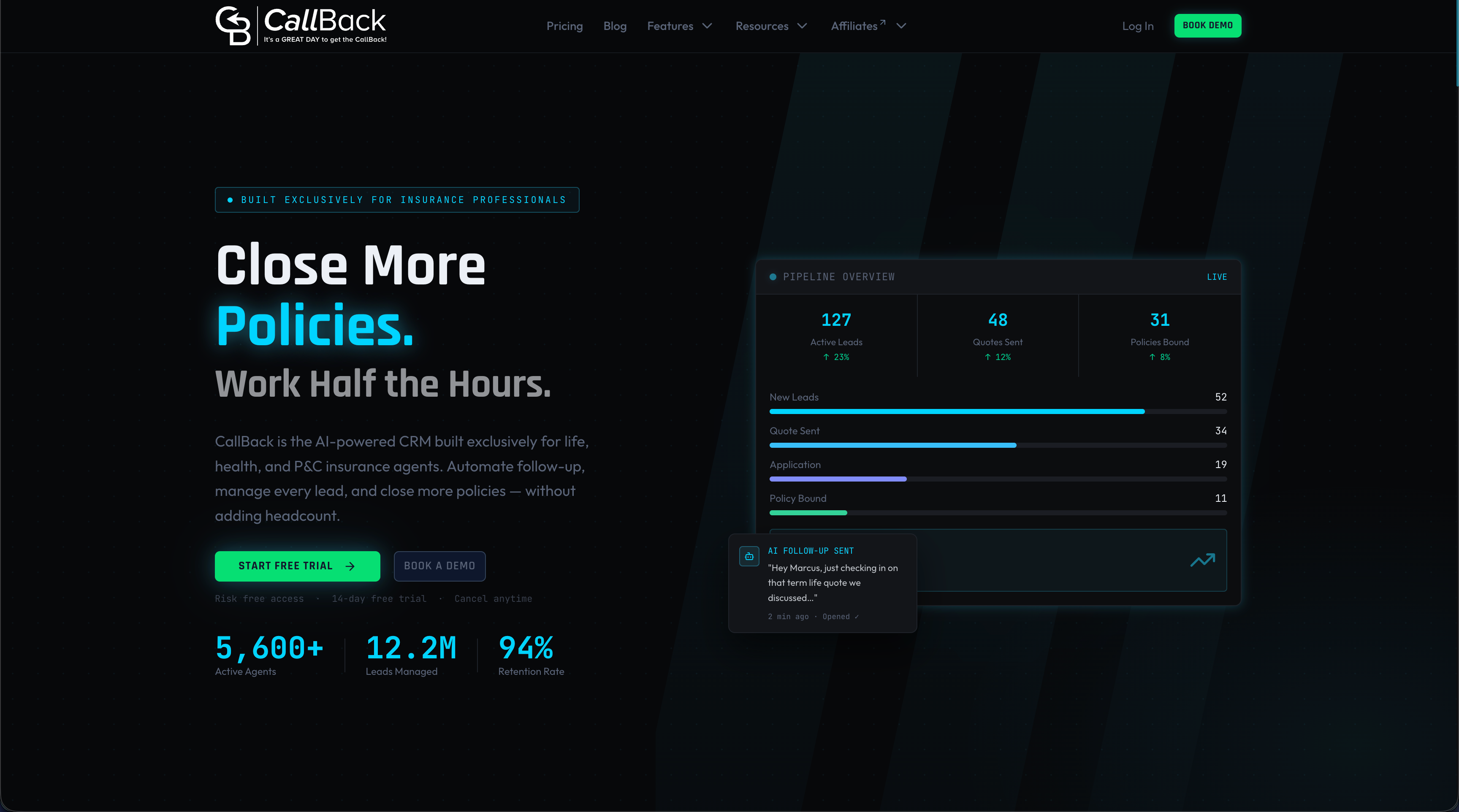
CallBack CRM is built specifically for insurance agents and agencies who want to stop losing leads to slow follow-up and manual processes. From lead automation tools that trigger instant responses to SMS marketing for agents that keep prospects engaged, the platform handles the heavy lifting so your team can focus on closing. Explore the full suite of all-in-one features to see how CRM management, AI lead scoring, drip campaigns, and reporting work together in one place. Book a demo and see what automated lead generation looks like when it’s built for your industry.
Frequently asked questions
What is the average conversion rate for insurance leads?
Auto insurance leads convert at around 4-9%, home insurance at 18-24%, and life insurance at 12-18%, so your benchmarks should vary by line of business.
Why is speed-to-lead so important for insurance agents?
Contacting a lead within one minute can boost your conversion rate by up to 391% compared to slower response times, because prospects are still in active buying mode.
Should I buy exclusive or shared insurance leads?
Exclusive leads convert 50-100% better than shared leads but cost more upfront, so your choice should depend on your budget and your team’s capacity to follow up quickly.
What are the most common mistakes in lead generation?
The biggest mistakes are slow initial follow-up, relying on a single channel, and failing to review lead data regularly. Responding within 5 to 60 minutes is associated with a 21x to 400% conversion boost, making speed your single highest-leverage improvement.