

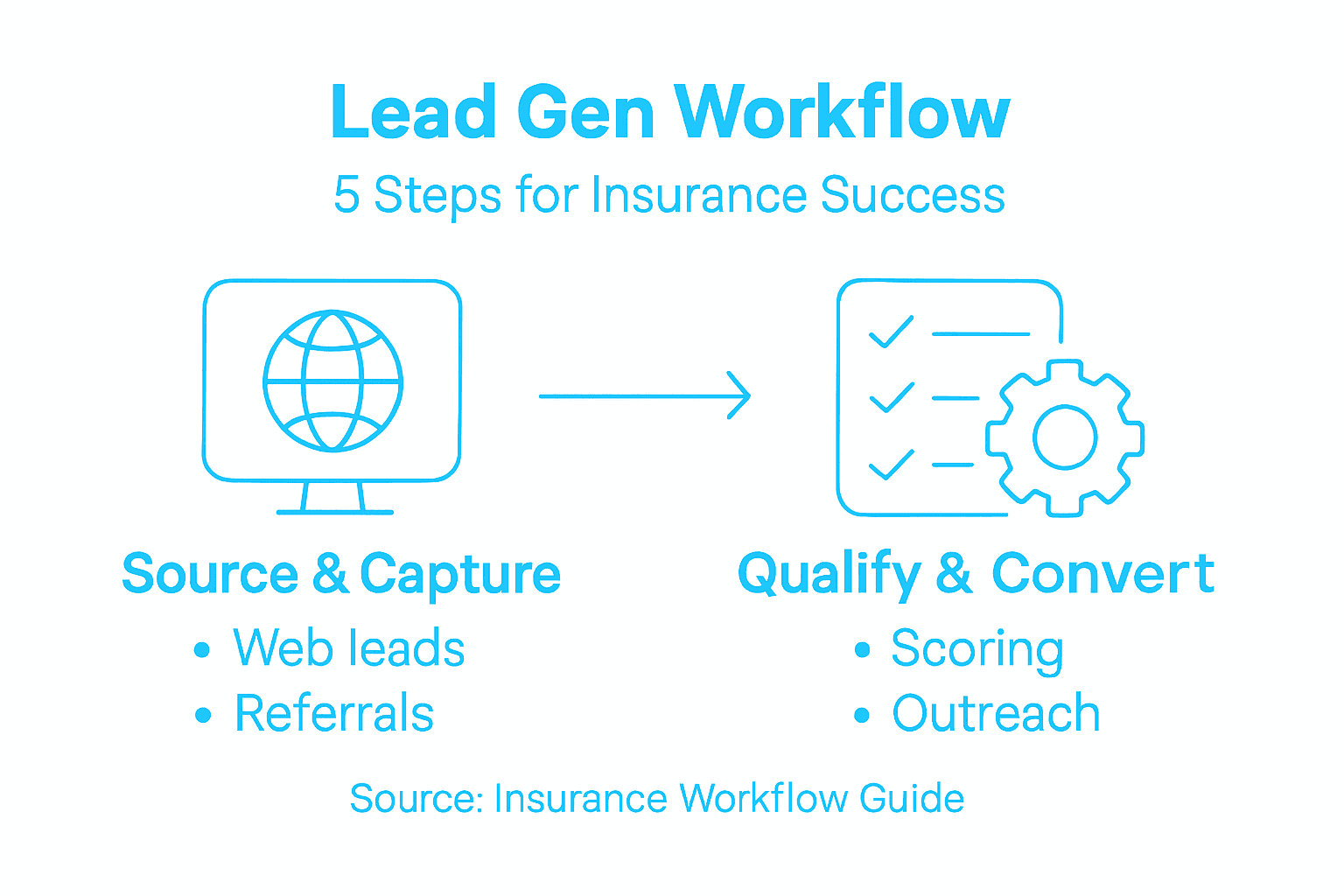
Many insurance agents struggle to keep up with rising client expectations and rapidly expanding contact lists. Setting up a solid, automated workflow can mean the difference between chasing cold leads and achieving real growth. By building a system with integrated lead sources, automated outreach, and real-time scoring, you not only save time but also create more meaningful, timely engagements with prospects.
Table of Contents
Quick Summary
| Key Insight | Explanation |
| 1. Identify Lead Sources | Determine key channels like social media and referrals for effective data integration. |
| 2. Automate Outreach Sequences | Use personalized automated messaging to enhance client engagement and nurture leads. |
| 3. Develop Lead Scoring | Create a scoring system to prioritize leads based on their likelihood to convert. |
| 4. Test Automation Workflows | Conduct systematic tests with sample leads to ensure smooth operation and data accuracy. |
| 5. Monitor and Optimize Workflows | Continuously analyze performance metrics to refine automation processes for better efficiency. |
Step 1: Set Up Lead Sources and CRM Integration
Successfully setting up lead sources and integrating your Customer Relationship Management (CRM) system is crucial for transforming insurance sales workflows. This step will help you strategically connect multiple lead generation channels with your centralized customer tracking platform.
Begin by identifying your primary lead sources, which might include web forms, referral networks, social media channels, and digital advertising platforms. Each source requires specific configuration to ensure smooth data transfer into your CRM. For insurance agencies, recommended lead sources typically include:
-
Professional networking sites like LinkedIn
-
Industry-specific lead generation websites
-
Targeted Facebook and Google advertising campaigns
-
Local Chamber of Commerce referral programs
-
Insurance comparison websites
Next, configure CRM integration by selecting a platform that supports comprehensive data synchronization. Look for solutions offering automated lead scoring, real-time contact information updates, and seamless communication tracking. The integration process involves connecting your lead sources through API connections or third-party middleware that can translate data between different systems.
Here’s how common insurance lead sources vary by integration complexity and quality:
| Lead Source | Integration Complexity | Data Quality Potential | Typical Setup Speed |
| LinkedIn Networking | Moderate | High | 2-3 days |
| Facebook/Google Ads | High | Medium | 1-2 days |
| Referral Programs | Low | High | 1 day |
| Comparison Websites | Moderate | Medium | 2 days |
Successful CRM integration reduces manual data entry by up to 80% and improves lead follow-up response times.
Implement webhook technologies or specialized connectors that enable instant lead information transfer, ensuring no potential customer falls through communication gaps. Your goal is creating a unified lead management ecosystem that provides comprehensive visibility into prospect interactions.
Pro tip: Always test your integration thoroughly by sending multiple test leads through different channels to confirm data accuracy and smooth information flow.
Step 2: Design Automated Outreach and Nurture Sequences
Creating sophisticated automated outreach and nurture sequences transforms how insurance agents engage potential clients, enabling personalized communication at scale. This step focuses on developing strategic workflows that guide prospects seamlessly through your sales funnel.
Designing effective nurture flows requires careful audience segmentation and strategic communication planning. Your automated sequences should address different prospect stages by delivering targeted content that matches their specific insurance needs and engagement levels. Key components of successful nurture sequences include:
-
Behavioral trigger-based messaging
-
Personalized email and SMS communications
-
Dynamic content that adapts to lead interactions
-
Segmentation based on demographic and interest data
-
Timely follow-up communications
Begin by mapping your customer journey and identifying critical touchpoints where automated interventions can provide maximum value. This involves creating segmented communication pathways that deliver relevant insurance product information, educational content, and strategic engagement materials.
Effective nurture sequences can increase conversion rates by up to 50% through consistent, personalized communication.
Implement multi-channel outreach strategies that combine email, SMS, and potentially direct mail to create a comprehensive engagement ecosystem. Automated workflows should include intelligent scoring mechanisms that track prospect interactions and adjust messaging dynamically based on their responses and engagement levels.

Pro tip: Regularly audit and refine your nurture sequences by analyzing engagement metrics and testing different communication approaches to optimize conversion potential.
Step 3: Assign Lead Scoring and Qualification Criteria
Lead scoring and qualification criteria are critical mechanisms for transforming raw prospect data into actionable sales opportunities. This step will help you develop a systematic approach to evaluating and prioritizing potential insurance clients based on their likelihood of conversion.
Designing an effective lead scoring model requires establishing clear qualification parameters that align with your specific insurance product offerings. These criteria will help you objectively rank and categorize leads, ensuring your sales team focuses energy on the most promising prospects. Key elements of a robust lead scoring framework include:
-
Demographic matching with ideal customer profiles
-
Engagement level and interaction history
-
Budget and purchasing intent signals
-
Specific insurance needs and risk profiles
-
Potential lifetime customer value
Develop precise scoring mechanisms by assigning numerical values to different prospect characteristics. Each interaction and data point should contribute to an overall lead score that helps predict conversion potential. For instance, a prospect requesting a complex life insurance quote might receive higher points than someone casually browsing auto insurance options.
Effective lead scoring can improve sales team efficiency by up to 35% and reduce time wasted on low-potential prospects.
Implement dynamic scoring models that automatically adjust based on prospect behavior, enabling real-time prioritization of high-value leads. Your scoring system should continuously evolve, incorporating machine learning techniques that refine qualification criteria based on actual conversion data.
Pro tip: Regularly review and recalibrate your lead scoring model by analyzing the correlation between initial scores and actual conversion rates to maintain predictive accuracy.
Step 4: Test Workflow Automation with Sample Leads
Validating your insurance lead generation workflow is a critical step that ensures your automated systems perform precisely as designed. This phase allows you to identify and resolve potential issues before deploying your workflow at full scale.
Systematic workflow testing involves creating controlled scenarios that simulate real-world lead interactions. You’ll want to generate representative sample leads that cover various potential customer profiles and engagement scenarios. Key testing objectives include:
-
Verifying data capture accuracy
-
Checking automated routing mechanisms
-
Validating lead scoring calculations
-
Ensuring communication trigger points function correctly
-
Identifying potential processing bottlenecks
Begin by developing a comprehensive test suite with synthetic leads representing different insurance market segments. These sample leads should mimic realistic demographic variations, interaction patterns, and engagement levels to provide a robust evaluation of your automated workflow.
Thorough workflow testing can reduce implementation errors by up to 60% and prevent costly operational disruptions.
Implement multi-stage validation protocols that track each sample lead through your entire automation sequence. Pay close attention to how leads move between different workflow stages, checking that scoring, segmentation, and communication triggers respond exactly as programmed.
Pro tip: Create a dedicated testing environment that mirrors your production system, allowing you to experiment and refine workflows without risking actual customer data.
Step 5: Monitor, Refine, and Scale Your Workflow
Successful lead generation workflows are living systems that require continuous observation, analysis, and strategic optimization. This final stage transforms your initial automation setup into a dynamic, high-performance engine for consistent insurance sales growth.
Continuous workflow monitoring involves establishing comprehensive performance tracking mechanisms that provide real-time insights into your lead generation processes. You’ll want to develop key performance indicators that reveal the effectiveness of your automation strategy. Critical metrics to track include:
-
Conversion rates across different lead segments
-
Average time from lead capture to sale
-
Cost per acquired customer
-
Lead engagement and interaction rates
-
Workflow processing speed and efficiency
Implement advanced analytics tools that enable granular performance evaluation, allowing you to identify bottlenecks, optimize communication sequences, and continuously refine your lead qualification approach. Your goal is creating an adaptive automation system that learns and improves with each interaction.
Key metrics to track for workflow effectiveness and scaling efforts:
| Performance Metric | What It Measures | Improvement Impact |
| Conversion Rate | Leads becoming clients | Direct sales boost |
| Lead Response Time | Speed of follow-up | Customer satisfaction |
| Cost Per Customer Acquisition | Expense per new client | Operational efficiency |
| Workflow Processing Speed | Automation throughput | Volume scalability |
Strategic workflow refinement can improve overall sales efficiency by up to 40% and reduce operational costs significantly.
Scale your successful workflow components by gradually expanding automation techniques that demonstrate consistent positive results. This might involve replicating high-performing communication strategies, adjusting lead scoring algorithms, or introducing more sophisticated segmentation techniques based on empirical performance data.
Pro tip: Schedule monthly workflow performance reviews to ensure your automation remains aligned with changing market dynamics and customer expectations.
Transform Your Insurance Lead Generation with CallBack CRM
If you are struggling to manage multiple lead sources, automate outreach, and prioritize your prospects effectively then this article’s detailed lead generation workflow tutorial highlights exactly the challenges you face. Common pain points include inefficient lead scoring, slow follow-up response, and manual data entry that consumes precious time. CallBack CRM is designed to solve these issues through powerful AI-powered automation workflows that unify your lead management into one intelligent system. From seamless CRM integration to personalized nurture sequences and dynamic lead qualification CallBack CRM helps you focus on closing more deals without the hassle.
Experience the power of automated lead capture and real-time scoring that drastically reduces manual errors and boosts your conversion rates. With features like email and SMS marketing automation, AI assistants, and comprehensive sales pipeline tools you can streamline every step described in the workflow tutorial. Visit CallBack CRM to discover how our platform replaces outdated cold calling methods with smart, personalized engagement strategies tailored for insurance agents and agencies.
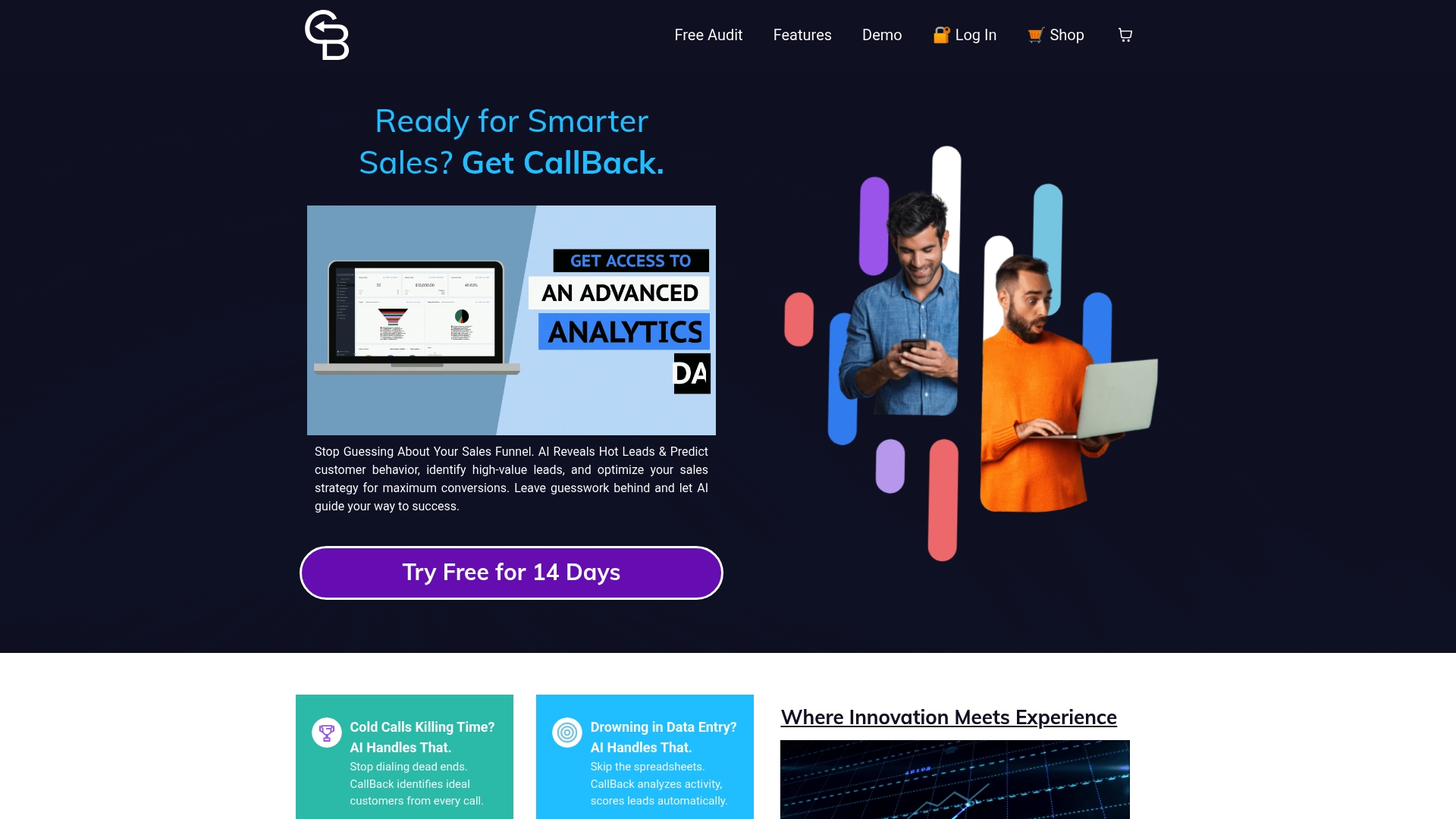
Ready to move beyond manual processes and scale your insurance sales pipeline efficiently Explore how CallBack CRM can transform your lead generation workflows today. Don’t wait — start automating your success now with the ultimate all-in-one insurance sales and marketing platform.
Frequently Asked Questions
How can I effectively set up lead sources for my insurance agency?
To set up lead sources for your insurance agency, identify primary channels such as web forms, referral networks, social media, and digital ads. Start by connecting these sources to your Customer Relationship Management (CRM) system to ensure smooth data transfer and tracking.
What are the key components of automated outreach for insurance leads?
Key components of automated outreach include behavioral trigger-based messaging, personalized communications, and dynamic content based on lead interactions. Map out your customer journey to ensure each communication aligns with the prospect’s specific insurance needs.
How do I create an effective lead scoring model?
Creating an effective lead scoring model involves establishing criteria based on demographic data, engagement levels, and potential purchasing intent. Use a numeric system to assign values to characteristics, prioritizing leads that show higher conversion potential based on their scores.
What steps should I take to test my lead generation workflow?
To test your lead generation workflow, create sample leads that mimic real customer profiles and run controlled scenarios. Validate that data capture, automated routing, and scoring calculations function correctly, while observing possible bottlenecks in the process.
How do I monitor and refine my lead generation workflow?
To monitor and refine your lead generation workflow, establish key performance indicators like conversion rates, response times, and workflow efficiency. Regularly review these metrics to identify areas for improvement and adjust your strategies to enhance overall effectiveness.