

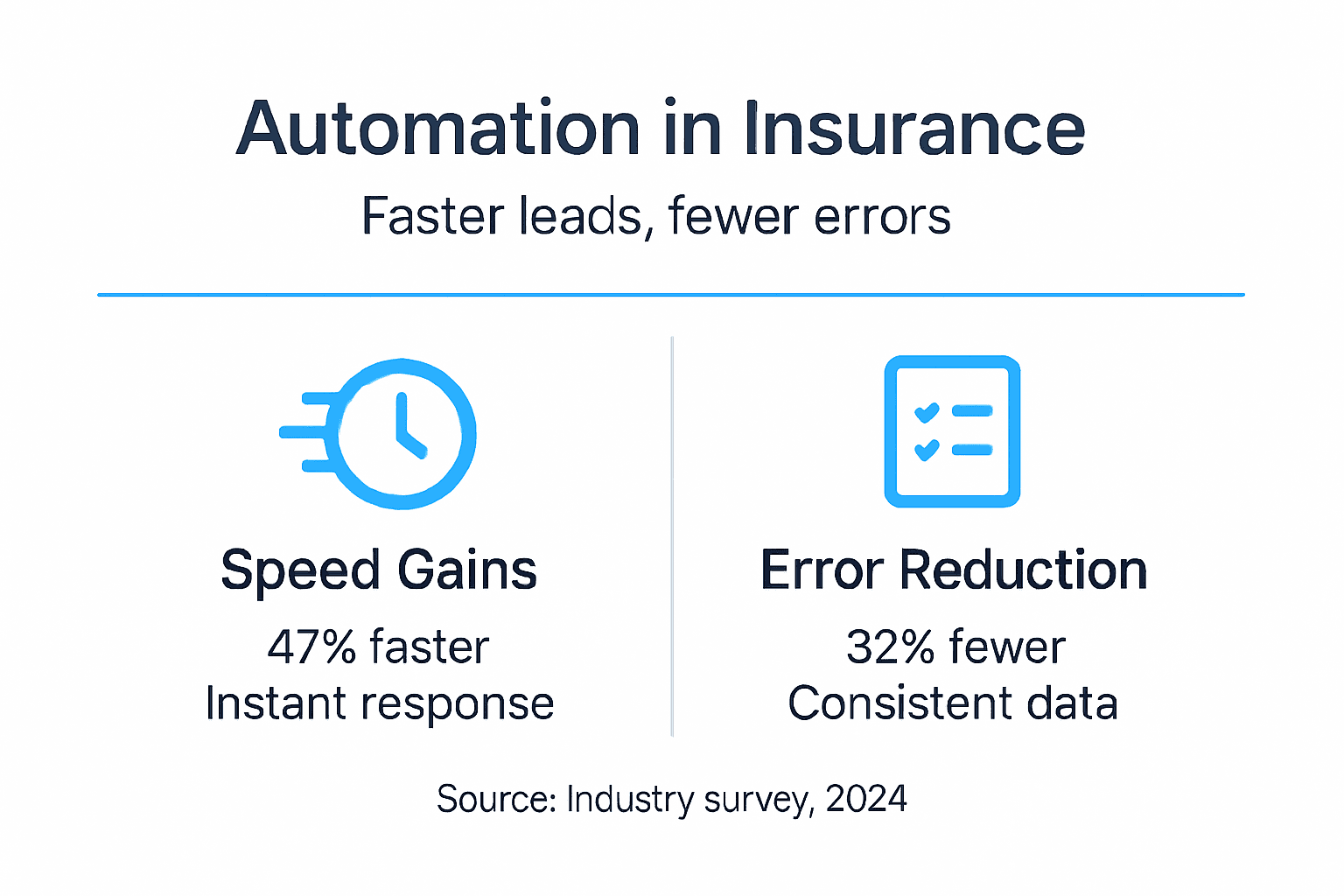
Insurance agencies adopting AI automation report up to 47% faster response times and significantly fewer manual errors. Yet many agents still rely on outdated manual workflows that drain productivity and frustrate customers expecting instant, personalized service. Automation transforms customer engagement by streamlining lead qualification, enabling intelligent outreach, and delivering 24/7 support. This guide explores how AI-powered automation solves critical challenges for insurance agents seeking efficiency and growth in 2026.
Table of Contents
- Why Automate Customer Engagement In Insurance?
- How AI Enables Personalized And Efficient Engagement
- Operational Efficiency Gains From Automation
- Common Misconceptions About Customer Engagement Automation
- Practical Implementation For Insurance Agents
- Empower Your Insurance Agency With CallBack CRM Automation
- Frequently Asked Questions
Key Takeaways
| Point | Details |
|---|---|
| Speed and Accuracy | AI automation delivers 47% faster response times and 32% fewer manual errors, improving lead conversion rates. |
| Personalization | 60% of insurers prioritize personalization, driving 20-30% higher customer satisfaction and retention through tailored messaging. |
| Operational Efficiency | AI handles up to 90% of low-complexity claims automatically, cutting processing times and reducing operational expenses significantly. |
| Human Augmentation | AI supports nuanced reasoning and empathy, enhancing agent capabilities rather than replacing human judgment and creativity. |
| Strategic Adoption | Successful automation requires staff training, integration with existing systems, and continuous refinement based on performance analytics. |
Why Automate Customer Engagement in Insurance?
Customers today demand fast, personalized service across every channel. Manual processes simply cannot keep pace. Automation addresses this gap by eliminating repetitive tasks and enabling agents to focus on high-value interactions that require human insight.
Agencies using AI automation report up to 47% faster response times and 32% fewer manual errors. This speed advantage directly impacts lead conversion. When prospects receive instant, accurate responses, they are far more likely to engage and purchase. Delayed or error-prone manual outreach pushes potential customers toward competitors.
AI-powered automation replaces inefficient cold calling with targeted outreach, reducing cold calls by up to 70%. Instead of burning hours dialing unqualified leads, agents leverage predictive analytics to identify high-value prospects. Intelligent systems score leads based on behavior, demographics, and engagement patterns. This precision targeting maximizes ROI on every outreach effort.
Scalability becomes effortless with automation. You can handle growing lead volumes without hiring additional staff or overwhelming your team. Automated workflows manage follow-ups, appointment scheduling, and policy renewals consistently. This frees agents to focus on complex cases requiring empathy and strategic thinking.
Key benefits include:
- Faster lead qualification through AI-driven scoring and segmentation
- Improved accuracy in data entry and policy administration
- 24/7 customer support via intelligent chatbots
- Consistent follow-up cadence without manual tracking
- Reduced operational costs through streamlined workflows
Exploring AI automation benefits reveals how these tools transform insurance operations. Agencies gain competitive advantage by delivering superior customer experiences while operating more efficiently. Learn more about AI automation tools shaping the industry today.
How AI Enables Personalized and Efficient Engagement
Generative AI creates hyper-personalized messages that resonate with individual customer needs. These systems analyze customer data, policy history, and communication preferences to craft empathetic, contextually relevant responses. Personalization drives engagement far more effectively than generic templates.
60% of insurers identify personalization as a top priority; personalization drives up to 20-30% higher customer satisfaction and retention. When customers feel understood and valued, they stay loyal. AI enables this at scale by customizing every interaction without manual effort.
AI chatbots provide instant, continuous support across all channels. Customers can ask questions, file claims, or update policies anytime without waiting for business hours. These intelligent assistants handle routine inquiries accurately, escalating complex issues to human agents. This hybrid approach balances efficiency with quality.

Omnichannel integration ensures seamless experiences whether customers engage via phone, SMS, email, or chat. AI systems maintain conversation context across channels. A customer can start a claim via chatbot, continue by email, and finalize over the phone without repeating information. This consistency builds trust.
Automation eliminates repetitive tasks like data entry, appointment reminders, and policy renewal notices. Agents reclaim hours previously spent on administrative work. They can dedicate more time to consultative selling, complex underwriting decisions, and building client relationships. This shift elevates job satisfaction and performance.
Benefits of AI-enabled personalization:
- Dynamic content tailored to customer demographics and behavior
- Predictive analytics identifying cross-sell and upsell opportunities
- Sentiment analysis detecting customer frustration for proactive intervention
- Automated journey mapping tracking customer lifecycle stages
- Real-time recommendations guiding agents during live interactions
Pro Tip: Implement AI-driven lead scoring tips to prioritize prospects most likely to convert, maximizing your team’s time and closing rates.
Discover how AI-enabled personalization transforms customer experiences in insurance, driving retention and growth through intelligent, empathetic engagement.
Operational Efficiency Gains from Automation
AI streamlines internal workflows including claims processing, underwriting, and fraud detection. Expense ratios at top 50 insurers declined due to AI and automation, improving operational efficiency notably in 2025. These gains compound over time as systems learn and optimize continuously.
Claims automation delivers dramatic time savings. AI automation can handle up to 90% of low-complexity claims automatically, lowering processing times significantly. Simple claims that once took days now resolve in minutes. Customers receive faster payouts, improving satisfaction and reducing administrative burden.
Underwriting benefits from AI analysis of risk factors, medical records, and behavioral data. Systems assess applications more consistently than manual review, reducing bias and improving accuracy. Faster underwriting means quicker policy issuance and happier customers.
Fraud detection algorithms identify suspicious patterns invisible to human reviewers. AI flags anomalies in real time, preventing fraudulent claims before payment. This protects your bottom line while maintaining legitimate claim approval rates.
| Workflow Stage | Manual Process | Automated Process | Efficiency Gain |
|---|---|---|---|
| Claims Intake | 45 min average | 5 min average | 89% time reduction |
| Underwriting Review | 3-5 days | 2-4 hours | 90% faster |
| Fraud Detection | 15% catch rate | 85% catch rate | 467% improvement |
| Policy Issuance | 7-10 days | 1-2 days | 80% faster |
| Operational Cost | $125 per policy | $42 per policy | 66% cost reduction |
Consistency improves across all operations. AI applies rules uniformly without fatigue or oversight. This reduces errors, compliance risks, and customer disputes. Audit trails automatically document every decision for regulatory review.
Pro Tip: Start with high-volume, low-complexity processes like policy renewals or simple claims to demonstrate ROI quickly, then expand automation to more complex workflows.
Explore sales automation benefits to understand how efficiency gains translate directly to increased revenue and profitability. Learn about operational efficiency improvements driving industry transformation. See how AI claims automation revolutionizes insurance operations in 2026.
Common Misconceptions about Customer Engagement Automation
Many agents fear AI will replace them entirely. This misconception prevents adoption and limits growth. Generative AI supports nuanced reasoning and empathy, augmenting human agents rather than replacing them. AI handles routine tasks while humans provide judgment, creativity, and emotional intelligence that machines cannot replicate.
Another myth suggests cold calling remains effective if agents simply make more calls. Data proves otherwise. Cold calling converts poorly because most contacts are unqualified or uninterested. AI enables targeted, personalized outreach to prospects already showing buying signals. This approach respects customer time while dramatically improving conversion rates.
Some believe automation tools work perfectly out of the box with no training or integration. In reality, successful deployment requires strategic planning, staff education, and system integration. Treating automation as plug-and-play leads to failed implementations and wasted investment.
Misunderstanding AI limitations causes unrealistic expectations. Current AI excels at pattern recognition, data analysis, and routine tasks. It struggles with truly novel situations requiring creative problem-solving or complex ethical judgment. Setting appropriate expectations ensures teams use AI effectively.
Common misconceptions include:
- AI completely replaces human agents
- Cold calling is efficient if volume increases
- Automation requires no training or integration
- AI understands context as well as humans
- One-size-fits-all solutions work for every agency
- Immediate ROI without process adjustments
- Automation eliminates need for customer service skills
Educating your team on realistic AI capabilities prevents disappointment and resistance. Frame automation as empowerment, not replacement. Agents equipped with AI tools become more productive, valuable, and satisfied with their roles.
Understanding sales automation helps dispel myths and set realistic goals. Research on AI-human collaboration demonstrates how technology enhances rather than threatens insurance careers.
Practical Implementation for Insurance Agents
Successful automation begins with honest assessment of current challenges. Identify manual bottlenecks consuming the most time or causing frequent errors. Common pain points include lead follow-up delays, data entry mistakes, and inconsistent customer communication.
Selecting the right platform matters enormously. Choose AI-powered systems designed specifically for insurance workflows. Generic CRM tools lack industry-specific features like policy management, commission tracking, and compliance tools. CallBack CRM offers tailored solutions built for insurance agents.
Implementation steps:
- Audit current processes identifying automation opportunities
- Define clear success metrics like response time and conversion rates
- Select an AI-powered platform with insurance-specific features
- Train staff on human-AI collaboration best practices
- Integrate automation with existing CRM and communication tools
- Implement AI-driven lead scoring and predictive outreach
- Deploy personalized messaging across email, SMS, and chat
- Monitor performance analytics continuously
- Refine workflows based on data and agent feedback
- Scale successful pilots to additional processes
Training ensures your team maximizes automation benefits. Focus on when to rely on AI versus when human judgment is essential. Teach agents to interpret AI recommendations critically rather than following blindly. This develops confident, capable users.
Integration with existing systems prevents data silos and workflow disruption. Your automation platform should connect seamlessly with current CRM, email, calendar, and communication tools. CallBack CRM lead management integrates smoothly with popular insurance software.
Start small with pilot projects before full-scale deployment. Test automation on a specific workflow or team segment. Measure results, gather feedback, and refine. This approach reduces risk and builds organizational confidence.
Common implementation pitfalls to avoid:
- Skipping staff training and change management
- Choosing platforms lacking insurance-specific features
- Automating broken processes instead of fixing them first
- Ignoring data quality and system integration
- Setting unrealistic timelines for ROI
- Failing to monitor and optimize continuously
- Underestimating change resistance
Sales automation benefits become clear when implementation follows proven best practices. Follow this lead generation workflow tutorial for step-by-step guidance. Learn to optimize your lead funnel with automation for maximum conversion.
Empower Your Insurance Agency with CallBack CRM Automation
CallBack CRM delivers AI-powered automation designed specifically for insurance agents seeking efficiency and growth. Our platform streamlines customer engagement through intelligent lead scoring, automated follow-ups, and personalized outreach across all channels.
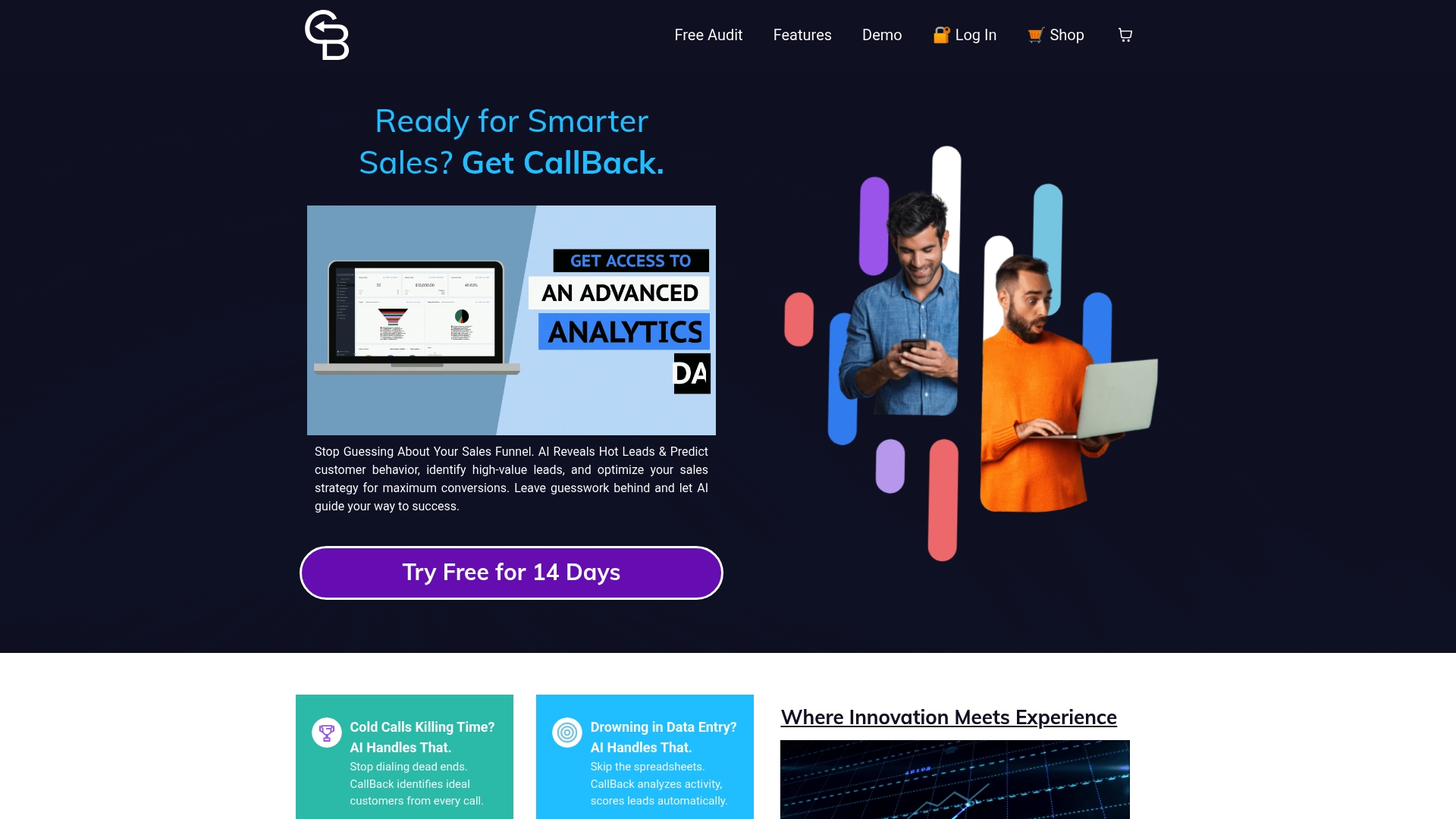
You gain everything needed to modernize operations: CRM management, email and SMS marketing, AI assistants, workflow automation, and mobile access. We replace outdated cold calling with targeted, data-driven strategies that identify high-value prospects and predict customer behavior.
Implementation is straightforward with comprehensive support and training included. Free trials let you experience automation benefits risk-free. Our team guides you through integration, staff training, and optimization to ensure success from day one.
Discover how CallBack CRM features transform insurance operations. Explore our lead management system built for agent productivity. Review sales automation benefits for insurance agents like you achieving remarkable results today.
Frequently Asked Questions
What are the key benefits of automating customer engagement for insurance agents?
Automation delivers 47% faster response times, 32% fewer errors, and significantly improved lead conversion rates. You gain 24/7 customer support, consistent follow-up, and freed capacity to focus on complex, high-value interactions requiring human expertise.
How does AI personalization improve customer satisfaction in insurance?
AI analyzes customer data to create tailored messages addressing individual needs and preferences. This personalization drives 20-30% higher satisfaction and retention because customers feel understood and valued, strengthening loyalty and reducing churn.
Will automation replace insurance agents or make their jobs easier?
Automation augments rather than replaces agents by handling routine tasks like data entry and appointment scheduling. Agents reclaim time for consultative selling, relationship building, and complex problem-solving where human judgment and empathy remain irreplaceable.
What first steps should agents take to implement automation effectively?
Start by identifying manual bottlenecks consuming the most time or causing frequent errors. Select an AI-powered platform with insurance-specific features, train staff thoroughly, and pilot automation on high-volume, low-complexity processes before scaling.
How can automation reduce operational costs in insurance?
AI handles up to 90% of simple claims automatically, cuts processing times by 80%, and reduces cost per policy by 66%. Efficiency gains from streamlined underwriting, fraud detection, and customer service translate directly to improved profitability and competitiveness.