

Manual prospecting and customer outreach drain valuable time from insurance agents who could be closing deals instead. Traditional methods like cold calling and scattered email campaigns no longer deliver the conversion rates needed to compete in 2026. AI-powered customer engagement strategies are transforming how insurance professionals identify high-value leads, personalize outreach, and automate repetitive tasks. This guide walks you through practical AI tools and workflows that streamline lead generation, boost engagement rates, and help you focus on what matters most: building relationships and growing your book of business.
Table of Contents
- Understanding AI-Driven Customer Engagement In Insurance
- Preparing Your Insurance Agency For AI-Powered Strategies
- Implementing AI Tools To Optimize Lead Generation And Outreach
- Verifying Success And Refining AI Engagement Workflows
- Boost Your Insurance Customer Engagement With Callback CRM
- Frequently Asked Questions
Key takeaways
| Point | Details |
|---|---|
| AI automates prospecting | AI tools handle manual lead sourcing and scoring, freeing up to 45% of producer time for relationship building. |
| Personalization drives conversions | Predictive analytics enable targeted outreach based on customer behavior, significantly improving engagement rates. |
| CRM platforms centralize workflows | AI-powered CRM systems connect fragmented tasks into seamless, data-driven engagement processes. |
| Chatbots enhance responsiveness | Voice AI and chatbots provide 24/7 customer service, instant quotes, and identify upselling opportunities. |
| Cultural readiness matters | Successful AI adoption requires organizational willingness to change and cross-department collaboration. |
Understanding AI-driven customer engagement in insurance
Insurance agents face a persistent challenge: prospecting consumes enormous time while delivering inconsistent results. You juggle multiple platforms for lead sourcing, client communication, policy management, and follow-up tasks. Each fragmented step pulls focus away from meaningful client conversations. This inefficiency costs you deals and burns you out.
AI technologies solve this problem by connecting these scattered workflows into intelligent, automated systems. Zywave’s Agentic AI streamlines workflows replacing 15+ manual steps that previously consumed 45% of producer time. Instead of manually researching prospects, scoring leads, and crafting individual outreach messages, AI agents handle these tasks while you focus on high-value activities like consultative selling and relationship nurturing.
The insurance industry is uniquely positioned to benefit from AI adoption. Insurance companies lead AI adoption alongside tech and telecom sectors, with sophisticated data infrastructure and regulatory compliance already in place. However, only 7 to 10% of insurance organizations currently scale AI at the enterprise level. This gap represents a massive opportunity for forward-thinking agents and agencies.
Consider how AI-powered customer engagement transforms your daily workflow:
- AI lead sourcing agents continuously gather enriched prospect data from multiple sources
- Predictive analytics identify which clients are most likely to need additional coverage
- Automated outreach systems send personalized messages at optimal times
- Voice AI analyzes customer calls to surface upselling opportunities
The insurance industry possesses decades of structured data on customer behavior, claims patterns, and risk profiles. This historical intelligence makes AI models exceptionally accurate when predicting customer needs and identifying conversion opportunities.
The shift from manual to AI-driven engagement is not about replacing human judgment. It’s about eliminating time-consuming busywork so you can spend more time doing what you do best: understanding client needs and providing tailored insurance solutions. When AI handles routine data entry, lead research, and initial outreach, you reclaim hours each week to build deeper client relationships and close more policies.
Preparing your insurance agency for AI-powered strategies
Successful AI implementation starts long before you activate any tools. Your data quality determines AI effectiveness. Inconsistent client records, duplicate entries, and incomplete contact information will sabotage even the most sophisticated AI systems. Begin by auditing your existing CRM data. Standardize fields like contact information, policy types, renewal dates, and interaction history. Clean data feeds accurate AI predictions.

Cultural readiness matters just as much as technical preparation. Overcoming AI adoption challenges depends on fostering a culture that embraces change and collaboration across silos. If your team views AI as a threat rather than a tool, adoption will stall. Leadership must communicate clearly: AI handles repetitive tasks so agents can focus on relationship building and strategic selling. Frame AI as your assistant, not your replacement.
Selecting the right AI tools requires understanding your specific workflow pain points. Do you struggle most with lead sourcing, outreach personalization, or follow-up consistency? Different AI solutions address different challenges. Look for platforms that integrate seamlessly with your existing systems. A powerful AI tool that requires manual data transfers between platforms creates new inefficiencies instead of eliminating old ones. Prioritize solutions designed specifically for AI CRM adoption for agents in the insurance industry.
Training your team to leverage AI insights is critical. AI can surface valuable patterns like which prospects are most likely to convert or when clients typically consider additional coverage. But agents must know how to interpret these insights and act on them. Schedule hands-on training sessions where team members practice using AI recommendations to personalize outreach. Role-play scenarios where AI flags a high-value lead and agents must craft compelling, consultative messages.
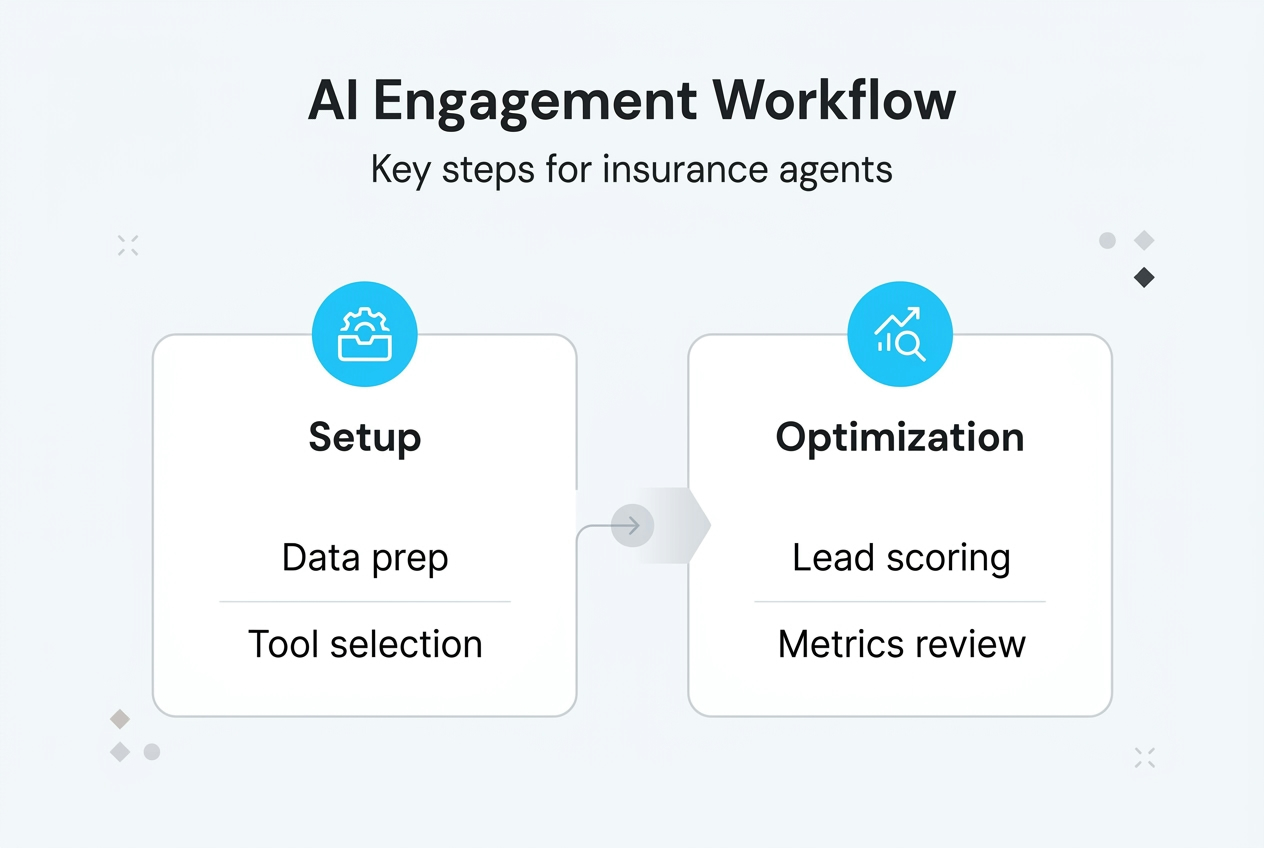
Follow this implementation roadmap:
- Audit and clean your existing CRM data to establish a solid foundation
- Identify your top three workflow pain points that AI could address
- Research AI platforms designed specifically for insurance agents and agencies
- Start with a pilot project using one AI feature with a small team
- Measure results, gather feedback, and refine your approach before scaling
- Gradually expand AI adoption across additional workflows and team members
Pro Tip: Begin your AI journey with lead scoring rather than jumping straight to full automation. Lead scoring delivers quick wins by helping you prioritize outreach efforts, building team confidence in AI recommendations before expanding to more complex workflows.
The agencies that thrive with AI are those that view implementation as an ongoing process, not a one-time project. Technology evolves rapidly. Customer expectations shift. Your AI strategy must adapt continuously based on performance data and emerging capabilities.
Implementing AI tools to optimize lead generation and outreach
AI transforms lead generation from a numbers game into a precision targeting exercise. Traditional prospecting casts a wide net, hoping a small percentage converts. AI-powered lead sourcing agents gather enriched prospect data from multiple sources including business databases, social media activity, industry publications, and public records. Zywave’s AI agents include specialized tools for outreach optimization, research and enrichment, lead sourcing and scoring, and prospect identification.
Lead scoring separates high-potential prospects from time wasters. AI lead scoring increases conversion by identifying the top 20% of leads most likely to purchase. The system evaluates firmographics like company size and industry, behavioral signals like website visits and email opens, engagement patterns across multiple touchpoints, and historical data on similar successful conversions. Instead of treating all leads equally, you focus energy where it delivers maximum return.
| Lead Type | Traditional Approach | AI-Powered Approach |
|---|---|---|
| Cold prospects | Manual research, generic outreach | Automated enrichment, personalized messaging based on behavioral data |
| Warm leads | Periodic check-ins, manual tracking | Predictive engagement timing, AI-recommended next actions |
| Existing clients | Annual renewal reminders | Continuous monitoring for cross-sell opportunities, churn prediction |
| Referrals | Manual follow-up, inconsistent prioritization | Instant scoring, automated nurture sequences |
Personalized outreach at scale becomes possible when AI analyzes prospect data and generates tailored messaging. Generic email blasts get ignored. AI-driven CRM insights reveal which products match each prospect’s needs based on their industry, company size, current coverage gaps, and recent business changes. You can explore comprehensive AI lead generation strategies designed specifically for insurance professionals.
Implement these AI-powered lead generation tactics:
- Deploy AI chatbots on your website to capture visitor information and qualify leads 24/7
- Use predictive analytics to identify existing clients likely to need additional coverage
- Automate follow-up sequences that adapt based on prospect engagement behavior
- Leverage voice AI to analyze sales calls and identify successful conversation patterns
- Integrate AI lead scoring with your CRM to automatically prioritize daily outreach lists
Pro Tip: Combine AI lead scoring with human intuition for best results. Review the top-scored leads each week and apply your professional judgment. AI identifies patterns in data, but you understand nuanced client situations that numbers cannot capture.
AI chatbots handle routine inquiries, provide instant quotes, and schedule appointments without agent involvement. This immediate responsiveness improves customer satisfaction while freeing you to focus on complex client needs. Modern chatbots can answer policy questions, explain coverage options, and even process simple claims. When a prospect visits your website at 11 PM, the chatbot engages them immediately instead of waiting until you check messages the next morning.
The most effective AI marketing tools for insurance integrate lead sourcing, scoring, outreach, and follow-up into one seamless workflow. You wake up to a prioritized list of high-value leads, AI-generated personalized message drafts, and recommended next actions based on each prospect’s recent behavior. This level of automation and intelligence was impossible just a few years ago.
Verifying success and refining AI engagement workflows
Implementing AI tools is just the beginning. Continuous measurement and optimization separate agents who see modest improvements from those who achieve transformational results. Focus on metrics that directly impact your bottom line: lead conversion rates, average deal size, customer retention rates, time from first contact to closed sale, and cost per acquisition.
AI-driven predictive analytics dashboards surface patterns you would miss manually reviewing data. AI-powered CRMs analyze client behavior, predict churn, and recommend personalized outreach to reduce attrition. The system might flag that clients who have not contacted you in 90 days are 3x more likely to switch providers at renewal. Armed with this insight, you can proactively reach out with value-added content before they start shopping competitors.
Predictive analytics identify behavior patterns like claim likelihood to target marketing campaigns effectively. If data shows that businesses in a specific industry typically add cyber liability coverage 18 months after initial policy purchase, you can automate outreach to clients approaching that timeline. This proactive approach positions you as a trusted advisor rather than a reactive salesperson.
| Metric | What to Track | Optimization Action |
|---|---|---|
| Lead conversion rate | Percentage of AI-scored leads that become clients | Adjust scoring criteria, refine outreach messaging |
| Engagement rate | Email opens, link clicks, chatbot interactions | Test different subject lines, content formats, send times |
| Customer churn | Clients who do not renew or switch providers | Implement AI-driven retention campaigns for at-risk clients |
| Average deal size | Revenue per closed policy | Use AI to identify cross-sell opportunities earlier |
Refine your outreach strategies based on AI recommendations and performance patterns. If data shows prospects engage more with video content than text emails, shift your content strategy. If AI identifies that follow-up calls on Tuesday mornings convert 40% better than Friday afternoons, adjust your schedule accordingly. Let data guide decisions rather than relying solely on intuition or industry conventional wisdom.
Regularly update your data inputs to maintain AI accuracy. Client circumstances change constantly. A small business that was not ready for group health coverage six months ago may have hired enough employees to qualify now. Feed your AI systems with fresh data:
- Sync CRM records with the latest client interaction notes
- Update firmographic data as clients grow or change industries
- Incorporate feedback from lost deals to improve lead scoring
- Track which AI-generated messages perform best and refine templates
Voice AI tools analyze customer sentiment from recorded calls and identify upselling opportunities. The technology detects tone, keywords, and conversation patterns that signal buying intent or satisfaction issues. You might discover that clients who mention specific pain points during calls are highly receptive to certain coverage types. This intelligence helps you train your team on effective conversation strategies.
Successful agents treat AI as a continuous learning system. Review your lead funnel optimization metrics monthly. What percentage of leads move from awareness to consideration? Where do prospects drop off? AI can pinpoint exactly which stage needs improvement and suggest specific interventions based on successful patterns from your best-performing campaigns.
Boost your insurance customer engagement with CallBack CRM
You have learned how AI transforms customer engagement from time-consuming manual work into efficient, data-driven processes. Now it’s time to put these strategies into action with a platform built specifically for insurance professionals.
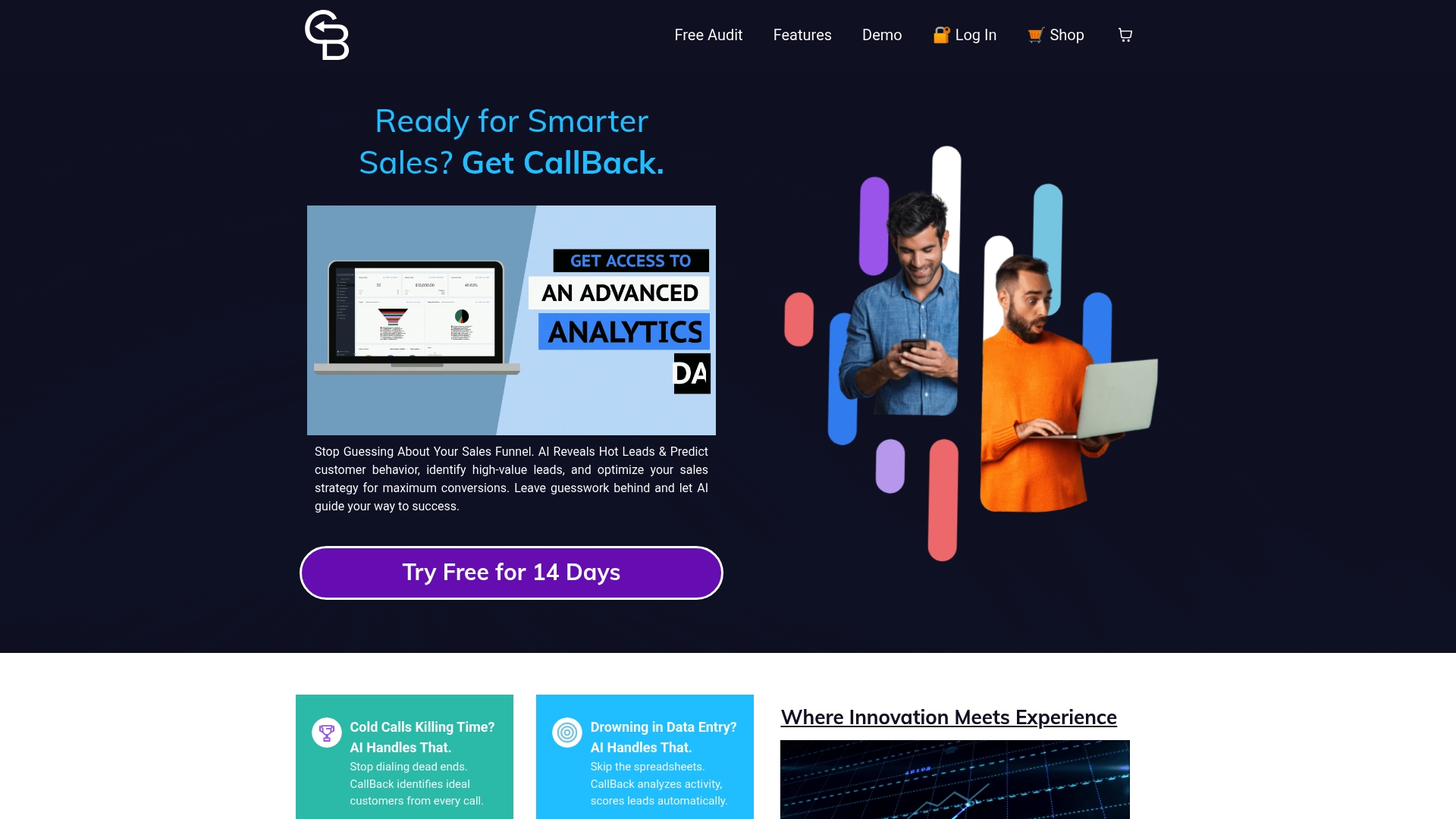
CallBack CRM delivers all the AI-powered tools discussed in this guide within one integrated platform. Our AI-driven features automate lead sourcing, scoring, and personalized outreach so you can focus on closing deals instead of chasing prospects. The lead management system centralizes your entire workflow, from initial contact through policy renewal. Automated SMS marketing campaigns keep you connected with clients at optimal times based on behavioral data. Start your free trial today and experience how AI automation can transform your insurance business.
Frequently asked questions
What are the most effective AI tools for insurance agents?
The most impactful AI tools for insurance agents include lead scoring systems that prioritize high-conversion prospects, chatbots that handle routine inquiries and provide instant quotes, predictive analytics platforms that identify cross-sell opportunities and churn risks, and voice AI that analyzes customer calls for sentiment and buying signals. AI-powered CRM platforms integrate these capabilities into unified workflows, eliminating the need to juggle multiple disconnected tools. The best solution depends on your specific pain points, whether that’s lead generation, client retention, or operational efficiency. Explore comprehensive smart AI marketing tools designed specifically for insurance professionals.
How can AI improve lead scoring accuracy in insurance sales?
AI lead scoring uses firmographics, digital engagement, policy history, and other signals to assign conversion likelihood. The algorithms evaluate company size, recent business activities, claims history, website interactions, email engagement, and social media behavior to predict which prospects are most likely to purchase. This data-driven approach eliminates guesswork and helps agents prioritize outreach efforts on the top 20% of leads that generate 80% of revenue. AI continuously learns from successful conversions, refining scoring criteria over time to improve accuracy.
What challenges do insurance agents face when adopting AI for engagement?
Resistance to change represents the biggest obstacle to AI adoption in insurance agencies. Team members may fear job displacement or feel overwhelmed by new technology. Poor data quality also undermines AI effectiveness since algorithms depend on accurate, consistent information to generate reliable predictions. Overcoming challenges depends on company culture that embraces change and collaboration across silos. Solutions include securing visible leadership support, starting with small pilot projects that deliver quick wins, investing in comprehensive training, and implementing AI incrementally rather than attempting wholesale transformation overnight.
How do AI chatbots enhance customer engagement for insurance agents?
AI-powered chatbots manage routine inquiries, provide instant quotes, and schedule appointments 24/7. This immediate responsiveness dramatically improves customer satisfaction by eliminating wait times for basic questions about coverage options, policy details, or claim status. Chatbots qualify leads by asking relevant questions and collecting contact information before routing high-priority prospects to human agents. They also nurture leads through automated follow-up sequences, keeping your agency top of mind without requiring manual effort. By handling repetitive tasks, chatbots free agents to focus on complex client needs that require human expertise and relationship building.