

Insurance agents in 2026 face mounting pressure to modernize sales processes while maintaining the personal touch that closes deals. AI tools promise faster lead conversion, smarter customer engagement, and streamlined operations, but choosing the right technologies requires a clear understanding of what actually drives results. This guide breaks down proven AI benefits for insurance sales, compares leading tools, and provides actionable steps to adopt AI safely and effectively in your agency.
Table of Contents
- How To Evaluate AI Benefits For Insurance Sales
- Top AI Benefits For Insurance Agents And Brokers
- Comparing AI Tools And Integrations That Benefit Insurance Sales
- Making The Decision: Best Practices For Adopting AI In Insurance Sales
- How CallBack CRM Can Help You Leverage AI In Sales
Key takeaways
| Point | Details |
|---|---|
| AI accelerates sales cycles | Claims and sales processes speed up by up to 30% with AI agents handling routine tasks. |
| Chatbots boost engagement | AI chatbots handle 80% of routine inquiries, cutting response times to seconds. |
| Integration beats silos | Coordinated AI systems across functions yield higher ROI than isolated tools. |
| Human oversight is critical | Over-reliance on AI without review risks errors in complex insurance sales situations. |
| Compliance is non-negotiable | Data privacy regulations like GDPR and CCPA require strict AI governance and security protocols. |
How to evaluate AI benefits for insurance sales
Before investing in AI tools, you need a framework that separates genuine value from marketing hype. The insurance industry has seen enough technology promises fall flat, and AI is no exception without proper evaluation.
Meaningful AI value requires coordination within and across your core sales and operations functions. Siloed AI solutions might automate one task well but create data bottlenecks and integration headaches that offset any gains. Your evaluation framework should prioritize tools that enhance multiple aspects of your sales process simultaneously.
Consider these essential criteria when assessing AI benefits:
- Lead generation impact: Does the tool identify high-quality prospects or just increase volume?
- Customer engagement quality: Will AI interactions feel personalized or robotic to your clients?
- Sales cycle efficiency: Can the technology demonstrably reduce time from lead to close?
- Compliance support: Does it help navigate data privacy regulations or create new risks?
- Integration capability: Will it work seamlessly with your existing CRM and workflow?
The benefits of sales automation multiply when systems share intelligence rather than operate in isolation. An AI chatbot that feeds lead insights to your scoring algorithm, which then triggers personalized email sequences, delivers exponentially more value than three separate tools that never communicate.
Top AI benefits for insurance agents and brokers
The real world impact of AI in insurance sales goes beyond efficiency talking points. One in three insurers runs AI agents in production, and these early adopters report measurable improvements across five key areas.
Faster sales and claims cycles
AI agents accelerate processing by handling routine documentation, data entry, and initial client communications. Agents report up to 30% faster cycle times from initial contact to policy issuance. This speed advantage compounds over hundreds of transactions annually, freeing you to focus on relationship building and complex cases that require human judgment.

Improved lead quality and scoring
Machine learning algorithms analyze behavioral signals, demographic data, and engagement patterns to identify prospects most likely to convert. You stop wasting time on cold leads and focus energy where it counts. These lead generation tips work even better when AI handles the initial qualification and prioritization.
Enhanced customer communication
AI chatbots handle 80% of routine inquiries, answering questions about coverage options, policy details, and claims status in seconds rather than hours. Your clients get instant responses while you handle the conversations that actually require expertise. The result is higher satisfaction scores and more referrals.
Underwriting efficiency gains
Automated risk assessment tools reduce manual review time and minimize human error in data analysis. AI catches inconsistencies and flags potential issues faster than traditional processes. You get more accurate quotes, faster approvals, and fewer costly mistakes that damage client relationships.
Compliance and regulatory support
AI systems help navigate complex data privacy requirements by automating consent tracking, data retention policies, and audit trails. This support becomes critical as regulations tighten and penalties for violations increase. Your agency stays protected while competitors scramble to meet evolving standards.
Pro Tip: Pair AI automation with human review for complex sales situations. AI excels at pattern recognition and speed, but you bring contextual understanding and relationship skills that close high-value deals.
The power of sales automation overview becomes clear when you see these benefits working together rather than in isolation. Each improvement reinforces the others, creating a modernized sales engine that outperforms traditional methods.
Comparing AI tools and integrations that benefit insurance sales
Not all AI tools deliver equal value for insurance sales. Understanding the strengths and limitations of each technology helps you build a stack that actually works.
| Tool Type | Best Use Case | Key Advantage | Main Limitation |
|---|---|---|---|
| AI Chatbots | Initial customer engagement and routine inquiries | Handles 80% of routine questions instantly | Struggles with complex policy discussions requiring nuance |
| Lead Scoring AI | Prospect prioritization and qualification | Identifies high-value leads based on behavioral patterns | Requires clean data and regular model training |
| Underwriting Automation | Risk assessment and quote generation | Reduces errors and speeds approvals by 40% | Needs integration with carrier systems |
| Email Automation | Drip campaigns and follow-up sequences | Personalizes outreach at scale without manual effort | Can feel generic without proper segmentation |
| Predictive Analytics | Customer lifetime value and churn prediction | Forecasts which clients need retention efforts | Demands significant historical data to be accurate |
The comparison reveals a consistent pattern: siloed AI use cases limit returns and slow scaling. A chatbot that cannot share lead data with your scoring algorithm wastes opportunities. An email system disconnected from your CRM sends irrelevant messages that damage relationships.
Integrated platforms that connect these tools deliver superior results. When your chatbot conversation triggers a lead score update, which then activates a personalized email sequence, you create seamless experiences that convert more prospects. The lead funnel optimization becomes exponentially more effective.
Pro Tip: Prioritize tools that integrate natively with your CRM and existing sales workflow. Migration headaches and data silos kill ROI faster than any other factor.
Look for platforms offering AI business automation insights that coordinate intelligence across functions rather than treating each tool as a standalone solution. Your success depends on the system working together, not individual feature lists.
Making the decision: best practices for adopting AI in insurance sales
Adopting AI successfully requires more than selecting the right tools. You need governance, security protocols, and human oversight to avoid the pitfalls that derail AI initiatives.
Start with these essential practices:
- Maintain human review of AI outputs: Over-reliance without oversight risks errors in complex insurance sales where context matters. Review AI-generated quotes, policy recommendations, and client communications before they go out.
- Implement clear governance and controls: Define who can deploy AI tools, what data they can access, and how decisions get escalated. Document your AI usage policies and train your team on boundaries.
- Ensure compliance with data regulations: Data privacy and security require GDPR and CCPA compliance. Audit your AI vendors for security certifications and data handling practices.
- Build feedback loops to monitor outcomes: Track conversion rates, client satisfaction, and error rates continuously. AI models drift over time, and regular monitoring catches problems before they compound.
- Understand vendor AI governance: Before signing contracts, clarify how vendors train models, handle your data, and update algorithms. Transparency here prevents unpleasant surprises later.
“The biggest mistake agencies make is assuming AI tools come with built-in governance. You need explicit clarity on how client data gets used, stored, and protected before deployment, not after a breach forces the conversation.” — Insurance technology consultant
Your AI strategies blog research should focus on real-world implementation stories, not just feature comparisons. Talk to other agents who have adopted similar tools and learn from their mistakes.
Remember that AI amplifies your existing processes, both good and bad. If your lead follow-up system is chaotic, automating it just creates faster chaos. Fix your fundamentals first, then let AI scale what already works.
How CallBack CRM can help you leverage AI in sales
You have learned what AI can do for insurance sales, but implementation remains the challenge. CallBack CRM removes the complexity by delivering integrated AI tools purpose-built for insurance agents.
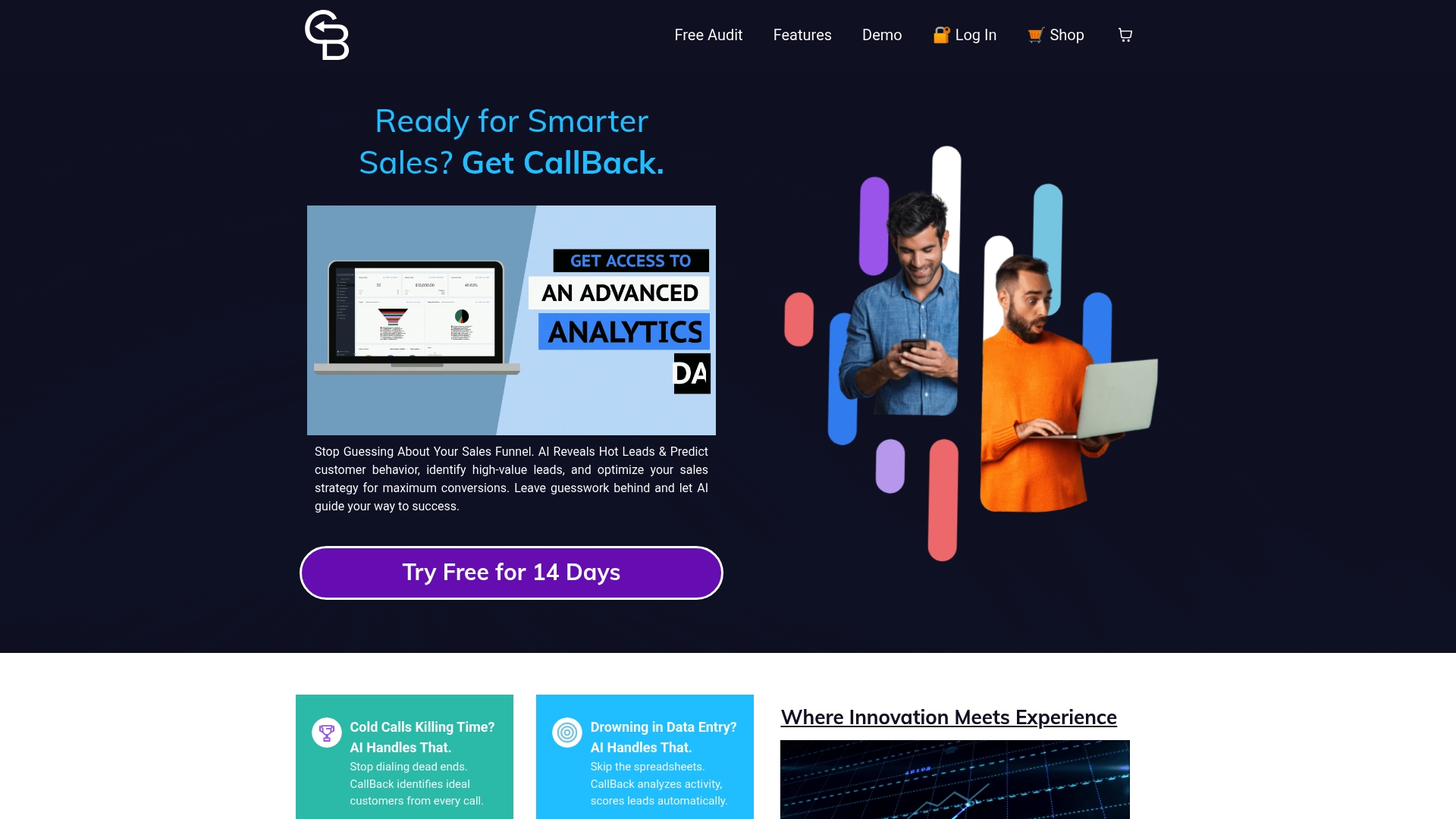
Our platform combines lead management, automation, and customer communication in one system designed specifically for your workflow. The CallBack CRM features include AI-powered lead scoring, chatbots that qualify prospects 24/7, and automated follow-up sequences that nurture relationships without manual effort. Unlike generic sales tools, our automation features understand insurance sales cycles and compliance requirements.
The CRM management features integrate seamlessly with AI assistants that handle routine tasks while you focus on high-value conversations. You get the benefits of enterprise-level AI without the enterprise-level complexity or cost.
FAQ
What are the main benefits of AI for insurance sales?
AI accelerates claims and sales cycles by up to 30%, improves lead quality through predictive scoring, and enhances customer interaction with instant chatbot responses. It also boosts underwriting efficiency and helps maintain compliance with evolving data regulations.
How can insurance agents ensure safe and effective use of AI?
Use AI to augment human judgment, not replace it, especially in complex sales situations requiring contextual understanding. Implement clear governance policies, ensure GDPR and CCPA compliance, and maintain human review of AI-generated outputs before client delivery.
What types of AI tools are most useful for insurance sales?
Chatbots handle routine inquiries and qualify leads around the clock. Lead scoring algorithms prioritize high-potential prospects based on behavioral data. Underwriting automation improves quote accuracy and speeds approvals while reducing manual errors.
Do I need to replace my existing CRM to use AI tools?
Not necessarily, but integration capability matters significantly. AI tools that cannot share data with your CRM create silos that limit returns. Look for platforms offering native CRM integration or all-in-one solutions that combine both functions.
How long does it take to see ROI from AI adoption in insurance sales?
Most agencies report measurable improvements within 60 to 90 days of proper implementation. Initial gains appear in response times and lead qualification efficiency, while sales cycle improvements and conversion rate increases compound over several months as AI models learn from your data.