

Every insurance agent knows that finding quality leads and converting them takes more than hard work. Generic forms waste time, slow responses cost you clients, and chasing low-potential prospects eats up your best hours. You need smarter tools that adapt to your needs and help you close deals faster.
The right AI-powered solutions give you an edge by capturing rich data, delivering instant support, and ranking leads by real buying signals—not just gut feeling. These modern strategies transform the way you attract, qualify, and engage with prospects, making your pipeline stronger and your workflow more efficient.
Get ready to discover practical, actionable ways to bring more high-value clients into your agency. You’ll learn proven methods—like using dynamic forms and predictive scoring—that insurance professionals are already leveraging to build better relationships and grow their book of business.
Table of Contents
- 1. Automate Lead Capture With AI-Powered Forms
- 2. Use AI Chatbots For Instant Customer Support
- 3. Leverage Predictive Lead Scoring For High-Value Clients
- 4. Streamline Campaigns With AI Email And SMS Tools
- 5. Enhance Social Media Management Through Automation
- 6. Personalize Customer Outreach Using AI Insights
Quick Summary
| Takeaway | Explanation |
|---|---|
| 1. Utilize AI Forms for Better Leads | AI-powered forms adapt in real time, personalizing questions to reduce abandonment and improve lead quality. |
| 2. Deploy AI Chatbots for 24/7 Support | Chatbots provide immediate answers to common inquiries, freeing agents for more complex tasks and enhancing customer experience. |
| 3. Implement Predictive Lead Scoring | Use machine learning to prioritize high-value leads based on historical data, improving sales efficiency and conversion rates. |
| 4. Automate Personalized Campaigns | AI tools streamline email and SMS outreach, delivering tailored messages at optimal times for each prospect, enhancing engagement. |
| 5. Personalize Communication with AI Insights | Tailored messaging based on individual behaviors significantly boosts response rates and customer satisfaction, fostering stronger relationships. |
1. Automate Lead Capture with AI-Powered Forms
Traditional contact forms are static, one-size-fits-all dead ends. AI-powered forms adapt in real time, learning what questions resonate with your prospects and adjusting on the fly.
Unlike standard forms that collect generic information, AI-powered lead generation forms use intelligence to infer purchase intent and capture actionable signals. This means you get better quality leads, not just more leads.
How AI-powered forms transform lead capture:
- Reduce form abandonment by personalizing questions based on visitor behavior
- Identify high-intent prospects through real-time data analysis and pattern recognition
- Qualify leads automatically before they even hit your inbox
- Adapt questions dynamically to match each visitor’s stage in the buyer journey
- Capture intent signals that traditional forms simply miss
When a prospect lands on your form, an AI-powered system assesses their behavior patterns and adjusts the questions shown. Maybe it skips questions irrelevant to their profile. Maybe it asks deeper follow-ups for serious prospects. The form becomes smarter with every interaction.
Your forms should work as hard as you do. AI-powered forms don’t just collect data, they qualify leads and predict conversion likelihood before your first conversation.
Here’s what makes this different for insurance agents. Your prospects often have specific coverage needs, time constraints, and budget limitations. A traditional form asks everyone the same five generic questions. An AI form recognizes when someone is shopping for commercial coverage versus personal auto, and tailors its approach accordingly.
You can also integrate these forms with your existing systems to automatically score leads, segment them by type, and route them to the right agent or team member. No manual data entry. No wasted follow-ups on unqualified leads. Just clean, qualified prospects ready for conversation.
The result? Studies show AI-enhanced forms reduce abandonment rates significantly while improving the quality of captured data. You spend less time chasing bad leads and more time converting genuine prospects.
Pro tip: Set up your AI forms to ask one qualifying question early (like coverage type or urgency level) so the system can immediately segment prospects and prepare your team with the right context before they call.
2. Use AI Chatbots for Instant Customer Support
Your phone rings at 11 PM on a Sunday. A prospect has a quick question about homeowners insurance. You’re offline. They give up and call your competitor instead.
AI chatbots eliminate this lost opportunity by providing instant answers around the clock. These bots simulate human conversation using natural language processing, handling routine questions while you sleep, work with other clients, or tackle complex cases that demand your personal attention.
Your customers expect fast responses. AI-powered customer service chatbots reduce wait times dramatically and handle frequent inquiries automatically. A prospect asking about coverage types, policy details, or claims processes gets immediate answers without waiting for your availability.
Here’s what an AI chatbot does for your agency:
- Answers FAQs instantly without human intervention
- Qualifies leads by gathering basic information before they contact you
- Handles multiple conversations simultaneously across multiple channels
- Frees your team to focus on complex cases and relationship building
- Provides personalized responses based on customer history and preferences
- Works 24/7 without breaks, weekends, or vacation time
Instead of your team fielding repetitive questions, the chatbot handles troubleshooting and common requests. A customer wondering about claim status, renewal dates, or coverage limits gets real-time answers. Meanwhile, your agents spend their time closing deals and managing relationships.
AI chatbots don’t replace your human touch, they amplify it. They handle the routine so you can focus on what actually builds relationships and revenue.
For insurance agents specifically, a chatbot can ask qualifying questions that help you understand if someone needs personal auto, commercial coverage, life insurance, or multiple product lines. This pre-qualification saves you hours of discovery calls on unqualified leads.
The technology also learns from interactions, becoming smarter over time. Each conversation improves how the bot responds to similar situations in the future.
Implementation is straightforward. Your chatbot integrates with your existing website and messaging platforms, providing consistent support everywhere your customers reach out.
Pro tip: Train your chatbot to recognize when a prospect is highly qualified or asking something complex, then automatically route that conversation to you with full context instead of forcing them to repeat information.
3. Leverage Predictive Lead Scoring for High-Value Clients
Not every lead deserves the same attention. Some prospects are ready to buy today. Others are just browsing. Traditional scoring methods treat them equally, wasting your time on tire-kickers while hot prospects slip away.
Predictive lead scoring uses machine learning to analyze historical data and identify which leads are most likely to convert. Instead of guessing, you get data-driven rankings that show you exactly who to pursue first.
The system examines patterns from your past successful sales. It looks at factors like lead source, engagement behavior, company size, industry, response timing, and content interactions. Predictive lead scoring models use machine learning classifiers to rank prospects by conversion likelihood, enabling better resource allocation and sales focus.
Here’s what changes when you implement predictive scoring:
- Your top salespeople focus exclusively on high-probability prospects
- You stop wasting hours on leads with minimal conversion potential
- Marketing and sales teams finally align on what actually matters
- You close deals faster because you prioritize ready-to-buy prospects
- Your conversion rates improve significantly as a result of better targeting
For insurance agents, this is transformative. Maybe your data shows that prospects from referrals convert at 40% while cold leads convert at 8%. The system learns this pattern and automatically scores referral leads higher. Or perhaps prospects who engage with your life insurance content within 48 hours are your best converters. The algorithm identifies these patterns instantly.
You’re no longer making gut-feel decisions about who to call. The system ranks every incoming lead, and you work your list strategically from highest to lowest probability.
Predictive scoring doesn’t eliminate bad leads, it reveals which leads are worth your time right now. That distinction changes everything about your sales efficiency.
The beauty is that this data-driven approach actually replaces outdated manual scoring methods. Where old systems relied on guesswork and arbitrary point assignments, predictive models learn from real outcomes and continuously improve accuracy.
Implementation starts by feeding the system your historical customer data. Over time, the model becomes more accurate as it learns what actually correlates with your conversions.
Pro tip: Have your system automatically route high-scoring leads to your experienced agents and use medium-scoring leads as training opportunities for newer team members, maximizing both immediate revenue and long-term capability.
4. Streamline Campaigns with AI Email and SMS Tools
You spend hours crafting the perfect email campaign, then send it to everyone on your list at the same time. Some read it immediately. Others won’t see it for days. Many delete it without opening.
AI-powered email and SMS tools change this by automating personalized outreach at scale. Instead of one-size-fits-all messaging, the system sends the right message to the right person at the right time based on their behavior and preferences.
Marketing automation tools leveraging AI enhance personalized messaging by utilizing behavior-based triggers and integrating email and SMS channels. These systems optimize timing, tailor content to customer personas, and increase campaign effectiveness significantly.
Here’s what AI-driven campaign tools deliver:
- Send messages triggered by specific actions, not by your schedule
- Personalize content based on customer history, interests, and past interactions
- Optimize send times so your message hits their inbox when they’re most likely to engage
- Reduce message fatigue by respecting frequency caps and preference settings
- Track engagement automatically and adjust future campaigns based on real data
- Integrate email and SMS seamlessly so prospects receive cohesive messages across channels
For insurance agents, this means a prospect who downloads your homeowners coverage guide automatically receives a follow-up email the next day, then an SMS reminder three days later if they haven’t responded. No manual work. No guessing about timing. The system handles it.
Maybe your data shows that prospects prefer SMS for quick questions but email for detailed information. The AI learns this pattern and routes communications accordingly for each individual.
Automation doesn’t mean generic. AI makes personalization at scale actually possible, not just a nice idea.
Another advantage is that these tools reduce the burden on your team. Instead of manually sending emails to different segments and scheduling follow-ups, your system handles the entire sequence automatically while you focus on high-value conversations.
You also gain visibility into what’s working. AI systems provide detailed analytics showing open rates, click rates, conversion rates by segment, and which messages drive the most valuable responses.
Pro tip: Set up behavior-based triggers for your most common prospect scenarios, like sending a commercial coverage brochure automatically when someone visits that page, then follow up with a call invitation email 48 hours later.
5. Enhance Social Media Management Through Automation
Managing social media across multiple platforms takes enormous time. You’re posting on Facebook, then LinkedIn, then Instagram, then Twitter. Each platform has different posting times and audience preferences. Most of your posts probably go out at the wrong time for maximum engagement.
AI-powered social media automation handles the heavy lifting. The system analyzes when your audience is most active, what content performs best, and automatically posts at optimal times across all your channels. You gain back hours every week while actually increasing engagement.
What AI social media tools do for your agency:
- Schedule posts in advance across multiple platforms from one dashboard
- Analyze sentiment automatically to understand how audiences react to your messaging
- Detect trends in real time so you can capitalize on relevant conversations
- Optimize posting times based on when your specific audience is most engaged
- Monitor mentions and comments automatically for instant response opportunities
- Improve content targeting by understanding audience behavior patterns
AI automation improves social media management through content moderation, sentiment analysis, trend prediction, and user behavior analysis. These tools increase engagement and marketing effectiveness dramatically.
For insurance agents, this is powerful. You post an article about homeowners coverage tips on Monday morning when prospects are scrolling. The system automatically reposts it on Wednesday when engagement typically peaks. You’re getting maximum visibility without lifting a finger.
You can also track conversations about insurance topics in your area. If a major weather event happens, the system alerts you so you can join relevant discussions with helpful information. Your competition isn’t doing this because they’re manually checking social feeds.
Automation gives you capacity for strategy. When the system handles scheduling and monitoring, you can focus on authentic engagement and relationship building.
The analytics piece is equally valuable. You see exactly which topics, formats, and posting times drive the most leads and engagement. Maybe video content about claims processes gets 300% more interaction than static images. The data shows you what works so you can do more of it.
Most importantly, automation eliminates the friction of social media management. You’re not choosing between managing social or prospecting. You do both simultaneously because the system handles the operational work.
Pro tip: Set up automated monitoring for keywords like “insurance,” “claim,” or “coverage” plus your city name, so you get alerts whenever someone in your area mentions these topics and can respond helpfully within minutes.
6. Personalize Customer Outreach Using AI Insights
You have a hundred prospects in your pipeline. You send them all the same email about life insurance. Some ignore it. Others read it but aren’t interested. A few respond because it’s relevant to them. Generic outreach wastes time and money.
AI-powered personalization changes this by analyzing each prospect’s unique situation and tailoring your message accordingly. Instead of one email for everyone, you send hundreds of different emails, each addressing what that specific person cares about most.
How AI personalization works in practice:
The system analyzes behavioral patterns, engagement history, and contextual signals about each prospect. Maybe one person frequently visits your commercial coverage pages. Another browsed your retirement planning content. The AI recognizes these patterns and adapts messaging to match each person’s demonstrated interests.
AI-powered personalization analyzes behavioral patterns to predict customer needs dynamically, adapting messaging in real-time to optimize relevance, timing, and channel. This approach transcends traditional demographic segmentation and delivers genuinely relevant outreach.
For insurance agents, this is transformative. A 35-year-old with a young family might receive messaging focused on life insurance protection. A 58-year-old business owner sees content about succession planning and key person insurance. Same agent, completely different conversations based on what actually matters to each person.
Here’s what personalized outreach delivers:
- Higher response rates because your message addresses what they actually need
- Shorter sales cycles when prospects feel understood from the first contact
- Better conversion rates when follow-ups match their demonstrated interests
- Improved customer satisfaction when communications feel relevant, not generic
- Reduced unsubscribe rates because your messages provide genuine value
- Stronger relationships built on understanding, not hard selling
Personalization stops being creepy the moment it becomes helpful. When your prospect realizes you understand their situation, they trust you more.
The technology combines your CRM data with external signals and engagement history. It identifies patterns humans would take weeks to discover manually. Someone who downloaded three articles about business insurance is signaling a clear interest. The system catches that immediately.
You’re also freed from decision fatigue. Instead of agonizing about what to say to each prospect, the AI generates personalized content suggestions. Your job shifts from crafting perfect generic messages to refining and approving personalized outreach.
This approach also works for lead generation strategies by ensuring new prospects receive relevant initial contact based on how they entered your funnel.
Pro tip: Start by identifying your top three prospect segments, then have the AI generate personalized messaging templates for each. Test which approaches drive the highest response rates, then expand personalization to more specific segments based on what works.
Below is a comprehensive table summarizing the innovative strategies and technologies highlighted in the article to enhance customer engagement and increase operational efficiency.
| Strategy | Implementation | Result |
|---|---|---|
| AI-Powered Forms | Real-time adaptive forms that learn from prospects’ behaviors to provide tailored questions. | Improved lead quality and reduced abandonment rates. |
| AI Chatbots for Support | 24/7 automated customer service capable of answering FAQs and qualifying leads through conversation. | Faster customer response times and increased agent efficiency. |
| Predictive Lead Scoring | Utilizing machine learning to analyze historical data and rank leads by conversion likelihood. | Focus on high-probability leads, enhancing sales productivity and conversion rates. |
| AI Email and SMS Tools | Behavior-based trigger systems for personalized and optimized outreach across channels. | Increased engagement and more effective customer communication. |
| Social Media Automation | Leveraging AI to schedule, monitor, and optimize social media postings and audience interactions. | Time-saving automation and improved social media performance. |
| Personalized Outreach | AI analyzes customer data to tailor communications, focusing on relevancy and individual needs. | Enhanced customer satisfaction and higher response rates with more meaningful interactions. |
This table offers a concise overview of how applying these strategies can transform an organization’s engagement and operational approach.
Revolutionize Your Insurance Agency with AI-Powered Automation
The article highlights how AI marketing tools solve critical challenges insurance agents face today, such as lead qualification, personalized customer outreach, and campaign automation. If you are tired of generic follow-ups, wasted time chasing low-quality leads, and manual social media posting that drains your energy AI-driven solutions are your key to transforming sales and marketing efforts. CallBack CRM is designed specifically to tackle these pain points with a robust all-in-one platform created for insurance professionals seeking smarter ways to engage prospects and close deals faster.
With CallBack CRM you can leverage predictive lead scoring, automate personalized email and SMS campaigns, use AI assistants for instant customer support, and streamline social media management — all in one place tailored to insurance agents. This means less manual work and more time focused on building real relationships with high-value clients. Every feature is built to replace outdated sales tactics with intelligent automation that adapts to each prospect’s unique needs and behaviors.
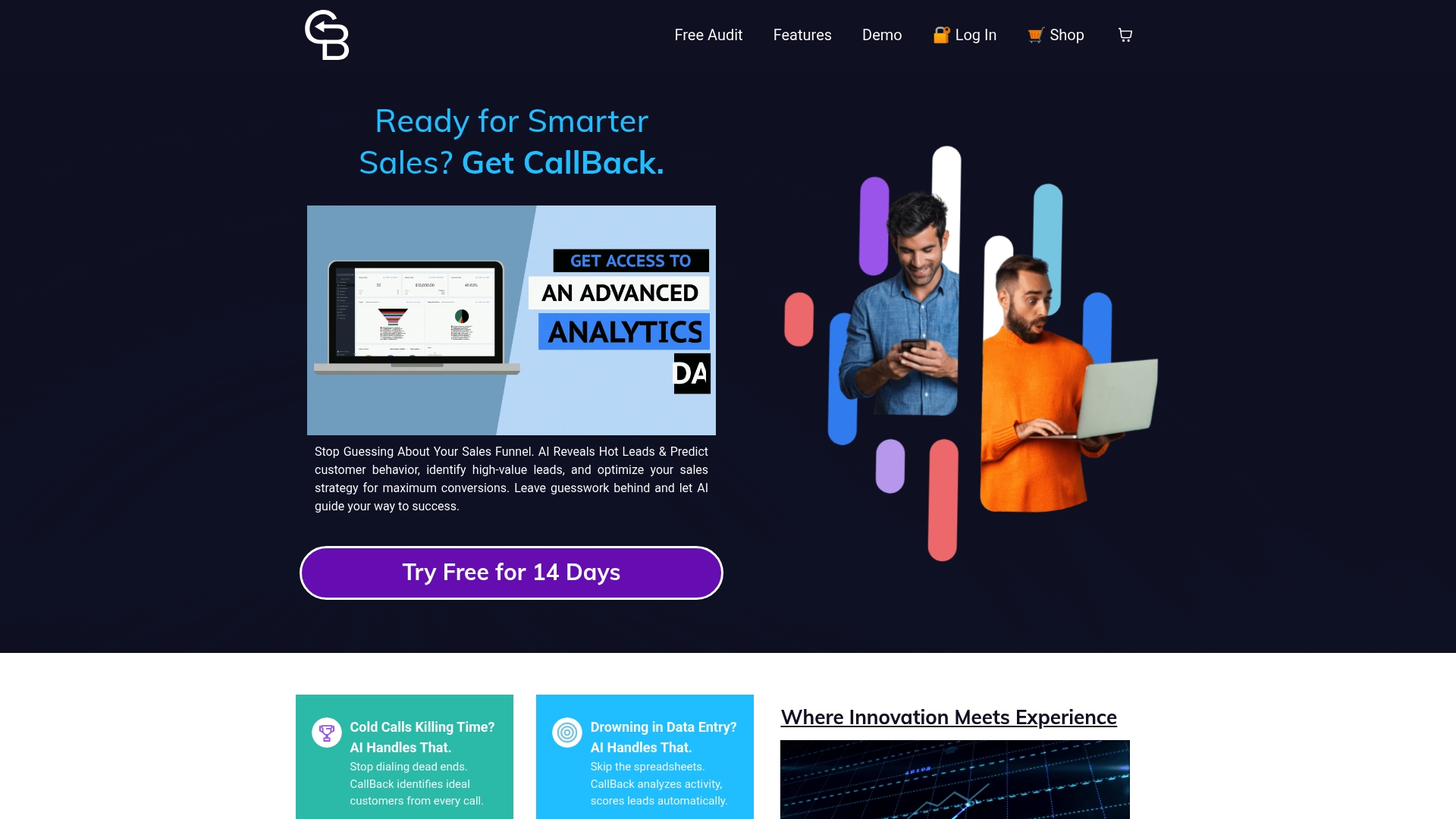
Ready to stop wasting hours on unqualified leads and generic outreach? Explore how CallBack CRM empowers insurance agents to harness AI marketing tools for measurable growth right now. Visit CallBack CRM to take the first step toward smarter, more effective customer engagement and lead management. Learn more about how our email and SMS marketing automation and AI-powered sales workflows can transform your agency today.
Frequently Asked Questions
What are AI-powered lead capture forms and how do they benefit agents?
AI-powered lead capture forms are dynamic tools that adapt their questions based on a prospect’s behavior. They provide personalized experiences that lead to higher-quality leads and reduced form abandonment. Implement these forms to automatically qualify prospects and increase conversion rates by delivering relevant questions tailored to each visitor.
How can AI chatbots improve customer support for agents?
AI chatbots provide instant answers to commonly asked questions, allowing agents to offer 24/7 support without being online. By integrating a chatbot into your systems, you can handle multiple inquiries simultaneously, freeing your team to focus on more complex cases and relationship building. Set up your chatbot to cover frequently asked questions to enhance customer satisfaction and engagement.
What is predictive lead scoring and how does it help agents prioritize prospects?
Predictive lead scoring uses machine learning to analyze historical data and rank leads based on their likelihood to convert. By implementing this system, agents can focus their efforts on high-probability prospects rather than wasting time on less promising leads. Start by feeding your system with past data to improve accuracy and refine your approach continuously.
How can automated email and SMS tools increase engagement with prospects?
Automated email and SMS tools send personalized messages based on individual behaviors and preferences, maximizing engagement. By implementing behavior-based triggers, you can ensure timely and relevant communication with prospects, such as sending follow-up messages shortly after they download resources. Use these tools to increase open rates and conversion rates effectively.
What advantages do AI-powered social media tools offer for agents?
AI-powered social media tools help agents automate posting schedules, ensuring content reaches audiences optimally. These tools analyze audience engagement patterns to deliver content when it’s most likely to be seen, improving visibility and interaction. Leverage these tools to create an efficient content strategy while saving time on social media management.
How can agents personalize their outreach using AI insights?
Agents can use AI insights to tailor their messaging based on each prospect’s behavior and interests, ensuring relevance in their communications. By analyzing engagement history, AI systems help identify what each prospect cares about most, making outreach more effective. Start by segmenting your prospects and generating customized email templates for each group to enhance response rates.