

Click to call lets a website visitor or ad viewer start a live phone conversation with one tap, with no number to copy or dial manually. It works on a tel: link, a browser-based call, or a request-a-call bridge, and it shows up on websites, ads, and CRM dialers. The result is a faster path from interest to conversation, which matters most when a lead is ready to talk now.
TL;DR:
- A tel: link opens the phone dialer on mobile, but desktop visitors need a paired calling app; WebRTC keeps calls inside the browser.
- Google Ads logs connected calls immediately, but counts conversions only after a threshold, commonly about 30 seconds; credit traces back to the ad click.
- A tel: link suits a small site, while a CRM dialer helps growing teams connect call records, context, and later outreach.
- Manual calls to Google forwarding numbers count by campaign, not keyword or ad click; CRM logging ties calls to contacts and sources.
- Automated business callbacks require telemarketing safeguards: disclosures, documented consent for prerecorded messages, Do Not Call checks, retained call logs, and a clear opt out.
Table of Contents
- How click to call actually works behind the tap
- Why sales, support, and recruiting teams rely on click to call
- Setting up tel: links, CRM dialers, and ad call tracking
- Tracking the metrics that show if click to call is working
- Staying compliant when calls are automated or unsolicited
- How CallBack CRM brings click to call into one workflow
- When a simple link is enough, and when it isn’t
- Put click to call to work with CallBack CRM
- FAQ
- Sources
How click to call actually works behind the tap
Click to call covers a few distinct setups, and the right one depends on your traffic and your team.
The simplest is a tel: link, a piece of HTML that tells a phone’s operating system to open the dialer with a number already filled in. On mobile, tapping it launches the native phone app. On desktop, it depends on whether the computer has a calling app paired to it; without one, nothing happens. The HTML anchor element reference recommends using a real tel: href rather than a placeholder link, since assistive technology and browsers both depend on a working address to make the link meaningful.
WebRTC-based click to call runs the call inside the browser itself, over data rather than the phone network. A visitor clicks a button, grants microphone access, and talks without leaving the page. This suits support widgets and sales chat tools where staying on-site matters.
Request-a-call, or bridge, implementations ask for a visitor’s number, then place two outbound calls, one to the visitor and one to the business, and connect them once both pick up. According to Wikipedia’s overview of click-to-call, this model is common for call centers and lead-generation forms, though bridged calls can cost more to run since the provider briefly holds a three-way connection before dropping the extra leg.

Why sales, support, and recruiting teams rely on click to call
Each implementation maps to a different business goal.
-
Sales teams use click to call on landing pages and ad extensions to catch leads while interest is highest, with practical CTA design and placement advice for improving click-to-call prominence, since a visitor who has to copy a number and switch apps is more likely to abandon the attempt.
-
Customer service teams add click-to-call buttons to help pages and order confirmations so frustrated customers can skip the search for a support line.
-
Recruiters and field teams use it in job postings and scheduling tools, letting candidates or field staff reach a coordinator directly from a mobile screen.
-
Marketers pair click to call with paid ads, since a call button in an ad removes a step between seeing an offer and discussing it.
Google Ads call assets let advertisers show a phone number or call button directly in an ad, and when call reporting is turned on, Google assigns a forwarding number so the advertiser can see call starts, durations, and conversions based on a chosen duration threshold, according to Google’s documentation on call assets. A short call that never passes the threshold still counts as a call, just not a conversion, which matters when judging whether an ad is actually generating real conversations.
Setting up tel: links, CRM dialers, and ad call tracking
Getting click to call working takes a few concrete steps, whether you’re editing a page by hand or configuring a CRM.
- Add a basic tel: link to your site using
<a href="tel:+15551234567">Call us</a>, placed in the header, a sticky mobile bar, or near a contact form where intent is highest. - Connect a CRM softphone or click-to-dial tool so outbound and inbound calls log automatically against a contact record, instead of relying on a rep to type notes after hanging up.
- Add a browser extension or browser-to-mobile pairing for desktop users, so clicking a number on a screen rings a paired mobile phone or softphone instead of doing nothing.
- Turn on Google Ads call assets and call reporting inside the campaign settings to get call-level data tied to the ads that generated them, following the setup steps in Google’s call assets guide.
Pro Tip: Place your click-to-call button above the fold on mobile pages, since a visitor who has to scroll to find it is more likely to leave instead.
A CRM-integrated dialer also solves a problem plain tel: links can’t: context. When a call comes in through a system tied to your contact database, the rep sees prior notes, past calls, and deal stage before saying hello, which a bare phone link never provides.
Tracking the metrics that show if click to call is working
Not every click that connects turns into a result worth counting, so a few distinct metrics matter.
- Calls versus call conversions: a call is logged the moment it connects, but a call conversion only counts once it passes a duration threshold you set, commonly around 30 seconds, per Google’s call reporting documentation.
- Forwarding number behavior: Google assigns a forwarding number when call reporting is active, and calls are reported on the date they happen while conversions attribute back to the original ad-click date, per the same source.
- Core KPIs to watch: calls per visit, average call duration, and conversion rate from calls to sales or resolved issues, each pulled from CRM or ad reporting dashboards.
Manually dialed calls to a Google forwarding number are counted at the campaign level but can’t be tied to a specific keyword or ad click, a gap that CRM call logging helps close by attaching every call to a known contact and source regardless of how it was dialed, according to Google’s guide on analyzing call reporting data. For a deeper look at connecting ad spend to actual conversions, see our guide to ad campaign tracking.
Staying compliant when calls are automated or unsolicited
Request-a-call and automated callback tools can cross into telemarketing rules once a call is placed on the business’s initiative rather than purely at the visitor’s request. The FTC’s Telemarketing Sales Rule guidance explains that outbound calls resulting from these tools must follow disclosure and consent requirements, including documented consent for prerecorded messages and recordkeeping for established business relationships and call lists.
Practical safeguards include checking numbers against the Do Not Call registry before outbound campaigns, keeping consent records for any automated or prerecorded contact, retaining call logs for the periods your compliance policy requires, and giving every contact a clear way to opt out. For campaigns that include voicemail drops alongside calls, our TCPA checklist for ringless voicemail covers related consent requirements in more detail.
How CallBack CRM brings click to call into one workflow
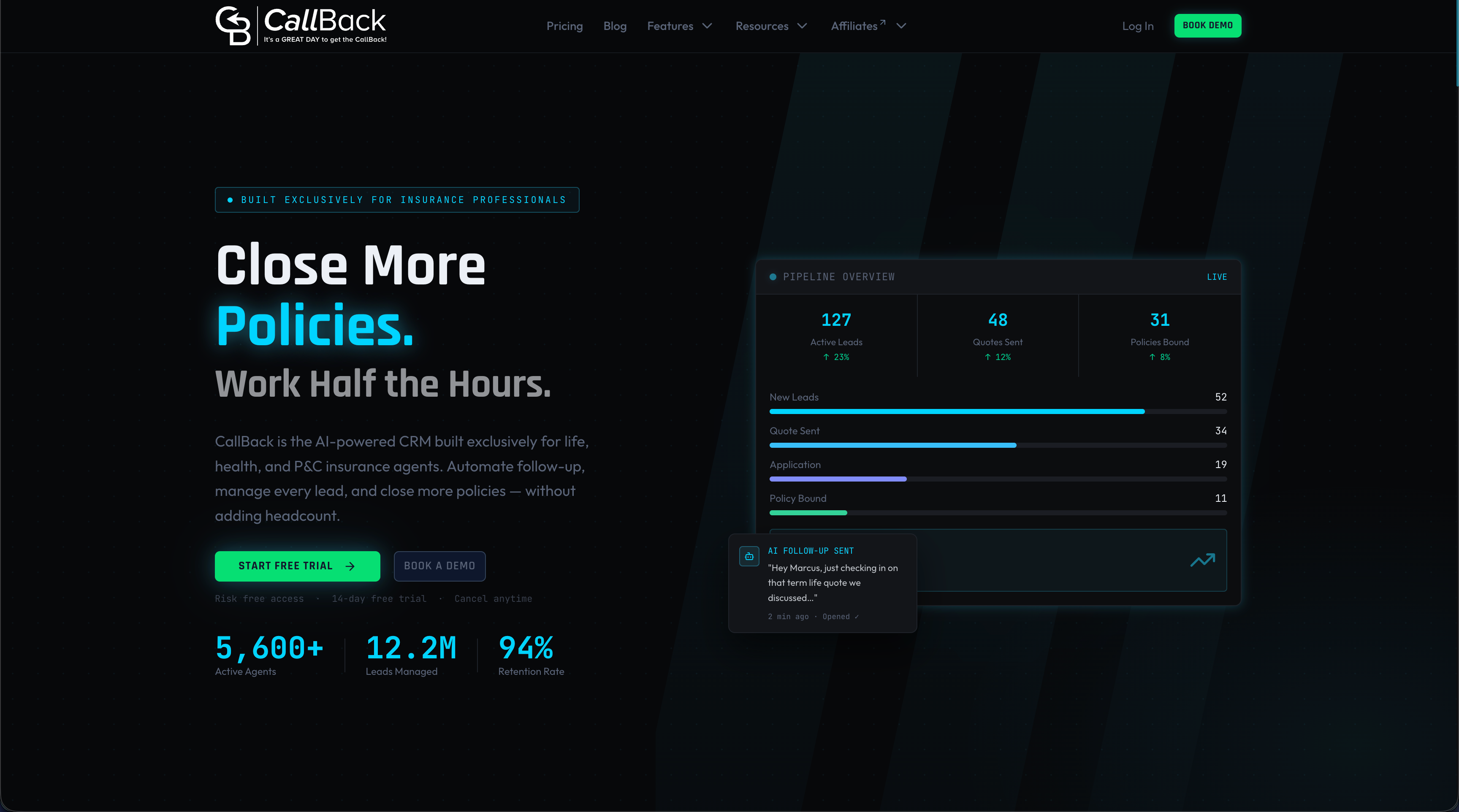
We built CallBack CRM around the operational pieces insurance agents and agencies actually need once a tel: link alone stops being enough. Our integrated dialer logs every call automatically against the right contact record, pairs with SMS and email follow-up sequences, and triggers automation workflows the moment a call ends, so a rep never has to manually update a pipeline stage after hanging up. Our mobile app carries that same call handling to agents working in the field, not just at a desk.

For an agency receiving many inbound leads daily, that integration removes the gap between a call happening and a record reflecting it, which shortens how long a lead sits before the next outreach step fires.
When a simple link is enough, and when it isn’t
A tel: link is the right call for a small site with modest traffic. It costs nothing to add and gets a mobile visitor connected in one tap.
Once call volume grows, or compliance recordkeeping and attribution start to matter, a CRM-integrated dialer earns its cost by logging every call against a real record automatically. For insurance workflows specifically, where follow-up speed and documentation both carry weight, that’s the point where a connected system becomes worth the switch.
— Kyle
Put click to call to work with CallBack CRM
We designed our platform so every click-to-call setup described above, the dialer, the automatic logging, the SMS and email follow-up, runs from a single dashboard built for insurance sales workflows. Instead of stitching together a tel: link, a separate call tracker, and a CRM that doesn’t talk to either, the platform connects all three so a call becomes a logged, followed-up contact without extra typing.
Check pricing and fees for phone numbers and call usage, or start with the Professional plan to see integrated click-to-call working inside your own pipeline today.
FAQ
What is the best CRM for calling?
The right choice depends on your industry and call volume, since general CRMs often require add-ons to log calls automatically. For insurance-specific workflows, a platform built around call logging, automated follow-up, and pipeline tracking in one system reduces the manual work generic tools leave behind.
What is the difference between calls from ads and click-to-call?
A call from an ad happens when someone taps a phone number or call button shown directly in a search or display ad, which Google’s call assets feature enables with built-in reporting. Click to call is the broader mechanism, a clickable tel: link or button, that can appear in ads, on websites, or inside a CRM, not just in paid campaigns.
How do I make a phone number click to call?
Wrap the number in a standard HTML link using the tel: scheme, for example <a href="tel:+15551234567">Call us</a>, which tells a phone’s dialer to open with the number pre-filled. Avoid placeholder links or JavaScript-only buttons, since the MDN anchor element reference notes that real tel: hrefs preserve accessibility for assistive technology.
What does *57 on a phone do?
That code is unrelated to click-to-call technology. It’s a carrier feature in some regions for tracing the most recent incoming call, separate from any web or ad-based calling tool discussed here.
Sources
- About call assets - Google Ads Help
- Complying with the Telemarketing Sales Rule - FTC
- HTML anchor element - MDN Web Docs