

The highest-impact insurance referral program ideas combine mutual incentives, professional partnerships, simple digital sharing tools, and automated follow-up. Agencies that build all four into a documented system consistently outperform those relying on ad-hoc asks. Businesses using referral programs report significantly higher conversion rates compared with non-referral channels, and referred prospects close at 30–50% rates while costing less to acquire than purchased leads.
The eight ideas worth prioritizing right now:
- Mutual refer-a-friend program (reward both referrer and new client) — low effort, results in weeks
- Professional partner engine (CPAs, realtors, attorneys) — medium effort, results in 1–3 months
- Tiered ambassador rewards (escalating gifts for repeat referrers) — low effort after setup, months
- Charity-match incentive (donate to client’s chosen cause) — low effort, compliance-friendly
- Onboarding referral ask (scripted ask at policy binding) — near-zero effort, results immediately
- Co-marketing events (seminars with CPA or realtor partners) — medium effort, 1–2 months
- Automated SMS/email share links (CRM-triggered after binding or claim) — medium setup, ongoing
- Client appreciation events (annual VIP gathering with referral ask built in) — higher effort, quarterly
Effort-to-ROI at a glance: the onboarding ask and charity-match incentive are the fastest, lowest-cost pilots to validate. The partner engine and co-marketing events take more setup but produce the highest referral volume over time.
Key Takeaways
A structured referral program with mutual incentives, professional partnerships, and automated follow-up is the most cost-effective growth channel available to insurance agencies.
| Point | Details |
|---|---|
| Start with the onboarding ask | A scripted referral ask at binding costs nothing and produces results within weeks. |
| Use mutual incentives | Rewarding both the referrer and the new client increases participation; gift cards and charity donations are the most compliant options. |
| Build at least two partner relationships | CPAs, realtors, and attorneys produce high-quality referrals when given a simple submission workflow and a named contact. |
| Track referral close rate and CPA | Referrals close at 30–50%; track cost per acquired client by incentive type to identify what is profitable. |
| Callbackcrm automates the follow-up | Use Callbackcrm’s email and SMS automation to trigger referral ask sequences, log sources, and manage rewards without manual effort. |
Table of Contents
- What are the best insurance referral program ideas you can act on now?
- What do real insurance agencies do that actually works?
- How do you design and launch a referral program step by step?
- How do you choose incentives that preserve trust and motivate referrals?
- What scripts and templates actually work for asking for referrals?
- Where should you promote your referral program and which tools help?
- How do you measure referral program success with the right KPIs?
- What are the US legal and compliance rules for insurance referral programs?
- How does an insurance CRM automate your referral workflow?
- What consistently separates referral programs that scale from those that stall?
- Callbackcrm makes referral follow-up automatic for insurance agencies
- Sources
What are the best insurance referral program ideas you can act on now?
The 25 ideas below are grouped by source type and labeled with effort level (Low/Med/High) and approximate time to first results. Each includes a short execution note and a compliance flag.
Client-driven ideas
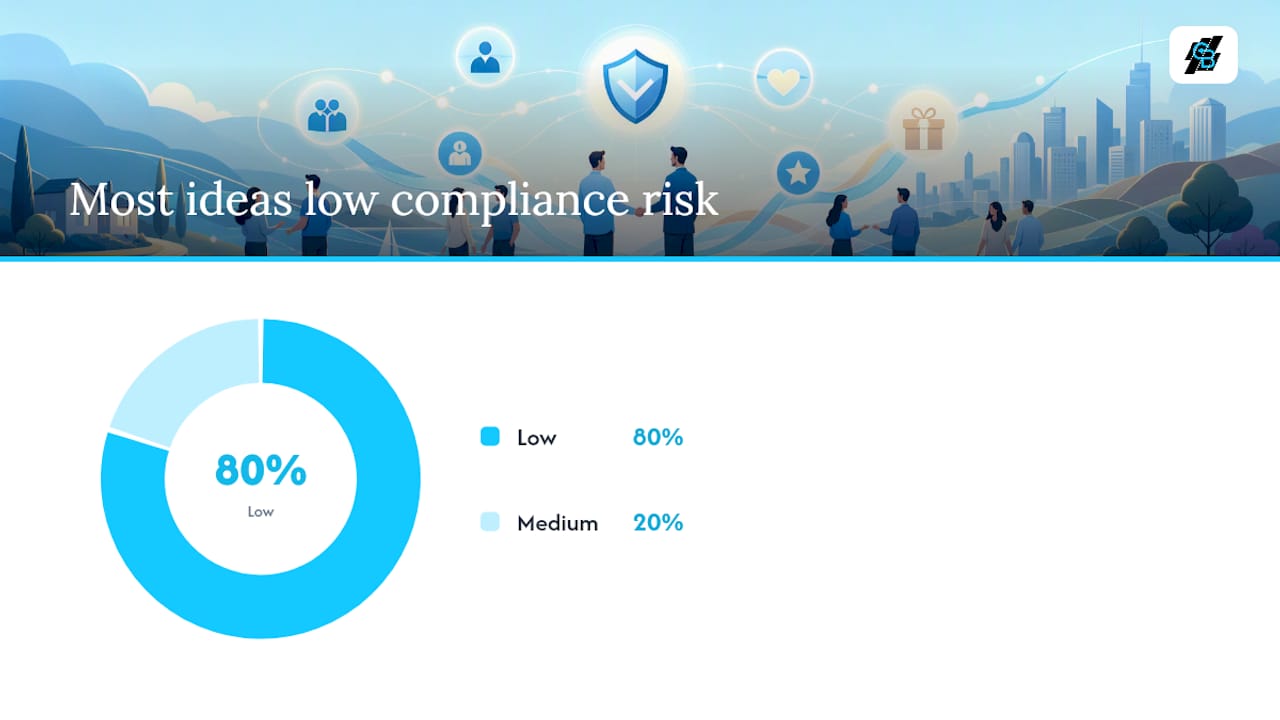
1. Refer-a-friend with mutual rewards | Low | 2–4 weeks Give the referring client a $25–$50 gift card and offer the new prospect a small premium credit or gift card at binding. Mutual incentives and automated reminders materially increase participation across industries. Compliance flag: Low (gift cards are generally safe; confirm premium credits with your state DOI).
2. Post-claim referral ask | Low | 1–2 weeks After a smooth claim resolution, send a personal note thanking the client and asking for one referral. Clients who just experienced good service are the most motivated to share.
3. Renewal review referral ask | Low | Ongoing At each annual renewal call, include a scripted ask: “Do you know anyone else who might benefit from a review?” Renewal conversations are natural trust checkpoints. Compliance flag: Low.
4. Tiered ambassador program | Med | 1–2 months Clients who refer 1 contact get a gift card; 3 referrals earn a restaurant experience; 5+ earn VIP status with priority service or an annual gift. Tiered rewards increase repeat sharing without proportionally increasing cost. Compliance flag: Low to Medium (document all rewards).
5. Savings discovery referral ask | Low | 1–2 weeks When you find a client meaningful savings at renewal, follow up within 48 hours: “Since we found you savings, do you have a friend or colleague who might benefit from the same review?” Compliance flag: Low.
6. Birthday and anniversary outreach | Low | Ongoing Automated birthday or policy anniversary messages with a soft referral ask embedded at the end. Feels personal, not transactional. Compliance flag: Low.
7. Client satisfaction survey with referral prompt | Low | 2–3 weeks After a positive survey response (4–5 stars), trigger an automated follow-up asking the client to share a referral link. Compliance flag: Low.
8. Charity-match referral incentive | Low | 2–4 weeks For each qualified referral, donate $25–$50 to a charity the client selects from a short list. This approach sidesteps most state rebating concerns and resonates with clients who find cash rewards awkward. Compliance flag: Low (confirm with state DOI).
9. Client appreciation event with referral ask | Med | 1–2 months Host an annual client dinner, golf outing, or community event. Referral cards or a QR code for a referral form are available at the event, but the ask is soft and relationship-first. Compliance flag: Low.
10. Referral card with QR code | Low | 1 week Print simple cards with your photo, a short value statement, and a QR code linking to a referral intake form. Give clients a small stack at policy delivery. Compliance flag: Low.
Partner-driven ideas
11. CPA and financial advisor partnership | Med | 1–3 months CPAs regularly encounter clients who need life, disability, or business insurance. A formal referral agreement with a simple submission workflow produces consistent, high-quality leads. Professional partners are among the highest-value referral sources when onboarded with clear SOPs. Compliance flag: Medium (document the agreement; no fee-splitting without proper licensing).
12. Real estate agent partnership | Med | 1–2 months Realtors need a reliable insurance contact for every transaction. Offer co-branded content, fast turnaround on homeowner quotes, and a simple referral form. Compliance flag: Medium.
13. Mortgage broker partnership | Med | 1–2 months Similar to realtors, mortgage brokers need a home and life insurance contact at closing. A co-branded referral card or digital link speeds the handoff. Compliance flag: Medium.
14. Estate and business attorney partnership | Med | 2–3 months Attorneys handling estate plans, business formations, or divorces regularly identify insurance gaps. A referral agreement with a simple intake process captures these leads. Compliance flag: Medium.
15. HR consultant and PEO partnership | High | 2–4 months HR consultants advising small businesses on benefits are natural partners for group health and commercial lines. Requires a more formal onboarding process but produces high-value commercial referrals. Compliance flag: Medium to High.
16. Auto dealership partnership | Med | 1–2 months Dealerships need a fast, reliable auto insurance contact for every sale. A co-branded referral card and a 24-hour quote turnaround commitment make this partnership sticky. Compliance flag: Low to Medium.
17. Financial planner co-marketing | Med | 2–3 months Co-host a webinar or workshop on financial planning topics. Both parties promote to their lists, and referrals flow naturally from the shared audience. Compliance flag: Low.
Event-driven ideas
18. Community seminar with referral follow-up | Med | 1–2 months Host a free seminar on a topic clients care about (Medicare options, home protection, business continuity). Collect contact information and follow up with a referral ask for attendees who engage. Compliance flag: Low.
19. Lunch-and-learn for small business owners | Med | 1–2 months Partner with a local chamber of commerce or business association to host a lunch-and-learn on commercial coverage. Attendees are pre-qualified prospects, and satisfied attendees become referral sources. Compliance flag: Low.
20. Networking group participation | Low | 1–3 months Join a BNI chapter or local business networking group. Structured referral exchanges are built into the format. Compliance flag: Low.
Digital-driven ideas
21. Automated SMS referral link after binding | Med | 2–4 weeks Within 24–72 hours of policy binding, send an automated SMS with a short message and a unique referral link. Automated reminders and shareable links boost referral participation when embedded in the client journey. Compliance flag: Medium (TCPA consent required).
22. Email referral sequence | Med | 2–4 weeks A two-step automated email sequence: a thank-you email at binding and a referral ask email 30 days later. Include a referral link and a short explanation of the reward. Compliance flag: Low to Medium.
23. Social proof post with referral prompt | Low | 1–2 weeks Share anonymized client success stories (with permission) on social media and include a referral link in the caption. Reputation management and social proof increase referral trust. Compliance flag: Low.
24. Website referral landing page | Med | 2–3 weeks A dedicated page explaining the referral program, the reward, and a simple intake form. Link to it from your email signature, social profiles, and referral cards. Compliance flag: Low.
25. White-label co-branded content for partners | High | 1–2 months Produce co-branded guides, checklists, or landing pages for partner firms (realtors, CPAs) that include a referral link back to your agency. Partners share content with their clients; you capture the referral. Compliance flag: Low to Medium.
What do real insurance agencies do that actually works?
The following examples reflect patterns from agencies and carriers that have documented referral program outcomes. Names are generalized where specific agency data is not publicly available.
Independent personal lines agency, Midwest: An agency with roughly 800 personal lines clients launched a mutual refer-a-friend program using $25 Amazon gift cards for both the referrer and the new client at binding. The program was promoted at renewal calls and via an automated post-binding SMS. Within 90 days, the agency attributed 22 new policies directly to the program. The key mechanic: the SMS went out within 48 hours of binding, when client satisfaction was highest.
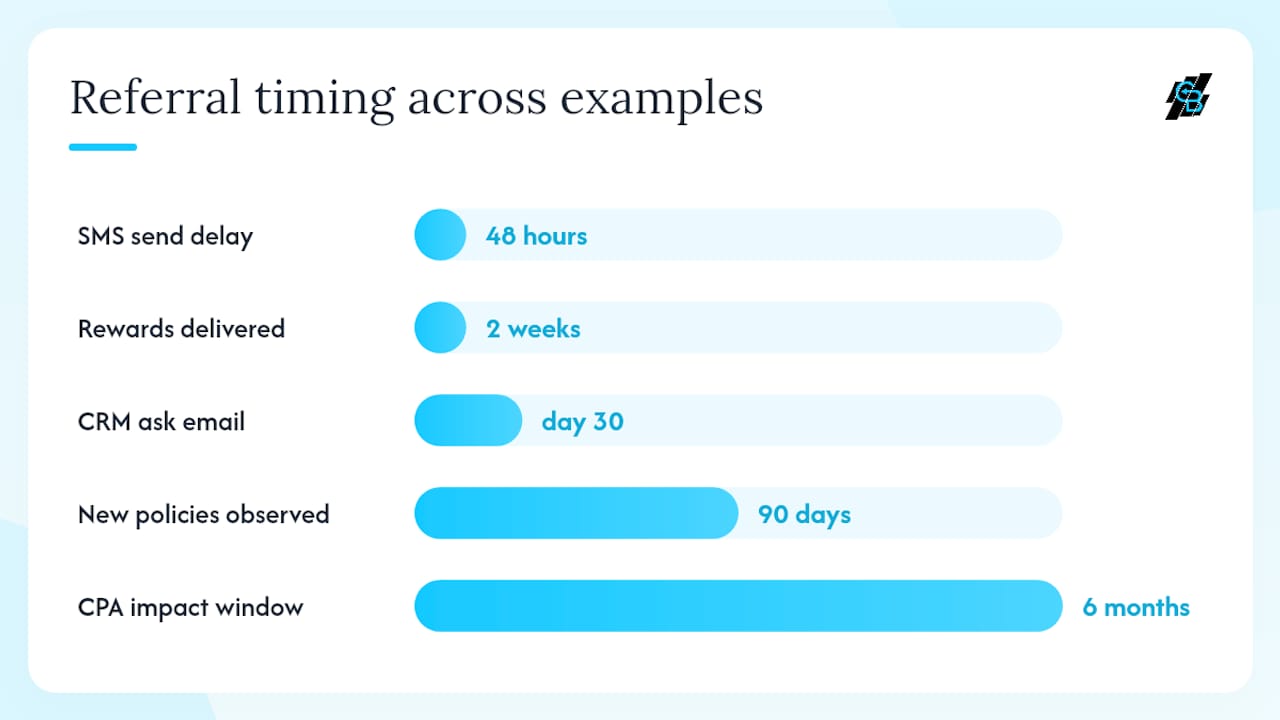
Commercial lines broker, Southeast: A mid-size commercial broker formalized a CPA partnership program. They created a one-page referral submission form, a co-branded introduction letter, and a quarterly lunch meeting with their top five CPA partners. Referral volume from CPAs tripled within six months of formalizing the process. The lesson: CPAs already knew clients needed insurance; they just needed a frictionless way to make the introduction.
Life and health agency, Southwest: An agency focused on Medicare and life insurance added a charity-match incentive: $50 donated to the client’s chosen charity for each qualified referral. The program required no cash payout to clients, avoided rebating concerns, and generated a measurable increase in referral conversations at annual reviews. Clients who selected a charity were more likely to follow through on making an introduction.
A referral program does not need to be complex to work. The agencies that generate the most referrals have one thing in common: they ask consistently, at the right moment, with a clear and simple process for the client to follow.
Regional carrier agency network: A carrier-supported agency network implemented automated referral tracking through their CRM. Every new policy triggered a referral ask email at day 30. The network reported that referred clients stayed materially longer and converted at higher rates than clients from other lead sources, producing lower customer acquisition cost across the portfolio.
Key patterns across all examples:
- The ask was scripted and timed, not improvised
- The referral submission process had two steps or fewer
- Rewards were delivered within two weeks of the qualifying event
- Partner programs had a named contact and a quarterly check-in
How do you design and launch a referral program step by step?
A 90-day pilot is the right scope for a first program. It is long enough to generate data and short enough to adjust before committing significant resources.
Step-by-step launch checklist
-
Set program goals (Week 0–1). Define what success looks like: number of referrals per month, referral close rate, cost per acquired client. Without a baseline, you cannot measure improvement.
-
Choose your referral source type (Week 1). Decide whether to start with clients, professional partners, or both. Most agencies get faster results starting with clients because the relationship already exists.
-
Design the incentive (Week 1–2). Select one incentive type (gift card, charity donation, tiered reward) and confirm it complies with your state DOI rules before launching. Keep it simple: one reward for the referrer, one for the new client at binding.
-
Build the intake process (Week 2–3). Create a referral intake form (a simple web form or CRM form works), a unique referral link or QR code, and a tracking field in your CRM. A documented submission workflow is the operational backbone of a reliable referral engine.
-
Write scripts and templates (Week 2–3). Prepare a phone script, an email template, and an SMS template. See Section 6 for ready-to-use versions.
-
Set up automated follow-up (Week 3–4). Configure your CRM to trigger a referral ask email or SMS at day 1 and day 30 after binding. A sales automation workflow reduces the manual burden and ensures consistency.
-
Train your team (Week 4). Run a 30-minute team session on when and how to ask, how to log referrals in the CRM, and how to process rewards.
-
Launch the pilot (Week 4–6). Activate the program for a defined client segment (e.g., personal lines clients renewed in the last 12 months). Limit the pilot to a manageable group so you can monitor quality.
-
Review and iterate (Week 8–12). Pull referral-to-quote and close rate data. Identify which ask timing and incentive type produced the best results. Adjust before scaling.
Pro Tip: Run the onboarding referral ask (scripted ask at binding) for two weeks before building anything else. If you get even three referrals from 20 clients, the ROI justifies the full program build.
90-day pilot timeline and cost estimates
Minimum viable pilot: one scripted ask at binding, one automated follow-up email at day 30, and a $25 gift card for the referrer. Total cost for a 50-client pilot: roughly $500–$750 in incentives plus staff time.
How do you choose incentives that preserve trust and motivate referrals?
Incentive design is where most agencies either win or lose client trust. The goal is to make the referral feel like a natural extension of a good relationship, not a transaction.
Incentive categories and how they work in insurance
Monetary incentives (gift cards, prepaid Visa cards, premium credits):
- Gift cards ($25–$100) are the most common and generally the most compliant option
- Premium credits are attractive but trigger rebating rules in many states; always confirm with your state DOI before offering them
- Prepaid Visa cards are flexible and easy to fulfill but feel less personal than a curated gift
Non-monetary incentives (events, VIP service, recognition):
- Priority service lanes, dedicated agent access, or “VIP client” status cost nothing but create real perceived value
- Event invitations (client appreciation dinners, sporting events) build loyalty and generate referral conversations organically
- Public recognition (a thank-you post on social media, a client spotlight) works well for business owners who value visibility
Charitable donations:
- Donating $25–$50 to a client’s chosen charity for each qualified referral is one of the most compliance-friendly options available
- Clients who select the charity feel a sense of agency and are more likely to follow through on the referral
- Gift cards, charitable donations, and event tickets are the most commonly recommended incentives in commercial insurance contexts, with charitable donations carrying the lowest compliance risk
Recognition-based rewards:
- A handwritten thank-you note costs almost nothing and is remembered longer than a gift card by many clients
- An annual “top referrer” acknowledgment (a framed certificate, a featured spot in your newsletter) motivates repeat referrers without ongoing cash outlay
Top-performing referral programs use two-sided rewards and often delay payouts until the referred client binds, which protects the agency’s ROI while keeping the incentive meaningful.
Pro Tip: Frame the reward as gratitude, not payment. “As a thank-you for thinking of us” lands differently than “Earn $50 for every referral.” The first preserves the advisor relationship; the second makes the referral feel like a sales transaction.
What scripts and templates actually work for asking for referrals?
Consistency matters more than perfection. Agents who ask every time, with a simple script, outperform those who wait for the “perfect” moment.
Six ready-to-use referral scripts
1. Post-sale phone script: “[Client name], I’m glad we got your coverage sorted. One quick thing: if you know anyone else who might benefit from a coverage review, I’d love an introduction. I’ll take great care of them, and as a thank-you, I’ll send you a [gift card / donate to your charity of choice].”
2. After a smooth claim: “I’m really glad we could help you through that claim. If you know a friend or colleague who might want the same level of support when it matters, I’d appreciate the introduction. No pressure at all.”
3. After a savings discovery: “Since we found you [X amount] in savings today, I wanted to ask: do you have a friend or family member who might benefit from the same kind of review? I’d be happy to do the same for them.”
4. Direct ask at renewal: “Before we wrap up your renewal, I have one quick ask. Do you know one person who might benefit from a conversation about their coverage? A name and a phone number is all I need.”
5. Targeted demographic ask (for Medicare clients): “A lot of my clients have friends or spouses who are turning 65 soon and aren’t sure where to start with Medicare. If you know anyone in that situation, I’d be glad to walk them through their options at no charge.”
6. Partner referral ask (for CPA or realtor): “I work with a lot of [CPAs / realtors] who like having a reliable insurance contact for their clients. If any of your clients ever need a coverage review or a fast quote, I’d love to be your go-to. I’ll always get back to them within 24 hours.”
Email template (automatable in a CRM)
Subject: A quick thank-you, and one small ask
Hi [First Name],
Thank you for trusting us with your coverage. We’re glad to have you as a client.
If you know a friend, family member, or colleague who might benefit from a coverage review, we’d love an introduction. Just reply to this email with their name and contact information, or share this link: [referral link].
As a thank-you, we’ll [send you a $25 gift card / donate $25 to [charity] on your behalf] once they become a client.
Thank you again. [Agent Name] | [Agency Name] | [Phone]
SMS template (automatable in a CRM)
Hi [First Name], thanks for choosing [Agency Name]! If you know someone who could use a coverage review, share this link: [referral link]. We’ll [send you a $25 gift card] as a thank-you when they sign up. Reply STOP to opt out.
Best timing for the referral ask
- 24–72 hours after binding: client satisfaction is at its peak
- Within 48 hours of a smooth claim resolution: trust is highest after a positive claims experience
- Within 48 hours of a savings discovery: the client has a concrete reason to recommend you
- Annual renewal review: a natural conversation checkpoint
- After a positive survey response: the client has already expressed satisfaction in writing
Automating client outreach at these five moments removes the reliance on agent memory and ensures every client gets the ask.
Where should you promote your referral program and which tools help?
Promotion determines whether clients and partners actually know the program exists. Most agencies underinvest here.
Promotion channels with execution notes
- Website referral landing page: A dedicated page with the program description, reward details, and an intake form. Link from your homepage, email signature, and social profiles. Cost: $0–$500 to build.
- Email signature link: Add “Know someone who needs coverage? [Refer a friend]” with a hyperlink to your referral page. Every outbound email becomes a passive promotion.
- Post-binding email and SMS sequence: Automated messages at day 1 and day 30 after binding. This is the highest-ROI promotion channel for most agencies.
- Physical referral cards: A business-card-sized card with a QR code and a short value statement. Give clients a small stack at policy delivery or at events.
- Social media posts: Share client success stories (anonymized, with permission) and include a referral link. Social proof posts build credibility and generate inbound interest.
- Partner co-branded materials: One-page flyers or digital landing pages co-branded with your CPA, realtor, or attorney partners. Partners share with their clients; you capture the referral.
- Events: Client appreciation events, community seminars, and networking groups all generate referral conversations when a soft ask is built into the agenda.
Tool categories to consider
CRM with automation: The foundation of any scalable referral program. A CRM tracks referral sources, triggers follow-up sequences, logs rewards, and produces attribution reports. Automating lead generation and follow-up through a CRM reduces time-to-contact and prevents referrals from falling through the cracks.
Referral software platforms: Dedicated referral tools like Rocket Referrals (built specifically for insurance agencies), Referral Rock (flexible for small agencies), ReferralCandy (e-commerce focused but adaptable), and Buyapowa (enterprise-grade, suited to larger carrier programs) each handle unique referral link generation, reward fulfillment, and basic reporting. Rocket Referrals is the most insurance-specific option; Referral Rock offers the most flexibility for independent agencies on a budget.
Form builders: A simple intake form (Google Forms, Typeform, or a CRM-native form) is sufficient for most pilots. The form should capture the referrer’s name, the prospect’s name and contact information, and the relationship.
Reward fulfillment tools: Tango Card and Tremendous both handle digital gift card delivery at scale, with API integrations for CRM automation.
Analytics dashboards: Your CRM’s built-in reporting is sufficient for most agencies. Track referral source, referral-to-quote rate, close rate, and cost per acquired client by incentive type.
A marketing automation checklist can help agencies confirm they have the right tools in place before launching.
Manual vs. automated referral tracking
Manual referral cards and paper logs work for very small agencies but create attribution gaps and reward fulfillment delays. Automated link sharing through a CRM or referral platform eliminates both problems and scales without adding staff time. The tradeoff: automated systems require upfront setup (2–4 weeks) and a modest monthly cost, while manual systems cost nothing but produce inconsistent data.
Checklist for selecting a referral tool:
- CRM integration (does it sync with your existing system?)
- Compliance controls (can you cap rewards and log all incentives?)
- Payout automation (does it handle gift card delivery automatically?)
- Partner portal (can partners submit referrals without calling you?)
- Reporting (does it show referral-to-quote and close rate by source?)
How do you measure referral program success with the right KPIs?
Tracking the right metrics reveals which incentives are profitable and which channels produce the best clients.
Core KPIs to track
- Referrals received: total referral contacts submitted per month, by source (client vs. partner)
- Referral-to-quote rate: percentage of referrals that result in a quoted proposal
- Referral close rate: percentage of quoted referrals that bind a policy (benchmark: 30–50%)
- Time-to-close: average days from referral submission to policy binding
- Cost per acquired referral client (CPA): total incentive and program cost divided by new clients from referrals
- Lifetime value of referred clients: referred clients convert roughly 30% better and stay materially longer than non-referred clients, making LTV a critical long-term metric
Attribution basics
Flag every new contact with a referral source field in your CRM at intake. Use first-touch attribution: the referral source that introduced the contact gets credit. A “qualified referral” is one that results in a quote; an “unqualified referral” is a contact who does not respond or is not a fit. Reward triggers should fire only on qualified referrals that bind, not on every submitted name.
Sample benchmarks
| KPI | Personal Lines | Commercial Lines |
|---|---|---|
| Referral close rate | 30–50% | 30–50% |
| Referral-to-quote rate | 30–50% | 50–65% |
| Time-to-close | 7–21 days | 30–90 days |
| Cost per acquired client | Under $50 | $25–$50 |
Reporting cadence: Review referral KPIs monthly for the first quarter of a new program. Once the program is stable, a quarterly review is sufficient. Use the data to answer three questions: Which source produces the most referrals? Which produces the highest close rate? Which produces the lowest CPA? Adjust incentives and promotion toward the highest-performing combination.
What are the US legal and compliance rules for insurance referral programs?
Compliance is not optional, and the rules vary by state. Getting this wrong can result in DOI fines or license issues.
Rebating risk
Rebating is the practice of giving a client something of value as an inducement to purchase insurance. Most states prohibit rebating, and some states treat gift cards or cash payments tied to a policy purchase as a rebate. The key distinction: a reward given after a referral results in a new policy binding is generally treated differently from a reward given to induce the purchase. However, state rules vary significantly. Always check your state Department of Insurance rules before offering any monetary incentive.
States with stricter rebating rules (including California, Florida, and New York) require particular care. In these states, charity donations and non-cash recognition are the safest incentive types.
TCPA and privacy considerations for SMS and email
- Obtain explicit written consent before sending automated SMS messages to clients or prospects
- Include a clear opt-out mechanism (“Reply STOP to opt out”) in every SMS
- Do not send automated messages to numbers on the National Do Not Call Registry
- For email, comply with CAN-SPAM: include a physical address, a clear unsubscribe link, and an accurate subject line
Practical compliance checklist
- Confirm your state DOI rules on referral fees and incentives before launch
- Document every incentive paid: date, recipient, amount, and the qualifying referral event
- Frame charitable donations as a program feature, not a payment for referrals
- Avoid tying reward amounts directly to premium size (this looks like a rebate)
- If using a partner referral agreement, confirm neither party is splitting commissions without proper licensing
- Review your E&O policy to confirm referral program activities are covered
Pro Tip: When state rules are unclear, default to charity donations or non-cash recognition. These options are the most defensible, require the least documentation, and still motivate referrals effectively.
How does an insurance CRM automate your referral workflow?
Manual referral tracking works until it doesn’t. A CRM built for insurance agencies handles the operational details that agents consistently miss: the day-30 follow-up email, the reward fulfillment trigger, the partner submission log.
Core referral automation features to look for
- Automated referral capture: a web form or CRM-native intake form that logs referrals directly into the pipeline without manual data entry
- Tracked referral links: unique URLs for each client or partner that attribute referrals automatically
- Reward fulfillment triggers: automated gift card delivery or notification when a referral binds
- Partner portals: a simple interface where CPA or realtor partners can submit referrals without calling the agency
- Reporting dashboards: referral-to-quote, close rate, and CPA by source, updated in real time
What an insurance CRM adds beyond generic referral tools
An insurance-specific CRM integrates referral tracking with policy data, compliance logging, and automated follow-up sequences. When a referral comes in, the CRM can trigger an immediate acknowledgment to the referrer, assign the prospect to an agent, schedule a follow-up call, and log the referral source for attribution. Insurance sales automation workflows reduce time-to-contact on referred leads, which directly improves close rates.
Downloadable templates and workflow assets to build
- Referral SOP template: a one-page document defining how referrals are submitted, logged, assigned, and followed up within your agency
- Referral intake form: a web form capturing referrer name, prospect name, contact information, and relationship type
- Email templates: post-binding thank-you, day-30 referral ask, partner introduction email
- SMS templates: post-binding referral ask, reward confirmation
- Partner onboarding checklist: steps to onboard a new CPA, realtor, or attorney partner (agreement, submission workflow, contact, quarterly check-in schedule)
Pro Tip: Build your referral intake form inside your CRM rather than using a separate tool. Every referral logged in the CRM is automatically tied to the referrer’s contact record, which makes attribution and reward fulfillment far easier to manage.
Callbackcrm provides email and SMS automation, workflow builders, CRM pipeline management, and reporting dashboards that align directly with these referral workflow needs. Agency teams typically use Callbackcrm to automate the post-binding referral ask sequence, track referral sources in the pipeline, and manage partner communications without adding staff time.
What consistently separates referral programs that scale from those that stall?
Most agencies launch a referral program with good intentions and then watch it quietly fade after the first month. The reason is almost always the same: the ask was not systematized.
The agencies that generate referrals month after month share three habits. First, they ask at a defined moment in the client lifecycle, every time, with a script. Second, they have a partner program with at least two or three professional relationships that produce steady, high-quality introductions. Third, they use automation to handle the follow-up so the program runs even when the agent is busy.
What gets overlooked most often is the gratitude framing. Agents who position the referral ask as “I’d love to help someone you care about” consistently outperform those who lead with the reward. The reward matters, but it is not the primary motivator for most clients. The relationship is.
One more thing worth saying plainly: the best referral program is the one you actually run. A simple scripted ask at binding, tracked in a spreadsheet, beats a sophisticated platform that no one uses. Start with the minimum viable version, measure it for 90 days, and build from there.
Callbackcrm makes referral follow-up automatic for insurance agencies
Referred leads convert at the highest rates of any source, but only if you follow up fast. Most agencies lose referred prospects not because the lead was bad but because the follow-up was slow or inconsistent.
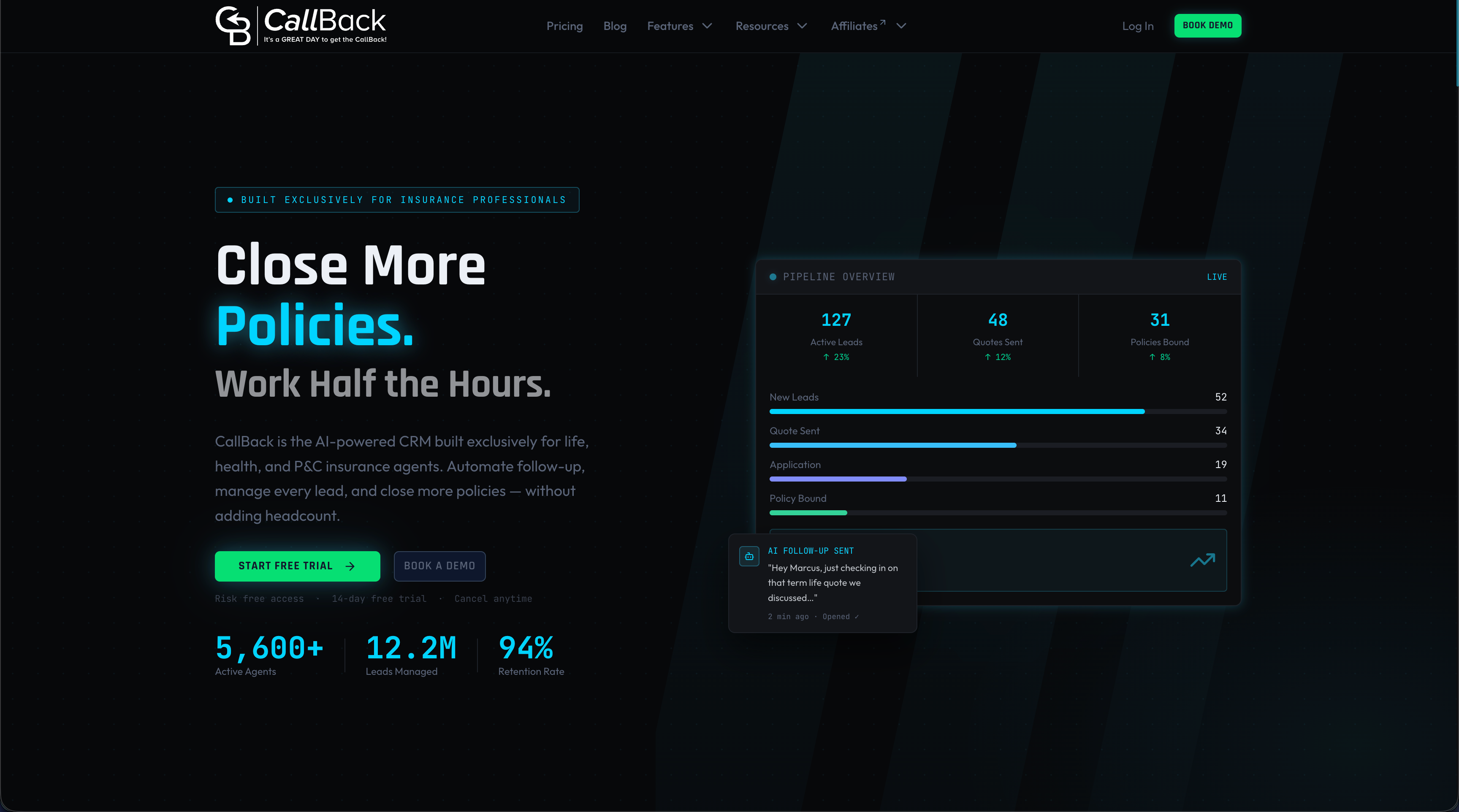
Callbackcrm gives insurance agents and agencies the tools to capture, track, and follow up on referrals without manual effort. The platform’s email and SMS automation triggers referral ask sequences at binding, sends reward confirmations automatically, and logs every referral source in the CRM pipeline for clean attribution. Partner portals, workflow builders, and reporting dashboards are included, so agencies can manage client and professional partner referral programs from one place.
The next step is straightforward: set up a free trial, load your post-binding referral ask sequence, and run it for 30 days on your most recent 50 clients. The data from that pilot will tell you exactly what to build next.
Sources
- Insurance Referral Programs: How to Get 10+ Referrals Per Month
- Referral Marketing That Turns Clients into Growth Champions - Insurassist
- Building a Referral Engine for Insurance Agents That Works - Agency Height
- How to Create a Referral Program for Your Insurance Agency - BBSI
- Refer-a-friend programme examples and tips
This article is general information, not a substitute for advice from a qualified lawyer. Consult a qualified legal professional about your own circumstances before acting on anything here.