

TL;DR:
- Insurance agencies can automate up to 85% of manual outreach, saving significant time and increasing lead recovery. Effective sequences consist of four touches over 20 to 30 days, with personalized, behavior-triggered messages that are carefully monitored and adjusted weekly. Oversight and tailored follow-up remain essential for building relationships and achieving optimal results at scale.
Client outreach automation is the practice of using intelligent software and structured message sequences to consistently connect with prospects and existing clients without manual effort for each interaction. Insurance agencies can automate 70–85% of manual outreach tasks, saving 10–20 hours per week while improving lead recovery by 15–25% and cutting no-shows by 40–60%. That kind of efficiency is not a luxury for a busy agency. It is the difference between chasing every lead by hand and running a system that works while you focus on closing. This guide covers how to automate client outreach from tool selection through scaling, with every step built for insurance professionals.
How to automate client outreach: tools and technologies you need
The right automation platform does three things well: it connects to your existing data, it sends messages across multiple channels, and it tracks every interaction back to a contact record. For insurance agencies, that means choosing a platform with built-in CRM integration, not just a standalone email tool.

Multi-channel sequencing is the core capability to look for. Effective automated outreach strategies reach prospects through email, SMS, phone, and LinkedIn in a coordinated sequence. Each channel fills a gap the others leave. Email carries detail. SMS gets opened fast. LinkedIn builds credibility. Phone closes.
Key features to evaluate when selecting a platform:
- Trigger mapping: The system fires messages based on specific events, such as a policy renewal date or a quote request, not just a fixed calendar.
- If/then logic: When a prospect replies or books a call, the sequence stops automatically and routes the contact to the next step.
- Reply detection: The platform recognizes inbound responses and removes the contact from the active sequence.
- Mailbox warmup: New sending domains start at low volume and ramp up gradually to protect deliverability.
- CRM sync: Every send, open, reply, and booked meeting updates contact records in real time, so campaigns never lose context.
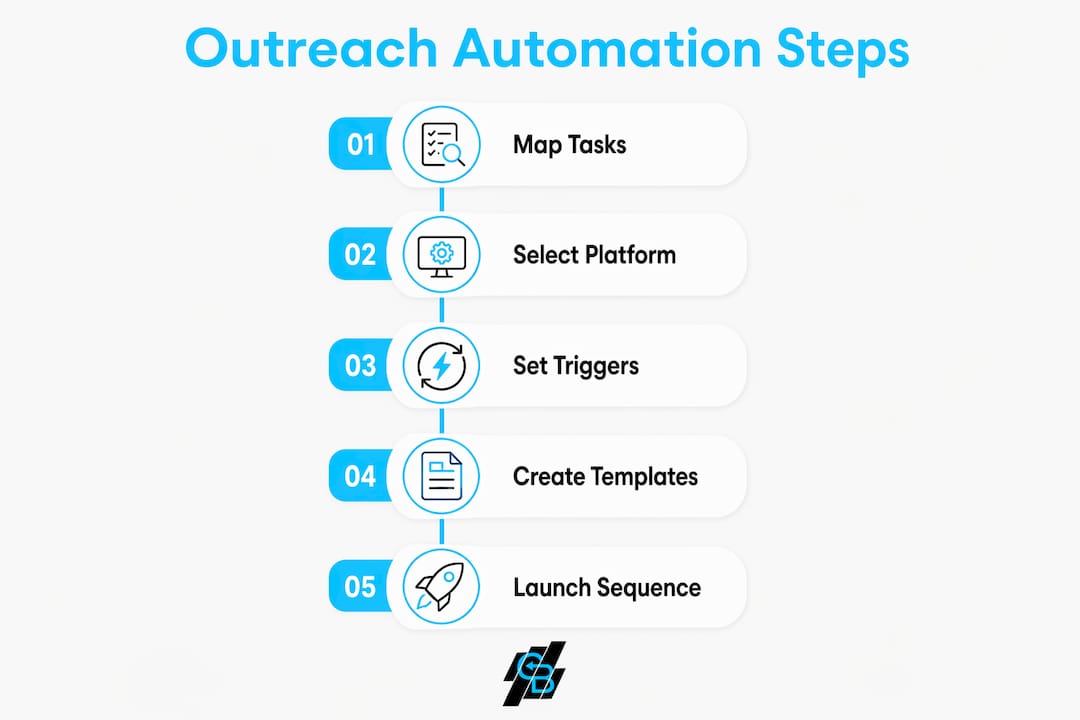
Most automation systems take fewer than 14 days to implement, including template setup, trigger mapping, and dashboard training. A single admin can manage the system without developer support. That timeline matters because agencies often delay automation expecting a long IT project. The reality is much faster.
Pro Tip: Before selecting a platform, map your current outreach steps on paper. Identify the three tasks you repeat most often. Any platform you choose should automate all three out of the box.
Callbackcrm is built specifically for insurance agents and agencies, combining CRM management, email and SMS marketing, AI assistants, and automation workflows in one place. That eliminates the integration headaches that come from stitching together separate tools.
What does an effective automated outreach sequence look like?
The industry-standard sequence runs 4 touchpoints over 20–30 days. Going beyond 5 touches produces diminishing returns and increases complaint rates. That is a hard limit worth respecting.
A proven sequence structure for insurance outreach looks like this:
- Day 0 (Email): Send a personalized introduction referencing a specific trigger, such as an upcoming renewal or a recent quote request. Keep it under 150 words. One clear call to action.
- Day 2 (LinkedIn): Send a connection request with a short note. Reference the email without repeating it word for word. This builds name recognition across channels.
- Day 5 (Email bump): Reply to your own original email with a one-line follow-up. “Did this land in the wrong inbox?” works better than a full re-pitch.
- Day 9 (Break-up email): Tell the prospect you will stop reaching out. This message consistently generates the highest reply rate in the sequence because it creates a clear deadline.
Personalization is what separates effective automated outreach from spam. The strongest personalization comes from behavior-triggered messages tied to real client actions, such as opening a proposal document, clicking a quote link, or reaching a policy anniversary date. Calendar-based triggers alone produce weaker results.
Content length guidelines for insurance outreach:
- Cold emails: 75–150 words. One idea, one ask.
- SMS messages: Under 160 characters. Direct and personal.
- LinkedIn notes: 50–75 words. Conversational, not salesy.
- Break-up messages: 3–4 sentences maximum.
Pro Tip: Write your break-up email first. If you cannot explain your value proposition in 3 sentences, your earlier messages are probably too long.
For policy renewals, set a trigger 60 days before the renewal date. Send the first email at 60 days, a second at 30 days, and an SMS reminder at 7 days. This three-touch renewal sequence alone recovers a measurable share of clients who would otherwise lapse without contact.
A good marketing automation checklist helps agencies confirm every trigger, template, and exit condition is in place before a sequence goes live. Skipping that review is one of the most common reasons campaigns underperform in the first month.
What mistakes should you avoid with outreach automation?
Over-automation is the most common failure mode. Agencies set up sequences and never review them, letting irrelevant messages go out to contacts who already converted or who opted out months ago. That behavior damages sender reputation and client trust simultaneously.
The most damaging mistakes in client engagement automation:
- Skipping email warmup: Starting a new domain at full send volume triggers spam filters immediately. Email warmup requires starting at 5–10 emails per day and increasing volume gradually over several weeks.
- Missing exit logic: Without automatic exit triggers, a prospect who books a meeting still receives follow-up emails. Exit logic must halt sequences the moment a lead takes a qualifying action.
- Ignoring reply rate thresholds: Segments with reply rates below 3% signal a problem with targeting, messaging, or timing. Those segments need to be paused and rebuilt, not just left running.
- Predictable send intervals: Sending at exactly 9:00 AM every Tuesday flags your messages as automated. Jitter and timezone-aware windows randomize send times within a defined range and match the recipient’s local business hours.
Automation must scale human touch, not replace it. The goal is to free insurance professionals for relationship building and high-value conversations, not to remove the human from the process entirely. Successful teams review segment reply rates every week and pause any segment that falls below 3% to protect sender reputation and campaign momentum.
Pro Tip: Set a recurring calendar block every Monday to review your top three sequences. Check reply rates, exit trigger performance, and any spam complaints. Fifteen minutes of weekly review prevents months of deliverability damage.
The human element matters most at the handoff point. When automation surfaces a warm lead, a real person needs to take over quickly. The sequence gets the conversation started. The agent closes it.
How do you measure and scale your outreach automation?
Measurement starts with four numbers: time saved per week, lead recovery rate, reply rate, and conversion rate. A 10%+ reply rate is achievable with best practices in place. Anything below 5% signals a problem worth fixing before scaling.
| Metric | Benchmark | Action if below benchmark |
|---|---|---|
| Reply rate | 10%+ | Rewrite subject lines and opening sentences |
| Segment reply rate | 3% minimum | Pause segment, review targeting |
| Lead recovery rate | 15–25% improvement | Check trigger timing and channel mix |
| No-show reduction | 40–60% improvement | Add SMS reminder to sequence |
| Weekly time saved | 10–20 hours | Audit manual tasks still outside automation |
Scaling works by adding triggers, not just more contacts. Once a renewal sequence runs well, build a cross-sell sequence triggered by a client’s policy anniversary. Once a cold outreach sequence hits benchmark reply rates, add a LinkedIn touchpoint or a voicemail drop.
Closed-loop CRM syncing is what makes scaling possible. When every interaction updates the contact record automatically, you can see exactly where leads drop off, which messages generate replies, and which sequences produce booked meetings. Without that sync, campaigns reset monthly and lose the learning they have built up.
Callbackcrm’s AI-powered outreach workflows connect sequence performance data directly to contact records, giving agencies a closed-loop view of every campaign without manual reporting.
Scaling also means reviewing your automation strategies quarterly. What worked for cold outreach in january may need adjustment by march as your contact list matures and your domain reputation grows.
Key Takeaways
Automating client outreach in insurance requires structured sequences, behavior-based triggers, and weekly performance reviews to sustain reply rates above 10% and protect sender reputation.
| Point | Details |
|---|---|
| Automate 70–85% of tasks | Insurance agencies can reclaim 10–20 hours weekly by automating repetitive outreach steps. |
| Use 4-touch sequences | Limit sequences to 4 touchpoints over 20–30 days to maximize replies and minimize complaints. |
| Build in exit logic | Sequences must stop automatically when a prospect replies or books a meeting. |
| Warm up email domains | Start at 5–10 daily sends and ramp up gradually to protect deliverability. |
| Measure and pause weak segments | Pause any segment below a 3% reply rate and rebuild before scaling. |
Why automation without oversight is a liability
Agencies that set up automation and walk away treat it like a vending machine. You put contacts in and expect meetings to come out. That is not how it works, and I have seen it burn good agencies.
The teams that get real results from client outreach automation treat it like a sales rep. They check in weekly, they adjust messaging when reply rates slip, and they know exactly which sequence is running for which segment at any given time. Automation gives you reach. Oversight gives you results.
The other thing I would push back on is the idea that automation makes outreach impersonal. Done right, a behavior-triggered message sent 60 days before a renewal feels more personal than a generic call from an agent who just pulled a list. The client gets the right message at the right moment. That is relationship building at scale.
The agencies I respect most use automation to handle the volume and reserve their agents for the conversations that actually require judgment, empathy, and expertise. That division of labor is where the real productivity gain lives. The email marketing checklist Callbackcrm publishes is a good starting point for agents who want to build that discipline into their workflow from day one.
— Kyle
Callbackcrm puts your outreach on autopilot
Insurance agencies that want to move from manual follow-ups to a fully automated outreach system need a platform built for that specific workflow. Callbackcrm combines CRM management, AI-driven lead scoring, and multi-channel automation in one place, so agents spend time selling instead of scheduling.
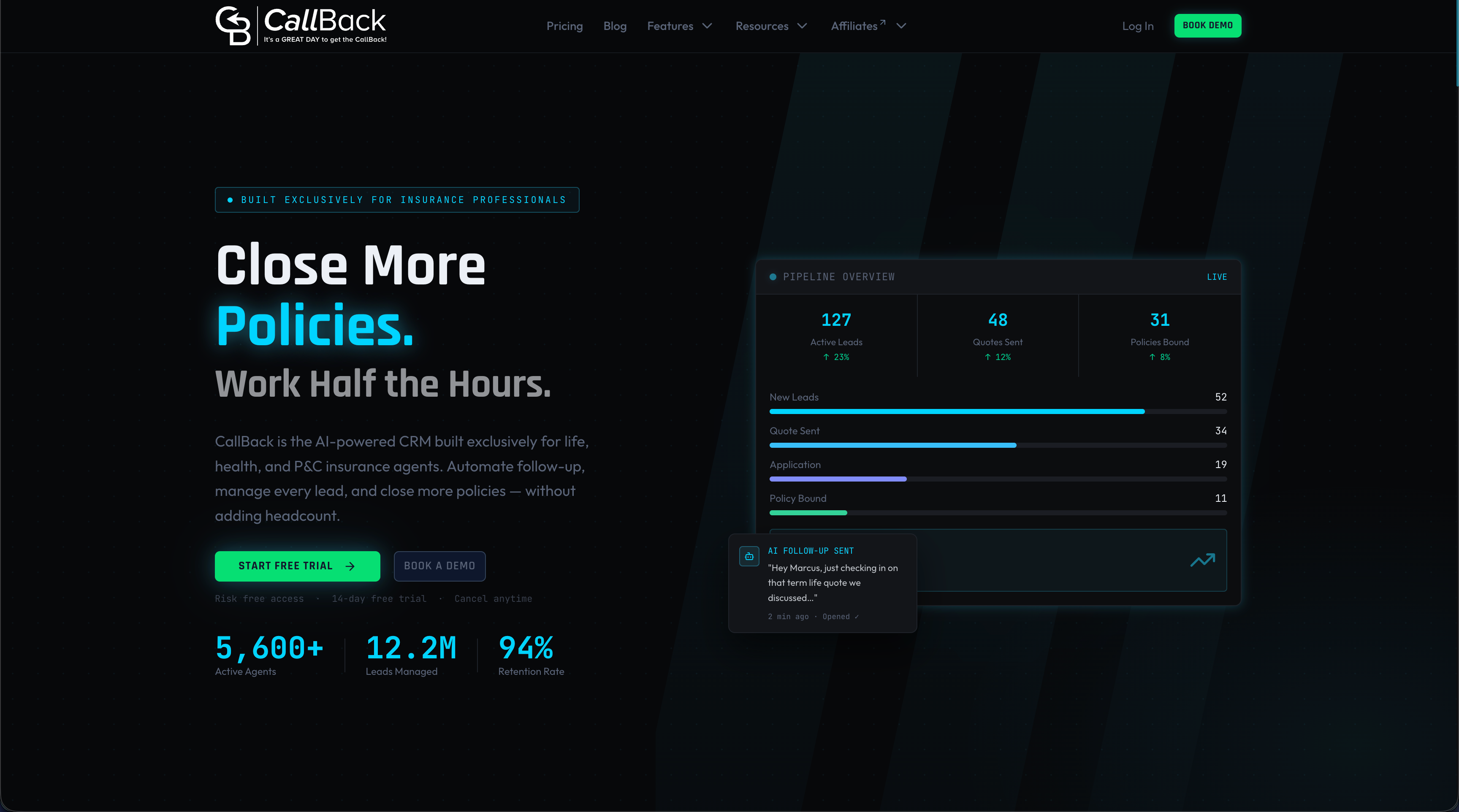
Callbackcrm’s SMS marketing features let agencies send behavior-triggered text messages that reach clients where they actually read their messages. Pair that with the website and funnel builder to capture inbound leads and route them directly into your automated sequences. Setup takes under 14 days, and the platform runs on Google Cloud with 24/7 support. Agencies that want to see the system in action can request a demo directly through Callbackcrm.
FAQ
What is client outreach automation?
Client outreach automation is the use of software to send scheduled, behavior-triggered messages across email, SMS, phone, and social channels without manual effort for each contact. It allows insurance agencies to maintain consistent follow-up at scale.
How many touchpoints should an automated sequence include?
The industry standard is 4 touchpoints over 20–30 days. Sequences that exceed 5 touches produce diminishing returns and increase complaint rates.
How do I protect my email deliverability when starting automation?
Start with 5–10 emails per day on a new domain and increase volume gradually over several weeks. This warmup process builds domain authority and prevents spam-flagging.
What reply rate should I target with automated outreach?
A 10%+ reply rate is the achievable benchmark with best practices in place. Any segment falling below 3% should be paused and reviewed before continuing.
When should automation hand off to a human agent?
Automation should hand off the moment a prospect replies, books a meeting, or takes a qualifying action. Exit logic in the sequence stops further automated messages and flags the contact for personal follow-up.