

TL;DR:
- Effective final expense lead nurturing requires patience, segmentation, and consistent multi-channel outreach over six months. Agents must tailor messaging based on age, behavior, and engagement signals while maintaining compliance, especially with manual calling. Using proper tools and tracking results enhances conversion rates and builds trust with prospects over time.
Final expense lead nurturing is a structured, multi-channel process that builds trust with prospects over time to convert more leads into paying clients. Most agents abandon leads after one or two attempts, leaving significant revenue on the table. A properly executed 6-month nurture sequence achieves a 3.2% conversion rate on aged leads. That number sounds modest until you calculate it across hundreds of leads you already paid for. The real competitive edge in final expense sales comes from patience, segmentation, and a system that keeps working even when you are not.
What is the best way to segment and prioritize final expense leads?
Segmentation is the foundation of any effective lead nurturing strategy. Without it, you send the same message to a 62-year-old who browses Facebook daily and a 74-year-old who reads paper mail. Those two prospects require completely different approaches, and treating them identically wastes both your budget and their attention.

Age is the primary divider for channel selection. Seniors aged 60–69 prefer digital touchpoints like search engines and social media, while adults 70 and older favor direct mail and phone calls. That single insight should reshape how you allocate your outreach budget across age bands.
Behavioral signals are equally powerful for prioritization. A lead who clicks a link in your email about burial cost planning is signaling readiness. A lead who opens nothing for three weeks is signaling fatigue or disinterest. Behavior-based segmentation means tailoring nurture paths based on what a prospect actually does, not just who they are on paper. Agents who act on these signals convert at higher rates because they meet prospects where they already are.
Practical segmentation criteria to apply immediately:
- Age band: 60–69 (digital first), 70–79 (phone and mail primary), 80+ (phone and family-centered messaging)
- Lead source: inbound web form, direct mail reply card, telemarketed, or aged purchased list
- Engagement level: active (opened or clicked in last 14 days), warm (some activity in 30 days), cold (no activity in 30+ days)
- Readiness signal: requested a quote, asked a specific question, or visited a pricing page
Pro Tip: Create a simple lead scoring sheet that assigns points for each behavior. A prospect who opens two emails and clicks once scores higher than one who opened nothing. Use those scores to decide who gets a personal phone call this week.
How do you build a multi-channel nurture sequence for final expense leads?
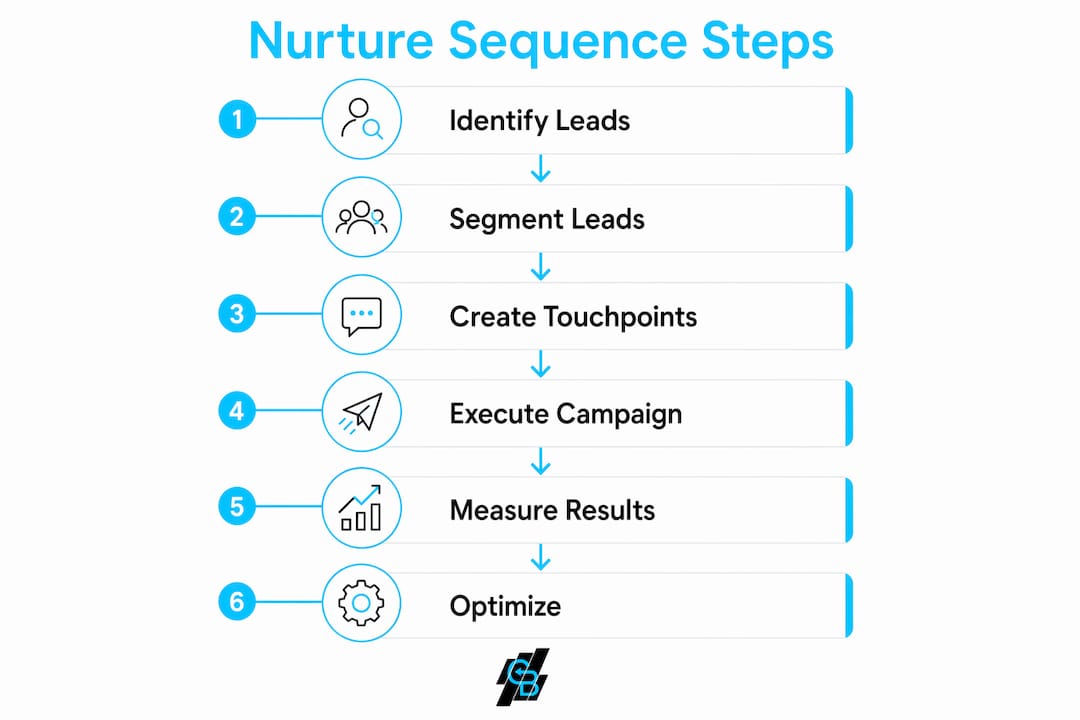
A multi-channel sequence is the engine of effective lead management for final expense. The goal is to stay present across multiple touchpoints without overwhelming the prospect. Adding SMS and direct mail to an email nurture sequence boosts response rates by up to 67% in senior demographics. That lift comes from repetition across trusted channels, not from any single message.
Structuring the six-month sequence
The sequence below reflects lead nurturing best practices for final expense agents working aged or semi-aged lists.
- Days 1–3: Send a warm re-introduction email acknowledging the prospect’s original inquiry. Keep the tone conversational, not sales-driven. Follow up with a personal phone call using manual dialing only. TCPA restrictions prohibit autodialers and prerecorded calls for aged leads, so manual dialing compliance is non-negotiable.
- Days 4–14: Send two additional educational emails covering burial cost averages and the burden final expense insurance removes from families. Add one SMS message with a brief, friendly check-in. Front-loading 3–5 touchpoints in the first two weeks captures attention while interest is highest.
- Weeks 3–6: Shift to a weekly cadence. Alternate between email and direct mail. A handwritten envelope sent at this stage performs well because handwritten envelopes dramatically increase open rates among seniors who receive mostly printed advertising.
- Months 2–4: Reduce frequency to bi-weekly. Introduce “commercial teaching” content: real client stories (anonymized), cost comparisons, and simple explanations of policy benefits. This phase builds credibility before any direct sales invitation.
- Months 5–6: Move to monthly contact. Include a clear, low-pressure invitation to get a free quote or speak with you directly. By this point, the prospect has received enough education to make a confident decision.
The messaging shift across these phases matters as much as the timing. Sending decision-stage content too early damages conversion. Prospects in the final expense market are making emotionally significant decisions about their families. Pushing for a sale before trust is established triggers resistance, not action.
Pro Tip: Scrub your phone list against the National Do Not Call Registry before every call phase. Set a calendar reminder at the start of each month. One compliance mistake costs far more than the leads you would have called.
The table below shows how channel focus should shift across the sequence.
| Phase | Primary channel | Message focus |
|---|---|---|
| Days 1–14 | Phone and email | Re-introduction and education |
| Weeks 3–6 | Email and direct mail | Trust building and awareness |
| Months 2–4 | Email and SMS | Commercial teaching |
| Months 5–6 | Email and phone | Sales invitation |
What tools best support a final expense nurture campaign?
The right tools determine whether your nurture system runs consistently or falls apart when you get busy. For final expense agents, the core technology stack covers four functions: contact management, multi-channel delivery, lead scoring, and compliance tracking.
A CRM built for insurance agents sits at the center of everything. It stores contact history, tracks touchpoints, and triggers follow-up tasks automatically. Without a CRM, agents rely on memory and spreadsheets, and leads fall through the cracks. Callbackcrm provides insurance agents with CRM management, SMS marketing, email automation, and AI-assisted lead scoring in one platform. That combination removes the need to stitch together five separate tools and reduces the manual work that causes agents to drop their nurture cadence.
Lead scoring is the tool most agents skip and then regret. A modern lead scoring system assigns point values to behaviors like email opens, link clicks, and page visits. Agents who use scoring spend their call time on the 20% of leads most likely to convert, rather than working the list in random order.
Key tool categories every final expense agent needs:
- CRM with task automation: logs every touchpoint and triggers next steps without manual input
- Email marketing with segmentation: sends different sequences to different age bands and engagement levels
- SMS platform with opt-out management: delivers brief, personal messages and automatically removes unsubscribers
- Call tracking: records call outcomes and flags leads for follow-up based on conversation results
- Compliance tools: maintains Do Not Call scrub records and TCPA documentation
Combining direct mail with a digital landing page is one of the most underused tactics in this market. Linking offline trust signals to an online conversion page moves prospects through the funnel faster than either channel alone. A postcard with a QR code pointing to a simple quote request form is a practical example agents can deploy immediately.
Pro Tip: Use your lead generation workflow to map out every touchpoint before you send a single message. Agents who plan the full sequence in advance stay consistent. Agents who wing it stop following up after week two.
How do you measure success in final expense lead nurturing?
Measurement turns a nurture campaign from a habit into a system you can improve. The agents who track results consistently outperform those who rely on gut feel, because they know exactly which messages convert and which ones waste time.
The most important metrics to track:
- Conversion rate by lead source: compare aged leads versus fresh leads to understand where your nurture effort delivers the best return
- Touchpoints to conversion: track how many contacts it takes before a prospect agrees to a quote. Most conversions require 5 or more distinct touchpoints, so agents who stop at two are leaving money behind
- Email open rate and click rate by segment: a drop in open rates signals message fatigue or poor subject lines
- Unsubscribe rate: a spike here means your frequency is too high or your content is off-target
- Cost per policy issued: divide total nurture campaign cost by the number of policies written to measure true ROI
A/B testing is the fastest way to improve results without spending more money. Test one variable at a time: subject line, send day, message length, or call-to-action phrasing. Run each test for at least 30 days before drawing conclusions. Small improvements in open rate compound into meaningful conversion gains over a six-month sequence.
Lead fatigue is real and worth managing actively. When a prospect stops engaging entirely, move them to a low-frequency “long-term drip” list rather than removing them. Final expense decisions often happen after a health event or family conversation, and a prospect who ignored you for four months may respond after a triggering life moment.
Key Takeaways
Consistent multi-channel nurturing, built on behavioral segmentation and patient sequencing, is the most reliable path to converting final expense leads into clients.
| Point | Details |
|---|---|
| Segment by age and behavior | Split leads into digital-first (60–69) and mail-first (70+) groups before sending anything. |
| Front-load your touchpoints | Send 3–5 contacts in the first 14 days to capture attention while interest is highest. |
| Educate before selling | Build trust through educational content for months before making a direct sales invitation. |
| Use multi-channel delivery | Combining SMS, email, and direct mail lifts response rates by up to 67% in senior markets. |
| Track and test consistently | Measure conversion rate, touchpoints to sale, and unsubscribe rate to improve every campaign. |
What I have learned from watching agents work final expense leads
The agents who struggle most with final expense nurturing share one trait: they treat every lead like a hot prospect who just needs one more push. That mindset produces aggressive follow-up in week one and complete silence by week three. The prospect never had a chance to trust them.
The agents who consistently convert aged leads do something different. They accept that the prospect made an inquiry months or years ago, probably forgot about it, and needs to be re-educated before they will engage. That re-opening approach lowers defenses and restarts the relationship without pressure. It feels slower, but it produces far better results over a six-month window.
Empathy is not a soft skill in this market. It is a sales technique. Final expense decisions involve mortality, family responsibility, and financial anxiety. Agents who acknowledge that emotional weight in their messaging build rapport faster than those who lead with product features. A message that says “We know this is a decision you want to get right for your family” outperforms “Get a free quote today” every time with this demographic.
The technology piece matters too, but not in the way most agents think. The goal is not to automate everything. It is to automate the administrative work so you have more time for genuine human conversations. A well-designed insurance email sequence handles the education phase automatically, so your phone calls land on prospects who already know who you are and why you are calling. That is a completely different conversation than a cold call.
Patience and a good system are the real competitive advantages in this space. Most agents quit too early. If you stay consistent and keep the sequence running, you will convert leads your competitors have already written off.
— Kyle
How Callbackcrm helps agents run better nurture campaigns
Final expense agents who manage nurture sequences manually spend hours on tasks that a purpose-built platform handles automatically.
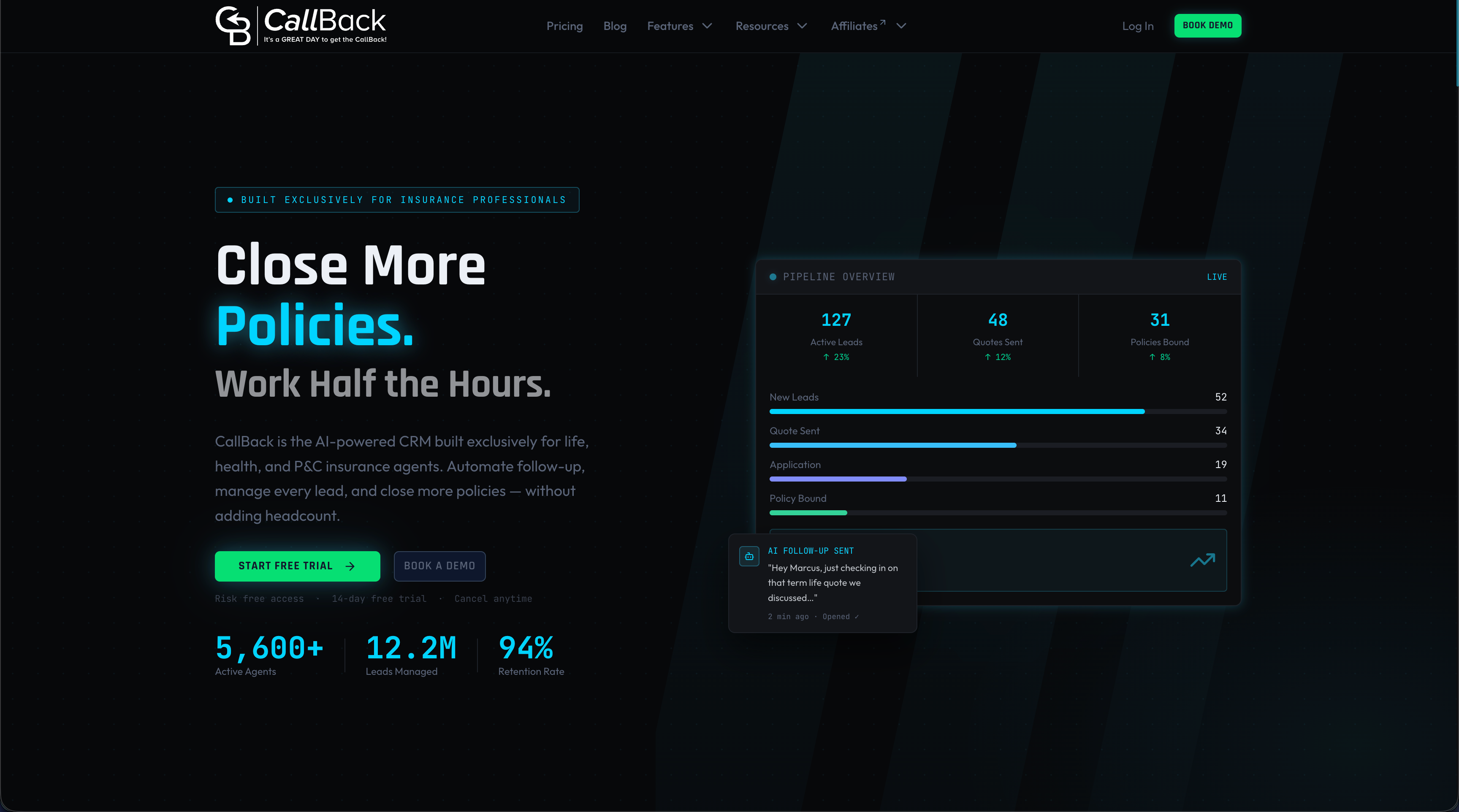
Callbackcrm gives insurance agents a single platform for SMS marketing, email automation, CRM management, and lead scoring. The SMS marketing features let you build compliant, segmented text sequences that reach seniors on the channel they check most. Automated workflows trigger follow-up tasks based on lead behavior, so no prospect falls through the cracks between your call phases. Agents using Callbackcrm replace manual tracking with a system that runs the nurture sequence consistently, whether they are in the field or off for the weekend.
FAQ
What is final expense lead nurturing?
Final expense lead nurturing is a structured, multi-touch process that builds trust with prospects over time through education and consistent outreach across phone, email, SMS, and direct mail channels.
How many touchpoints does it take to convert a final expense lead?
Most conversions require at least 5 or more distinct touchpoints. Agents who stop after one or two attempts miss the majority of leads who would have converted with continued follow-up.
Can I use an autodialer for aged final expense leads?
No. TCPA restrictions require manual dialing for aged leads. Using autodialers or prerecorded calls on these lists creates significant legal and compliance risk.
What is the best channel mix for senior final expense prospects?
Seniors aged 60–69 respond best to digital channels like email and social media. Adults 70 and older respond better to direct mail and personal phone calls. Combining both channels increases response rates substantially.
How long should a final expense nurture sequence run?
A six-month sequence is the industry standard for aged leads. Front-load contacts in the first two weeks, then taper to weekly, bi-weekly, and monthly cadences to maintain engagement without causing fatigue.