

TL;DR:
- Effective agency reputation management combines targeted media campaigns, native community engagement, content ecosystems, and automation. These strategies build trust signals that improve search rankings, reputation, and AI visibility over time. Consistent investment in reputation infrastructure is essential to long-term success and brand credibility.
Agency reputation management is defined as the practice of monitoring, shaping, and protecting how a brand or professional is perceived across digital and physical channels. For agency owners and marketing professionals, the difference between a thriving client roster and a stagnant one often comes down to reputation signals. The best examples of agency reputation management share three traits: they are data-driven, platform-specific, and built for scale. This article breaks down four proven approaches, from targeted media campaigns to AI-ready content ecosystems, so you can apply what actually works.
1. Examples of agency reputation management through targeted media campaigns

Targeted media relations is one of the most measurable agency reputation strategies available. The goal is simple: earn positive coverage in publications your audience already trusts, then amplify that coverage across owned channels.
A financial services firm working with Axia Public Relations demonstrates exactly how powerful this approach can be. The campaign generated over 1,500 positive media placements and delivered a 194% ROI. That kind of return does not happen by accident. It requires a coordinated system of pitching, placement tracking, and brand reinforcement.
The campaign also grew the firm’s Facebook following from zero to 10,000 and its Twitter following to nearly 9,000. Those numbers reflect something beyond vanity metrics. Social proof at that scale signals credibility to both prospective clients and search algorithms.
Key tactics that drove those results:
- Strategic media pitching: Journalists received story angles tied to market trends, not generic press releases.
- Award submissions: The firm won 20 industry awards, which fed back into media coverage as third-party validation.
- Geographic expansion: The agency helped the client grow from 4 regional to 11 national locations, using each expansion as a fresh news hook.
- SEO-aligned content placement: Articles were placed on high-authority domains to shift SERP results toward positive coverage.
Pro Tip: Align media pitching with award season calendars. A single industry award win can generate three to five additional media placements when pitched correctly to trade publications.
2. Engaging hostile online communities: the Reddit approach
Reddit presents a unique challenge for agencies. The platform’s culture actively rejects promotional content, and a single misstep can trigger community backlash that spreads far beyond the original thread. Direct confrontation on hostile platforms like Reddit may trigger backlash, making community-native engagement the only viable path.
An iGaming brand tackled this head-on with a structured six-week reputation framework. The results were striking. Positive sentiment rose from 41% to 82%, while negative mentions dropped from roughly 38% to 10%. Zero platform bans or flags occurred during the campaign. That last data point matters as much as the sentiment shift. It proves the strategy was genuinely native, not manufactured.
The framework followed this sequence:
- Sentiment audit: Map all brand mentions across relevant subreddits, categorizing tone and identifying the most active critics.
- Account seasoning: Create or identify accounts that engage in broader community discussions for weeks before any brand commentary begins.
- Misinformation removal: Submit factually incorrect posts for moderator review using platform-compliant reporting tools.
- Native engagement: Participate in threads organically, answering questions without commercial language or redirect links.
- Monitoring cadence: Track sentiment weekly and adjust engagement topics based on what the community responds to positively.
The accounts engaged in broader discussions for weeks before brand commentary. No commercial content links or redirects were posted at any point. That discipline is what separates a successful Reddit reputation campaign from one that gets the brand permanently banned.
Pro Tip: Never assign Reddit engagement to someone unfamiliar with the platform’s culture. A single “shill” comment can undo weeks of trust-building and generate negative press outside Reddit.
For agencies managing reputation across multiple platforms, a step-by-step reputation guide for SMBs offers a practical framework that translates well to client work.
3. Executive reputation management through content ecosystems
Executive online reputation management (ORM) is a specialized discipline within the broader field of agency reputation work. The standard industry term is “executive ORM,” and it differs from brand-level reputation management because the stakes are personal. A negative news story about a CEO can affect stock prices, partnership deals, and employee morale simultaneously.
The most effective approach is building a content ecosystem: a network of owned and earned digital properties that collectively dominate the search results for a person’s name and related keyword variations.
A three-year campaign for a tech CEO illustrates how this works in practice. All negative URLs for the executive were pushed beyond page 1 of Google, and the top negative news story moved from position 9 to position 27. That shift did not happen through suppression tactics. It happened through volume and authority.
The content architecture included:
- Multi-site property creation: Separate authoritative sites built around the executive’s name, expertise, and industry contributions.
- Internal linking structure: Properties linked to each other strategically to pass authority and reinforce keyword relevance.
- Guest posting and link acquisition: High-quality backlinks from industry publications strengthened the positive properties’ domain authority.
- Buyer-prompt content: Articles answering specific questions clients and journalists would search for, rather than generic biography pages.
- Monthly SERP tracking: Monthly keyword position reporting tracked negative URL movement and guided tactical adjustments.
Long-term, content-rich strategies focused on authoritative positive assets outperform direct suppression attempts, particularly for executives or high-profile brands. The three-year timeline is not a limitation. It is the strategy. Patience and consistency produce results that short-term tactics cannot replicate.
| Content Property Type | Primary Function |
|---|---|
| Personal authority website | Ranks for executive name searches |
| Industry blog | Captures topic-specific keyword traffic |
| Guest articles on trade sites | Builds backlinks and third-party credibility |
| Podcast appearances | Creates audio and transcript content for long-tail keywords |
| LinkedIn thought leadership | Controls social SERP results for name searches |
4. Automating reputation workflows to scale agency efforts
Manual reputation management breaks down at scale. An agency managing 20 clients cannot rely on someone checking Google reviews every morning. Automation is not a shortcut. It is the only way to maintain consistent quality across a large client portfolio.
Five core workflows define how agencies approach reputation management automation:
- Milestone-triggered review requests: Automated SMS or email requests sent at project completion, onboarding anniversaries, or key deliverable moments.
- Negative review triage: Alerts routed to account managers within minutes of a one or two-star review appearing on Google or industry directories.
- Profile monitoring: Automated checks across Google Business Profile, Yelp, and niche directories to flag outdated or incorrect information.
- Brand mention tracking: Real-time alerts for client name mentions across social platforms, news sites, and forums.
- Case study pipelines: Automated follow-up sequences that identify satisfied clients and guide them through a structured testimonial or case study submission process.
A 22-person agency increased monthly Google reviews 14x in 90 days using automated review requests without adding manual effort. That result is not about gaming the system. It is about removing friction. Most satisfied clients never leave a review because no one asks them at the right moment.
Callbackcrm’s automation workflows handle all five of these functions within a single platform, which matters because fragmented tools create gaps. When review requests, mention alerts, and case study pipelines run through separate systems, data gets lost and response times slow down.
Pro Tip: Trigger review requests within 24 hours of a positive client interaction. Response rates drop significantly after 48 hours, regardless of how satisfied the client was.
For a deeper look at building these systems, the 2026 automation playbook covers the specific workflow architecture agencies use most.
Key Takeaways
The most effective agency reputation management combines proactive media coverage, platform-native community engagement, content-driven SERP control, and automated review workflows to build lasting brand trust.
| Point | Details |
|---|---|
| Media campaigns deliver measurable ROI | A coordinated PR campaign can generate 194% ROI and thousands of social followers through strategic placement. |
| Reddit requires native engagement | Sentiment can shift from 41% to 82% positive in six weeks when engagement is authentic and non-promotional. |
| Executive ORM takes years, not weeks | A three-year content ecosystem approach moves negative URLs off page 1 of Google sustainably. |
| Automation multiplies review volume | Milestone-triggered review requests can increase monthly reviews 14x without adding manual workload. |
| AI visibility depends on reputation signals | 62% of enterprise brands remain invisible to generative AI, making consistent trust signals a competitive necessity. |
Why reputation is infrastructure, not a campaign
Most agency owners treat reputation management as something you do when a crisis hits. That framing is the problem. Reputation signals now function as access filters in AI recommendation engines, which means an agency with weak trust signals simply does not appear when a prospect asks an AI tool for recommendations.
I have watched agencies spend heavily on SEO while ignoring review volume, response rates, and earned media. The result is a brand that ranks on Google but gets passed over by AI-generated recommendations. That gap will widen in 2026 as generative AI becomes the first stop for buyer research.
The case studies in this article share a common thread. None of them treated reputation as a one-time fix. The Reddit campaign ran for six weeks with daily monitoring. The executive ORM campaign ran for three years. The media relations campaign built a flywheel of awards, coverage, and social proof that compounded over time.
Cross-functional alignment matters just as much as the tactics. Centralized communication routing reduces reputational risk during product launches or public failures. When PR, legal, and social teams operate from separate playbooks, inconsistent messaging does more damage than the original incident.
The agencies that win on reputation treat it the same way they treat their tech stack: as infrastructure that requires ongoing investment, monitoring, and iteration. Build it before you need it.
— Kyle
How Callbackcrm supports agency reputation workflows
Callbackcrm’s platform gives agencies the tools to run the workflows described in this article without stitching together five separate tools. The SMS marketing features power milestone-triggered review requests, which is the single highest-impact automation for agencies looking to grow review volume fast. The built-in reputation management module handles profile monitoring, mention alerts, and negative review triage in one dashboard.
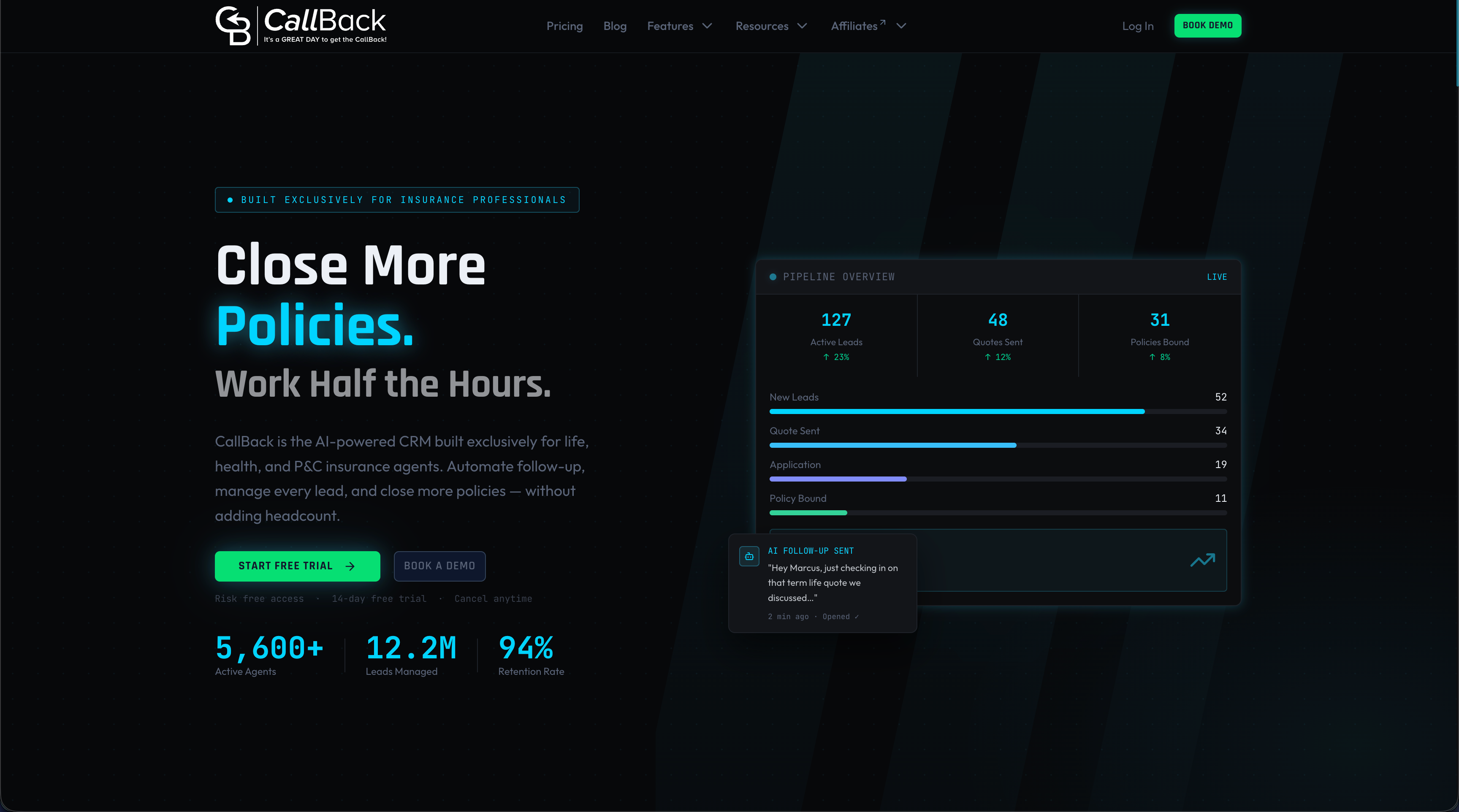
Agencies using Callbackcrm also get access to case study pipeline automation, which turns satisfied clients into published proof points without manual follow-up. For insurance agencies and IMOs specifically, these features connect directly to lead scoring and client engagement workflows, so reputation management becomes part of the sales process rather than a separate effort. Explore the reputation management features to see how the platform fits your current workflow.
FAQ
What are the best examples of agency reputation management?
The strongest examples combine targeted media campaigns, community-native engagement on platforms like Reddit, executive content ecosystems, and automated review workflows. Each approach targets a different layer of brand perception.
How long does agency reputation management take to show results?
Timelines vary by tactic. Automated review requests can increase monthly review volume within 90 days. Executive ORM campaigns that move negative URLs off page 1 of Google typically require two to three years of consistent effort.
How do agencies manage reputation on hostile platforms like Reddit?
Successful Reddit reputation management requires weeks of authentic community participation before any brand commentary, strict avoidance of promotional language, and structured misinformation reporting through platform-native tools.
Why does reputation management matter for AI visibility?
62% of enterprise brands remain invisible to generative AI tools despite SEO spending. AI recommendation engines rely on trust signals and consistent brand proof, making reputation management a direct factor in whether an agency appears in AI-generated results.
What automation workflows should agencies prioritize for reputation management?
Milestone-triggered review requests and real-time negative review triage deliver the fastest impact. Agencies that automate these two workflows first typically see the largest gains in review volume and response time before expanding to mention tracking and case study pipelines.
Recommended
- Customer Engagement Best Practices That Drive Insurance Sales | CallBack CRM Blog
- Automation Strategies for Agencies: 2026 Playbook | CallBack CRM Blog
- Data-Driven Decision Making Explained for Business Pros | CallBack CRM Blog
- Reputation Management Explained for Insurance Agents | CallBack CRM Blog