

Most insurance agents believe their products and pricing drive customer decisions, but research reveals a different story. 87% of consumers read online reviews before choosing an insurance provider, and your digital reputation shapes trust more than any policy feature. A single negative review left unaddressed can cost you dozens of potential clients, while proactive reputation management transforms satisfied customers into powerful advocates. This guide breaks down proven strategies insurance professionals use to monitor, protect, and enhance their online presence, turning reputation into your strongest competitive advantage in an industry where trust determines success.
Table of Contents
- Key takeaways
- Understanding reputation management for insurance agents
- Core strategies and methodologies for effective reputation management
- Managing risks and edge cases in insurance reputation
- Measuring success and ongoing reputation enhancement
- Enhance your insurance reputation with CallBack CRM
- Frequently asked questions
Key Takeaways
| Point | Details |
|---|---|
| Reputation drives trust | 87% of consumers read online reviews before choosing an insurer, and digital reputation shapes trust more than any policy feature. |
| Prompt review requests | Generate positive reviews by asking for feedback within 48 hours of positive interactions using automated email or SMS sequences. |
| Local SEO focus | Optimize local search presence with consistent NAP data across directories, claim your Google Business Profile, and publish location specific content. |
| Crisis response protocols | Deploy crisis response protocols with pre approved message templates for common negative scenarios to protect your reputation quickly. |
| KPIs and integration | Track key metrics such as average star rating, Net Promoter Score, response time, retention, and brand sentiment to guide improvement and CRM integration. |
Understanding reputation management for insurance agents
Reputation management is the proactive process of monitoring, influencing, and controlling how your insurance agency appears across digital platforms. It encompasses everything from review responses and social media engagement to search engine results and crisis communications. For insurance professionals, reputation directly impacts perceived value because customers evaluate trustworthiness before they ever discuss coverage options.
The connection between reputation and business outcomes is quantifiable. One insurance agency case study demonstrated a 19% increase in lead conversions after implementing systematic reputation recovery tactics. The same agency saw a 23% boost in Google traffic within six months. These numbers matter because insurance is fundamentally a trust-based purchase where customers hand over money for future promises.
Consider these critical reputation KPIs that successful insurance agents track:
- Average star rating across review platforms
- Net Promoter Score from customer surveys
- Review response time and response rate
- Customer retention and renewal rates
- Brand mention sentiment across social media
Insurance operates in a heavily regulated environment where reputation serves as a quality signal. Prospective clients can’t easily evaluate policy performance before purchase, so they rely on peer experiences and online feedback. A strong reputation reduces customer acquisition costs because warm leads arrive pre-sold on your credibility.
“In the insurance industry, reputation management isn’t optional. It’s the difference between agencies that grow through referrals and those that struggle to replace churned customers.”
When you integrate CRM and marketing systems effectively, reputation data flows directly into your sales process. This integration allows you to identify satisfied customers for review requests and flag at-risk accounts before they become public complaints. The goal is transforming reputation from a reactive concern into a proactive growth engine.
Core strategies and methodologies for effective reputation management
Building a strong reputation requires systematic approaches that address multiple touchpoints in the customer journey. Here are proven methodologies insurance agents use to strengthen their online presence:
-
Generate positive reviews systematically by requesting feedback within 48 hours of positive customer interactions like policy purchases or resolved claims. Use automated email or SMS sequences that make leaving reviews frictionless.
-
Optimize local SEO by maintaining consistent NAP data across directories, claiming your Google Business Profile, and publishing location-specific content that ranks for searches like “insurance agent near me.”
-
Engage actively on social media to demonstrate responsiveness and expertise. Share educational content, answer questions publicly, and showcase customer success stories with permission.
-
Deploy crisis response protocols with pre-approved message templates for common negative scenarios. Speed matters because core methods include review generation and crisis plans that prevent small issues from becoming viral problems.
-
Leverage AI sentiment analysis tools to monitor brand mentions across platforms automatically. These systems flag negative sentiment in real time so you can respond before situations escalate.
Pro Tip: Create a “reputation response matrix” that maps different review types to specific response templates. This ensures consistency while allowing personalization for individual situations.
The table below shows how different tactics support specific reputation goals:
| Tactic | Primary Goal | Time Investment | Impact Timeline |
|---|---|---|---|
| Review generation campaigns | Increase positive volume | 2-3 hours/week | 30-60 days |
| Local SEO optimization | Improve search visibility | 5-8 hours initial setup | 60-90 days |
| Social media engagement | Build community trust | 1 hour daily | Ongoing |
| Crisis response planning | Damage mitigation | 4-6 hours setup | Immediate when needed |
| AI monitoring tools | Automated oversight | 1 hour setup | Continuous |
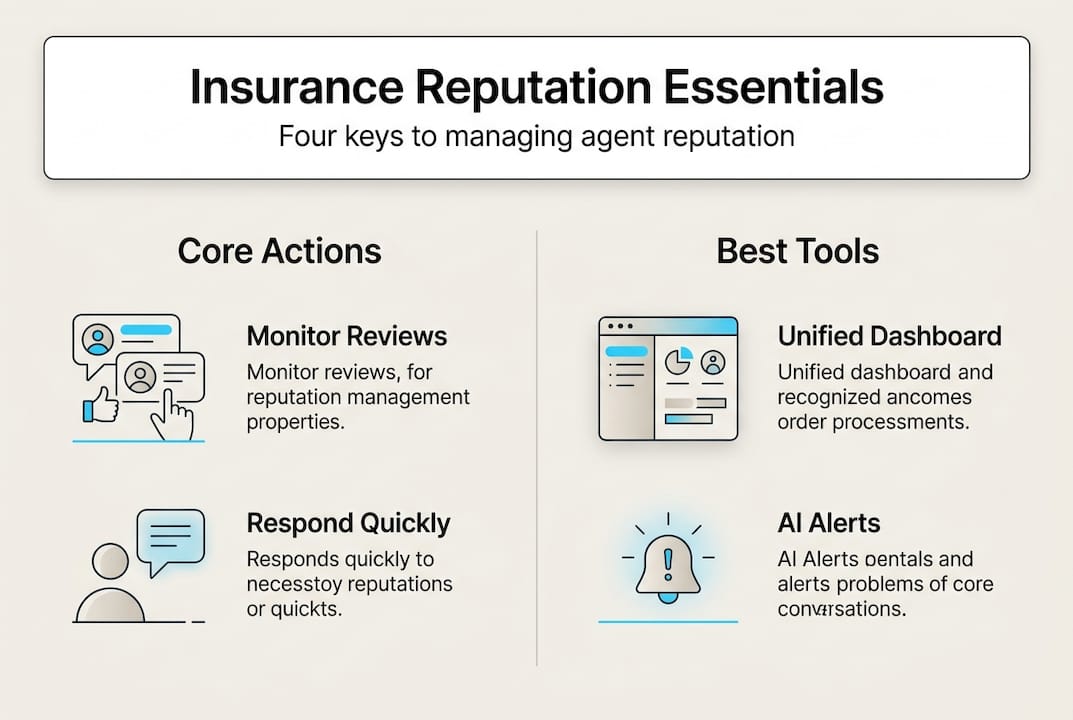
Modern reputation management software consolidates these tactics into unified dashboards. Instead of checking five platforms manually, you receive alerts when action is needed and can respond from a single interface. This efficiency matters because reputation work competes with selling time.
Advanced practitioners combine reputation tactics with AI marketing tools for insurance to personalize outreach based on sentiment data. If a customer leaves a glowing review, your system can automatically trigger a referral request. If sentiment trends negative, you can intervene with retention offers before they churn.
Search engine reputation management uses SEO techniques to ensure positive content ranks above negative mentions. This involves creating authoritative content on owned properties, earning backlinks from reputable insurance industry sites, and optimizing existing positive reviews for search visibility. The goal is controlling page one results for branded searches.
Implementing AI tools for agents accelerates reputation work by automating repetitive tasks. AI can draft initial review responses for human approval, identify which customers are most likely to leave positive reviews, and predict which accounts face churn risk based on engagement patterns. This allows you to focus human effort where it creates maximum impact.
Managing risks and edge cases in insurance reputation
Even with proactive strategies, insurance agents face unique reputation challenges that require specialized approaches. The industry’s complexity and emotional nature of claims create situations where standard tactics fall short.
Common reputation risks include:
- Fake or defamatory reviews from competitors or disgruntled individuals
- Negative feedback from legitimate claims denials that follow policy terms
- Perception issues stemming from insurance being viewed as a grudge purchase
- Regulatory complaints that become public record
- Commission-based sales model creating distrust about recommendations
When facing fake reviews, dispute or reporting procedures become essential. Most platforms allow flagging reviews that violate terms of service. Document why the review is false, provide evidence the reviewer wasn’t a customer, and follow up persistently. Platform removals can take weeks, so simultaneously post a professional public response explaining the situation.

Claims denials present a delicate scenario because the customer frustration is real even when your decision is correct. Your response should acknowledge their disappointment, briefly explain the policy reasoning without being defensive, and offer to discuss further offline. Never argue publicly about coverage details.
Pro Tip: Maintain a “reputation emergency kit” with pre-drafted responses for common crisis scenarios, contact information for platform support teams, and a decision tree for when to involve legal counsel versus handling internally.
Transparent communication during crises must happen within 12 to 48 hours to prevent narrative control loss. Speed demonstrates you take concerns seriously and prevents speculation from filling information voids. Even if you don’t have complete answers, acknowledge the situation and commit to follow up timelines.
Compliance requirements add complexity because insurance is regulated at state levels. Your reputation responses must avoid language that could be construed as admitting fault or making promises outside policy terms. Work with compliance officers to pre-approve response templates for sensitive situations.
The grudge purchase problem requires reframing through education and relationship building. Use content marketing to demonstrate value beyond claims, highlighting risk management advice and financial planning support. Position yourself as a trusted advisor rather than a transactional vendor.
Leverage lead generation tips to attract customers who value advisory relationships over price shopping. These clients are less likely to leave negative reviews because they understand the partnership nature of insurance relationships.
Implementing a lead generation workflow tutorial helps you systematically identify satisfied customers for testimonials and case studies. These proactive reputation assets counterbalance the occasional negative review by demonstrating consistent positive outcomes.
When reputation damage occurs despite precautions, focus on recovery velocity. Issue sincere apologies when warranted, explain corrective actions taken, and demonstrate changed processes. Follow up publicly after resolution to show closure. The goal is turning critics into advocates by exceeding expectations during recovery.
Measuring success and ongoing reputation enhancement
Tracking the right metrics transforms reputation management from subjective feeling to data-driven strategy. Insurance agents should monitor these key performance indicators:
- Average star rating: Target 4.5 stars or higher across major review platforms
- Net Promoter Score: Measure customer willingness to refer your agency
- Review velocity: Track new reviews per month to ensure consistent feedback flow
- Response rate and time: Aim for 100% response rate within 24 hours
- Customer retention rate: Industry average sits at 84%, while top performers achieve 93%
Response time particularly impacts reputation because it signals how much you value customer feedback. Automated monitoring tools alert you immediately when new reviews appear, enabling rapid responses that impress both the reviewer and future prospects reading the exchange.
Review velocity matters because recent feedback carries more weight in consumer decisions and platform algorithms. A steady stream of new positive reviews signals active business and current service quality. Agencies should generate at least 3 to 5 new reviews monthly to maintain momentum.
The comparison table below shows typical versus top performer benchmarks:
| Metric | Industry Average | Top Performers | Your Target |
|---|---|---|---|
| Star Rating | 4.2 | 4.7+ | 4.5+ |
| Response Rate | 67% | 95%+ | 90%+ |
| Response Time | 3-5 days | Under 24 hours | Under 48 hours |
| Monthly Reviews | 1-2 | 5-8 | 3-5 |
| Retention Rate | 84% | 93% | 88%+ |
| NPS Score | 32 | 55+ | 45+ |
Ongoing reputation enhancement requires quarterly audits of your digital footprint. Search your agency name and key staff members to see what appears on page one. Check review platform profiles for completeness and accuracy. Monitor competitor reputations to identify gaps you can exploit.
Digital marketing amplifies trust signals by distributing positive reputation content across channels. Share customer testimonials in email newsletters, feature case studies on social media, and incorporate review snippets into paid advertising. This multi-channel approach ensures prospects encounter your strong reputation regardless of where they research.
Expert recommendations for sustained reputation strength:
- Schedule monthly reputation reviews with your team to address trends
- Invest in customer experience improvements that prevent negative feedback at the source
- Build relationships with local media and industry publications for positive coverage
- Create video testimonials that add authenticity beyond text reviews
- Implement customer feedback loops that catch issues before they become public complaints
Understanding types of lead generation helps you attract customers predisposed to positive experiences. Referral leads and content marketing leads typically have higher satisfaction rates than cold outreach prospects because they arrive with established trust.
Automating reputation workflows through sales automation ensures consistency even as your agency scales. Automated systems request reviews at optimal times, monitor feedback continuously, and alert you to situations requiring personal attention. This combination of automation and human touch maximizes efficiency while maintaining relationship quality.
Reputation management is never finished because customer expectations and platform algorithms constantly evolve. Commit to continuous improvement by testing new tactics, learning from both successes and failures, and staying current with industry best practices. Your reputation compounds over time when you consistently deliver excellent experiences and effectively communicate that value to your market.
Enhance your insurance reputation with CallBack CRM
Managing your agency’s reputation across multiple platforms while running your business creates competing demands on your time. CallBack CRM solves this challenge by centralizing reputation management alongside your lead generation and customer engagement workflows.
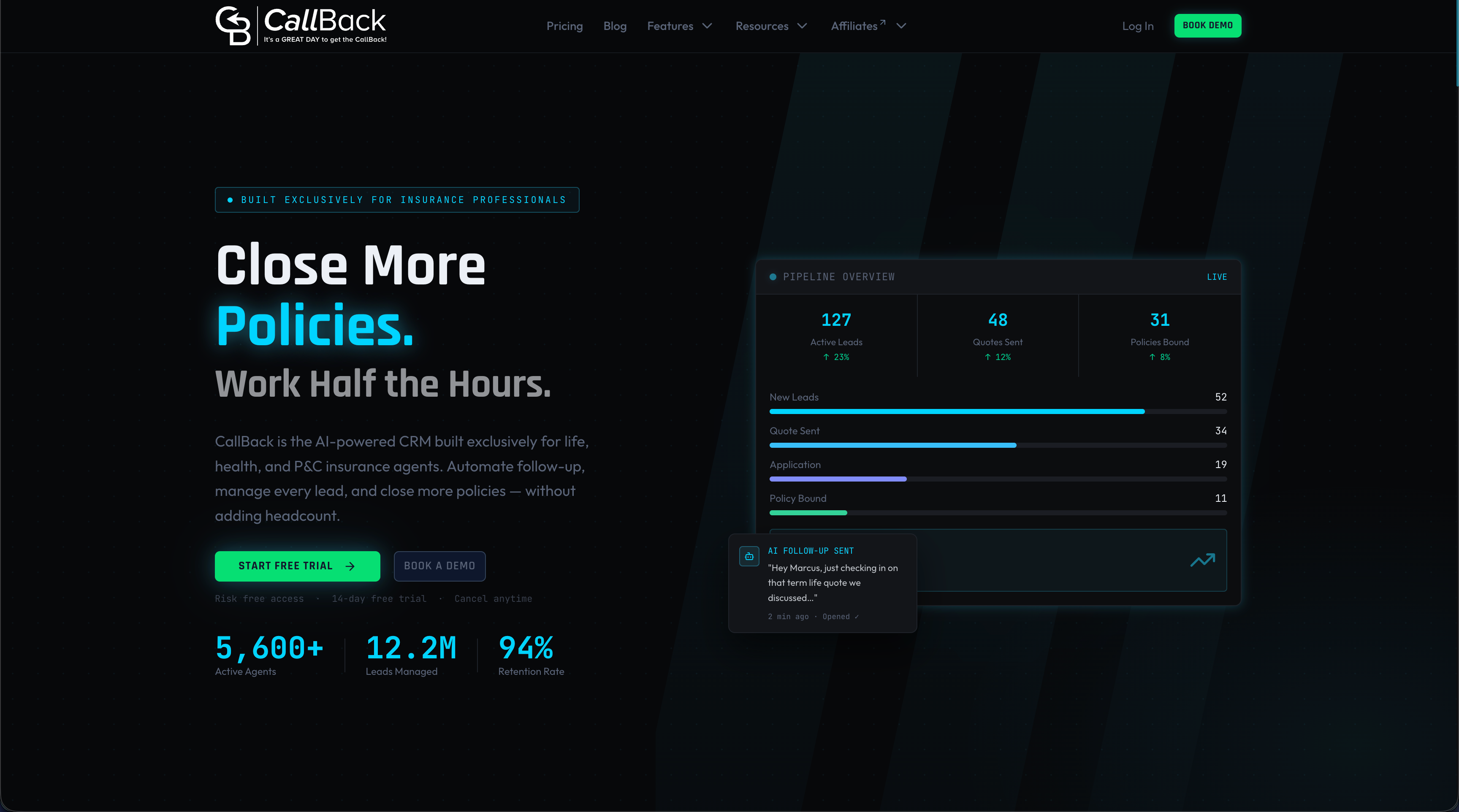
Our platform provides AI-driven monitoring that tracks reviews and brand mentions across all major platforms, alerting you instantly when feedback appears. The integrated reputation management features let you respond directly from your CRM dashboard, maintaining context with customer history. Automated review request sequences trigger at optimal moments in the customer journey, generating positive feedback systematically.
Explore our complete suite of AI tool features designed specifically for insurance professionals. From lead scoring to automated follow-up sequences, CallBack CRM helps you deliver the exceptional experiences that build strong reputations. Request your free marketing audit to identify specific opportunities for enhancing your agency’s online presence and customer engagement. Our team will analyze your current reputation footprint and recommend personalized strategies for improvement.
Frequently asked questions
What is reputation management and why is it crucial for insurance agents?
Reputation management is the systematic process of monitoring, influencing, and controlling how your insurance agency appears across digital platforms including review sites, social media, and search engines. It’s crucial because 87% of consumers read online reviews before choosing insurance providers, making your digital reputation the first impression for most prospects. Strong reputation management builds trust, reduces customer acquisition costs, attracts higher quality leads, and increases retention rates in an industry where credibility determines purchasing decisions.
How quickly should insurance agents respond to online reviews and feedback?
Best practice requires responding within 24 to 48 hours to demonstrate responsiveness and show you value customer feedback. Faster responses improve customer satisfaction scores and signal to prospects that you prioritize client relationships. Platform algorithms also favor businesses with high response rates and quick response times, improving your visibility in local search results. Delayed responses risk letting negative narratives solidify and suggest you don’t monitor or care about customer experiences.
What tools can insurance agents use for effective reputation monitoring?
Insurance agents should use comprehensive reputation management software that monitors multiple platforms simultaneously and provides real-time alerts when new reviews appear. Tools like Birdeye, Hootsuite, and integrated CRM platforms with reputation features offer sentiment analysis, automated response suggestions, and performance dashboards. AI-powered platforms can analyze review patterns, predict reputation risks, and automate routine monitoring tasks while flagging situations requiring personal attention. The best solutions integrate with your existing CRM so reputation data informs your sales and retention strategies.
How can insurance agents handle fake or defamatory online reviews?
Report fake reviews immediately through the platform’s dispute process, providing documentation that the reviewer wasn’t a customer and explaining why the review violates terms of service. Respond publicly and professionally to acknowledge the situation while you pursue removal, stating that you have no record of serving this individual and inviting legitimate concerns to be discussed privately. Maintain detailed customer records to support disputes and consider legal consultation for seriously defamatory content that platforms won’t remove. Simultaneously generate positive reviews from real customers to dilute the impact of fake feedback while the dispute process unfolds.