

Trigger-based automation that detects life events and policy events is the fastest way for agents to increase cross-sell conversion while saving producer time. Map your top three triggers first: home purchase, renewal window, and new vehicle. These three cover the largest share of coverage gaps in most books.
The evidence backs this up. One workflow deployment lifted conversion from 4.2% to 13.8% once outreach was tied to detected triggers instead of blanket campaigns.
- Home purchase: signals a likely need for updated homeowners and umbrella coverage.
- Renewal window: the natural moment to review the full account, not just one policy.
- New vehicle: near-automatic auto and liability review opportunity.
Statistic Callout: The same case study found producer outreach time per attempt dropped from 4.2 hours to about 18 minutes once automation handled identification and first-touch outreach.
Key Takeaways
Trigger-based automation converts better than broadcast outreach because it matches messaging to the moment a client actually has a coverage need.
| Point | Details |
|---|---|
| Start with three triggers | Home purchase, renewal window, and new vehicle cover most early cross-sell opportunity. |
| Conversion uplift is real | One workflow moved conversion from 4.2% to 13.8% by timing outreach to detected life events. |
| Producer time drops sharply | Automated first-touch outreach cut producer time per attempt from 4.2 hours to about 18 minutes. |
| Cap sequences to protect trust | Limit clients to two active sequences at once and log every opt-out immediately. |
| Callbackcrm runs the workflow | Its trigger monitoring, templates, and AMS integrations implement this playbook without manual setup. |
Table of Contents
- Why Trigger-Based Insurance Cross-Sell Automation Beats Broadcast Campaigns
- Which Life-Event Triggers Deserve Priority?
- How Do You Build a Cross-Sell Automation Workflow?
- How Do You Avoid Spamming Clients With Automated Cross-Sell Outreach?
- What KPIs Actually Prove Cross-Sell Automation Works?
- Your 30/60/90 Day Rollout Checklist
- Automation Should Sharpen Producer Focus, Not Replace It
- Put Cross-Sell Automation to Work With Callbackcrm
- Sources
Why Trigger-Based Insurance Cross-Sell Automation Beats Broadcast Campaigns
Timing changes everything. A client who just bought a house has an immediate, tangible need for updated coverage. A client who got a marketing email about “reviewing your policy” in a random month has no urgency at all. Trigger-based insurance cross-sell automation wins because it matches outreach to the moment the client actually needs to act.
Humans miss most of these moments. The signals live in scattered places: your AMS, county property records, DMV filings, even social media. Automation stitches them together so no trigger falls through the cracks.
- Broadcast campaigns convert in the low single digits.
- Trigger-timed outreach converts in the low to mid teens.
- Clients with more policies per household churn less.
Agencies that push policies-per-client toward 3.0 to 4.0 or higher see materially lower churn than single-policy books. Every cross-sell is also a retention play.
Which Life-Event Triggers Deserve Priority?
Not every trigger deserves equal attention. Some events reliably signal a coverage gap; others are noise. Start with the events that show up most often in successful cross-sell campaigns, then build outward as your automation matures.
- Home purchase — new mortgage, new homeowners policy, umbrella eligibility.
- New vehicle — auto quote opportunity, often bundled with the same household’s other lines.
- Renewal window — full account review, natural moment to surface gaps.
- Teen driver — auto policy update, often missed until a claim exposes it.
- Marriage — combined households, duplicate coverage, umbrella needs.
- New baby — life insurance conversations, disability coverage review.
- Small business formation — commercial lines opportunity, missed entirely by personal-lines-only agents.
- Umbrella eligibility — asset growth signals, often invisible without net worth estimates.
High-conversion triggers like these respond best when outreach happens within 30 days of the event, according to Neudash’s cross-sell research.
Each trigger has its own signal source:
- Property records flag home purchases and address changes.
- AMS policy events flag renewals, endorsements, and new vehicles added elsewhere.
- State Secretary of State filings flag new business formation.
- DMV records and social posts often surface teen drivers and marriages before the client mentions it.
Choose triggers based on your book’s makeup. An agency heavy in young families should weight new baby and teen driver signals higher; a commercial-leaning book should prioritize business filings.
How Do You Build a Cross-Sell Automation Workflow?
Standing up automated cross-selling doesn’t require a full platform migration on day one. It requires a clean data foundation and a willingness to start small.
- Audit your data. Confirm which AMS fields are populated and reliable, and which external feeds (property records, DMV, SOS filings) you can connect to. Data quality gaps here are the single most common reason automation projects stall before launch.
- Define gap-analysis rules. Decide what actually counts as a coverage gap for each trigger. A home purchase without an updated dwelling limit is a gap. A renewal with no auto policy on file is a gap.
- Build sequence templates. Two to four touches per trigger works well: an email explaining the coverage consideration, an SMS follow-up three to five days later, then a producer task if there’s no response. Time each touch to the trigger’s urgency. A teen driver alert can wait a week; a home purchase closing in 10 days cannot.
- Choose your integration approach. APIs, webhooks, and AMS connectors each work depending on your platform. Run a lightweight pilot on one trigger before wiring in every data source at once, since a compact pilot with one trigger and two or three templates delivers usable ROI data fast.
- Hand off to producers with context. Pre-populate call briefs with the trigger type, the coverage gap summary, current policies on file, three suggested talking points, and the last contact date pulled directly from the AMS.
Pro Tip: Don’t build all eight triggers at once. Launch with your single highest-volume trigger, measure conversion for 60 days, then expand. A narrow pilot teaches you more than a wide one you can’t fully monitor.
Sequence structure and cadence templates like these are covered in more detail in Callbackcrm’s sales automation workflow guide.
How Do You Avoid Spamming Clients With Automated Cross-Sell Outreach?
Automation that annoys clients defeats its own purpose. Set a hard cap: no client should sit in more than two active sequences at once. Space distinct triggers apart by a minimum number of days so a client who just got a home-purchase sequence doesn’t also get bombarded with a renewal-window pitch the same week.
- Cap active sequences per client at two, maximum.
- Require a minimum gap between distinct trigger sequences.
- Log every opt-out immediately and suppress future sequences for that contact.
- Tie every message directly to the specific life event, not generic “check your coverage” language.
Keep messages short and advisory, not salesy. A client who just bought a car wants “here’s what to check on your auto policy,” not a hard pitch.
Pro Tip: Document consent for SMS and email outreach at the point of collection. TCPA and CAN-SPAM compliance isn’t optional, and opt-out logs are your best defense if a client disputes contact.
What KPIs Actually Prove Cross-Sell Automation Works?
Three numbers matter more than the rest: incremental premium generated by automation, conversion rate by trigger, and average premium per cross-sell. These tell you whether the program is making money, not just generating activity.
Secondary metrics round out the picture:
- Producer time saved per cross-sell attempt.
- Percentage of sequences that escalate to a phone call.
- Policies per household, tracked as a retention proxy.
For attribution, tag every sequence with a unique ID and track conversions in a 30 to 90 day window after the first touch. Link quotes and policy adds back to that sequence ID so incremental premium can be credited to the specific trigger and template that produced it. This is the same mechanism that let one deployment document the 4.2 to 13.8 percent conversion jump with a clean, defensible number for agency owners.
Your 30/60/90 Day Rollout Checklist
Treat the first 90 days as a structured pilot, not a full rollout. Each phase has a specific deliverable so you know whether to keep moving or fix something first.
Checklist before you start:
- Data audit complete across AMS and external feeds.
- Trigger priority list finalized for your book.
- Two to four sequence templates drafted per trigger.
- Integrations connected (API, webhook, or AMS connector).
- Suppression rules configured and tested.
- Producer playbook and call brief format finalized.
- Attribution tagging set up on quotes and adds.
The schedule:
- Days 1 to 30: Complete the data audit, finalize your top trigger, and build the first sequence. Goal: one live trigger with clean data feeding it.
- Days 31 to 60: Launch the pilot trigger, monitor conversion weekly, and refine templates based on producer feedback. Goal: a documented conversion rate you trust.
- Days 61 to 90: Add a second and third trigger, formalize the producer handoff process, and set up the attribution dashboard. Goal: repeatable process, not a one-off experiment.
Pilot success looks like a conversion rate meaningfully above your historical broadcast baseline, with producers reporting the call briefs actually save them prep time. If both hold true, that’s your signal to expand into additional triggers.
Automation Should Sharpen Producer Focus, Not Replace It
Automation’s real job is prioritization. It should surface the clients most likely to need a conversation right now, so producers stop cold-calling a flat list and start working warm, timed opportunities. Experts in the space consistently make this point: automation exists to prioritize high-potential leads for human attention, not to eliminate the human conversation entirely.
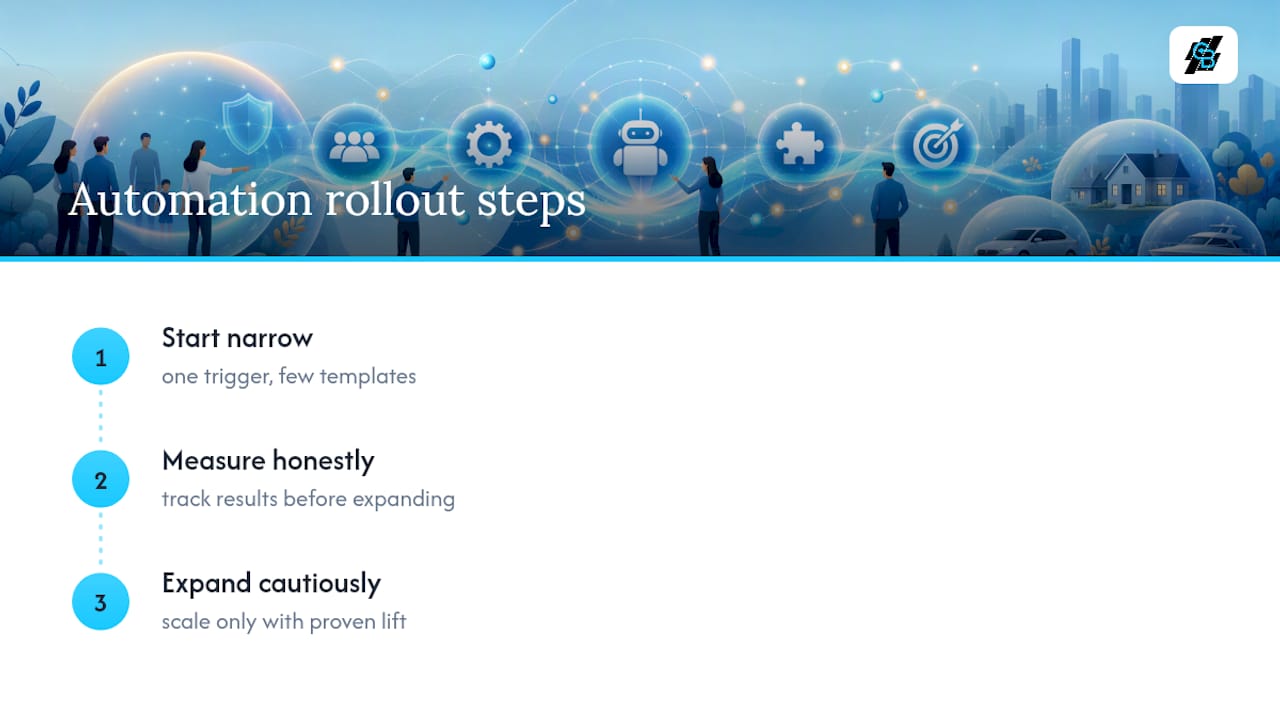
I think the agencies that get this wrong treat automation as a replacement for producers rather than a filter for their time. That’s backwards. The best rollout I’ve seen in the data starts narrow, with one trigger and a handful of templates, and expands only once the numbers hold up. Start there. Measure honestly. Let the results tell you what to build next.
— Kyle
Put Cross-Sell Automation to Work With Callbackcrm
Callbackcrm turns everything in this playbook into working software instead of a spreadsheet you have to maintain by hand. Trigger monitoring, sequence templates, AMS integrations, and producer handoff automation all live in one platform, so you’re not stitching together three tools to run one cross-sell program.
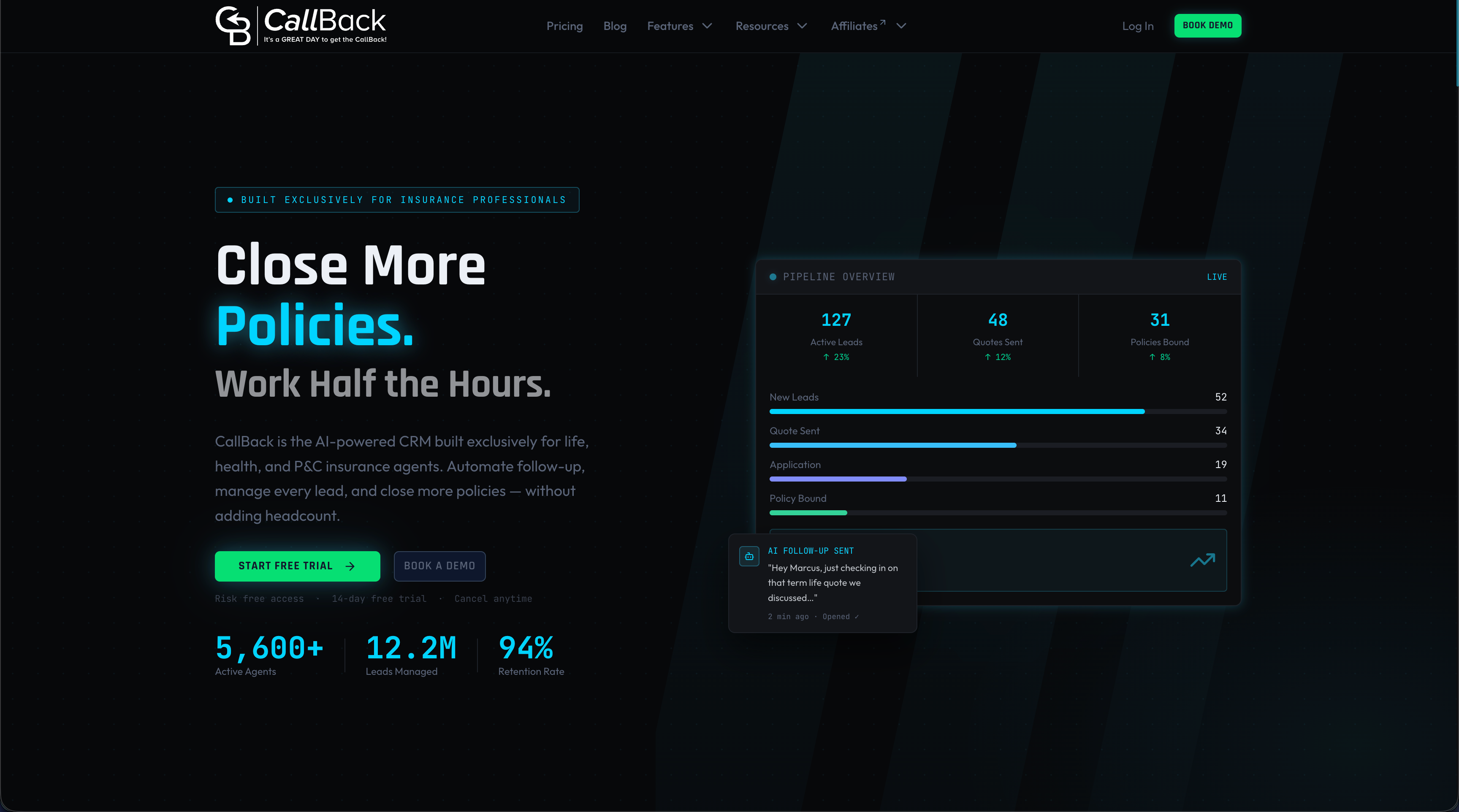
The platform builds call briefs automatically from your AMS data, routes escalations to the right producer, and tracks attribution by sequence ID so you can prove incremental premium instead of guessing at it. If you want a faster starting point than building sequences from scratch, Callbackcrm’s email automation and template tools give you pre-built cadences you can adapt to your top trigger today. Start a trial and launch your first trigger sequence this week.
Sources
- Insurance Cross-Sell Automation: Case Study Results 2026 | US Tech Automations
- InsuranceJournal expert commentary on automation and producer prioritization
- Insurance Cross-Sell Automation | Life Event Triggers | Neudash