

Many insurance agents struggle with funnel building because they confuse it with simple lead collection or assume it requires expensive tech skills. The truth is funnel building is a structured process that guides prospects from awareness to policy purchase, and AI has made it faster and more effective than ever. In 2026, agents who master AI-powered customer engagement see dramatically higher conversion rates and reduced lead loss. This guide explains funnel building basics and shows you proven AI techniques to transform your insurance sales performance.
Table of Contents
- Understanding Funnel Building And Its Impact In Insurance Sales
- How AI Enhances Sales Funnels For Insurance Agents
- Case Study: How AI-Driven Funnel Building Powers Insurance Growth
- Practical Steps For Insurance Agents To Build AI-Powered Funnels
- Explore AI-Driven Funnel Tools With CallBack CRM
- Frequently Asked Questions
Key takeaways
| Point | Details |
|---|---|
| Structured funnels boost performance | Agents with defined processes see 33% higher performance rates compared to those without clear funnel stages |
| Speed matters for lead qualification | Contacting leads within 5 minutes makes them 21 times more likely to qualify than delayed follow-up |
| AI reduces funnel leakage | Automation handles routine tasks so you can focus on high-value closing conversations and complex objections |
| Real results from AI funnels | Insurance leaders using AI chatbots complete quote-to-policy journeys in under 90 seconds |
Understanding funnel building and its impact in insurance sales
Funnel building is the structured process of guiding potential customers through distinct stages from initial awareness to final policy purchase. Unlike a static lead list, a sales funnel is a dynamic journey that moves prospects through awareness, interest, decision, and action phases with targeted messaging and interactions at each step. For insurance agents, this means creating systematic touchpoints that educate prospects about coverage options, address concerns, and build trust before asking for commitment.
The importance of structured funnels is backed by compelling data. Agents with defined processes see 33% higher performance compared to those who handle leads reactively without clear stages. This performance boost comes from several factors:
- Focused resource allocation on prospects most likely to convert
- Consistent messaging that builds credibility and addresses common objections
- Automated nurturing that keeps leads warm without manual effort
- Clear metrics at each stage revealing bottlenecks and optimization opportunities
- Reduced chaos and wasted time chasing unqualified prospects
Many agents mistakenly think funnels are just about collecting contact information or sending generic email sequences. The reality is effective funnel marketing for insurance agents involves understanding customer psychology, timing communications perfectly, and delivering the right information at each decision point. A well-built funnel anticipates questions, removes friction, and makes the path to purchase feel natural rather than pushy.
The funnel framework also helps you identify where prospects drop off. If many leads engage with your awareness content but never request quotes, you know your interest stage needs work. If quote requests rarely convert to policies, your decision stage messaging or follow-up process needs refinement. This diagnostic capability alone makes structured funnels invaluable for continuous improvement.
How AI enhances sales funnels for insurance agents
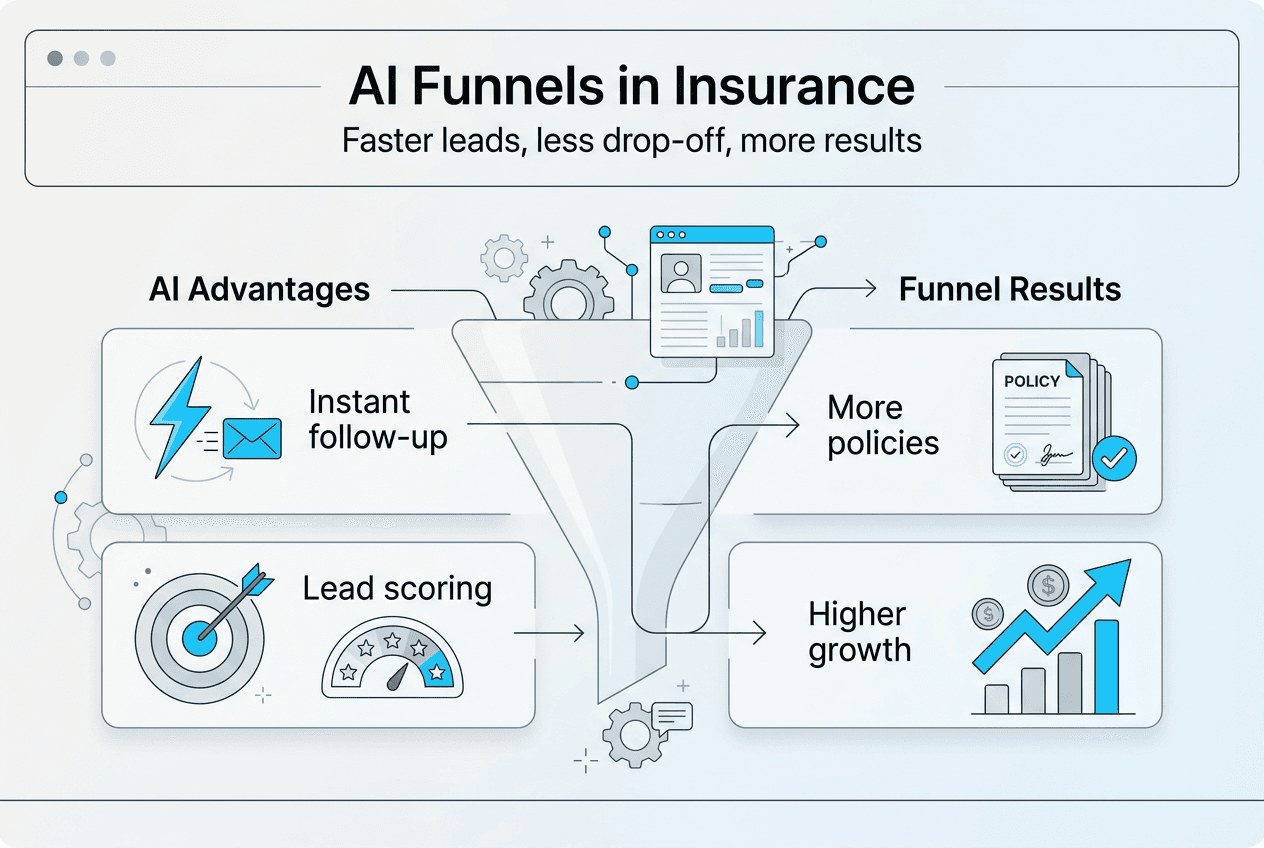
AI transforms traditional funnels from manual, slow processes into intelligent, automated systems that respond instantly and personalize at scale. The most immediate impact comes from AI-powered lead scoring and prioritization, which analyzes prospect behavior, demographics, and engagement patterns to predict conversion likelihood. This automation improves conversion rates by up to 30% because you invest time in prospects actually ready to buy rather than spreading effort equally across all leads.
Timing is critical in insurance sales, and AI excels at speed. Research shows leads contacted within 5 minutes are 21 times more likely to qualify than those who wait longer. Human agents cannot monitor lead sources 24/7 or respond instantly, but AI chatbots and automated workflows can. The moment someone fills out a quote form or clicks an ad, AI can initiate personalized follow-up, answer basic questions, and schedule appointments without any delay.
Beyond speed, AI-automated sales funnels leak less because they eliminate the manual handoffs and forgotten tasks that cause leads to fall through cracks. AI handles routine activities like sending policy information, scheduling reminders, updating CRM records, and nurturing cold leads with educational content. This frees human agents to focus exclusively on high-value activities like explaining complex coverage, handling objections, and closing deals.
Real-world insurance leaders demonstrate AI’s power. Lemonade uses AI chatbot Maya to guide customers from initial quote through policy binding in under 90 seconds, eliminating traditional friction points. The system asks questions, explains coverage, processes payments, and issues policies entirely through conversational AI, creating a seamless experience that traditional agents cannot match for speed or consistency.

Pro Tip: When integrating AI into your funnel, start with one stage rather than automating everything at once. Test AI lead scoring or automated follow-up first, measure results, then expand. Rushing full automation can create disconnected experiences that confuse prospects and hurt conversion.
Key AI capabilities that enhance insurance funnels include:
- Predictive analytics identifying which leads need immediate attention
- Natural language processing understanding prospect questions and concerns
- Automated nurture sequences delivering relevant content based on behavior
- Intelligent routing connecting prospects to the right specialist
- Real-time personalization adapting messaging to individual needs
The combination of speed, personalization, and consistency makes AI lead generation for insurance pros far more effective than traditional methods. You can engage hundreds of prospects simultaneously while maintaining quality interactions, something impossible with manual processes alone.
Case study: How AI-driven funnel building powers insurance growth
Lemonade provides a compelling example of AI-powered funnel success in the insurance industry. The company built its entire customer acquisition and servicing model around conversational AI, with chatbot Maya handling the complete journey from awareness through policy issuance. Maya asks targeted questions, explains coverage options, provides instant quotes, and binds policies in under 90 seconds, creating a frictionless experience that traditional insurance funnels cannot match.
The results speak for themselves. Lemonade’s pet insurance premium grew 55% year-over-year, and the company’s growth rate outpaces established competitors by 350%. Perhaps most impressive, Lemonade grew its customer base 23% to nearly 3 million policyholders, demonstrating that AI funnels scale efficiently without proportional increases in human staff.
| Metric | 2025 Performance | 2026 Performance | Growth Rate |
|---|---|---|---|
| Pet Insurance Premium | $180M | $279M | 55% |
| Total Customer Base | 2.4M | 3M | 23% |
| Quote to Policy Time | 90 seconds | 90 seconds | Maintained speed |
| Growth vs Competitors | Baseline | 350% faster | Industry leading |
Lemonade’s success offers several lessons for insurance agents building AI-powered funnels. First, the company prioritizes customer experience over traditional sales tactics, using AI to remove friction rather than add complexity. Second, they maintain transparency about AI involvement, building trust by being upfront about how the technology works. Third, they continuously optimize based on data, using AI analytics to identify and fix funnel bottlenecks.
Key tactics Lemonade employs that agents can adapt:
- Conversational interfaces that feel natural and reduce form-filling friction
- Instant gratification through immediate quotes and policy issuance
- 24/7 availability ensuring no lead waits for business hours
- Data-driven personalization tailoring coverage recommendations to individual needs
- Seamless mobile experience meeting customers where they prefer to interact
- Proactive communication keeping customers informed throughout the process
While most independent agents cannot replicate Lemonade’s full technology stack, the principles apply at any scale. Using AI-powered customer engagement tools available through modern CRM platforms, you can automate lead scoring, instant follow-up, nurture sequences, and appointment scheduling. The goal is not replacing human agents but amplifying their effectiveness by handling routine tasks automatically.
Practical steps for insurance agents to build AI-powered funnels
Building an effective AI-powered funnel does not require a massive budget or technical expertise. Follow these steps to create a system that qualifies leads faster and converts at higher rates:
- Identify your target customer segments based on demographics, needs, and policy types you specialize in selling
- Map the customer journey from initial awareness through policy purchase, noting typical questions and objections at each stage
- Implement AI lead scoring to prioritize prospects showing high engagement or ideal characteristics for your offerings
- Automate initial follow-up so every lead receives immediate acknowledgment and relevant information within minutes of inquiry
- Analyze funnel performance weekly, tracking conversion rates at each stage and testing improvements to messaging and timing
Choosing the right AI tools matters. Look for platforms designed specifically for insurance that understand policy types, compliance requirements, and typical customer concerns. Generic marketing automation misses nuances like explaining coverage differences or handling beneficiary questions. The best tools integrate with your existing systems, provide pre-built insurance templates, and offer support from teams familiar with agent workflows.
Pro Tip: Resist the temptation to automate everything. Use AI for routine qualification and information delivery, but keep human agents involved for complex objections, policy customization, and final closing conversations. The most effective funnels blend AI efficiency with human expertise.
Common mistakes to avoid when building AI funnels:
- Neglecting to test funnel changes before full rollout, risking broken experiences
- Ignoring customer feedback about AI interactions that feel robotic or unhelpful
- Poor integration between AI tools and CRM creating data silos and duplicate work
- Over-automating to the point where prospects cannot reach humans when needed
- Failing to update AI training data as products, regulations, or customer preferences change
The research confirms that AI agents improve efficiency by filtering unqualified leads, allowing human agents to focus on promising opportunities. This division of labor maximizes both speed and quality, giving you the responsiveness of automation with the relationship-building power of personal interaction.
Maintaining personalized and transparent communication builds trust throughout your funnel. Use AI to gather prospect information and preferences, then leverage that data to customize recommendations and messaging. Be clear about when prospects are interacting with AI versus humans, and make it easy to escalate to a live agent when complexity requires it. This approach reduces friction while preserving the human connection that insurance buyers value.
Integrating your AI funnel with a robust CRM system is essential. Understanding why use CRM for agents helps you see how centralized data powers better AI decisions and more coherent customer experiences. Your CRM becomes the single source of truth, feeding AI tools the information needed for smart scoring, personalization, and follow-up while capturing all interactions for future reference.
Finally, embrace sales automation workflow for insurance agents as an ongoing optimization process rather than a one-time setup. The best funnels evolve based on performance data, customer feedback, and changing market conditions. Review your metrics monthly, test new AI capabilities as they emerge, and continuously refine your approach to stay ahead of competitors still relying on manual processes.
Explore AI-driven funnel tools with CallBack CRM
Now that you understand how AI-powered funnels transform insurance sales, the next step is implementing these strategies with tools built for your needs. CallBack CRM offers comprehensive AI tool features designed specifically for insurance agents, including intelligent lead scoring, automated follow-up sequences, and conversational AI that engages prospects instantly.
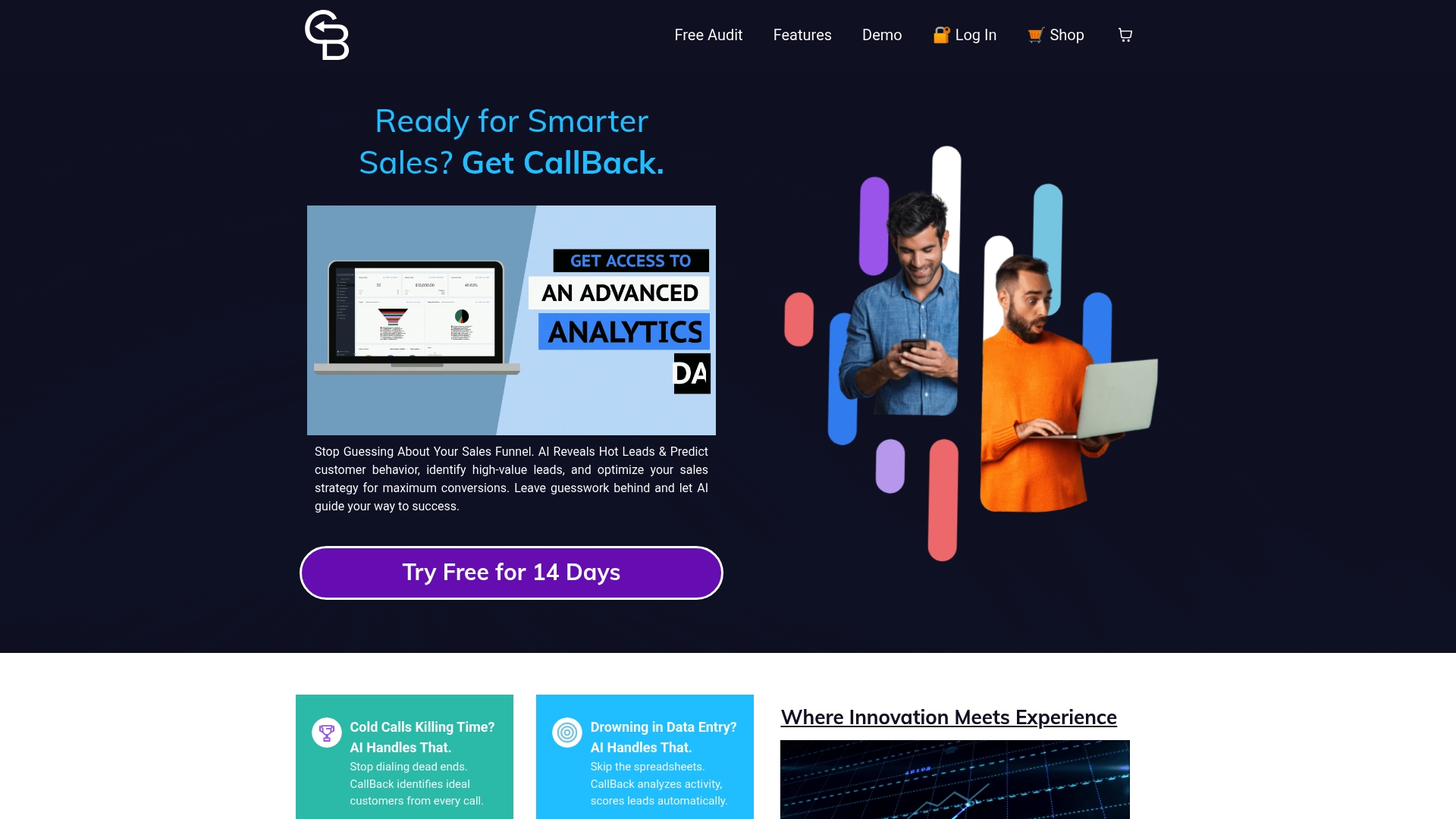
The platform makes it easy to build websites and funnels without technical skills, using drag-and-drop builders and insurance-specific templates that convert. You can manage leads and customers in one centralized system, ensuring your AI tools have the data needed for smart decisions and personalized outreach. With 24/7 support and seamless integrations, CallBack CRM helps you implement the AI funnel strategies covered in this guide starting today. Explore the free trial and discover how AI automation can multiply your sales results while reducing manual workload.
Frequently asked questions
What is funnel building in insurance sales?
Funnel building is creating a structured process that guides prospects through awareness, interest, decision, and action stages toward purchasing insurance policies. It involves mapping the customer journey, creating targeted content for each stage, and implementing systems that nurture leads automatically. Effective funnels reduce lead loss, improve conversion rates, and help agents focus resources on the most promising prospects.
How does AI improve insurance sales funnels?
AI automates lead scoring to prioritize high-value prospects, enables instant follow-up that captures leads within the critical 5-minute window, and handles routine tasks like sending policy information or scheduling appointments. This automation reduces funnel leakage, speeds up the customer journey, and frees human agents to focus on complex conversations and closing deals. AI-powered funnels can improve conversion rates by up to 30% while scaling to handle hundreds of prospects simultaneously.
When should I follow up with insurance leads?
Immediate follow-up is critical for lead qualification. Research shows leads contacted within 5 minutes are 21 times more likely to qualify than those who wait longer. AI chatbots and automated workflows enable instant responses 24/7, ensuring no prospect waits for business hours. After initial contact, continue nurturing with relevant content every 3 to 7 days until the prospect is ready to make a decision.
Can I build AI funnels without technical skills?
Yes, modern platforms designed for insurance agents offer drag-and-drop funnel builders, pre-built templates, and AI features that require no coding. You focus on defining your customer journey and messaging while the platform handles technical implementation. Most systems provide onboarding support and insurance-specific guidance to help you launch effective funnels quickly, even if you have limited tech experience.
What results can I expect from AI-powered funnels?
Agents using AI funnels typically see 30% higher conversion rates, significantly faster lead qualification, and reduced time spent on administrative tasks. Real-world examples like Lemonade show 55% year-over-year growth and customer bases expanding by 23% through AI automation. Your specific results depend on funnel design, target market, and how well you blend AI efficiency with human relationship-building, but most agents report measurable improvements within the first 90 days of implementation.