

TL;DR:
- A CRM for IMOs creates private, isolated sales environments for agents while providing centralized leadership oversight. It offers features like lead routing, automated follow-ups, compliance tracking, and pipeline dashboards to enhance sales speed, accountability, and scale. Successful adoption relies on phased rollout, simple user interfaces, and integration with existing systems.
A CRM for IMOs is defined as a multi-tenant platform that creates private, isolated sales environments for each downline agent while giving organizational leadership centralized visibility across the entire network. This structure is the foundation of effective insurance marketing organization management. Understanding how to use CRM for IMOs separates organizations that scale from those that stall. The right IMOs CRM software tracks leads, automates follow-ups, enforces compliance, and gives every producing agent a clean workspace without exposing their data to peers.
What are the core CRM features designed specifically for IMOs?

Multi-tenant CRM platforms create separate CRM spaces for individual agents yet enable centralized oversight and reporting for IMO leaders. That architecture is what makes CRM systems for IMOs fundamentally different from a standard single-account sales tool. Each agent works inside their own environment, while the IMO leadership sees aggregate pipeline data, performance metrics, and compliance records across every subaccount.
The core feature set for IMO-focused CRM software includes:
- Multi-tenant subaccount management. Each producing agent gets their own CRM space with private lead data, call logs, and pipeline stages. The IMO admin controls billing, permissions, and reporting from a single dashboard.
- Lead routing and real-time delivery. Real-time API integrations between lead generation platforms and CRM systems significantly improve lead response rates and reduce manual errors in the sales pipeline.
- Automated communication workflows. Automated workflows in IMO CRMs include instant SMS lead response, acknowledgment messages, quote follow-up sequences, renewal reminders, and referral campaigns. A standard sequence fires an SMS within 60 seconds of lead capture, then continues follow-up messages until contact is made or a final outreach is sent.
- TCPA compliance tracking. Every lead interaction logs consent documentation and timestamps. This creates an audit trail that protects the IMO and its agents during regulatory reviews.
- Pipeline dashboards. Leaders see conversion rates, contact rates, and stage-by-stage drop-off for every agent in the network. That visibility turns coaching from guesswork into a data-driven conversation.
Pro Tip: Set up your SMS acknowledgment workflow before your first lead arrives. Agents who respond within 60 seconds of lead capture consistently outperform those who call back hours later.
How to evaluate and implement a CRM system for an IMO
Choosing the wrong CRM costs more than the subscription fee. It costs agent adoption, lead quality, and months of lost momentum. A structured evaluation process prevents that.
-
Run a 60–90 day pilot. A pilot period of 60–90 days is recommended before committing to long-term CRM and lead technology contracts. Pilots let you validate lead quality, routing efficiency, and CRM ease of use under real-volume conditions. Never sign a multi-year contract without this step.
-
Verify TCPA compliance from lead vendors. A good lead generation partner must provide TCPA-compliant consent documentation, genuine exclusivity, real-time API lead delivery, and a 60–90 day pilot period for evaluation. Compliance failures at the lead source create liability that no CRM can fix after the fact.
-
Apply the 15-minute admin rule. Agents should spend under 15 minutes a day on CRM admin tasks like lead import, call logging, and follow-up setting for optimal productivity. If your agents are spending more time than that, the system is too complex for your team’s current stage.
-
Confirm AMS integration compatibility. CRMs for IMOs do not replace Agency Management Systems. They work alongside platforms like Applied Epic or Hawksoft to handle marketing, lead nurturing, and automated communication. Confirm that your CRM connects to your existing AMS before you commit.
-
Evaluate usability with new agents first. New agents reveal usability problems that experienced producers work around. If a new agent cannot log a call and set a follow-up reminder in under two minutes, the interface needs work.
Pro Tip: Ask your CRM vendor for a lead generation workflow tutorial before your pilot starts. Vendors who cannot show a working lead-to-close workflow in a demo rarely deliver one in production.
What are the practical benefits of CRM for IMOs in managing sales?
The benefits of CRM for IMOs show up in four specific areas: speed, accountability, compliance, and scale.
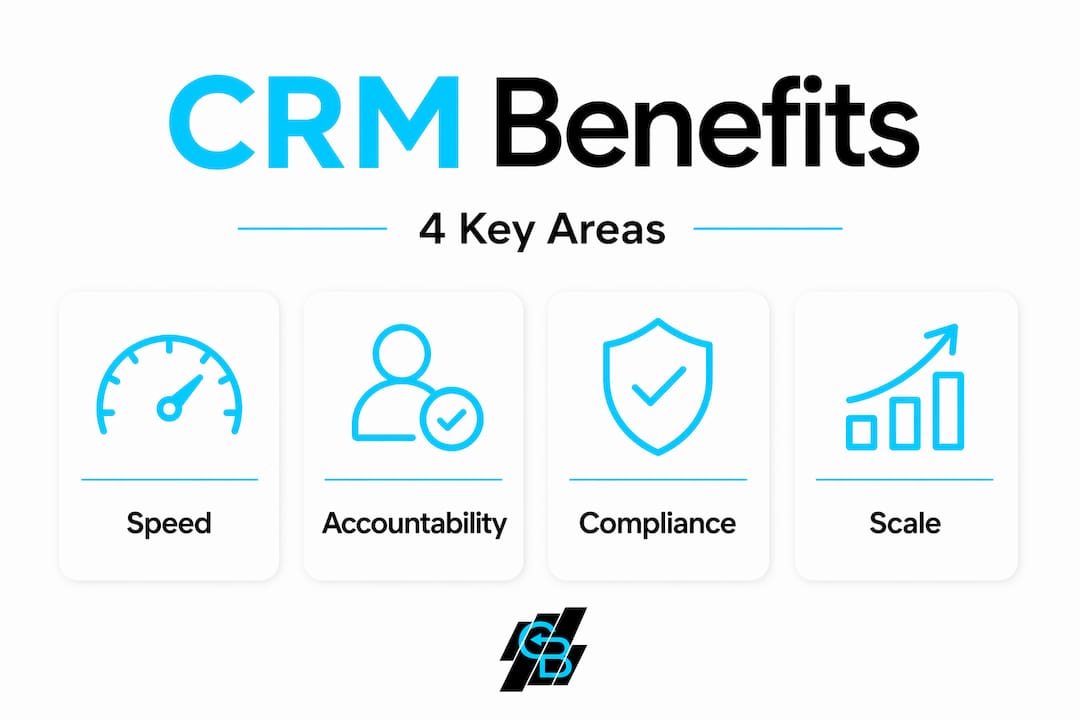
Speed to lead is the most measurable gain. Automated reminders are the highest ROI feature in any insurance CRM, reducing missed contacts and duplication of effort. When a lead arrives and an SMS fires automatically within 60 seconds, the agent’s contact rate climbs without any manual effort. That single workflow change can transform a team’s monthly production numbers.
Call logging and follow-up tracking prevent lost sales. Lead follow-up tracking and call logging in the CRM prevent lost sales by ensuring timely callbacks with accurate call outcome records. Without a CRM, agents rely on memory and spreadsheets. Both fail at volume. A structured CRM forces every interaction into a logged, searchable record.
The organizational benefits are equally strong:
- Pipeline visibility. IMO leaders see exactly where deals stall across every agent. That data identifies coaching opportunities before a bad month becomes a bad quarter.
- Compliance documentation. Automated audit trails capture consent records, call timestamps, and communication logs. Regulatory audits become a reporting exercise rather than a crisis.
- Scalability. Adding a new producing agent means spinning up a new subaccount, not rebuilding your entire workflow. CRMs tailored to IMOs provide multi-tenant SaaS modes that enable agent subaccount management along with centralized leadership control and billing automation.
A well-run IMO using CRM software can onboard new agents faster, track their ramp-up performance, and intervene with coaching before productivity problems compound. That is the organizational value that generic sales tools cannot replicate.
How does CRM technology integrate with other insurance agent tools?
The most effective insurance tech stacks layer CRM on top of, not instead of, existing systems. CRMs for IMOs do not replace Agency Management Systems. They function alongside AMS platforms to handle marketing, lead nurturing, and automated communication. The AMS manages policy data, renewals, and carrier integrations. The CRM manages the front-end sales process, lead nurturing, and agent communication.
Integrating CRM with marketing automation creates a closed loop from lead capture to policy issuance. Without that integration, data lives in silos and agents manually re-enter information between systems. Manual entry creates errors and delays that cost sales.
The table below shows the key integration points and their business impact:
| Integration point | Business impact |
|---|---|
| Lead platform to CRM via API | Eliminates manual lead import; fires automated workflows instantly |
| CRM to AMS (e.g., Applied Epic) | Syncs policy data with sales records; reduces duplicate entry |
| CRM to SMS/email marketing | Triggers personalized sequences based on lead stage or behavior |
| CRM to compliance tools | Logs TCPA consent and call records automatically for audit readiness |
| CRM to reporting dashboards | Gives IMO leaders real-time agent performance data across all subaccounts |
Lead nurturing through CRM integration directly improves conversion rates by keeping prospects engaged between initial contact and close. That is the gap where most insurance sales are lost. A CRM that connects to your marketing platform closes that gap with automated, timed outreach that requires no manual effort from the agent.
Pro Tip: Map every data handoff point in your tech stack before you buy a CRM. If the vendor cannot show you a working API connection to your lead source and your AMS, budget for custom integration work or choose a different platform.
Key Takeaways
A CRM built for IMOs is the single most effective tool for managing downline agents, automating lead follow-up, and maintaining compliance across a distributed sales network.
| Point | Details |
|---|---|
| Multi-tenant architecture is non-negotiable | Each agent needs a private CRM environment with centralized IMO oversight built in. |
| The 15-minute admin rule defines usability | If daily CRM admin takes agents more than 15 minutes, the system impedes sales. |
| Pilot before you commit | Run a 60–90 day pilot to validate lead quality, routing, and CRM fit under real conditions. |
| CRM and AMS serve different functions | CRM handles front-end sales and nurturing; AMS manages policy and carrier data. |
| Automated follow-up is the highest ROI feature | SMS workflows that fire within 60 seconds of lead capture consistently improve contact rates. |
What I’ve learned about CRM adoption in IMOs after years of watching it go wrong
Most IMO leaders buy a CRM for the features list and then wonder why adoption is low six months later. The problem is almost never the software. It is the rollout.
New agents do not need a platform with 40 features. They need three things: a place to see their leads, a way to log a call in one click, and an automated reminder to follow up. Industry consultant David Price puts it plainly: complex CRM tools distract new agents from core sales work. A simple, focused CRM supports productivity and prospecting. That advice is worth more than any feature comparison.
The IMOs I have seen succeed with CRM technology share one habit. They phase the rollout. Week one is lead import and call logging only. Week three adds automated SMS sequences. Week six introduces pipeline reporting for leadership. Each phase has a training session and a clear success metric. That structure prevents the “we bought it but nobody uses it” outcome that kills CRM investments.
The other mistake is treating CRM data as a reporting tool instead of a coaching tool. Pipeline dashboards tell you which agents are struggling before they tell you. A drop in contact rate is a coaching conversation, not a performance review. The IMOs that use CRM data weekly for coaching outperform those that pull reports monthly for accountability. The data is the same. The timing is everything.
Technology does not close deals. Agents do. A CRM’s job is to make sure every agent has the right information at the right time and never lets a lead go cold because of a missed reminder. When the system does that job quietly in the background, agents sell more without working harder. That is the actual promise of CRM for IMOs, and it is achievable with the right setup.
— Kyle
How Callbackcrm supports IMOs with built-in automation and multi-tenant management
Callbackcrm is built specifically for insurance agents, agencies, and IMOs that need more than a basic contact database.
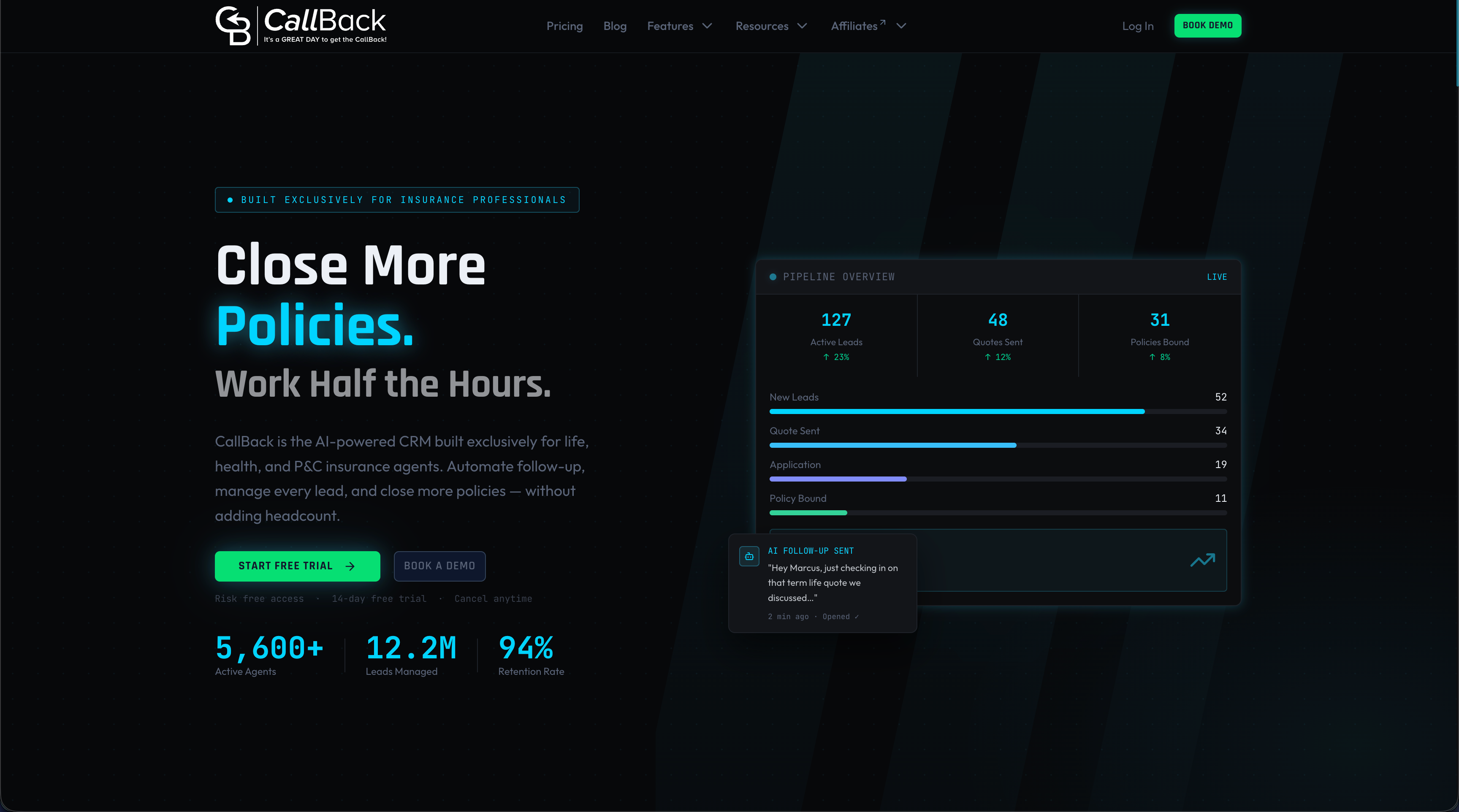
The platform includes multi-tenant subaccount management, so each producing agent works inside their own CRM environment while IMO leadership retains full visibility and billing control. SMS marketing automation fires lead response sequences within seconds of capture, handles quote follow-ups, and manages renewal campaigns without manual input from your agents. AI-powered lead scoring, automated workflows, and a full suite of email and SMS tools replace the manual tasks that slow down sales teams. Callbackcrm also integrates with third-party tools and runs on Google Cloud for secure data handling. If your IMO is ready to move beyond spreadsheets and disconnected tools, Callbackcrm offers a free demo to show you exactly how the platform fits your operation.
FAQ
What does CRM for IMOs mean?
A CRM for IMOs is a multi-tenant customer relationship management platform that gives each downline agent a private sales environment while allowing IMO leadership to monitor aggregate performance and compliance across the entire network.
How long should an IMO pilot a new CRM before committing?
A 60–90 day pilot period is the industry standard. That window is long enough to validate lead quality, routing efficiency, and day-to-day usability under real production conditions.
What is the 15-minute admin rule for insurance CRMs?
The 15-minute admin rule states that agents should spend no more than 15 minutes per day on CRM tasks like lead import, call logging, and follow-up setting. Exceeding that threshold signals the system is too complex and is reducing selling time.
Does a CRM replace an Agency Management System for IMOs?
No. A CRM handles front-end sales, lead nurturing, and automated communication. An AMS like Applied Epic manages policy data, carrier integrations, and renewals. Both systems work together in a layered tech stack.
What automation features matter most in IMOs CRM software?
Automated SMS lead response, quote follow-up sequences, and call logging reminders deliver the highest return. An SMS fired within 60 seconds of lead capture is consistently the single most impactful workflow an IMO can deploy.