

Every insurance agent knows the challenge of keeping up with growing client expectations while managing leads efficiently. As automated systems reshape the industry, the importance of CRM and marketing integration becomes clear for agents ready to advance their business. This article will show you how connecting customer management platforms with marketing tools enables seamless data exchange, targeted communication, and deeper insights that drive retention and revenue for agents working in major markets from Canada to Australia.
Table of Contents
Key Takeaways
| Point | Details |
| CRM and Marketing Integration | This integration creates a unified view of customer interactions, enhancing targeted marketing efforts and client retention. |
| Benefits for Insurance Professionals | Enhanced operational efficiency leads to better lead qualification and more strategic customer engagement. |
| Key Features of Integrated Solutions | Modern CRM platforms offer advanced functionalities like automated workflows and predictive analytics to transform customer engagement. |
| Implementation Considerations | A thorough needs assessment and change management planning are critical to avoid common pitfalls during CRM integration. |
What CRM and Marketing Integration Means
Customer relationship management (CRM) and marketing integration represents a strategic alignment that transforms how insurance agents understand, track, and engage with potential clients. This sophisticated process goes far beyond simple data collection, creating a comprehensive ecosystem where sales, marketing, and customer service functions seamlessly communicate and collaborate.
At its core, CRM and marketing integration involves connecting customer relationship management platforms with marketing systems to enable seamless data exchange. The primary goal is establishing a unified view of customer interactions, preferences, and journey stages. By breaking down traditional departmental silos, insurance agents can develop more targeted, personalized approaches that significantly improve client acquisition and retention.
Key components of effective CRM and marketing integration include:
-
Centralized customer data management
-
Automated lead scoring and tracking
-
Real-time interaction history tracking
-
Personalized communication workflows
-
Advanced analytics for predictive insights
The integration process typically involves sophisticated techniques like API connections, middleware platforms, and prebuilt connectors that create a single source of truth. Through these technological bridges, insurance agents can transform raw customer data into actionable intelligence, enabling more strategic decision-making and relationship building.
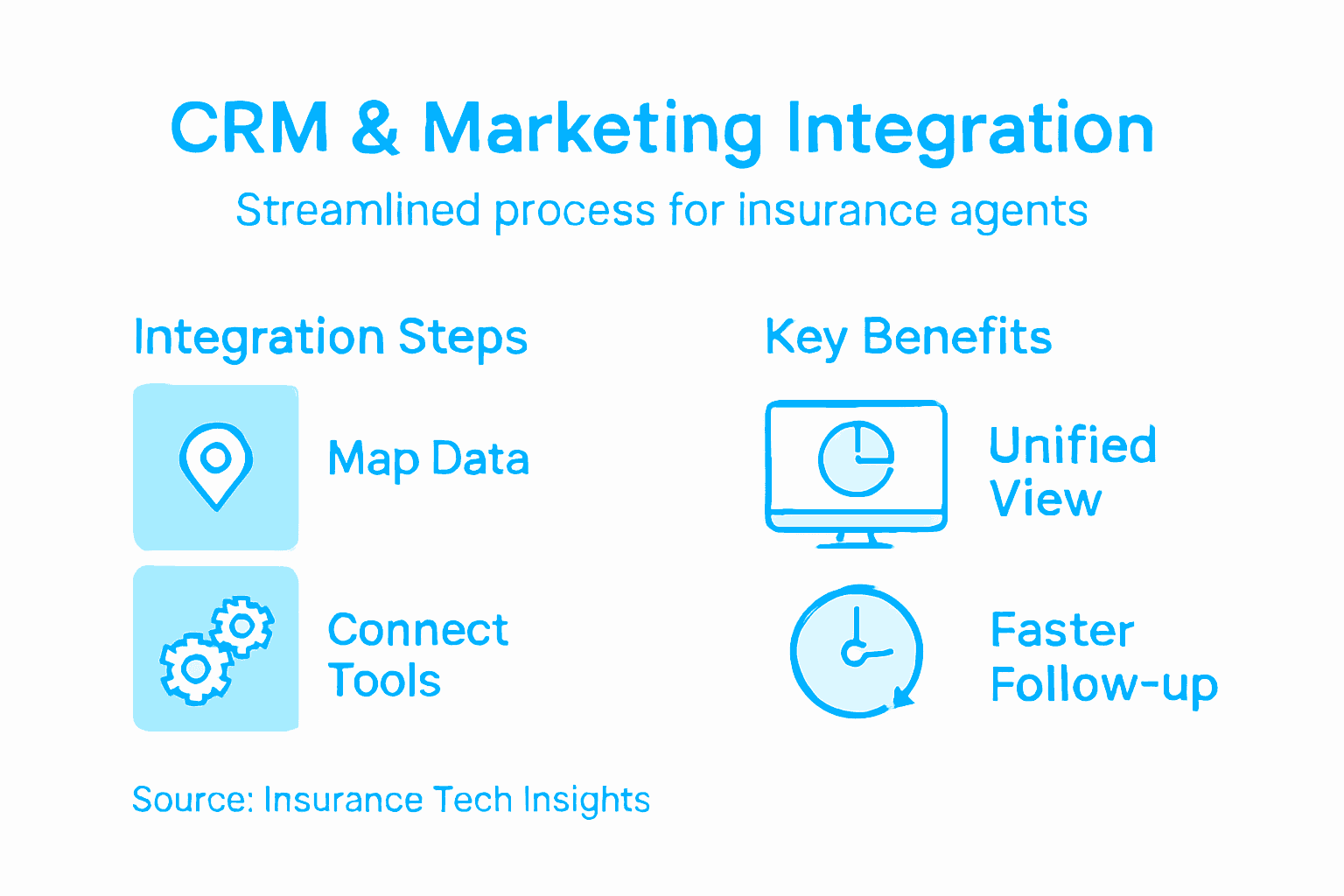
Pro tip: Start by mapping your current customer interaction points and identifying potential integration opportunities before selecting a CRM platform.
Core Benefits for Insurance Professionals
CRM integration offers insurance professionals a transformative approach to managing customer relationships, dramatically enhancing their ability to generate, nurture, and convert leads. By implementing sophisticated customer interaction management systems, agents can unlock unprecedented efficiency and strategic insights across their entire business operation.
The core benefits of CRM integration for insurance professionals extend far beyond traditional sales tracking. Operational efficiency becomes a tangible advantage, allowing agents to streamline complex processes and redirect valuable time and resources toward high-value activities. This technological approach fundamentally reshapes how insurance professionals approach customer engagement, sales, and long-term relationship management.
Key benefits include:
-
Enhanced lead qualification and tracking
-
Automated follow-up and renewal processes
-
Comprehensive customer interaction history
-
Advanced sales pipeline visualization
-
Personalized marketing campaign development
-
Real-time performance analytics
-
Improved customer segmentation capabilities
Moreover, CRM integration provides insurance professionals with powerful predictive analytics tools. These systems analyze historical data, identify trends, and help agents anticipate customer needs before they arise. By transforming raw data into actionable intelligence, insurance professionals can develop more targeted, proactive engagement strategies that significantly improve customer satisfaction and retention rates.
CRM integration is not just a technological upgrade—it’s a strategic transformation of how insurance professionals understand and serve their customers.
Pro tip: Invest time in comprehensive staff training to ensure your team fully leverages the advanced features of your CRM integration platform.
Key Features of Integrated Solutions
Modern insurance CRM platforms have evolved into sophisticated ecosystems that go far beyond traditional data management. Comprehensive insurance CRM solutions now encompass a wide range of integrated features designed to streamline complex business processes and enhance customer interactions across multiple channels.

The core technological infrastructure of these integrated solutions typically includes advanced modules that address every critical aspect of insurance operations. From lead management to policy administration, these platforms provide insurance professionals with powerful tools that transform raw data into actionable strategic insights. The interconnected nature of these systems enables seamless communication between different departments, breaking down traditional organizational silos and creating a more holistic approach to customer relationship management.
Key features of integrated CRM solutions include:
-
Comprehensive contact and customer data management
-
Automated lead scoring and tracking
-
Multi-channel communication platforms
-
AI-powered predictive analytics
-
Policy and claims management workflows
-
Compliance tracking and reporting
-
Personalized marketing campaign builders
-
Real-time performance dashboards
-
Automated renewal and follow-up systems
Moreover, modern CRM platforms leverage artificial intelligence to provide unprecedented levels of operational intelligence. These systems can automatically rank leads, predict customer behavior, and recommend personalized engagement strategies. By combining advanced analytics with intuitive user interfaces, insurance professionals can make more informed decisions, reduce administrative overhead, and focus on building meaningful customer relationships.
Integrated CRM solutions are not just software—they are strategic partners that transform how insurance professionals understand, serve, and grow their customer base.
Pro tip: Conduct a thorough assessment of your current workflows before selecting a CRM integration platform to ensure it matches your specific operational requirements.
Real-World Use Cases in Insurance
Insurance professionals are increasingly leveraging CRM technologies to solve complex operational challenges and transform their business strategies. Workflow optimization technologies have revolutionized how insurance agents approach sales, customer engagement, and regulatory compliance.
The practical applications of integrated CRM solutions span multiple critical business scenarios. These technologies enable insurance agents to move beyond traditional reactive approaches, creating proactive, data-driven strategies that anticipate customer needs and streamline complex operational processes. From small independent agencies to large insurance corporations, CRM integration provides scalable solutions that adapt to unique organizational requirements.
Specific real-world use cases include:
-
Automated lead qualification and prioritization
-
Personalized policy recommendation engines
-
Predictive customer churn prevention
-
Streamlined claims processing workflows
-
Targeted renewal campaign management
-
Compliance documentation tracking
-
Performance management and sales forecasting
-
Customer segmentation and risk assessment
-
Automated communication and follow-up systems
Moreover, these integrated solutions help insurance professionals navigate increasingly complex regulatory landscapes. By centralizing data, automating compliance checks, and providing real-time reporting capabilities, CRM systems reduce administrative overhead and minimize the risk of regulatory violations. The ability to track, document, and validate every customer interaction becomes a powerful competitive advantage in an increasingly regulated industry.
Here’s a summary of how CRM integration transforms key insurance operations:
| Area Impacted | Operational Shift | Strategic Outcome |
| Lead Management | Automated scoring and tracking | Faster, higher-quality conversions |
| Customer Engagement | Personalized, multi-channel outreach | Improved satisfaction and loyalty |
| Compliance | Centralized tracking and documentation | Reduced risk, easier audits |
| Sales Pipeline | Real-time visualization and updates | Better forecasting and efficiency |
CRM integration transforms raw data into strategic intelligence, turning customer interactions from transactional exchanges into meaningful, long-term relationships.
Pro tip: Develop a comprehensive data migration strategy before implementing a new CRM system to ensure seamless integration and minimal disruption to existing workflows.
Costs, Risks, and Common Mistakes
Implementing a CRM integration strategy requires careful navigation of potential pitfalls that can derail even the most well-intentioned technological investments. AI-driven CRM integration challenges present complex considerations that insurance professionals must strategically address to ensure successful implementation.
The financial implications of CRM integration extend far beyond initial software costs. Insurance agencies must consider comprehensive expenses including technology infrastructure, staff training, data migration, potential workflow disruptions, and ongoing maintenance. These investments can range from modest for smaller agencies to substantial enterprise-level implementations, making thorough cost-benefit analysis critical before committing to any platform.
Common risks and potential mistakes include:
-
Insufficient change management planning
-
Underestimating data migration complexity
-
Lack of clear executive sponsorship
-
Inadequate staff training and support
-
Poor integration with existing systems
-
Neglecting cybersecurity and compliance requirements
-
Overlooking scalability needs
-
Failing to define clear implementation metrics
-
Ignoring user experience and adoption challenges
Moreover, technical complexity represents a significant risk factor in CRM integration. Insurance organizations must carefully evaluate their technological capabilities, ensuring that selected platforms align with existing infrastructure and can adapt to evolving business requirements. Successful implementation demands a holistic approach that balances technological sophistication with practical usability and organizational readiness.
Effective CRM integration is not about acquiring the most advanced technology, but about strategically aligning technological capabilities with organizational objectives.
Pro tip: Conduct a comprehensive organizational readiness assessment and develop a phased implementation strategy to mitigate risks and ensure smoother technological transition.
Comparing Alternatives and Best Practices
Navigating the complex landscape of CRM solutions requires a strategic approach that goes beyond simple software selection. Insurance-specific CRM implementation strategies demand careful consideration of industry-unique requirements and organizational capabilities.
The core evaluation framework for CRM alternatives involves comprehensive assessment across multiple critical dimensions. Insurance agencies must look beyond surface-level features, examining deeper considerations such as scalability, industry-specific workflow alignment, integration capabilities, and long-term adaptability. Successful selection requires a holistic approach that balances technological sophistication with practical operational requirements.
Key best practices for comparing and selecting CRM solutions include:
-
Conduct thorough needs assessment
-
Prioritize industry-specific customization options
-
Evaluate cross-department integration capabilities
-
Assess data migration and compatibility
-
Analyze total cost of ownership
-
Review vendor’s insurance industry experience
-
Examine AI and automation features
-
Check compliance and security standards
-
Request comprehensive demonstration and trial periods
-
Evaluate ongoing support and training resources
Moreover, modern CRM selection goes beyond traditional feature comparisons. Insurance professionals must consider emerging technologies like artificial intelligence, predictive analytics, and machine learning capabilities that can provide competitive advantages. The most effective solutions offer not just data management, but intelligent insights that transform customer interactions and operational efficiency.
Compare main CRM solution selection factors for insurance agencies:
| Factor | Why It Matters | What to Consider |
| Industry Customization | Matches insurance workflows | Policy and claims modules |
| Integration Capabilities | Seamless data exchange between tools | APIs and legacy compatibility |
| Scalability | Supports future growth needs | User limits and feature add-ons |
| Security and Compliance | Protects sensitive client data | Encryption, regulatory standards |
Selecting the right CRM is not about finding the most advanced technology, but discovering the most strategically aligned solution for your specific organizational ecosystem.
Pro tip: Create a detailed scoring matrix with weighted criteria to objectively evaluate and compare potential CRM solutions, ensuring a data-driven selection process.
Transform Your Insurance Business with Seamless CRM and Marketing Integration
Insurance agents face the challenge of breaking down silos and managing complex customer data effectively. The article highlights pain points like inefficient lead tracking, manual follow-ups, and the need for personalized outreach driven by predictive analytics. CallBack CRM is built to solve these exact problems by providing a unified platform that automates lead scoring, streamlines communication workflows, and leverages AI to predict customer behavior for smarter engagement. With features for email and SMS marketing, funnel builders, and AI assistants, CallBack CRM empowers agents to replace outdated manual processes with intelligent automation.
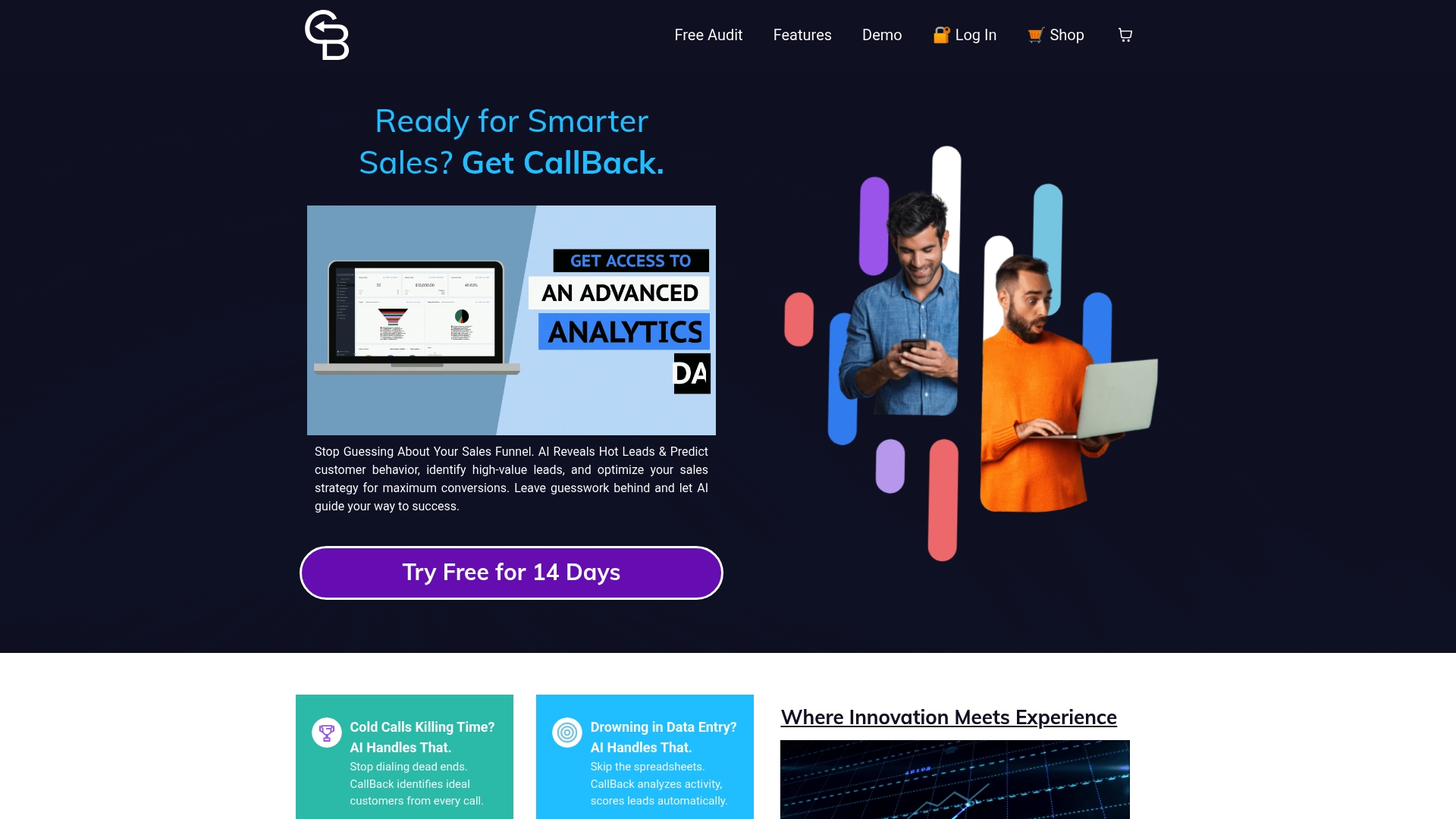
Ready to elevate your customer relationship management with an all-in-one solution tailored to the insurance industry This is your chance to harness AI-powered tools that boost operational efficiency and enhance client acquisition. Explore how CallBack CRM can help you automate lead generation and follow-up, improve marketing personalization, and create seamless data integration across your sales processes. Discover more about how to modernize your approach with CRM management and marketing automation or start your transformation journey today on the CallBack CRM platform.
Frequently Asked Questions
What are the key benefits of integrating CRM with marketing for insurance agents?
Integrating CRM with marketing allows insurance agents to streamline customer management processes, enhance lead qualification, automate follow-up tasks, and personalize marketing communications, leading to improved customer satisfaction and retention.
How does CRM and marketing integration improve customer engagement for insurance professionals?
By creating a unified view of customer interactions and preferences, CRM and marketing integration enables insurance professionals to develop targeted marketing campaigns and personalized communications, resulting in more meaningful customer engagements.
What common mistakes should insurance agents avoid when implementing CRM integration?
Common mistakes include inadequate staff training, insufficient change management planning, and neglecting cybersecurity requirements. It’s essential to have a comprehensive strategy and ensure that the team is fully prepared for the transition.
How can predictive analytics in integrated CRM solutions benefit insurance agents?
Predictive analytics can help insurance agents identify trends and anticipate customer needs by analyzing historical data. This enables agents to create proactive strategies that improve customer satisfaction and potentially prevent churn.