

Cold calling no longer works as a primary sales channel. Pickup rates have drastically declined by 2026 compared to a decade earlier, while modern alternatives deliver significantly higher response rates. Sales professionals who shift to multi-channel, digital-first outreach close more meetings, protect their brand reputation, and reduce team burnout. The case for moving away from cold calling comes down to these core points:
- Phone screening technology and AI spam filters block most unknown calls before they ring.
- Buyers prefer asynchronous channels like LinkedIn, email, and messaging apps that fit their schedules.
- High-volume dialing flags corporate numbers as “Spam Likely,” silencing even legitimate follow-up calls.
- Multi-channel sequences combining LinkedIn, email, and warm calls achieve far higher engagement.
- Shifting away from cold calling improves sales team morale and lowers cost per meeting.
Why cold calling is less effective today
The structural problems with cold calling have compounded since 2020. Mobile screening apps, corporate VoIP systems from providers like RingCentral and Zoom Phone, and AI-powered spam detection now block the majority of outbound dials before a prospect ever hears the phone ring. Over 80% of buyers use corporate VoIP with AI filtering, which means “unknown caller” is effectively a blocked caller.
Regulatory pressure adds another layer of risk. TCPA fines run $500–$1,500 per violation, and state attorneys general have increased enforcement against autodialers. The compliance math alone pushes many sales organizations to reconsider volume dialing.
Generational shifts are accelerating the decline. Buyers under 40 rarely answer calls from unknown numbers. Their default channels are email, LinkedIn, and messaging apps. Cold calling also damages brand reputation over time: persistent volume dialing can permanently flag a corporate phone number as spam, blocking even scheduled follow-up calls to existing customers.
- Connect rates decreased markedly between 2019 and 2026, indicating declining cold call effectiveness.
- AI buyer assistants in Slack, Teams, and Gmail route cold calls to voicemail without alerting the prospect.
- Remote work eliminated office switchboards, removing the receptionist routing that once helped cold callers reach decision-makers.
- Cold calling treats every interaction as a high-pressure moment, which generates rejection and lowers rep confidence over time.
Cold call pickup rates have dropped substantially since the early 2010s and remain very low in 2026. Dialer teams now need substantially more dials just to hit the conversion targets they met five years ago.
How buyer behavior has shifted in 2026
Modern buyers complete most of their research before speaking to any salesperson. They read reviews on G2 and Capterra, compare options through peer networks, and consult LinkedIn before engaging with a vendor. By the time a buyer is ready to talk, they have usually narrowed their choices. An unexpected phone call interrupts that process rather than supporting it.
Asynchronous communication has become the preferred mode for professional outreach. A LinkedIn message lets a VP of Sales respond between meetings, on their schedule, without the pressure of a live call. That lower friction produces more deliberate, higher-quality responses than a cold call ever could.
Trust signals matter before any conversation starts. When a prospect receives a LinkedIn message, they can immediately check the sender’s profile, mutual connections, work history, and published content. Cold calling offers none of that context. A prospect who knows nothing about the caller has every reason to hang up.
- Buyers commonly screen unknown contacts by default, with a large majority treating unknown numbers as spam.
- LinkedIn profiles provide social proof through endorsements, mutual connections, and published content before a single word is exchanged.
- Peer-level digital engagement, such as commenting on a prospect’s posts, builds familiarity that bypasses the “stranger filter.”
- Sales success now centers on interaction warmth and context rather than call volume.
Pro Tip: Spend 15–20 minutes each day engaging with prospects’ LinkedIn content before sending any direct message. Recognition converts far better than a cold introduction.
Modern alternatives to cold calling that actually work
LinkedIn and multi-channel social selling achieve substantially higher response rates than traditional cold calls. That gap is wide enough to change how entire sales teams are structured. The most effective approaches in 2026 combine multiple channels in a coordinated sequence rather than relying on any single method.

Multi-channel sequencing that combines LinkedIn, email, and WhatsApp produces notably improved reply rates over single-channel attempts. Video messages, such as 45–90 second personalized Loom or BombBomb clips, generate 2–3 times the engagement of text-only email. The effort is higher, but so is the return.
Understanding digital sales funnels is central to replacing cold outreach with a system that generates pipeline consistently. Intent data platforms identify accounts already researching solutions, so outreach arrives at the right moment rather than interrupting a buyer who has no current need.
- LinkedIn social selling typically attains strong average response rates, with the best approaches achieving notably higher engagement.
- Email sequencing from warmed-up domains still works as a complement to LinkedIn, not a standalone channel.
- WhatsApp and SMS carry the highest open rates of any channel but work best for warm follow-up rather than cold first contact.
- Partner-sourced referrals and warm introductions shift 30–50% of outbound pipeline into pre-qualified conversations.
- Phone calls made after prior digital contacts generally achieve much higher pickup rates due to established context with the prospect.
Email-to-meeting rates for signal-based, AI-personalized sequences run 15–22% versus under 2% for cold dial, according to conversion benchmarks from top-quartile sales teams.
Building a strong digital footprint before outreach is not optional. Prospects will check your online presence before replying to any message, and a thin or inconsistent profile reduces response rates measurably.
How to transition effectively from cold calling
The transition does not require eliminating phone calls overnight. The practical approach is gradual reallocation: keep 1–2 hours per day for warm-prospect calling and replace the remaining dial time with LinkedIn and email outbound over a 60-day ramp. This protects pipeline continuity while building new channel competency.
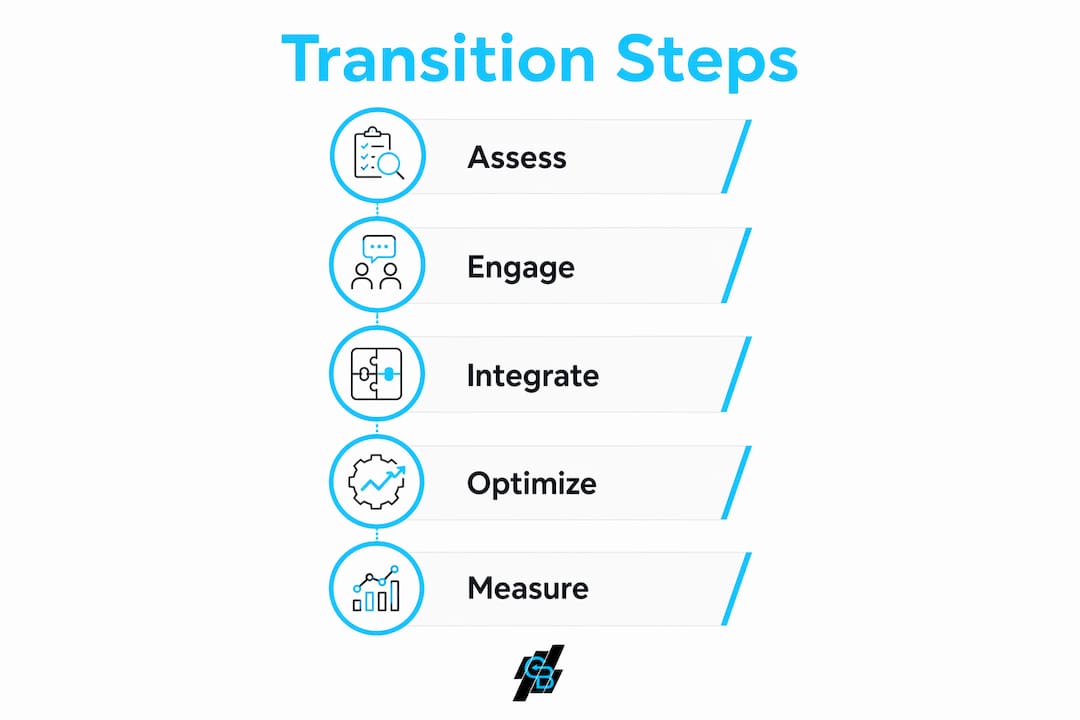
Compensation structures need to change alongside activity metrics. Per-call quotas reward volume, not results. Shifting to per-meeting compensation aligns incentives with qualified pipeline. Sales development reps (SDRs) also need new skills: transitioning demands that reps become writers and content strategists, crafting shorter, sharper, highly personalized messages rather than scripted phone pitches.
A multi-channel CRM is the operational backbone of this shift. It coordinates LinkedIn, email, and call sequences with conditional logic, so the next touch adapts to how the prospect responded, or did not respond, to the previous one.
- Reduce dialing time gradually, replacing cold dials with LinkedIn and email outbound over 60 days.
- Retrain SDRs to write shorter, more personalized messages with clear hooks rather than scripted pitches.
- Revise KPIs from total dials to meaningful conversations and qualified meetings booked.
- Use AI-driven tools to automate intent signal ingestion, sequence orchestration, and lead scoring.
- Align marketing and sales on a target account list so outreach follows content engagement rather than cold lists.
- Measure engagement quality: open rates, reply rates, and meeting conversion, not dials per day.
Research insights on AI-powered automation replacing cold calling
AI has shifted prospecting from guesswork to signal-based targeting. Intent data platforms monitor buying signals such as whitepaper downloads, G2 comparison searches, and anonymous website visits to identify accounts in an active buying window. By the time an SDR reaches out, the prospect is already researching a solution. That context changes the entire conversation.

Voice AI handles inbound qualification efficiently, routing warm leads to human reps without requiring a cold dial. Top-quartile sales teams now run zero-dial prospecting motions, relying on AI-personalized email cadences, partner referrals, and voice AI triage rather than outbound dialing. The conversion benchmarks reflect the difference: email-to-meeting rates of 15–22% versus under 2% for cold dial.
AI also lowers cost per meeting. LinkedIn AI prospecting delivers meetings at 40–80% lower cost than phone-based outbound, according to data from teams that have made the full transition. The tooling cost shift reinforces this: dialer software typically runs $89–$150 per seat per month, while LinkedIn automation and email sequencing tools often cost less in combination.
- AI automates personalized email cadences triggered by intent signals, improving timing and relevance.
- Voice AI qualifies inbound callbacks and transfers warm leads to human reps, removing the “cold call” label entirely.
- Orchestrated multi-channel sequences with conditional logic adapt to prospect behavior rather than following a rigid script.
- Warm calls post digital qualification achieve pickup rates of 25–40% versus under 1% for cold calls.
- New skill requirements emphasize writing, personalization, and digital engagement over dialing speed.
- Sales engagement software tracks interaction quality and guides reps to the next best action based on real prospect behavior.
The future of cold calling and sales prospecting
Cold calling is not disappearing. It is becoming a precision tool used after digital warm-up rather than a discovery channel. The phone call that follows a LinkedIn connection, a personalized email, and a video message lands in a completely different context than a blind dial. That context is what drives the 25–40% pickup rate on warm calls versus under 1% on cold ones.
Sales organizations that embrace hybrid models, digital-first with selective warm calling, report better pipeline and less rep burnout. The metrics that define success are shifting from dials per day to signals-to-revenue per motion. Partner-led pipeline, signal-based email, and voice AI qualification each carry their own conversion benchmarks, and top teams track all three.
Generational change will continue to push unsolicited calls further to the margins. The buyer cohort entering procurement roles in 2026 and beyond has never relied on phone calls as a primary professional channel. Email, LinkedIn, and async video are native to how they work. Sales teams that follow buyer attention, rather than defaulting to the channel that worked in 2010, will generate more pipeline with less friction.
The phone remains valuable. Timing and context define whether it helps or hurts.
Key Takeaways
Cold calling’s pickup rate has collapsed below 1% in 2026, making multi-channel, signal-based outreach the only reliable path to consistent pipeline growth.
| Point | Details |
|---|---|
| Pickup rates have collapsed | Cold call connect rates fell from 3–4% in 2010–2015 to under 1% by 2026. |
| Social selling outperforms cold calls | LinkedIn response rates average 15–25%, and some approaches reach as high as 39% with strong profiles and multi-channel sequences. |
| Warm calls work; cold calls don’t | Phone calls placed after digital warm-up achieve pickup rates of 25–40% versus under 1% cold. |
| Compensation must change | Shifting from per-call quotas to per-meeting pay aligns SDR incentives with qualified pipeline. |
| AI replaces volume dialing | AI-personalized email sequences reach 15–22% email-to-meeting rates versus under 1% for cold dial. |
The phone is not the problem. Cold is.
The debate over cold calling misses the real point. The channel is not the issue. The “cold” part is. A phone call to someone who has already seen your LinkedIn profile, read your email, and watched a short video from you is not a cold call. It is a warm close. That distinction explains why top sales teams are not abandoning the phone; they are repositioning it as the final step in a sequence rather than the first.
What is actually dying is the belief that volume compensates for lack of context. Dialing through a list of 200 names and hoping someone picks up is a strategy built for a world where buyers had no tools to ignore you. That world is gone. Buyers now have caller ID, AI spam filters, VoIP screening, and the option to simply not answer. The reps who keep dialing cold lists are not being persistent. They are being inefficient.
The transition to digital-first prospecting also changes what sales development looks like as a career. Writing a sharp, personalized LinkedIn message that earns a reply is a harder skill than reading a phone script. It requires understanding the prospect’s business, their recent activity, and what they actually care about. That is a higher bar, and it produces better salespeople over time.
The organizations that will own pipeline in 2027 and beyond are the ones building those skills now, pairing them with AI tools that handle sequencing and intent scoring, and using the phone only when it adds something the digital channel cannot.
Callbackcrm helps you make the shift
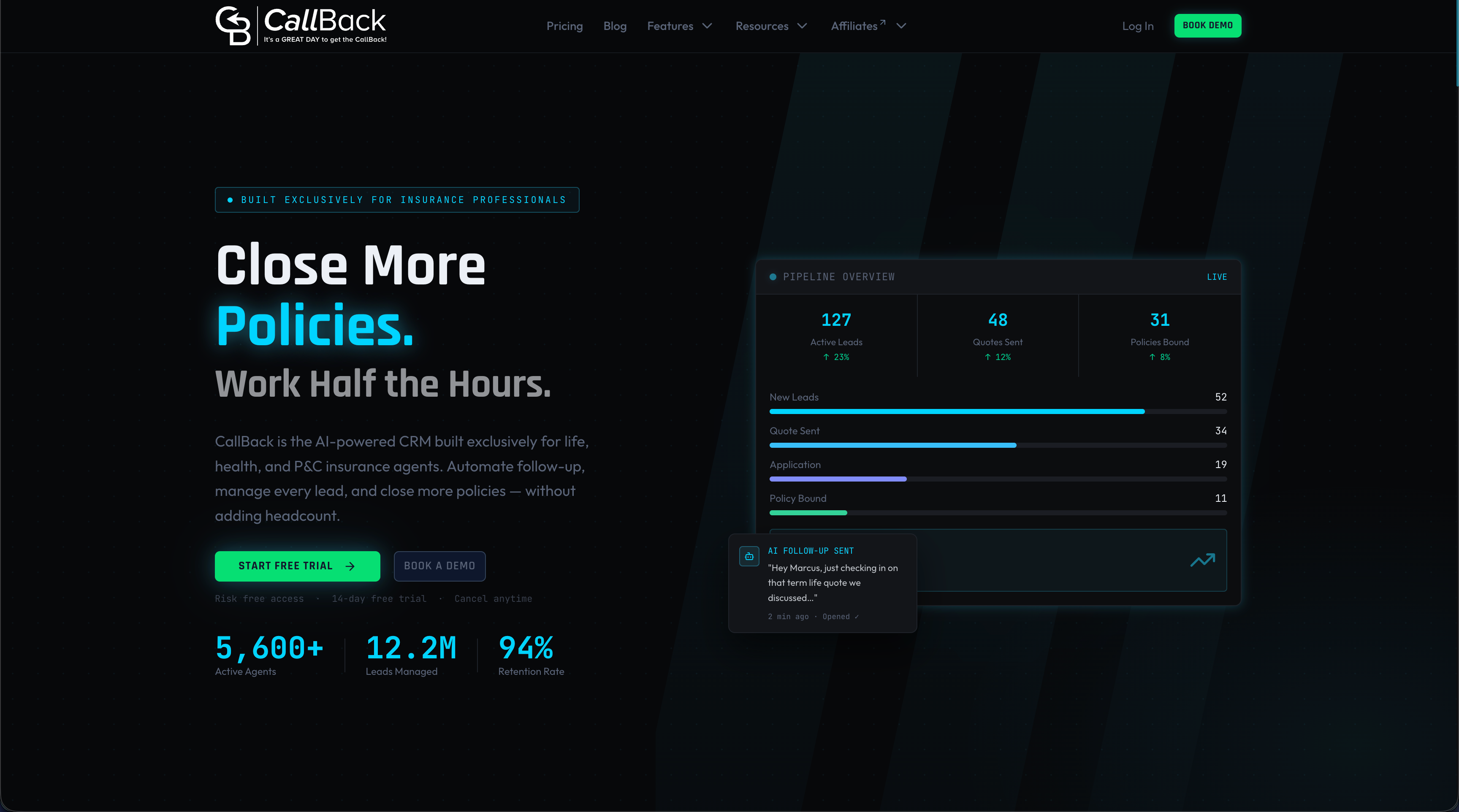
Callbackcrm is built for sales and marketing teams ready to move beyond cold outreach. The platform combines AI-driven automation, multi-channel sequencing, CRM management, and SMS marketing tools into one system designed for insurance agents, agencies, and IMOs. Instead of dialing cold lists, Callbackcrm identifies high-value leads, automates personalized outreach, and tracks engagement quality across every channel.
Sales teams that want to replace volume dialing with a signal-based pipeline can build their digital funnel and start generating warm leads without adding headcount. Callbackcrm handles the automation so reps focus on conversations that are already warm.