

TL;DR:
- Multi-channel CRM integrates communication channels like email, SMS, and social media into a single platform to streamline customer interactions. It differs from omnichannel CRM by maintaining separate channel records instead of unifying all interactions into one timeline. Successful implementation relies on data unification, automation, and prioritized channel selection to improve response times and personalization.
Multi-channel CRM is defined as a customer relationship management system that connects email, phone, social media, SMS, and live chat into one unified platform so teams manage every customer interaction without switching apps. The industry also calls this approach multi-channel customer relationship management, and it sits one step below the more tightly integrated omnichannel model. Platforms like Telecrm and BigContacts have built their core value proposition around this concept. For marketing teams and business professionals, the practical payoff is clear: one dashboard, fewer dropped conversations, and a complete record of every touchpoint with every contact.
What is multi-channel CRM and why does it matter?
Multi-channel CRM is a system that integrates 5–7 communication channels into a single platform to improve productivity and response times. That consolidation means your sales rep sees a prospect’s email thread, SMS reply, and Facebook message in one place rather than hunting across three separate tools.

The business case is straightforward. When agents stop manually juggling apps, they respond faster and make fewer errors. For insurance agencies and SMBs in particular, that speed directly affects conversion rates. A lead who waits two hours for a callback often goes cold.
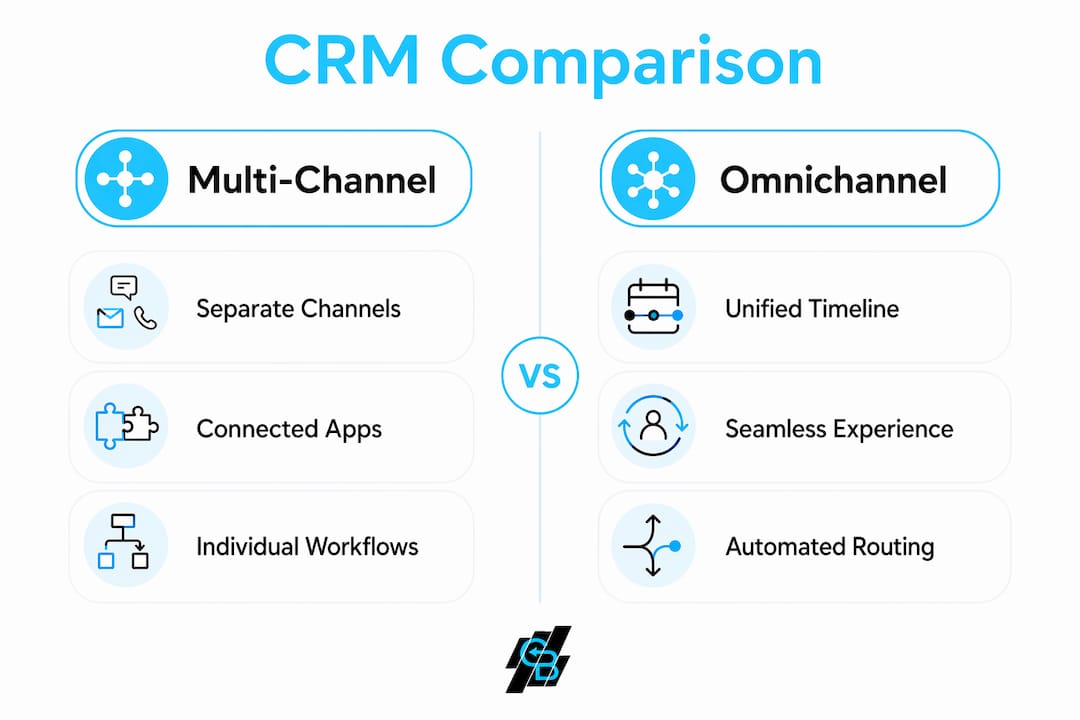
The term “multi-channel” is sometimes used interchangeably with “omnichannel,” but they describe different architectures. Multi-channel CRM connects channels to a central record. Omnichannel CRM goes further by unifying those channels into a single, continuous customer timeline. Understanding that distinction matters before you buy or build anything.
What are the key features and benefits of multi-channel CRM?
The core feature of any multi-channel CRM is a unified communication dashboard. From that single interface, teams handle WhatsApp messages, SMS campaigns, live chat sessions, phone calls, and email threads without logging into separate platforms.
The operational benefits stack up quickly:
- Faster response times. Agents see all incoming messages in one queue, so no channel gets ignored.
- Automated data entry. Centralizing channels like WhatsApp and SMS creates CRM records automatically, removing the manual logging step.
- Higher customer retention. When agents have full context on a contact, conversations feel personal rather than repetitive.
- Pipeline customization. Tools like Telecrm let SMBs customize sales pipelines and automate lead follow-ups across every connected channel.
- Consistent messaging. Marketing and sales teams pull from the same contact record, so a prospect never receives contradictory information from two departments.
Unified customer data across multiple channels has been shown to drive 57% better marketing ROI according to 2026 industry analyses. That figure reflects what happens when personalization improves because teams finally have complete data.
Pro Tip: Before selecting a multi-channel CRM, list the three channels your customers use most. Prioritize platforms that offer native integration for those three rather than paying for ten channels you will never activate.
How does multi-channel CRM differ from omnichannel CRM?
Omnichannel CRM is defined as a system that unifies all customer interactions into a single chronological timeline, regardless of which channel the customer used. Multi-channel CRM, by contrast, keeps interactions siloed by channel even when those channels feed into the same platform. That is the critical architectural difference.
The table below shows where the two models diverge in practice:
| Feature | Multi-Channel CRM | Omnichannel CRM |
|---|---|---|
| Channel integration | Connected but separate records | Unified single customer timeline |
| Data flow | Channel-specific logs | Bi-directional, real-time sync |
| Agent experience | Switches between channel views | One continuous conversation view |
| Customer experience | May feel disjointed across channels | Consistent regardless of channel |
| Best fit | Teams managing high volume per channel | Teams prioritizing seamless customer journeys |
The practical impact on your team is significant. In a multi-channel setup, an agent handling a customer complaint via email may not immediately see that the same customer sent a frustrated SMS an hour earlier. In an omnichannel system, both messages appear on one timeline. The agent walks into the conversation fully informed.
Adding more channels alone does not create an omnichannel strategy. True omnichannel requires automated, bi-directional synchronization so that every message, regardless of origin, updates the same CRM record in real time. Many businesses invest in multi-channel tools and then wonder why their customer experience still feels fragmented. The answer is almost always missing synchronization.
Pro Tip: If your team handles high-value, long-cycle relationships such as insurance renewals or enterprise sales, prioritize omnichannel architecture. If you manage high-volume, short-cycle transactions, a well-configured multi-channel CRM often delivers sufficient results at lower cost.
How does multi-channel CRM work to streamline marketing workflows?
Multi-channel CRM works by pulling lead and customer data from every connected channel into one manageable system. That centralization eliminates the duplicate records and missed follow-ups that plague teams running separate tools for email, SMS, and social media.
Here is how a typical workflow looks in practice:
- Lead capture. A prospect fills out a Facebook Lead Ad. The CRM automatically creates a contact record and assigns the lead to a sales rep.
- Automated follow-up. The system sends a personalized SMS within minutes, then queues an email for 24 hours later if there is no reply.
- Pipeline update. When the prospect replies via email, the CRM moves them to the next pipeline stage without any manual input from the rep.
- Cross-channel context. The rep who calls the prospect two days later sees every prior interaction, including the SMS reply and the email open, before dialing.
Integrating CRM and marketing into a single workflow supports sales and marketing alignment and consistent messaging delivery. That alignment is where most teams leave money on the table. Marketing generates a lead, sales loses context, and the prospect receives a generic pitch instead of a relevant one.
Automating marketing and customer interactions through multi-channel CRM reduces manual errors, improves response speed, and builds stronger customer relationships over time. The automation does not replace the human conversation. It makes sure the human conversation happens at the right moment with the right information.
“The goal of multi-channel CRM is not to be everywhere. It is to be relevant everywhere you show up.” This distinction separates teams that use CRM as a contact database from teams that use it as a revenue engine.
What are the best practices and challenges of implementing multi-channel CRM?
The single most important implementation principle is data unification. A unified customer profile enables teams to provide consistent and relevant communication, which is the foundation of any effective CRM strategy. Without it, you are just collecting data in more places.
Common challenges and how to address them:
- Fragmented customer profiles. Identity mapping across channels is critical to prevent duplicate records that degrade personalization and frustrate both agents and customers.
- Siloed data by channel. If your email tool and your SMS tool do not share records, your CRM is a filing cabinet, not a relationship engine.
- Inconsistent team messaging. Train every team member on channel-specific tone guidelines. A customer who gets a formal email and a casual SMS from the same company in the same hour notices the disconnect.
- Overbuilding channel count. More channels do not equal better CRM. Success with multi-channel CRM depends on data unification rather than simply being present on many platforms.
- Ignoring scalability. Choose a platform that grows with your contact volume. A system that works for 500 contacts may break at 50,000 if it was not built for scale.
AI-driven features are now standard in leading platforms. Automated lead scoring, predictive follow-up timing, and sentiment analysis across channels turn raw interaction data into prioritized action lists. Teams that adopt these features early gain a measurable advantage in response speed and conversion rates.
Pro Tip: Run a data audit before you migrate to any new CRM. Identify duplicate contacts, outdated phone numbers, and missing email addresses. Clean data at migration is worth ten times the effort of cleaning it after the fact.
Key takeaways
Multi-channel CRM delivers its highest value when data unification, automation, and consistent cross-channel messaging work together rather than in isolation.
| Point | Details |
|---|---|
| Core definition | Multi-channel CRM connects 5–7 channels into one platform to centralize customer interactions. |
| Omnichannel distinction | Omnichannel CRM unifies all channels into one timeline; multi-channel keeps channel records separate. |
| Top business benefit | Unified customer data drives up to 57% better marketing ROI by enabling true personalization. |
| Critical implementation step | Identity mapping and data unification prevent duplicate profiles and fragmented customer records. |
| Automation advantage | Automating lead capture and follow-ups removes manual errors and accelerates response times. |
The uncomfortable truth about multi-channel CRM adoption
Most teams I have worked with buy a multi-channel CRM and immediately try to activate every channel at once. That is the wrong move. The platforms that deliver real results are the ones where teams picked two or three channels, built clean workflows around them, and only expanded after those workflows ran without friction.
The industry conversation has shifted heavily toward omnichannel, and for good reason. But omnichannel is not a product you buy. It is an outcome you build. Many businesses I have seen spend significant budget on an “omnichannel platform” and still end up with siloed data because they skipped the identity mapping and synchronization work that makes the whole system function.
My honest recommendation for marketers in 2026: start with CRM integration fundamentals before worrying about channel count. Get your data clean, get your automations running, and then layer in additional channels. The omnichannel marketing payoff is real, but it requires a foundation that most teams skip in their rush to go live.
The future of CRM is not more channels. It is smarter use of the channels you already have.
— Kyle
How Callbackcrm brings multi-channel CRM to life
Callbackcrm is built for exactly the workflows described in this article. The platform connects SMS, email, social media, and voice into one dashboard, with AI-powered automation handling lead capture, follow-ups, and pipeline updates without manual input from your team.
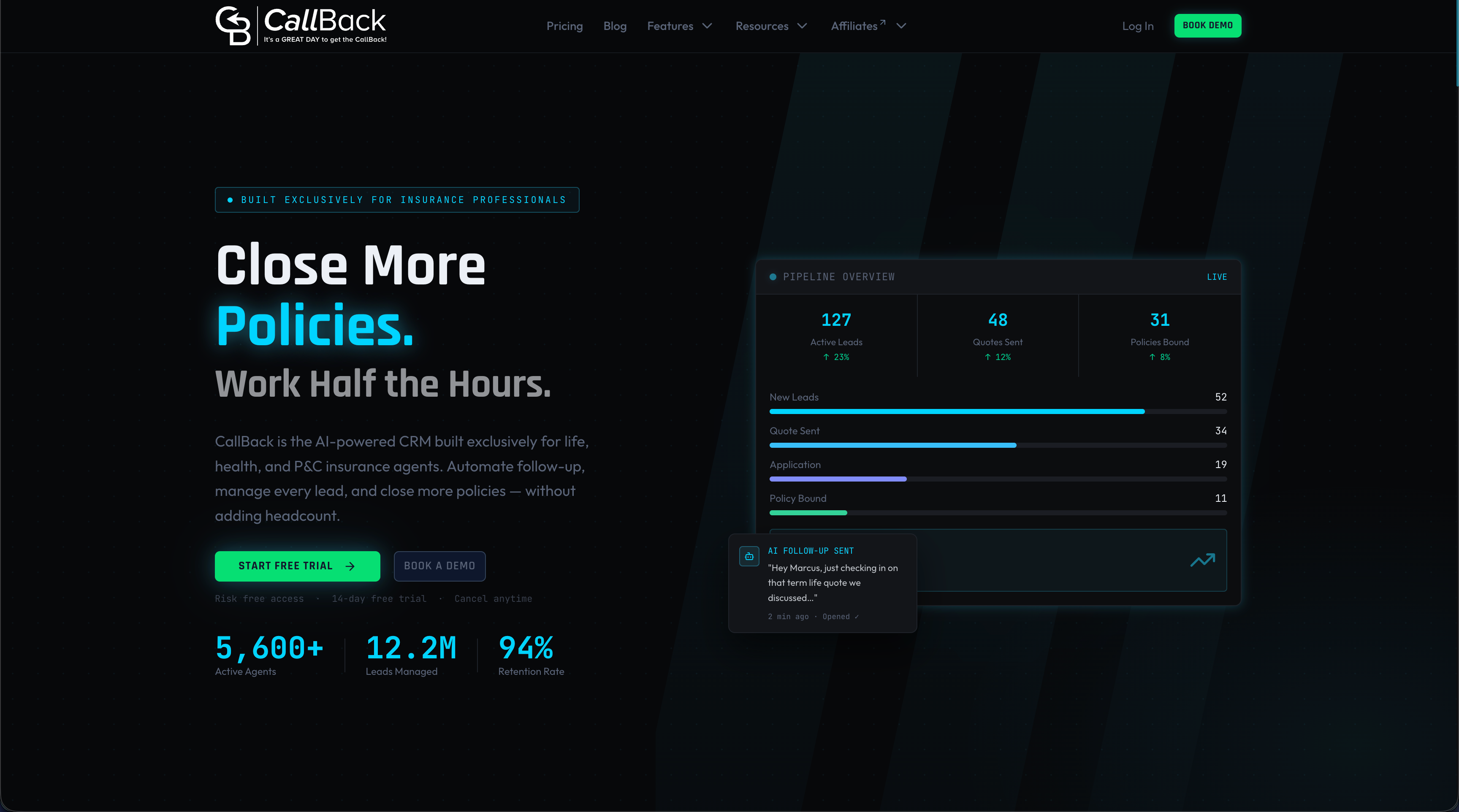
Insurance agents and marketing teams using Callbackcrm replace manual outreach with intelligent automation that identifies high-value leads, personalizes messaging by channel, and tracks every interaction in one place. The full feature suite includes over 50 tools covering CRM management, SMS marketing, funnel building, reputation management, and AI assistants. If you are ready to move beyond disconnected tools, Callbackcrm gives you the infrastructure to do it without rebuilding from scratch.
FAQ
What is multi-channel CRM in simple terms?
Multi-channel CRM is a platform that connects communication channels like email, SMS, phone, and social media into one system so teams manage all customer interactions from a single dashboard.
How does multi-channel CRM differ from omnichannel CRM?
Multi-channel CRM keeps channel records separate, while omnichannel CRM unifies all interactions into one continuous customer timeline for a consistent experience across every touchpoint.
What are the main benefits of multi-channel CRM?
The primary benefits include faster response times, automated data entry, higher customer retention, and better personalization through centralized contact records.
Can small businesses use multi-channel CRM effectively?
Yes. SMBs benefit most from a centralized CRM that acts as a single source of truth, reducing friction in the customer journey without requiring enterprise-level infrastructure.
What is the biggest mistake when implementing multi-channel CRM?
The most common mistake is adding more channels without first establishing data unification and identity mapping, which leads to duplicate profiles and fragmented customer records that reduce personalization.