

Insurance agents face a harsh reality in 2026: lead costs have surged 43% while traditional prospecting methods deliver diminishing returns. Digital noise drowns out cold calls, ad prices inflate faster than conversion rates improve, and customer acquisition costs eat into margins. Yet agents who master AI-powered lead generation strategies gain a decisive edge, boosting productivity by 10-20% through automation. Understanding these dynamics separates thriving agencies from struggling ones in today’s competitive marketplace.
Table of Contents
- Why Lead Generation Matters More Than Ever For Insurance Agents In 2026
- Understanding Lead Generation Benchmarks, Costs, And Conversion Rates In Insurance
- Navigating AI And Automation Risks, Compliance, And The Hybrid Agent Advantage
- Applying AI-Powered Lead Generation Strategies To Boost Your Insurance Sales In 2026
- Unlock Your Insurance Sales Potential With CallBack CRM
- Frequently Asked Questions
Key takeaways
| Point | Details |
|---|---|
| Rising costs demand smarter strategies | Lead generation expenses and competition have intensified dramatically in 2026, forcing agents to adopt more efficient methods. |
| AI delivers measurable productivity gains | Automation tools boost lead generation efficiency by 10-30%, cutting costs and accelerating response times. |
| Compliance remains non-negotiable | TCPA regulations and AI governance frameworks require strict human oversight to avoid legal and ethical risks. |
| Exclusive leads outperform shared options | Higher upfront costs translate to better conversion rates when leads receive personalized, immediate attention. |
| Speed-to-lead response multiplies conversions | Contacting prospects within one minute increases conversion likelihood nearly fourfold compared to delayed outreach. |
Why lead generation matters more than ever for insurance agents in 2026
Competition among insurance agents has reached unprecedented intensity this year. Customer acquisition costs climb as more agencies chase the same prospects through saturated digital channels. Traditional methods like cold calling and generic email blasts produce fewer results because consumers have learned to ignore them. Ad platforms charge premium rates for clicks that rarely convert, forcing agents to spend more for less return.
The productivity gap between early AI adopters and traditional agents widens daily. Agencies leveraging AI gain 10-20% productivity advantages by automating repetitive tasks like data entry, lead scoring, and initial outreach. These tools identify high-value prospects faster, personalize messaging at scale, and free agents to focus on relationship building and complex advice. Without these capabilities, agencies struggle to compete on cost and speed.
Market shifts compound these challenges. Consumers research insurance options independently online before contacting agents, arriving with specific expectations and comparison shopping habits. They demand immediate responses and personalized solutions, not generic pitches. Agents who fail to meet these expectations lose opportunities to competitors who respond faster with better-targeted messaging.
“The agents who thrive in 2026 treat lead generation as a strategic discipline, not an afterthought. They invest in systems that identify quality prospects, respond instantly, and nurture relationships systematically.”
Sustainable growth requires scalable lead generation systems. Relying on referrals and personal networks limits expansion potential. Building a predictable pipeline through diverse lead generation channels creates stability and enables strategic planning. The agents who master this discipline control their business trajectory rather than reacting to market fluctuations.
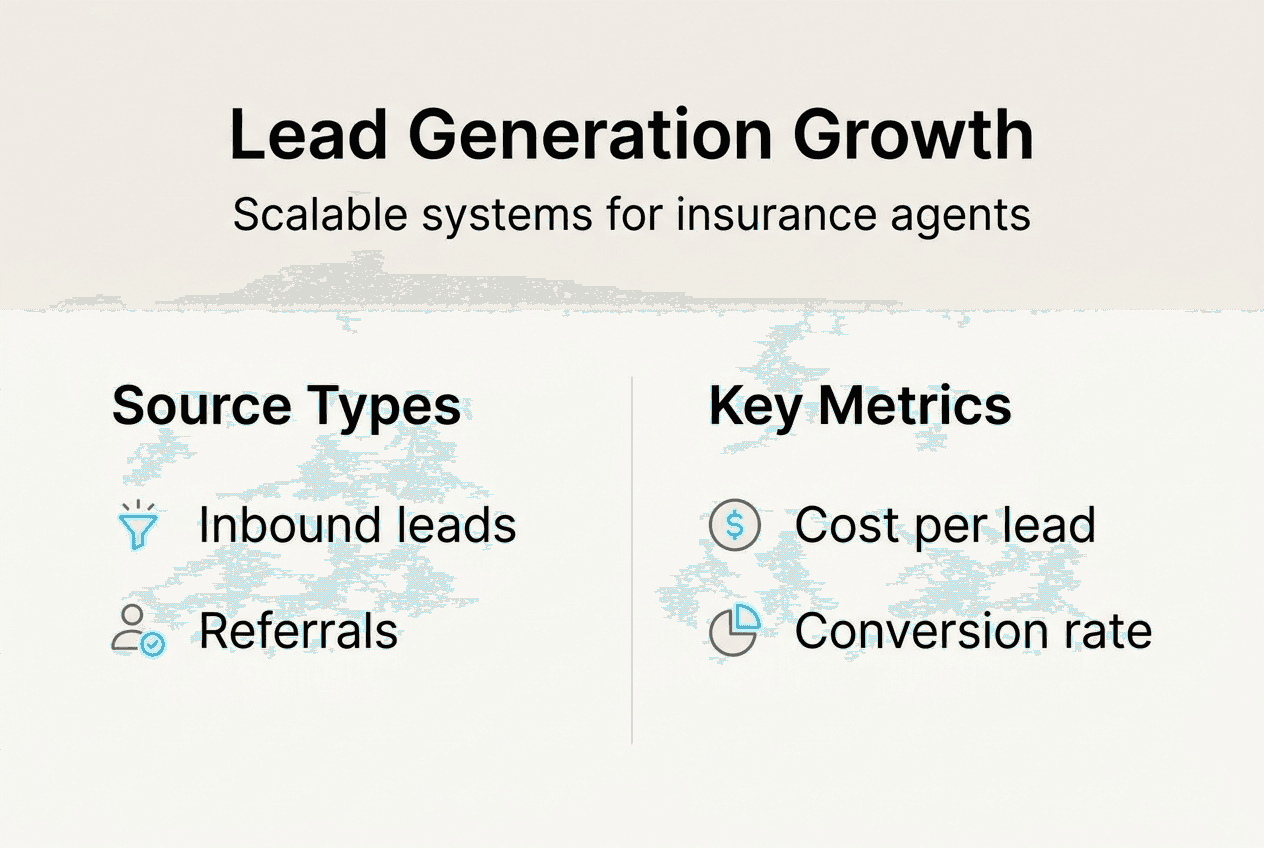
Understanding lead generation benchmarks, costs, and conversion rates in insurance
Lead costs vary dramatically by insurance type and exclusivity. Exclusive auto insurance leads typically cost $40-100 per lead but convert at 6-9%, while shared leads cost less upfront but deliver lower conversion rates due to competition from multiple agents contacting the same prospect. Life insurance and Medicare leads command higher prices but show conversion rates reaching 19% when agents respond quickly and provide personalized guidance.
| Lead Type | Average Cost | Conversion Rate | Key Factor |
|---|---|---|---|
| Auto (Exclusive) | $40-100 | 6-9% | Immediate response critical |
| Auto (Shared) | $15-30 | 2-4% | Multiple agents competing |
| Life Insurance | $25-75 | 8-15% | Trust building essential |
| Medicare | $30-80 | 12-19% | Timing with enrollment periods |
Speed-to-lead response creates massive conversion differences. Contacting prospects within one minute of inquiry submission increases conversion likelihood nearly four times compared to waiting even five minutes. This reality forces agents to implement automated response systems or risk losing opportunities to faster competitors. The first agent to engage typically wins the business, regardless of price or product differences.

AI and automation slash lead costs while boosting returns. Agencies implementing intelligent systems report 43% lower lead costs and ROI improvements ranging from 30-200%. These tools eliminate manual data entry, score leads based on conversion probability, and trigger personalized outreach sequences automatically. They also identify optimal contact times and channels for each prospect, maximizing engagement rates.
Organic lead sources deliver superior economics. Inbound leads from content marketing, SEO, and referral programs cost 42% less than paid advertising leads while converting at higher rates because prospects arrive with existing interest and trust. Building these channels requires upfront investment but creates compounding returns over time. Smart agents balance paid and organic strategies to optimize both immediate results and long-term efficiency.
Pro Tip: Track your cost per lead and conversion rate by source monthly. Identify which channels deliver the best ROI and double down on those while cutting underperformers. Many agents waste budget on familiar tactics that no longer work instead of testing proven lead generation approaches systematically.
Data quality impacts every downstream metric. Clean, accurate lead information enables faster qualification and more personalized outreach. Poor data forces agents to waste time verifying details or attempting to contact invalid prospects. Implementing AI-powered lead generation tools that validate and enrich data automatically improves efficiency and conversion rates simultaneously.
Navigating AI and automation risks, compliance, and the hybrid agent advantage
AI systems produce errors when deployed without proper oversight. Hallucinations occur when algorithms generate plausible-sounding but factually incorrect information, potentially leading to compliance violations or customer misinformation. Bias in training data can cause discriminatory outcomes in lead scoring or pricing recommendations, creating legal liability under fair lending and anti-discrimination laws. These risks demand human judgment and oversight at critical decision points.
Compliance requirements grow stricter as AI adoption accelerates. TCPA regulations govern automated calling and texting, requiring explicit consent before contacting prospects. NAIC has issued guidance on AI use in insurance, emphasizing transparency, fairness, and accountability. State privacy laws like CCPA impose strict data handling requirements. Violating these rules triggers severe penalties, making compliance frameworks essential before scaling AI tools.
- Establish clear governance policies defining acceptable AI use cases and requiring human review of automated decisions.
- Maintain detailed audit trails documenting how AI systems process data and generate recommendations.
- Train staff on compliance requirements and empower them to override AI outputs when necessary.
- Regularly test AI systems for bias and accuracy, adjusting algorithms based on performance data.
- Partner with legal counsel to ensure AI implementations meet evolving regulatory standards.
Customers prefer human expertise despite AI capabilities. Research shows 88% of insurance buyers want human advice for complex decisions, not algorithm-generated recommendations. They value the judgment, empathy, and accountability that only human agents provide. This preference creates opportunity for agents who position themselves as trusted advisors rather than order takers, using AI to enhance rather than replace their expertise.
“The winning model combines AI efficiency with human judgment. Machines handle data processing, lead scoring, and routine outreach while agents focus on relationship building, complex problem solving, and strategic advice.”
Hybrid bionic agents outperform both pure AI and traditional approaches. These professionals leverage automation for repetitive tasks while applying human expertise to high-value activities. They respond faster than traditional agents thanks to AI-powered systems, yet deliver more personalized service than fully automated competitors. This combination maximizes productivity while minimizing errors and omissions exposure.
Pro Tip: Start small with AI pilots in low-risk areas like lead scoring or email personalization. Measure results rigorously before expanding to more sensitive applications. This approach builds organizational confidence while limiting downside risk if systems underperform or create unexpected compliance issues.
Scaling AI requires strong data foundations. Garbage in, garbage out applies ruthlessly to machine learning systems. Invest in data quality, integration, and governance before deploying sophisticated algorithms. Many agencies rush to implement flashy AI tools without ensuring their underlying data supports accurate predictions, wasting money on technology that cannot deliver promised results.
Applying AI-powered lead generation strategies to boost your insurance sales in 2026
Structured lead funnels transform random inquiries into systematic revenue. Map your ideal customer journey from initial awareness through purchase decision. Identify where prospects enter your funnel and what information they need at each stage. Implement AI-driven segmentation to group leads by characteristics like insurance type, urgency, and budget. Use automated scoring to prioritize high-probability prospects for immediate agent attention while nurturing lower-priority leads through email sequences.
Automation tools slash operational costs while improving response speed. Configure chatbots to qualify website visitors 24/7, capturing contact information and scheduling agent callbacks automatically. Deploy email sequences that educate prospects about insurance options based on their specific situation. Use SMS reminders to reduce no-shows for scheduled consultations. These systems work continuously without breaks, ensuring no lead falls through cracks due to agent availability constraints.
- Implement instant lead alerts that notify agents via mobile app when high-value prospects submit inquiries.
- Use AI-powered email personalization to reference prospect-specific details automatically, increasing engagement rates.
- Deploy automated follow-up sequences that maintain contact without manual effort, keeping your agency top of mind.
- Leverage predictive analytics to identify which existing customers are most likely to need additional coverage soon.
Exclusive versus shared lead strategies require careful cost-benefit analysis. Exclusive leads cost more upfront but eliminate competition from other agents contacting the same prospect. Shared leads offer lower entry costs but demand faster response and stronger differentiation to win business. Test both approaches systematically, tracking not just conversion rates but also lifetime customer value. Sometimes lower-cost shared leads that convert at 3% outperform expensive exclusive leads converting at 8% when you factor in total economics.
| Strategy | Best For | Key Success Factor |
|---|---|---|
| Exclusive Leads | Agencies with strong follow-up systems | Speed and personalization |
| Shared Leads | High-volume operations | Fastest response wins |
| Organic Inbound | Long-term brand building | Content quality and SEO |
| Referral Programs | Relationship-focused agents | Systematic asking process |
Overcoming AI adoption barriers requires cultural change, not just technology. Many agents resist new tools because they fear complexity or job displacement. Address these concerns directly by framing AI as an assistant that handles tedious work, freeing agents for activities they enjoy and excel at like building relationships and solving complex problems. Provide hands-on training and celebrate early wins to build momentum. Align AI capabilities with individual agent strengths rather than forcing one-size-fits-all approaches.
Tracking the right KPIs drives continuous improvement. Monitor cost per lead by source, conversion rate by lead type, and speed-to-lead response times. Calculate customer acquisition cost including all marketing and sales expenses, then compare against lifetime customer value to ensure profitability. Review these metrics monthly, identifying trends and adjusting strategies accordingly. What gets measured gets managed, especially in lead generation where small improvements compound dramatically over time.
Pro Tip: Build a comprehensive lead generation workflow that documents every step from initial contact through policy sale. Identify bottlenecks where prospects drop out and test solutions systematically. Many agencies lose half their potential revenue to process gaps that simple automation could eliminate. Focus on optimizing your funnel rather than just generating more top-of-funnel traffic.
Unlock your insurance sales potential with CallBack CRM
Ready to implement the AI-powered strategies that separate thriving agencies from struggling competitors? CallBack CRM delivers 50+ automation features purpose-built for insurance professionals who demand results. Our platform handles lead capture, scoring, and nurturing automatically while you focus on closing deals and serving clients.
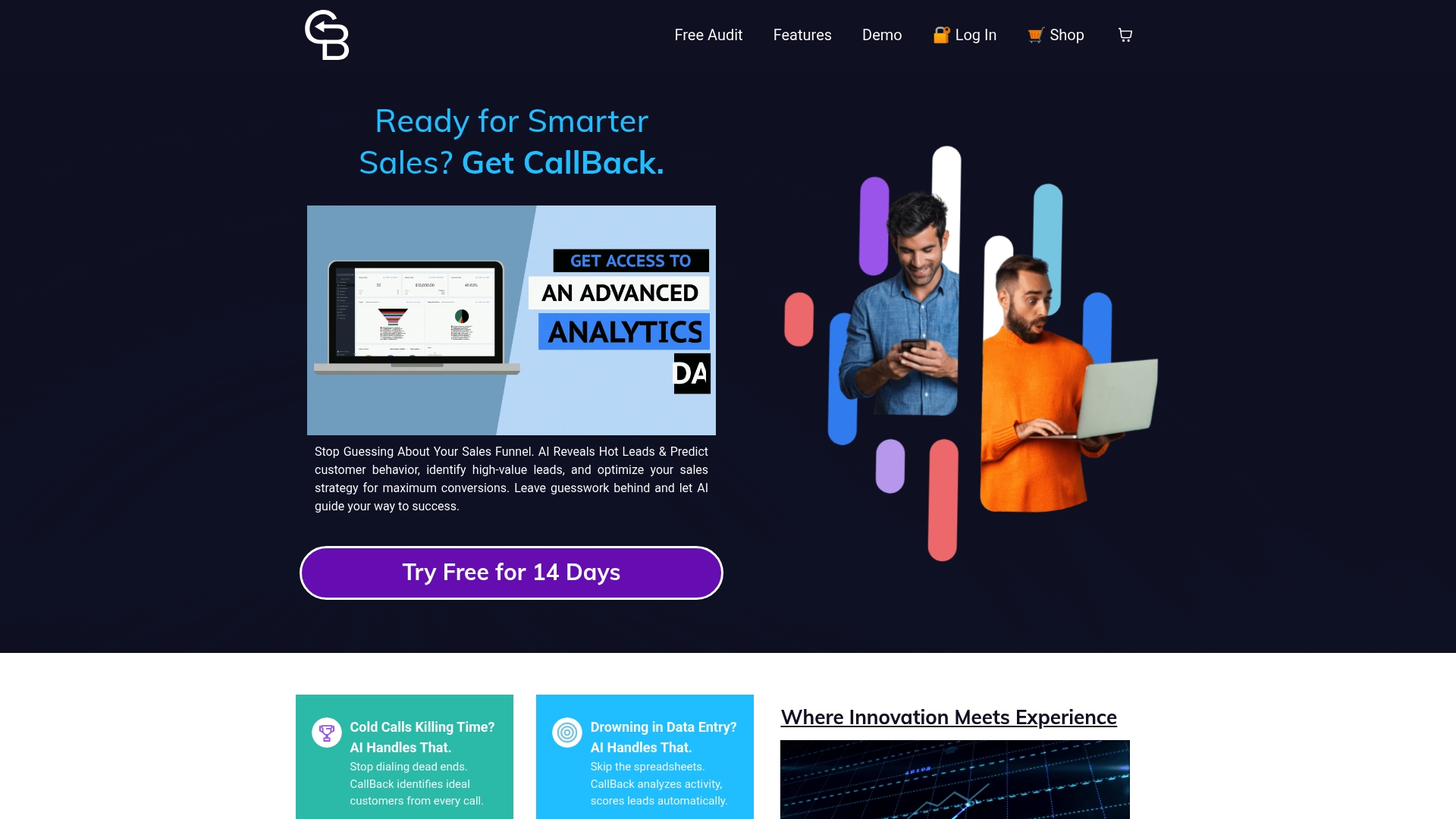
Manage your entire sales pipeline from first contact through policy renewal in one intuitive system. AI-powered features eliminate manual data entry, trigger personalized outreach at optimal times, and surface high-priority opportunities instantly. Built-in CRM capabilities organize customer information effortlessly while intelligent automation reduces lead costs and accelerates response times. Stop losing opportunities to faster competitors and start leveraging technology that works as hard as you do.
Frequently asked questions
What makes lead generation so critical for insurance agents in 2026?
Rising customer acquisition costs and intensifying competition force agents to generate leads more efficiently or risk losing market share. Traditional prospecting methods deliver diminishing returns while AI-powered approaches create sustainable competitive advantages. Agencies that master systematic lead generation control their growth trajectory rather than depending on unpredictable referrals.
How does AI improve lead generation for insurance agents?
AI identifies high-potential prospects faster by analyzing behavioral patterns and demographic data that predict conversion likelihood. It automates repetitive outreach tasks, personalizes messaging at scale, and ensures instant response to inquiries. These capabilities cut lead costs by 43% while boosting ROI 30-200% compared to manual approaches.
What are the risks of relying on AI for insurance lead generation?
AI systems produce errors when deployed without human oversight, potentially causing TCPA violations or discriminatory outcomes that trigger legal liability. Algorithms trained on biased data perpetuate unfair patterns in lead scoring and pricing. Human judgment remains essential to review AI outputs, ensure ethical compliance, and maintain customer trust through personalized expertise.
How can insurance agents effectively combine AI with human expertise?
Use AI for data processing, lead scoring, and automated outreach while reserving human attention for relationship building and complex advisory conversations. This hybrid model maximizes efficiency gains from automation while preserving the judgment, empathy, and accountability that customers value. Start with low-risk AI pilots, measure results rigorously, and scale successful applications gradually while maintaining strong governance frameworks.
Why do exclusive leads convert better than shared leads?
Exclusive leads receive attention from only one agent, eliminating competition and allowing personalized follow-up without pressure to respond faster than rivals. Prospects appreciate undivided attention and tailored solutions rather than generic pitches from multiple agents simultaneously. While exclusive leads cost more upfront, their higher conversion rates and better customer lifetime value often justify the premium for agencies with strong nurturing systems.