

TL;DR:
- Effective agency social media management requires documented onboarding, account isolation, and automation linked to CRMs. Agencies should structure services into strategic, tactical, and growth tiers, focusing on results-driven outcomes. Callbackcrm streamlines workflows by integrating scheduling, lead routing, automation, and reporting in one platform.
Managing agency social media accounts comes down to three non-negotiables: a documented onboarding system, isolated client sessions, and automation pipelines that connect your content calendar to your CRM. Get all three in place before you post a single piece of content.
Start here this week:
- Sign a brand-voice brief with every client before any drafts are written
- Provision admin access through platform business managers, not shared passwords
- Set up isolated browser profiles or cloud phone sessions per client account
- Define KPIs and a reporting cadence in writing before go-live
- Route all inbound leads from social directly into a CRM from day one
Pro Tip: Set up isolated browser profiles before any native posting. Shared sessions create correlated device fingerprints across accounts, and one policy strike can cascade to others.
Table of Contents
- What service tiers should your agency offer?
- How to run the operational playbook from onboarding to reporting
- How does AI automation make account management more efficient?
- What KPIs matter and what does agency social actually cost?
- What compliance rules apply to U.S. insurance social media?
- Who should own agency social accounts internally?
- Key Takeaways
- What agencies get wrong about social media management
- Callbackcrm fits directly into this workflow
- Useful sources for agencies building this system
What service tiers should your agency offer?
High-performing agencies structure social services as a three-tier model: Strategic, Tactical, and Growth. Each tier has distinct deliverables, pricing logic, and client expectations.
Strategic tier covers audits, 30- or 90-day briefs, competitive research, platform selection, and high-level KPI setting. For an insurance agent, this means identifying which platforms their target policyholders actually use and documenting a content strategy before any scheduling begins.
Tactical tier handles the production pipeline: content creation, scheduling, community management, and approval workflows. This is where most agencies live, and where commoditization happens if deliverables are not clearly defined upfront.
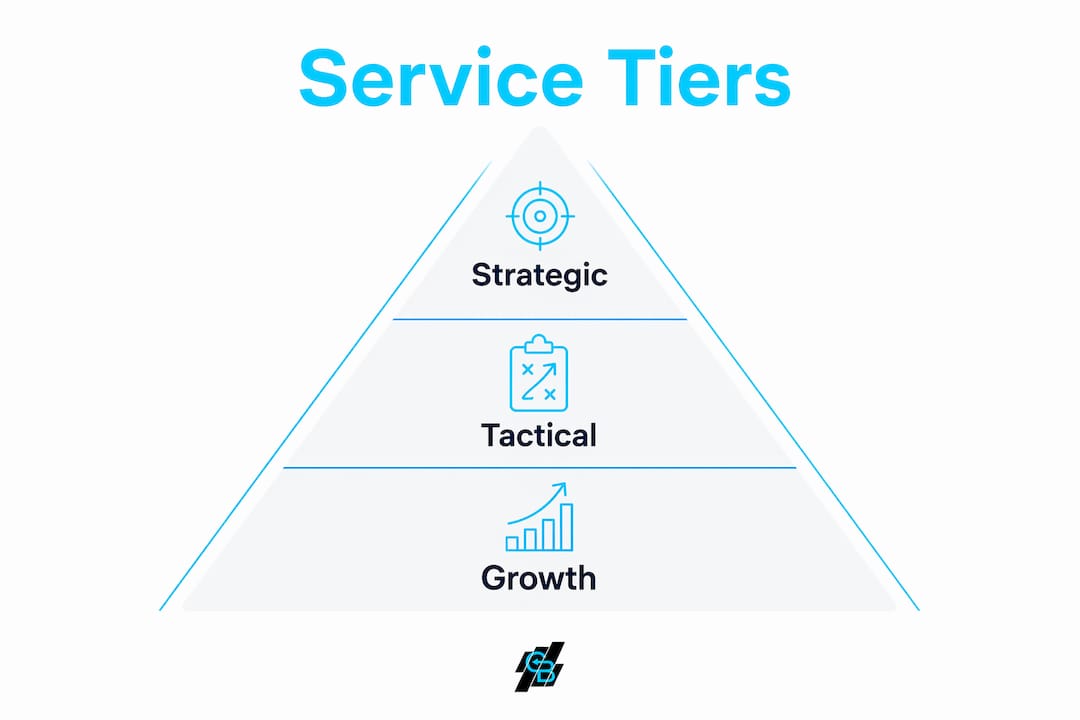
Growth tier adds paid media execution, audience testing, conversion tracking, and ROI reporting that ties social activity to lead outcomes. The trigger to upsell from Tactical to Growth is straightforward: when a client asks “what did social actually generate this month?” and the Tactical report cannot answer in dollar terms, the Growth tier is the answer.
Position each tier by outcome, not by task list. Clients pay for results, not hours.
How to run the operational playbook from onboarding to reporting
A repeatable workflow is what separates agencies that scale from those that plateau. Follow these steps in order:
- Provision access. Assign admin and editor roles through platform business managers. Enable 2FA on every account. Never share passwords.
- Collect assets. Gather logos, legal disclosures, licensed-agent identification, policy wording, and any carrier-required language before drafting begins.
- Sign the brand-voice brief. A signed brand-voice document and versioned approval trail prevent scope creep and repeated rework.
- Set baseline KPIs. Document follower growth rate, engagement rate, reach, impressions, CTR, and lead events. Agree on reporting cadence in writing.
- Run a content audit. In the first 30 days, audit the last 90 days of content. Identify top performers by engagement and CTR.
- Build the 30-day brief. A 30-day living brief of 1,000–1,500 words should include client goals, three content themes, platform-specific instructions, and the approval workflow. Update it monthly.
- Schedule the first two weeks before go-live. Never launch with an empty calendar.
- Run the approval workflow. Every post follows: AI pre-draft → human review → client sign-off (versioned) → schedule → publish.
Content calendar template
| Field | Details |
|---|---|
| Platform | Facebook, LinkedIn, Instagram, etc. |
| Post type | Educational, testimonial, product highlight, compliance notice |
| Content pillar | Brand authority, lead generation, community trust |
| Copy slot | Draft text with disclosure language |
| Assets | Image or video file reference |
| CTA | Link, phone number, or form |
| Scheduled time | Date and time with time zone |
| Owner | Content creator or account manager |
| Approval status | Draft / In review / Approved / Scheduled |
Reporting scorecard
Automate these data points monthly: follower growth rate, engagement rate, reach, impressions, CTR, conversions tied to lead events, and a brief narrative interpretation. The narrative is the one element that stays human.
How does AI automation make account management more efficient?
AI handles the production layer. Your team handles review, strategy, and client relationships. That division is what makes social media automation worth the setup time.

A practical automation flow looks like this: 30-day brief → AI caption generator → batch scheduling → monitoring triggers → lead routing to CRM → automated monthly report. Each step connects to the next without manual handoffs.
Callbackcrm fits directly into this flow. Its Socials feature handles social scheduling and publishing, while its automation workflows route inbound leads from social to the right pipeline stage via SMS or email follow-up. Reporting connectors like Looker Studio or Callbackcrm’s built-in dashboards generate white-labeled PDFs automatically.
Structured AI workflows can save agencies an estimated 12 hours per client per month when paired with a structured review process. That time goes back to strategy and client relationships.
Do not automate: sensitive compliance messaging, crisis responses, or any post containing product-specific claims, quote language, or pricing statements. Those require a human sign-off every time.
Pro Tip: Keep a 30-day living brief updated monthly so your AI agent has current direction. A stale annual strategy produces generic drafts that require more rework, not less.
What KPIs matter and what does agency social actually cost?
Core KPIs for insurance agency social accounts:
- Engagement rate: likes, comments, shares divided by reach
- Follower growth rate: net new followers per month as a percentage of total
- Reach and impressions trend: directional movement month over month
- CTR: link clicks divided by impressions
- Leads generated: form fills, DMs, and call requests attributed to social
- Lead-to-opportunity conversion: leads that enter the sales pipeline
- Cost-per-lead: for paid Growth tier accounts only
Reporting cadence: daily health checks (post went live, no flags), weekly content review (performance against plan), and a monthly narrative report with a one-page executive summary for the client.
Resourcing benchmarks as capacity guides: one account manager for a small team of clients, one content creator for a moderate group of clients, one community manager for a reasonable client load. These are starting points, not guarantees.
Pricing for U.S. insurance clients varies by tier. Basic channel management (Tactical) typically runs at a lower monthly rate covering scheduling and community management. Full-service Growth retainers that include paid media, conversion tracking, and ROI reporting command significantly higher fees. Automated reporting reduces monthly delivery time from several hours to minutes, which directly protects margin at both price points. For a broader view of why automation pays off at the agency level, the ROI case is well documented.
What compliance rules apply to U.S. insurance social media?
Insurance agents in the United States operate under state insurance department regulations, carrier marketing guidelines, and FTC disclosure requirements. Social media is not exempt from any of them.
Required account setup steps: display licensed-agent identification on every profile, surface required state disclosures, and link to policy documents where applicable. Platform business accounts for Instagram, TikTok, and Meta Business Suite must be configured correctly during onboarding to access analytics and paid features.
Approval policy: any post containing product-specific claims, quote language, or pricing statements requires final human sign-off before scheduling. No exceptions.
Privacy and lead capture: handle sensitive customer data according to applicable state privacy laws. Obtain explicit consent before adding contacts to SMS or email sequences. Route all consented leads securely into Callbackcrm for follow-up. For health agents specifically, platform-specific compliance guidance covers the additional regulatory layer.
Crisis checklist: place an immediate hold on scheduled content, notify legal or compliance, preserve native content and timestamps, and move resolution to private channels.
Pro Tip: Store one-sentence disclosure snippets and a compliance checklist inside every 30-day brief. AI drafts will then include required language automatically, reducing the compliance review step to a confirmation rather than a rewrite.
Who should own agency social accounts internally?
Assign a single internal owner for the agency’s own brand channels and one account manager as owner for each client account. Document both in writing with SLAs attached.
Owner KPIs: content velocity (posts published versus planned), engagement trend, inbound leads from social, and approval turnaround time. These four metrics make performance visible and reviewable.
Organizational rules: one owner means one escalation path. Monthly one-on-one performance reviews tied to measurable KPIs keep accountability real. Missed SLAs should have documented consequences, not just verbal reminders.
Treat the agency’s own social channels with the same rigor as a paying client account. Agencies that deprioritize their own presence lose credibility with prospects who check social before making contact. A strong presence on two or three platforms beats a weak presence across six.
Key Takeaways
Managing agency social media accounts at scale requires documented systems, account isolation, and automation pipelines connected to a CRM before any content goes live.
| Point | Details |
|---|---|
| Sign the brand-voice brief first | A signed, versioned brief prevents scope creep and repeated rework before a single post is drafted. |
| Isolate every client session | Use separate browser profiles or cloud phones per client to prevent policy flags from spreading across accounts. |
| Use a 30-day living brief | Update it monthly with goals, content themes, and platform instructions so AI drafts stay accurate and on-brand. |
| Automate reporting, not compliance | Route lead data and performance metrics automatically, but keep human sign-off on all product-specific or regulatory content. |
| Callbackcrm as the integration hub | Callbackcrm routes social leads, automates SMS and email follow-up, schedules posts via Socials, and centralizes reporting in one platform. |
What agencies get wrong about social media management
The most common mistake is treating social media management as a production task rather than a systems problem. Agencies that share passwords, skip account isolation, and neglect their own social presence are not cutting corners on execution. They are missing the infrastructure layer entirely.
Account isolation is the clearest example. Most agencies know they should separate client accounts. Few treat it as core infrastructure from day one. The result is a policy flag on one account that disrupts others, or a cross-posting error that damages a client relationship. The fix is not more careful posting. It is isolated browser profiles assigned per client before the first post goes live.
The second pattern is neglecting the agency’s own channels. Prospects check your social presence before they call. An agency with an inconsistent or dormant feed signals that it cannot manage what it sells.
Month one changes look like this: cleaner approvals, fewer missed posts, and a functioning lead routing path. Month three brings measurable engagement trends and a reporting cadence clients trust. Month six is where lead attribution becomes clear and Growth tier upsells become natural conversations.
Callbackcrm fits directly into this workflow
Callbackcrm gives insurance agencies a single platform to schedule social posts, route inbound leads, and automate follow-up without stitching together separate tools. The Socials feature handles scheduling and publishing. Automation workflows move leads from social into SMS and email sequences immediately. Reporting runs on Google Cloud infrastructure, so data is secure and accessible.
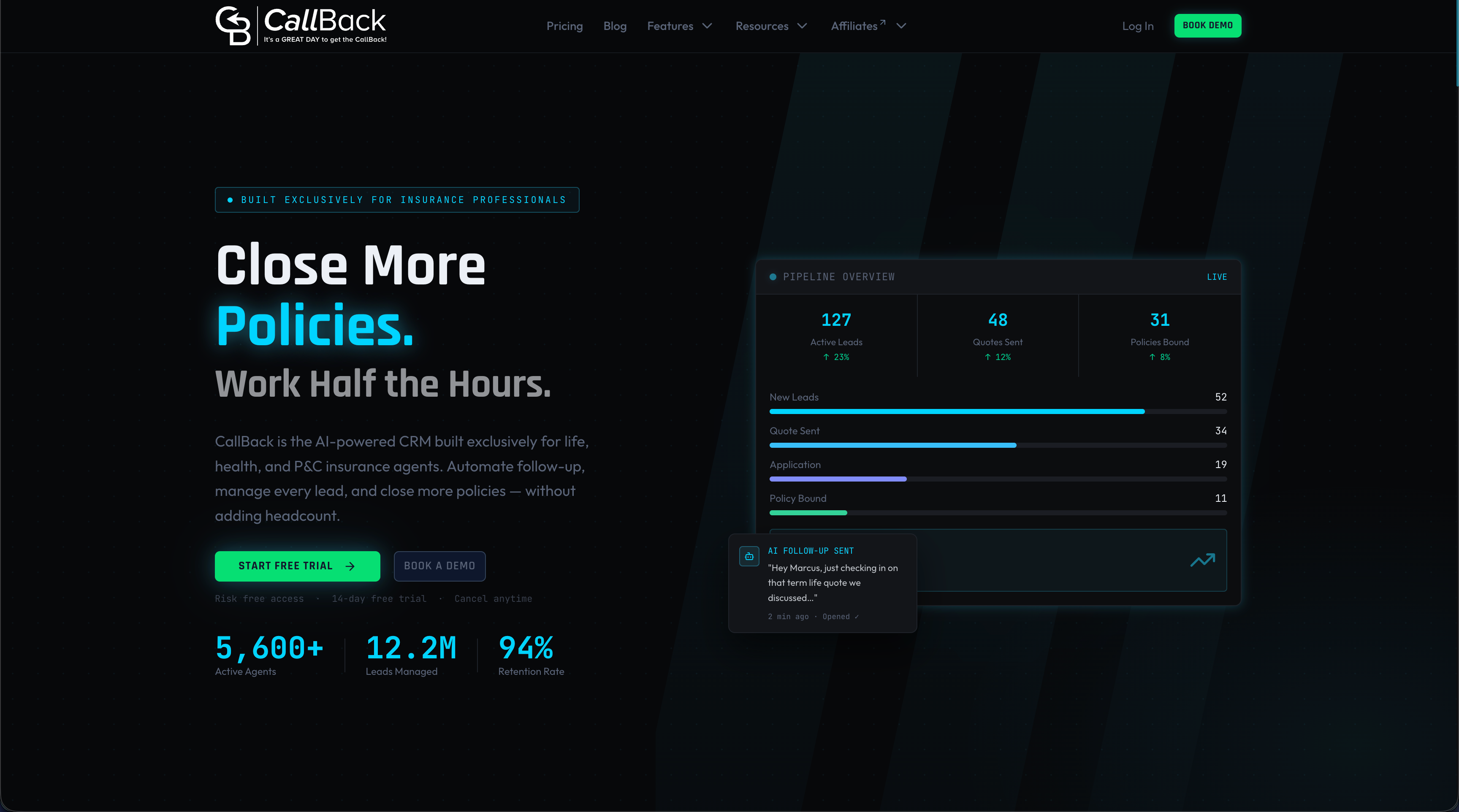
For agencies managing multiple clients, the platform replaces several disconnected tools with one system that covers the full workflow from content to conversion. The SMS automation features are particularly useful for insurance agents who need fast, compliant follow-up after a social lead comes in.
Request a free marketing audit at callbackcrm.com/audit to see where your current social workflow has gaps and how automation can close them.
Useful sources for agencies building this system
- 4 Systems Agencies Use to Manage Client Social Accounts — covers account isolation, role-based delegation, and automated reporting pipelines.
- Social Media Management Checklist — daily, weekly, and monthly checklists including device isolation and platform-native setup steps.
- 30-Day Social Media Brief Template for Agencies — the primary template for AI-ready briefs with platform-specific instructions.
- Mastering Social Media Marketing: A Playbook for Agencies — the three-tier service model framework and pricing logic.
- Social for Agencies — brand-voice documentation and approval workflow best practices.
- Social Media for Marketing Agencies — internal ownership structures and accountability frameworks.
- AI Content Audit Guide for Marketers — practical guidance on auditing content quality and refreshing 30-day briefs with AI tools.
- Automation Strategies for Agencies: 2026 Playbook — detailed automation workflows specific to Callbackcrm integrations.