

IMO marketing automation applies AI-driven CRM tools to insurance agent workflows, handling lead outreach, appointment scheduling, lead scoring, and compliance without manual effort. The primary outcome agents see is faster lead response and automated renewal cycles that raise retention and cross-sell revenue. Some platforms build these functions specifically for insurance agents, agencies, and Insurance Marketing Organizations.
TL;DR:
- Automating renewal sequences 120 days before policy expiry can improve retention by 8 to 15 percentage points within one cycle.
- Speed-to-lead automation, including instant SMS or email, significantly increases the likelihood of qualifying new leads, especially if responded to within five minutes.
- Compliance safeguards such as opt-in verification, time restrictions, and timestamped consent records are crucial to avoid fines and ensure message deliverability.
- Connecting automation platforms to existing AMS and dialer systems with native integrations reduces setup time and prevents data inaccuracies.
- Starting with a pilot focusing on renewal or lead acknowledgment workflows helps ensure compliance, data accuracy, and measurable ROI within 90 days.
Table of Contents
- What Does IMO Marketing Automation Include?
- Which Workflows to Automate First for the Fastest ROI
- What Compliance Safeguards Should Any Platform Include?
- Which Integrations Actually Make Automation Work?
- How Do You Implement and Measure Success?
- Training and Onboarding Staff on Automated Workflows
- What Does Successful IMO Automation Look Like in Practice?
- Common Challenges and How to Fix Them
- Metrics That Matter Beyond Lead Score
- Author Perspective: Practical Pitfalls and the Minimal Starting Point
- How Callbackcrm Maps to This Checklist
- Sources
- FAQ
What Does IMO Marketing Automation Include?
IMO marketing automation is not one tool. It is five interconnected systems working together: outreach automation, appointment scheduling, lead scoring, sales intelligence, and a compliance layer that keeps every message legal.
Each piece solves a specific bottleneck. Outreach automation replaces manual follow-up calls and texts with triggered sequences. Scheduling tools remove the back-and-forth of booking a call. Lead scoring ranks prospects by likelihood to convert, so agents spend time on the leads worth chasing. Sales intelligence surfaces which policies a client is likely to need next. Compliance tooling makes sure none of it violates messaging law.
When these systems work together, agents using AI automation often report booking three times more appointments and closing deals faster than agents relying on manual outreach.
- Outreach automation: SMS, email, and voicemail drops triggered by lead behavior
- Appointment scheduling: self-service booking synced to agent calendars
- Lead scoring: AI ranks prospects by conversion probability
- Sales intelligence: flags cross-sell and renewal opportunities automatically
- Compliance layer: manages opt-in records and messaging restrictions
Pricing generally scales with agency size, and smaller shops tend to see the fastest relative return since they lack existing staff to do this work manually.
Which Workflows to Automate First for the Fastest ROI
Not every workflow deserves equal attention on day one. Some pay back in weeks. Others take months. Sequencing matters more than most agents realize.
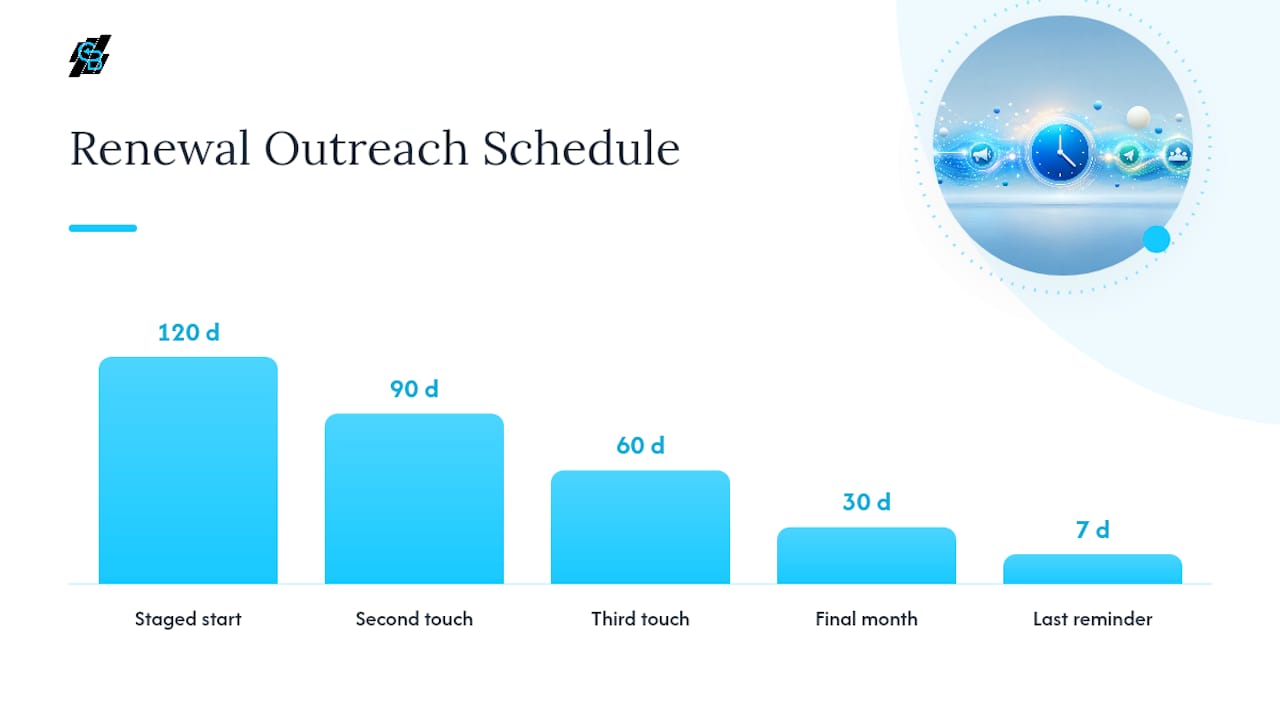
- Renewal automation. Start staged outreach 120 days before policy expiration, with touches at 90, 60, 30, and 7 days out. Renewal workflows deliver the highest ROI of any automation type because the client relationship already exists and the cost of losing the policy is high.
- Speed-to-lead triggers. New leads should get an instant SMS or email within minutes of form submission, paired with auto-dialer routing to a live agent. Agents who respond within five minutes are roughly 21 times more likely to qualify a lead than those who wait 30 minutes.
- Cross-sell sequencing. Trigger outreach off life events: a new auto policy holder gets a home insurance quote request 60 days in; a term life client gets a disability coverage nudge at renewal time.
- Referral and post-claim outreach. After a claim closes, an automated check-in sequence both retains the client and often surfaces a referral opportunity.
Agencies that automate renewal, cross-sell, and referral flows together tend to outperform peers by 8 to 15 percentage points in retention, with ROI showing up within 3 to 9 months depending on scope.
Pro Tip: Build your no-show recovery flow before you launch anything else. A lead who misses a scheduled call is not gone, but without an automated re-engagement sequence, most agents never call back.
What Compliance Safeguards Should Any Platform Include?
Messaging compliance is not optional, and it is where automation projects most often go wrong. The Telephone Consumer Protection Act governs how businesses can text and call prospects, and enforcement has real teeth.
TCPA violations carry statutory damages commonly cited in the $500 to $1,500 range per unlawful message, and a single bad campaign sent to a few thousand numbers can produce liability that erases a year of automation savings. Separately, 10DLC registration (the carrier system for application-to-person text messaging) affects whether your messages get delivered at all. Unregistered numbers get throttled or blocked outright by carriers.
A platform built for insurance outreach should handle:
- Opt-in verification before any SMS sequence starts
- Time-of-day restrictions that block outreach outside legal calling windows
- Automated opt-out handling that removes numbers instantly
- Timestamped assessment trails documenting consent for every contact
Before launching any campaign, confirm your opt-in source is documented, your 10DLC registration is active, and your platform logs consent with a timestamp. Skipping any one of these is how a $1,500-per-message fine becomes a real bill instead of a hypothetical one.
Which Integrations Actually Make Automation Work?
Automation is only as good as the data feeding it. Most implementation friction has nothing to do with the software itself. It comes from messy or disconnected agency management system (AMS) data.
Native connectors to platforms like Applied Epic, HawkSoft, and AgencyZoom cut setup time from weeks to days compared with custom API builds, because the field mapping is already solved. Your CRM needs specific data points to trigger the right sequences at the right time:
- Policy effective and expiration dates (drives renewal timing)
- Consent flags and opt-in timestamps (drives compliance)
- Producer or agent assignment (drives task routing)
- Coverage lines held (drives cross-sell targeting)
Beyond the AMS, plan for connections to your dialer, calendar system, email and SMS gateway, ad platforms if you run paid lead generation, and a reporting dashboard that consolidates performance across all of it. Clean AMS data is the single biggest hidden cost in any rollout, so budget time for data cleanup before you budget for the software itself.
How Do You Implement and Measure Success?
Start with the workflow tied to your biggest revenue leak. If you are losing renewals to competitors, start there. If leads go cold before anyone calls them, fix speed-to-lead first.
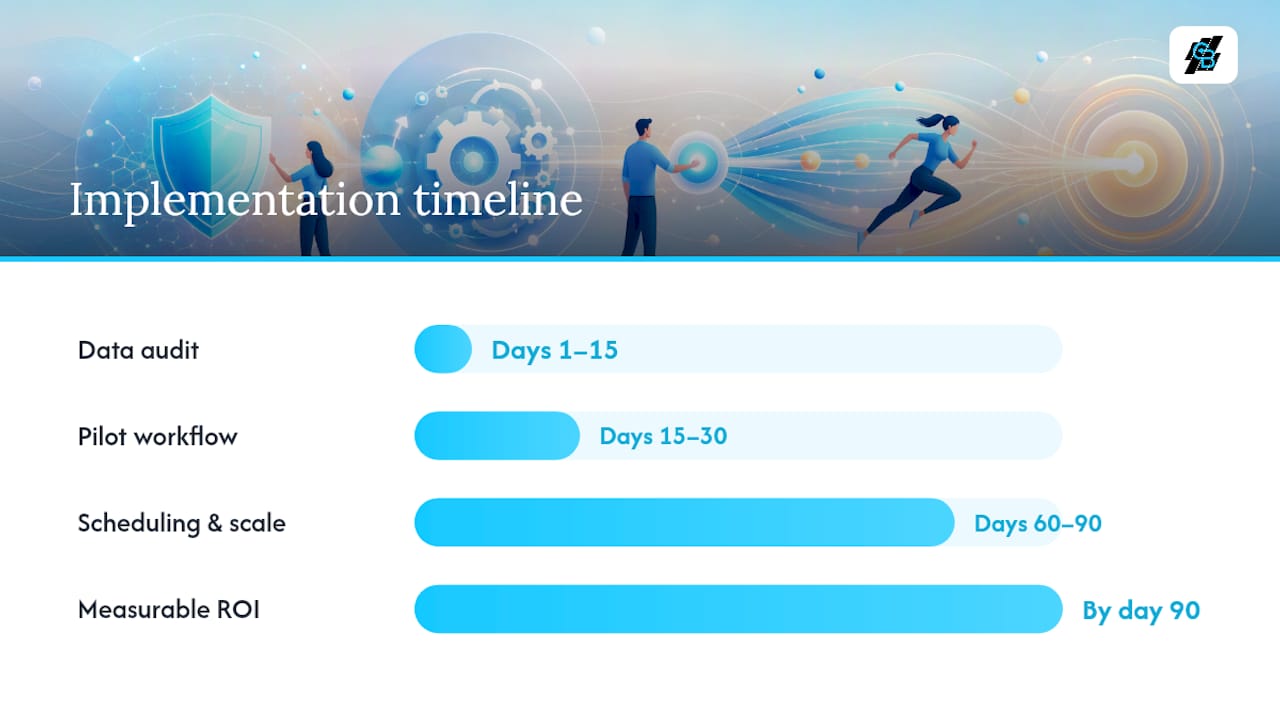
- Data audit (days 1 to 15). Clean and export AMS records, verify consent flags, and confirm policy date fields are accurate.
- Pilot workflow (days 15 to 30). Launch one automation, usually renewal reminders or instant lead acknowledgment, and calibrate lead scoring against real outcomes.
- Compliance checks (ongoing from day 1). Verify 10DLC registration and opt-in documentation before any message goes out.
- Scale (days 60 to 90). Add scheduling automation and additional sequences once the pilot proves stable.
A realistic timeline puts data import and scoring calibration in the first 30 days, scheduling and core automations live by day 60, and measurable ROI appearing by day 90.
Track appointment booking rate, close rate, renewal retention percentage, and average response time to new leads. Cost ranges from roughly $300 a month for small agencies to $3,000 or more for larger operations with heavier integration needs.
Pro Tip: Do not wait for a perfect data set to launch your pilot. Run one clean workflow on your best-documented leads first, then expand once you trust the output.
Training and Onboarding Staff on Automated Workflows
The software is rarely the hard part. Getting a team to trust and actually use it is.
Start onboarding with the workflow the team already understands, usually renewal outreach, since agents recognize the value immediately. Give producers a short reference sheet showing exactly what messages go out and when, so nobody is surprised by an automated text a client mentions on a call. Run a two-week shadow period where staff review automated messages before they send, then remove that gate once trust builds.
Assign one person as the compliance owner. That person checks opt-in documentation, monitors opt-out requests, and confirms 10DLC status stays active. Without a named owner, compliance tasks tend to fall through the cracks once the novelty of a new system wears off.
Schedule a 30-day check-in where the team reviews what is working, what leads are falling through automated gaps, and where lead scoring needs recalibration based on actual close data. Staff who feel involved in tuning the system use it more consistently than staff who were simply handed a new tool with no say in how it runs.
What Does Successful IMO Automation Look Like in Practice?
The pattern across agencies that automate well is consistent: they start narrow, measure results, then expand.
A mid-sized agency losing renewals to competitor outreach typically sees the fastest turnaround by launching a staged renewal sequence starting 120 days before expiration. Within one renewal cycle, retention improvements in the 8 to 15 point range are common among agencies running this kind of automation, according to cost and ROI analysis from industry benchmarking.
Agencies focused on inbound lead volume see a different pattern. Instant SMS acknowledgment paired with auto-dialer routing captures leads that would otherwise go cold waiting for a callback, particularly since most insurance web leads never get called back within an hour under manual processes. Agencies that close that gap with automated triggers convert a meaningfully higher share of the leads they already pay for.
The common thread in both cases is sequencing discipline. Agencies that try to automate everything simultaneously, renewals, cross-sell, referrals, and lead nurture, tend to struggle with quality control and compliance tracking across too many moving parts at once. The agencies seeing results picked one high-value workflow, proved it out, then layered on the next.
Common Challenges and How to Fix Them
Most automation problems trace back to a handful of recurring issues.
Messages feel robotic. If every automated text reads like a template, response rates drop. Fix this by writing three or four variations for each trigger point and rotating them, so repeat contacts do not see identical wording.
Lead scoring feels inaccurate early on. Scoring models need real outcome data to calibrate. Expect the first 30 to 45 days of scores to be imprecise, and treat that period as training data rather than a final verdict on lead quality.
Staff bypass the system. If producers keep working leads manually outside the CRM, the data feeding your automation gets incomplete, and reporting becomes unreliable. Require all lead activity to log inside the platform, even manual touches, so scoring and attribution stay accurate.
Deliverability drops without warning. This usually traces back to 10DLC registration lapsing or an opt-out not processing correctly. Check registration status monthly and audit opt-out handling quarterly.
Renewal sequences trigger too late. If your AMS integration has a sync delay, a policy expiring in 30 days might not trigger the 120-day sequence in time. Confirm sync frequency during setup, not after a missed renewal.
Metrics That Matter Beyond Lead Score
Lead scoring tells you which prospects to prioritize. It does not tell you whether your automation program is actually working.
Response time to new leads is the clearest early signal. If your average first-contact time creeps above five minutes, you are losing the qualification advantage that speed-to-lead automation is supposed to deliver. Appointment show rate matters just as much as booking rate. A high booking number with a low show rate points to a scheduling or reminder gap, not a lead quality problem.
Renewal retention percentage, tracked separately from new business close rate, shows whether your renewal automation is actually preventing lapses or just adding noise to an already-stable book. Cross-sell attachment rate, the share of existing clients who add a second policy within 12 months, measures whether your sales intelligence triggers are surfacing real opportunities or getting ignored.
Message-level metrics matter too: opt-out rate per campaign and delivery rate per campaign flag compliance or 10DLC problems before they become expensive. A rising opt-out rate is usually the first sign that message frequency or timing needs adjustment, well before it becomes a deliverability crisis.
Author Perspective: Practical Pitfalls and the Minimal Starting Point
Speed-to-lead failures and compliance mistakes cause more automation regret than any software limitation. Agencies that try to automate every workflow at once usually end up with none of them working well, because nobody is watching for the edge cases a fully hands-off system misses. Keep a human checking flagged conversations, especially early on. If you are starting from zero, build two things first: an instant lead acknowledgment trigger and a 120-day renewal sequence. Everything else can wait.
— Kyle
How Callbackcrm Maps to This Checklist
Some platforms are built around workflow priorities like instant lead acknowledgment, staged renewal sequencing, AI lead scoring, and compliance layers that handle opt-in tracking and time-of-day restrictions automatically.
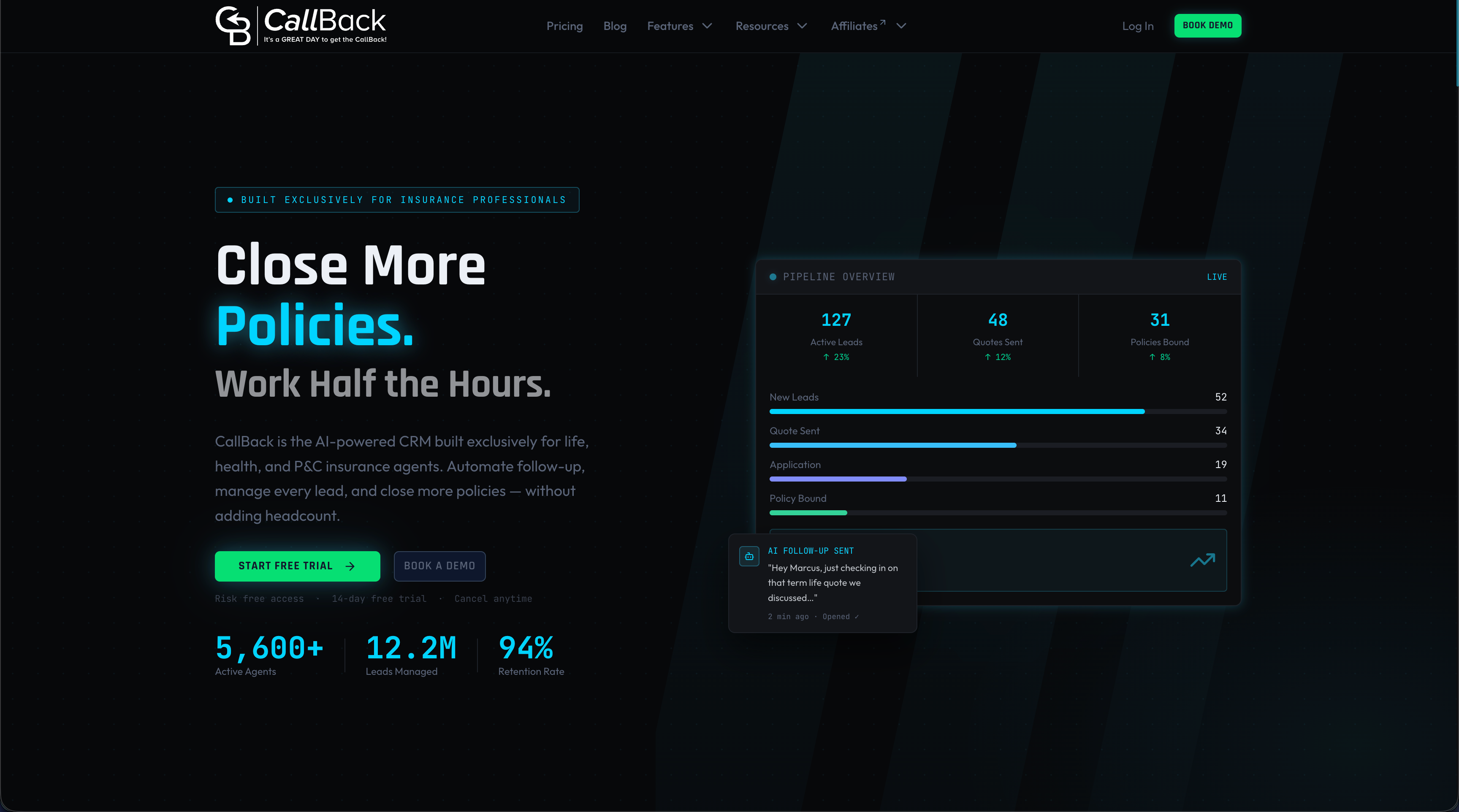
The platform can connect to existing AMS and dialer setups to keep data fields driving renewal timing and cross-sell triggers accurate without manual entry. Before committing to any platform, run a short pilot: import a clean data set, launch one workflow (renewal or speed-to-lead), and verify opt-in records and 10DLC status before sending a single message. For a broader view of automation planning, this SMB automation checklist covers the same setup discipline. If your current lead funnel is losing prospects to slow follow-up, Callbackcrm’s lead generation workflow tools and email automation features are built to close that gap. Start a trial pilot and measure your first 30 days against the benchmarks in this article.
Sources
- Only 19% of insurance web leads are called back in under 1 hour — why speed matters
- Federal Communications Commission (TCPA guidance and enforcement)
- AI Marketing Automation for Insurance Agents: The Complete 2026 Guide | Kijestic
- Insurance Marketing Automation Cost 2026
FAQ
What Is IMO Marketing Automation?
It is AI-driven CRM software that automates lead outreach, appointment scheduling, lead scoring, and compliance specifically for insurance agents, agencies, and Insurance Marketing Organizations.
How Fast Should I Respond to a New Lead?
Within five minutes. Agents who respond that quickly are roughly 21 times more likely to qualify the lead than those who wait 30 minutes.
What Compliance Rules Apply to Automated Texts and Emails?
The TCPA governs consent and messaging practices, with statutory damages commonly cited between $500 and $1,500 per unlawful message, and 10DLC registration affects whether texts get delivered at all.
Which Workflow Should I Automate First?
Renewal automation, staged starting 120 days before expiration, typically delivers the fastest payback because it protects revenue you already have.
How Much Does IMO Marketing Automation Cost?
Costs generally range from about $300 a month for small agencies to $3,000 or more for larger operations, depending on integration depth. Pricing for platforms often scales with agency size.