

Data hygiene in an insurance CRM means every contact record is accurate, complete, and correctly linked to the right policies, renewals, and activity history. Fixing it takes three moves: run a scoped audit to find where records break, stop bad data at the point of entry with validation rules, and roll out a governed deduplication process with clear survivorship rules. Skip any one of these and the other two won’t hold.
TL;DR:
- Properly linked and validated policy status data from the AMS or carrier system prevents renewal and compliance errors caused by duplicate or outdated CRM records.
- Conducting a scoped audit on a sample of 100 to 200 records helps identify specific sources of data inconsistency and failure points before military cleaning efforts.
- Standardizing contact and policy formats at the point of capture reduces silent matching failures and is more cost-effective than retroactive cleanup.
- Assigning clear ownership and survivorship rules to each shared field helps prevent silent overwrites and recurring data corruption during system synchronization.
- Agencies should run continuous match-on-entry validation and schedule full deduplication sweeps every one to three months to prevent small errors from escalating into major issues.
Table of Contents
- What Is Data Hygiene in Insurance CRM Practice, and Why Does It Matter?
- Practical Data-Hygiene Checklist for Insurance CRMs
- Which System Should Own Which Field?
- What Governance and Security Controls Protect Data Quality?
- How Should Agencies Automate Data Cleaning Safely?
- How Callback CRM Supports Insurance-Specific Data Hygiene
- Where Agencies Go Wrong, and How to Fix It Fast
- Get Your Agency’s CRM Hygiene Under Control
- Sources
- FAQ
What Is Data Hygiene in Insurance CRM Practice, and Why Does It Matter?
Dirty CRM data doesn’t announce itself. It shows up quietly, in a renewal that never gets a call because the policy status field says “active” when the carrier system says “lapsed.” An insurance CRM is supposed to centralize prospect and customer information, linking every contact to their policies and open opportunities, and that link only holds if the underlying records are accurate, according to HubSpot’s insurance CRM guidance.
When records go stale or duplicate, three things break at once, harming your customer retention strategies. Retention reporting gets distorted because the same client counts twice or a lapsed policy still reads as in force. Producers chase commission numbers that don’t match carrier statements because the CRM and the AMS disagree on who wrote what. And outreach turns clumsy: two agents calling the same household about the same renewal, or a text going to a number that was disconnected two years ago.
There’s a compliance layer too. If a client asked to be removed from marketing communications and that flag gets lost in a bad merge, you have a consent problem, not just a messy database. Gartner’s research on data quality management consistently finds that prevention costs far less than cleanup after the fact. Every duplicate you stop at intake is one you never have to untangle six months later during a commission dispute.
Pro Tip: Before you build any cleanup plan, pull a renewal report from your CRM and cross-check ten policies against your AMS. If more than one or two disagree on status, your hygiene problem is bigger than you think.
Practical Data-Hygiene Checklist for Insurance CRMs
Cleaning an insurance CRM works best as three phases: audit, remediate, verify. Trying to fix everything at once usually means fixing nothing well.
1. Scope the audit before you touch anything. Pull a sample of 100 to 200 records and check five things: name and contact formatting consistency, phone and email validity, policy-to-contact links, duplicate household matches, and date-of-last-activity accuracy. Reconcile a handful of these against your agency management system or carrier portal. Most agencies find their worst offender is one specific import source, often a lead vendor feed or a legacy spreadsheet migration, so identify that source before you clean anything downstream of it.
2. Standardize formats and lock them in at capture. Inconsistent formatting (phone numbers with and without dashes, states abbreviated three different ways, policy types spelled out inconsistently) makes matching algorithms fail silently. Fix this going forward with picklists and validation rules rather than free-text fields. A step-by-step CRM management approach that enforces required fields at the point of entry stops most of this problem before it starts, and it’s far cheaper than a retroactive cleanup, according to research on deduplication economics.
3. Build your matching keys before you deduplicate. Name matching alone produces both false positives and missed matches. Insurance-specific dedupe needs normalized email, phone, mailing address, date of birth where appropriate, policy identifiers, and household links working together. Assign confidence tiers: high-confidence matches (matching email plus phone plus policy number) can merge automatically; medium-confidence matches go to a human review queue; low-confidence matches stay separate until proven otherwise.
4. Write survivorship rules before you merge a single record. Decide in advance which value wins when two records disagree. A workable default: preserve any Do-Not-Contact flag regardless of which record it came from, prefer carrier-verified policy fields over CRM-entered ones, keep the most recently verified phone number, and union activity histories rather than picking one record’s history and discarding the other. Every merge should re-link the associated policies, opportunities, and tickets automatically, and it needs an audit trail recording who approved the merge and which values survived.
5. Verify results with a reconciliation pass. After a dedupe sweep, spot-check another sample against your AMS. If the error rate hasn’t dropped meaningfully, the matching keys or survivorship rules need adjustment, not the whole process scrapped.
Pro Tip: Never let an automated tool auto-merge two records where one has an active policy and the other has none. Route those to human review every time, even at high match confidence. Losing an active policy link in a bad merge is the single costliest CRM mistake an agency can make.

Which System Should Own Which Field?
The most common source of recurring data corruption isn’t a bad import. It’s two systems fighting over the same field, each one overwriting the other’s correction on the next sync. The fix is a written data dictionary that assigns one authoritative owner to every shared field.
- Field owner: name the system (CRM, AMS, or carrier portal) responsible for each field’s accuracy.
- Allowed values: define the picklist or format so both systems validate the same way.
- Update trigger: specify what event changes the field (a renewal, a status change, a manual edit).
- Review cadence: set how often the field gets reconciled, whether monthly or quarterly.
A common pattern works well for most agencies: let the AMS or carrier portal own policy status, premium, and effective dates, since those are verified against carrier records. Let the CRM own engagement data, contact preferences, and pipeline stage, since those live in the sales process. Integrations should use pre-flight matching before writing any record, and staged backfills rather than live two-way syncs, which is what causes the overwrite loops that silently revert a correct AMS update with stale CRM data. Reviewing your CRM and marketing integration setup with this ownership model in mind usually surfaces where the loop is happening.
What Governance and Security Controls Protect Data Quality?
Hygiene work doesn’t stick without governance behind it. Rules written down and enforced outlast whoever happened to run last quarter’s cleanup project.
- Field-level survivorship rules, documented in writing, so any staff member running a merge follows the same logic every time.
- Audit trails on every merge, recording who approved it, when, and which values survived, so a bad merge can be traced and reversed.
- Retention and archival policies that favor archiving over deleting. The NAIC’s model guidance on retention cautions against deleting records without weighing reporting and legal needs first.
- Role-based access controls built on least privilege, so junior staff can view records without the ability to bulk-merge or delete them.
- A written information security program, including risk assessments, encryption, and an incident response plan, matching what the FTC Safeguards Rule requires of financial institutions handling consumer data, which includes most insurance agencies.
Agencies that treat these as one-time setup tasks instead of living policies tend to see hygiene decay within two or three quarters. The rules only work if someone owns enforcing them.
How Should Agencies Automate Data Cleaning Safely?
Automation earns its place at the point of entry, not just in cleanup sweeps. Match-on-entry checks, email and phone validation, and enrichment lookups catch bad data before it ever becomes a duplicate record, which is a cheaper fix than any retroactive dedupe project.
AI tools are genuinely useful for flagging likely duplicates, suggesting a next action, or scoring which records need attention first. The mistake is treating those suggestions as final. Every AI-generated match or merge recommendation should arrive as a proposal, carrying a confidence score, a source, and a timestamp, and it should sit in an approval queue until a person signs off, particularly for anything touching an active policy or a consent flag. Reserve auto-merge for the narrowest case: matches where email, phone, and policy identifier all agree exactly. Everything else goes to human review. An AI-assisted CRM setup built this way cuts the manual sorting work substantially without handing over judgment calls the software isn’t equipped to make.

Pro Tip: Run automated match-on-entry continuously, but schedule a full deduplication sweep monthly or quarterly depending on how much data flows through your integrations. Waiting longer than a quarter lets small errors compound into a much bigger cleanup job.
How Callback CRM Supports Insurance-Specific Data Hygiene
Callbackcrm builds several of these checklist items directly into platform configuration rather than leaving them to manual discipline. Mandatory fields and picklist enforcement stop free-text formatting errors at capture. Match-on-entry validation flags likely duplicates before a second record ever saves. Merge actions generate an audit trail automatically, and role-based access controls limit who can approve a merge involving an active policy.
| Checklist item | How it’s configured |
|---|---|
| Field validation | Mandatory fields, picklists, and format rules at entry |
| Duplicate prevention | Match-on-entry checks against existing records |
| Survivorship defaults | Configurable rules preserving consent flags and verified fields |
| Review queues | Medium-confidence matches route to a human approval step |
| Audit trail | Merge history logged with approver and timestamp |
Agencies configuring these settings for the first time should start with mandatory fields on phone, email, and policy number, since those three drive most matching accuracy.
Where Agencies Go Wrong, and How to Fix It Fast
Most CRM damage comes from three habits: merging records with no survivorship rules in place, letting a CRM field silently overwrite a carrier-verified value, and deleting inactive records without checking retention needs first. Each is fixable without a big project. Add an approval queue for merges, name a field owner for every shared field, and run a ten-record spot check monthly instead of an annual scramble.
— Kyle
Get Your Agency’s CRM Hygiene Under Control
This CRM platform is designed specifically for insurance sales workflows, with match-on-entry validation, review queues, and audit trails configured for how agencies actually work, rather than adapted from a generic sales CRM. That matters if you’ve spent hours untangling duplicate households or chasing a commission discrepancy that traces back to a bad merge six months ago.
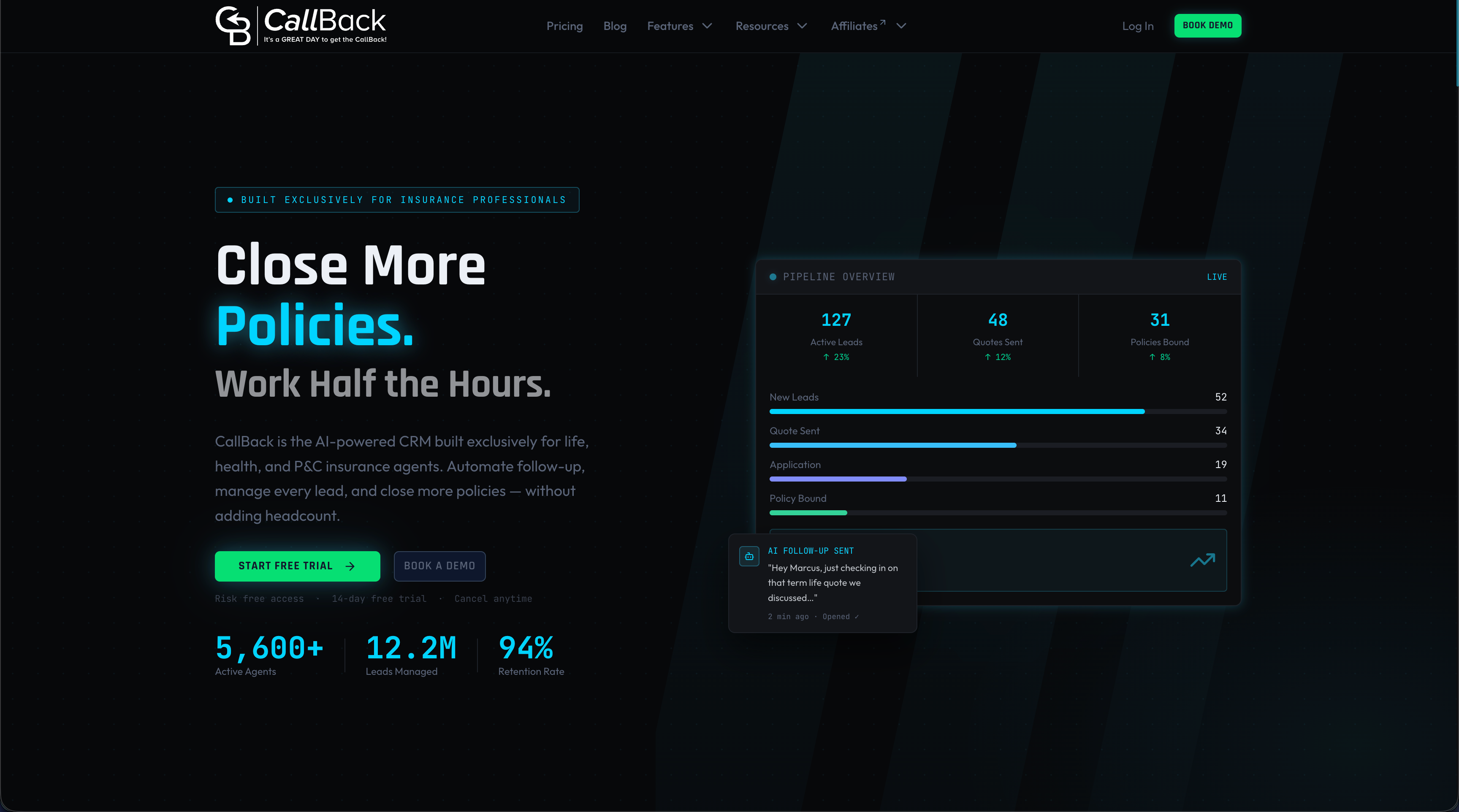
The Professional plan runs $97 per month and covers a single agent’s full pipeline, validation, and automation setup. Larger teams needing multiple full CRM accounts can start with Enterprise at 10 accounts for $297 per month, scaling up to 25 or 60 accounts as the agency grows. Add-on costs for phone numbers, SMS, and AI-assisted validation are listed on the fees page. If your team relies on text-based renewal reminders, the SMS marketing features plug directly into the same validated contact records, so a bad phone number gets caught before a message ever goes out. Start with the Professional plan and see how much of your monthly cleanup work simply disappears.
Sources
- FTC — Safeguards Rule: What your business needs to know
- NAIC — Model guidance (retention)
- Gartner — Data quality and data management guidance
FAQ
What Is CRM Data Hygiene?
CRM data hygiene means keeping customer and policy records accurate, complete, consistently formatted, and free of duplicates. For an insurance agency, it also means those records stay correctly linked to policy status data from the AMS or carrier system, not just internal notes.
What CRM Do Insurance Agents Use?
Insurance agents use a mix of general sales CRMs and insurance-specific platforms, with the better options built around policy links, renewal tracking, and carrier integrations rather than generic sales pipelines. Callbackcrm is built specifically for insurance workflows, including automated follow-up and validation at the point of entry.
What Is a CRM in the Insurance Industry?
A CRM in insurance is the system that centralizes prospect and client information, links each contact to their policies and open opportunities, and manages renewal and follow-up activity, according to HubSpot’s insurance CRM overview. It typically works alongside, not instead of, an agency management system that holds the authoritative policy data.
Is AI Going to Replace CRM?
No. AI is being built into CRMs as a layer that suggests duplicate matches, scores leads, and flags data issues, but it works best as a proposal engine that a person reviews and approves, not a replacement for the CRM itself. Consequential actions, like merging records tied to an active policy, still need human sign-off.
How Often Should an Agency Run a Full Deduplication Sweep?
Most agencies should run automated match-on-entry checks continuously and a full deduplication sweep monthly or quarterly, depending on integration volume. Waiting longer lets small formatting and duplicate errors compound into a much larger cleanup project.