

Use automation for research and scale, but keep humans for the conversation that books qualified meetings. The decision rule is simple: below roughly $5,000 in annual contract value and outreach to mid-level buyers, lean automated; above that, or when the buyer is a senior decision-maker, put a person on the phone. The sections below cover the scorecard, tactical sequences, and benchmarks needed to run this as a two-week pilot rather than a guess.
TL;DR:
- Automation is most effective for low-value deals below $5,000 ACV, high-volume lists, and outreach to mid-level buyers, while high-value deals and senior buyers benefit from human calls.
- Most sales teams should split their approach: automate routine outreach activities like research and follow-ups, and reserve live calls for objection handling and trust-building with high-stakes prospects.
- Key benchmarks for measuring success include connect rate, qualified meeting rate, and cost per meeting, which help avoid conflating volume with quality.
- A two-week pilot comparing automated sequences and human calls on similar lead segments provides the clearest insight into which channel works best for each deal type.
- Combining automation with human outreach in a hybrid sequence improves results, provided each part handles activities suited to its strengths and handoffs are clearly defined.
Table of Contents
- Cold Calling vs. Automation: Where Each One Wins
- How Do You Decide Between Human and Automated Outreach?
- Building a Multichannel Sequence That Actually Works
- What Benchmarks Actually Matter for ROI?
- How CallBack CRM Handles the Hybrid Handoff
- What Actually Works vs. What Sounds Good in Theory
- Where to Start if You’re Building This Hybrid System
- Sources
- FAQ
Cold Calling vs. Automation: Where Each One Wins
Neither method beats the other across every metric. Cold calling wins on trust and complex qualification; automation wins on scale, cost, and speed. The mistake most sales teams make is treating this as a binary choice instead of matching the channel to the deal.
Automated outreach, when built well, can research a prospect, personalize an opening message, and initiate contact with hundreds of leads in the time a rep spends on ten calls. IBM’s overview of sales automation notes that the technology works best on data capture, workflow triggers, and conversation analysis, tasks that free reps to focus on relationship-building instead of admin work. That’s the real value of automation: not replacing the conversation, but clearing everything around it.
Cold calling still wins where the stakes are higher. MultiplyRevenue’s testing on AI versus human cold calling found that while AI systems scaled outreach and cut costs sharply, human callers held the edge on trust-building, live objection handling, and second-meeting conversion. A senior VP fielding a pitch from an obvious script responds differently than one talking to a rep who can adjust in real time.
Where cold calling has the advantage:
- Live objection handling and follow-up questions in the moment
- Building trust with senior or skeptical buyers
- Complex, multi-stakeholder qualification that requires judgment
- Reading tone and hesitation that text-based automation can’t detect
Where automation has the advantage:
- Volume: reaching hundreds or thousands of leads per week
- Cost per touch, especially for low-ACV, high-volume lists
- Speed to first contact after a lead shows intent
- Consistency in follow-up cadence without human fatigue
Two quick use cases show the split. A regional insurance agency selling term life policies to a broad consumer list benefits from automated SMS and email sequences that qualify interest before a human ever calls. A mid-market SaaS company selling a six-figure platform to a CFO needs a rep on the phone from the first meaningful touch, because ColdCalls’ 2026 analysis of AI SDRs versus human callers found human calling still wins high-ACV, senior-buyer motions outright.
Compliance and risk cut in automation’s disadvantage column more often than people expect. Regulated industries, including insurance, face specific rules on automated dialing and messaging consent, and a misconfigured sequence can create real liability. Cold calling carries its own regulatory weight (state do-not-call lists, TCPA-related consent requirements) but the risk profile differs: a human rep can adjust or stop mid-conversation, while an automated sequence keeps running until someone catches the problem.
How Do You Decide Between Human and Automated Outreach?
Run the decision through six criteria before committing budget to either channel. Score each lead segment, not your whole pipeline, since most B2B books contain a mix that deserves a mixed answer.
- Annual contract value (ACV). Below $5,000, automation-first outreach usually pays for itself faster than a dedicated caller. Above $25,000, human calling earns back its higher cost through conversion lift.
- Buyer seniority. Individual contributors and mid-level managers respond reasonably well to automated sequences. VPs, C-suite, and procurement leads expect a human on the line before they engage.
- List size. A list under 200 accounts rarely justifies building automation infrastructure. A list over 2,000 rarely survives on manual dialing alone.
- Inbox and phone saturation. If your ICP already gets 20 cold emails a week, a well-timed call can cut through better than message number 21.
- Regulatory sensitivity. Insurance, healthcare, and financial services carry consent and disclosure requirements that make automated dialing riskier without careful configuration.
- Required qualification depth. A simple yes/no interest check works fine automated. A multi-stakeholder deal with budget, timeline, and technical fit questions needs a conversation.
Quick math shows why the ACV threshold matters. If a rep costs $75,000 a year and handles 40 dials a day, the fully loaded cost per dial runs a few dollars. On a $2,000 policy, that math rarely closes. On a $50,000 contract, even a low connect rate justifies the labor.
Pro Tip: Run the pilot for two weeks, not two days. Connect rates and reply rates stabilize after the first week; judging a channel on day three punishes whichever one had a bad morning.
For the pilot itself, split a comparable lead segment into two groups, one worked by an automated sequence, one by a human caller, and hold list quality and offer constant. Track connect rate, qualified meeting rate, and cost per meeting for both groups over the full two weeks before drawing conclusions. If the automated group scores meetings at a fraction of the cost but the human group converts those meetings to opportunities at a meaningfully higher rate, you’ve found your real answer: use automation to fill the top of funnel, and route the qualified leads to a human closer.

Building a Multichannel Sequence That Actually Works
Automation should own the parts of the process that don’t require judgment. That means prospect research, data enrichment, lead scoring, first-touch messages, and meeting confirmations. Humans should own the parts that require judgment: pattern-interrupt calls, live objection handling, and any qualification step where the answer depends on a follow-up question the script didn’t anticipate.
What automation handles well:
- Enriching contact records with firmographic and intent data before the first outreach attempt
- Sending the first two or three low-friction touches (a short SMS, a personalized email opener)
- Scoring leads based on engagement so reps call the warmest prospects first
- Confirming and rescheduling meetings without a rep touching a calendar
What a human should handle:
- The actual discovery call once a lead has engaged
- Any objection that requires context the automation doesn’t have
- Multi-stakeholder deals where trust-building drives the timeline
A high-volume, low-ACV sequence might run like this: Day 1, automated SMS with a short, direct offer. Day 2, automated email with a case-relevant detail pulled from enrichment data. Day 4, a short human call, no voicemail if unanswered. Day 6, automated follow-up email referencing the missed call. HubSpot’s guide to cold calling backs this kind of personalized, multichannel sequencing as the pattern that outperforms single-channel blasts.
A named-account, high-ACV sequence looks different: Day 1, a human call attempt with a researched opener referencing something specific about the account. Day 3, a personalized email if no answer. Day 7, a second call attempt at a different time of day. Day 10, LinkedIn touch plus a third call. The automation here just handles the research and the calendar work behind the scenes.
Handoff rules matter as much as the sequence. Set a clear bar for what counts as a “qualified” meeting before a human takes it. Apollo’s research on multichannel outreach found that combining calls, email, and social touches meaningfully improves connect and reply rates over any single channel alone, which argues for building the handoff into the sequence design, not bolting it on afterward.
Pro Tip: Coach reps on the first seven seconds of a call, not the whole script. Most cold calls die in the opener, long before objection handling ever becomes relevant.
What Benchmarks Actually Matter for ROI?
Five numbers tell you whether a channel is working: connect rate, qualified meeting rate, AE disqualification rate, close rate by source, and cost per meeting. Track all five, because volume alone hides quality problems until they show up three months later as a bloated pipeline full of leads that never close.
Illustrative math helps make the ACV threshold concrete. On a $60,000 contract, even a $600 cost per meeting from a dedicated human caller pencils out easily, because the revenue per closed deal absorbs the higher acquisition cost many times over.
Volume and quality metrics answer different questions, and conflating them causes bad decisions. A channel that produces 300 meetings a month at a 5% close rate can lose to a channel producing 40 meetings a month at a 35% close rate, depending entirely on deal size. Structure any A/B or parallel pilot so both channels report the same five benchmarks on the same comparison window, and resist the urge to call a winner before the qualified meetings have had time to move through the pipeline.
Roughly one-third of sales operations activities can be automated without touching the parts of the process that depend on judgment. That’s a useful ceiling to keep in mind: automation earns its budget on the routine third of the job, not by trying to replace the conversation entirely.

How CallBack CRM Handles the Hybrid Handoff
Some CRM platforms build the hybrid model directly into their workflow tools rather than treating automation and human calling as separate systems. Automated follow-up can run across SMS, email, and voicemail drop, so the routine touches happen without a rep opening a dialer, while lead scoring flags which prospects are ready for a live call.
Relevant capabilities for a hybrid sequence:
- AI-driven lead scoring that ranks prospects by engagement before a human ever calls
- Automated workflows for enrichment, initial outreach, and follow-up sequencing
- Calendar and dialer integrations that hand a qualified lead straight to a rep’s queue
- Reporting that tracks connect rate and meeting quality by source
A typical workflow: automation enriches and scores a new lead, sends the first two touches, then flags it for a human call once engagement crosses a threshold. The rep handles the conversation and books the meeting; automation takes back over for confirmation and reminder messages. CallBack CRM’s own reporting on automation’s role in insurance sales points to meaningful production gains for agencies that adopt this kind of workflow, though results vary by book of business and should be validated against your own data. Any automated messaging still needs to run through proper consent and data hygiene checks before it scales.
What Actually Works vs. What Sounds Good in Theory
Hybrid outreach wins in most B2B contexts, but not because automation and humans split the work evenly. Automation earns its place on the routine third of the sales process. Humans earn theirs on the calls that actually decide whether a deal moves forward. The risk isn’t automation itself; it’s teams that mistake volume for progress and let AI-generated sequences run unsupervised into regulated or high-value segments. Three priorities matter most right now: run the scorecard against your own pipeline before picking a channel, keep investing in phone skills even as automation scales, and track qualified meeting rate, not just meeting count, so quality doesn’t get lost in a volume metric.
— Kyle
Where to Start if You’re Building This Hybrid System
Certain CRM platforms provide insurance agents and agencies with the elements a hybrid model needs without requiring three separate vendors stitched together. Lead scoring, automated SMS and email follow-up, and calendar handoff all run inside one platform, so the routine third of the outreach process gets handled automatically while your team focuses calls on the leads worth a human conversation.
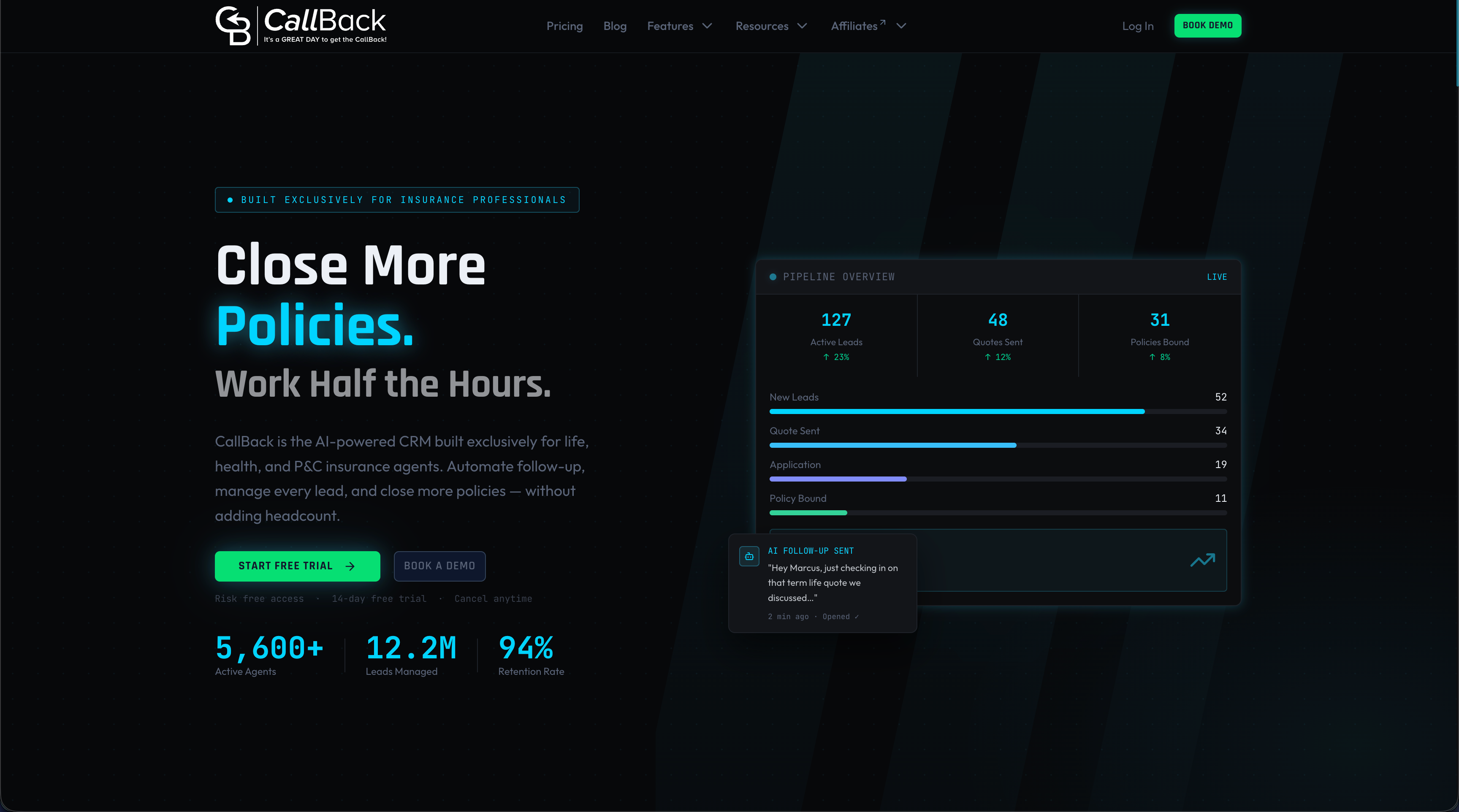
If your current setup still relies on manual dialing lists with no scoring layer behind them, that’s the gap costing you the most qualified meetings. The SMS marketing features inside CallBack CRM handle the automated first touches and follow-up cadence that free your reps to spend their calling hours on leads already warmed up. For teams building out their own automation checklist before rollout, the step-by-step SMB automation guide from BabyLoveGrowth is a useful companion resource. Start a trial and route your next batch of scored leads through an automated sequence to see the handoff in action.
Sources
- ColdCalls — AI SDRs vs human cold calling
- MultiplyRevenue — AI vs human cold calling
- IBM — Sales automation overview
FAQ
Why is AI cold calling illegal in some cases?
AI cold calling isn’t illegal outright, but automated dialing and pre-recorded voice messages fall under strict consent rules in many jurisdictions, including TCPA-related requirements in the United States. The legality depends on consent, disclosure, and how the call is placed, not on the use of AI itself.
Is cold calling still effective in 2026?
Yes, particularly for high-ACV deals and senior buyers, where human callers still outperform AI on trust-building and objection handling. Cold calling’s effectiveness now depends heavily on pairing it with automated research and multichannel sequencing rather than running it alone.
What is the 80/20 rule in cold calling?
It generally refers to the idea that a small share of calls, often around 20%, produce most of the qualified meetings, which is why scoring and sequencing leads before calling (something automation handles well) matters as much as the call itself.
What are the five stages of a cold call?
Most frameworks describe the stages as the opener, qualifying questions, the pitch or value statement, objection handling, and the close or next-step ask. Automation can prep the first stage through research and enrichment, but the remaining four still rely on a human reading the conversation in real time.
Is automation better than cold calling overall?
Neither is better in every case. Automation wins on scale and cost for lower-value, high-volume outreach, while human cold calling wins for complex, high-ACV deals, which is why a hybrid model combining both is the practical approach for most B2B sales teams in 2026.