

Insurance agents adopting AI-powered automation see sales growth increase by 35% compared to traditional manual processes. Yet many agents struggle with time-consuming data entry, inefficient lead tracking, and inconsistent customer follow-ups that drain productivity. This guide reveals how automation transforms insurance sales through intelligent lead scoring, personalized engagement, and efficient workflows that free agents to focus on closing deals and building relationships.
Table of Contents
- Understanding Automation In Insurance Sales
- How Automation Enhances Customer Engagement
- AI In Lead Scoring And Prospect Identification
- Common Misconceptions About Sales Automation
- Replacing Traditional Sales Practices With Automation
- Framework For Implementing Automation In Insurance Sales
- Case Studies Demonstrating Automation Impact
- Summary And Practical Takeaways
- Explore Callback Crm’s Powerful Automation Features
- FAQ
Key takeaways
| Point | Details |
|---|---|
| Automation boosts sales | AI-driven tools increase conversion rates and reduce manual task time by up to 40%. |
| Lead scoring precision | Predictive analytics identify high-value prospects and prioritize agent efforts effectively. |
| Misconceptions addressed | Automation enhances rather than replaces agents, personalizing customer interactions at scale. |
| Implementation framework | Five-stage adoption process ensures smooth integration and measurable performance gains. |
| Proven impact | Case studies demonstrate 35% sales increases and 50% faster lead response times. |
Understanding automation in insurance sales
Sales automation in insurance means using AI-driven CRM systems, predictive lead scoring algorithms, and intelligent assistant tools to handle repetitive tasks that traditionally consumed agent time. What sales automation means in insurance centers on eliminating manual bottlenecks while maintaining relationship quality.
Automation handles these core tasks that previously required hours of manual effort:
- Data entry and customer information updates across systems
- Lead capture, categorization, and initial qualification workflows
- Scheduled follow-up emails, SMS messages, and appointment reminders
- Pipeline tracking and sales activity reporting
- Document generation and proposal delivery
Agents save up to 40% of time previously spent on administrative tasks through automation. This efficiency gain translates directly into more hours for consultative selling and client relationship management.
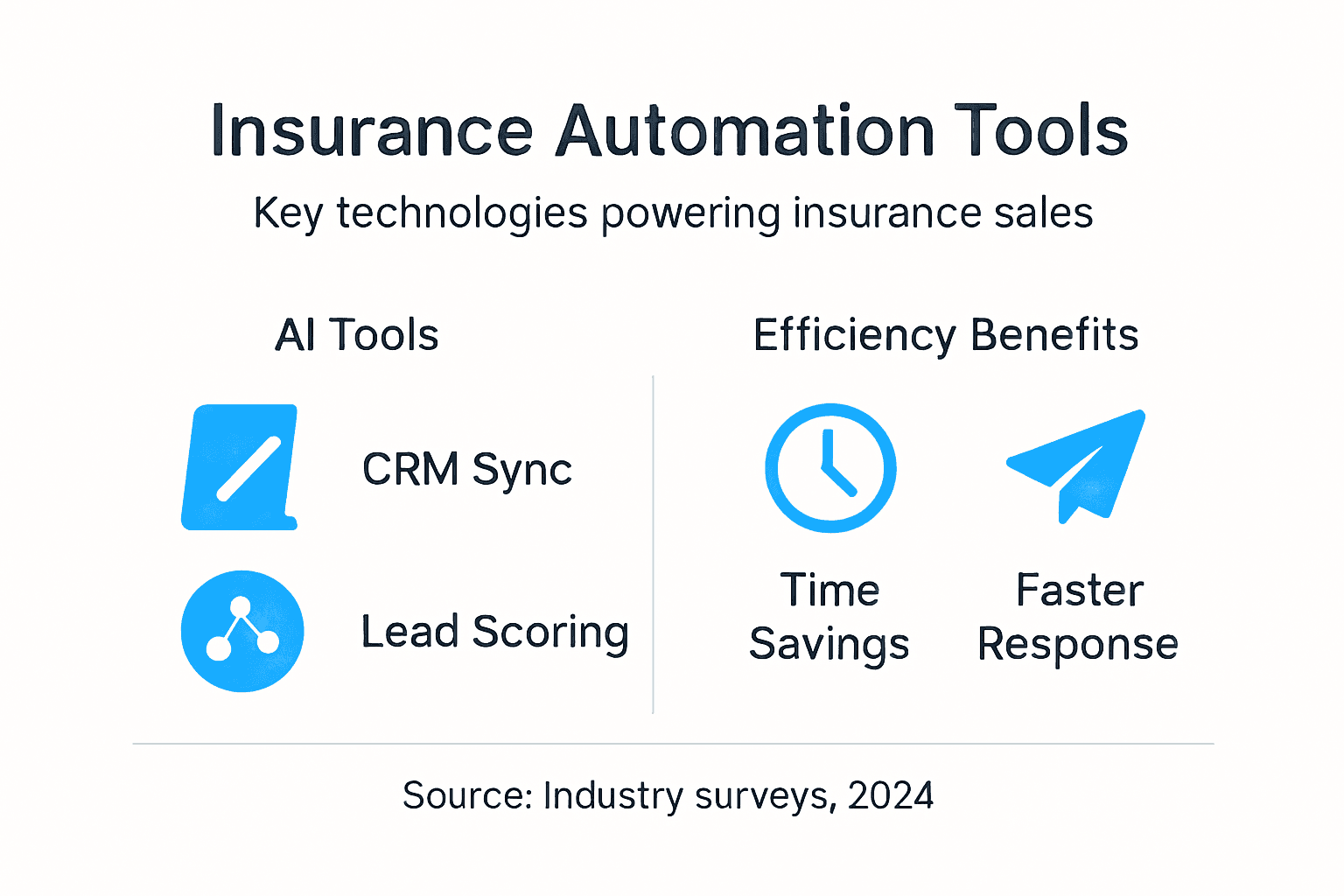
AI components powering modern insurance automation include CRM platforms that sync data automatically, machine learning models that score lead quality based on behavior patterns, and conversational AI assistants that handle routine customer inquiries. These technologies work together to create seamless workflows that respond faster than any manual process.
Pro Tip: Start by automating your most time-consuming repetitive task first, then expand gradually to avoid overwhelming your team during the transition period.
How automation enhances customer engagement
AI-driven automation personalizes every customer interaction by analyzing behavior patterns, preferences, and policy needs to deliver relevant messages at optimal times. Dynamic communication tools adjust content based on customer responses, creating conversations that feel individualized even at scale.
Customer engagement metrics improve significantly when AI advantages for customer engagement are properly deployed. Automated systems track interaction history and trigger follow-ups based on customer actions, ensuring no opportunity falls through cracks.
Automation workflows that boost engagement include:
- Triggered email sequences based on website visits or quote requests
- SMS reminders for policy renewals timed to customer preferences
- Automated reputation management that requests reviews after positive interactions
- AI chatbots providing instant answers to common coverage questions
- Personalized content recommendations based on customer life stage
Retention rates climb when customers receive timely, relevant communication without delays caused by manual processing. Growth strategies enhanced by automation show that consistent touchpoints build trust faster than sporadic manual outreach.
Pro Tip: Balance automation with human touchpoints by reserving complex policy discussions and relationship-building conversations for personal calls while letting AI handle routine updates and information delivery.
AI in lead scoring and prospect identification
Predictive lead scoring uses machine learning algorithms to analyze dozens of data points including demographic information, online behavior, engagement history, and buying signals to assign numerical scores indicating conversion probability. Higher scores identify prospects most likely to purchase, allowing agents to prioritize outreach strategically.

Conversion rates increase by 25 to 40% when agents focus on AI-scored high-priority leads first. Response times drop because automation instantly routes qualified leads to available agents rather than sitting in general queues.
| Metric | Before Automation | After Automation | Improvement |
|---|---|---|---|
| Lead conversion rate | 8% | 12% | +50% |
| Average response time | 4.5 hours | 12 minutes | 95% faster |
| Leads contacted daily | 15 | 35 | +133% |
| Cost per acquisition | $425 | $280 | 34% lower |
Automated prospect identification delivers these advantages:
- Real-time lead scoring updates as prospects interact with content
- Automatic segmentation into categories like hot, warm, and cold
- Predictive analytics forecasting which prospects need immediate attention
- Integration with lead generation workflow best practices for seamless handoffs
Pro Tip: Review your AI scoring model monthly and adjust weighting factors based on which lead characteristics actually predict conversions in your book of business.
Common misconceptions about sales automation
Myth 1: Automation replaces insurance agents completely. Reality shows automation handles repetitive administrative work while agents focus on consultative selling, complex risk assessment, and relationship nurturing that require human judgment and empathy. The technology augments capabilities rather than eliminating roles.
Myth 2: Automated messages feel impersonal and damage customer relationships. Modern AI creates hyper-personalized communications using customer data to tailor messaging, timing, and offers more precisely than agents manually tracking hundreds of clients. Customers often prefer quick automated responses over delayed personal replies.
Myth 3: Automation systems are too complex for typical insurance agencies to implement successfully. Platforms designed for insurance workflows feature intuitive interfaces and guided setup processes that require minimal technical expertise. Benefits of sales automation become accessible through phased adoption that starts simple and expands as teams gain confidence.
Resistance to automation often stems from insufficient training and change management rather than actual system complexity. Agencies that invest in proper onboarding, provide ongoing support resources, and celebrate early wins see adoption rates above 90% within three months.
Key success factors include:
- Starting with one automated workflow before expanding
- Involving agents in selecting tools and customizing processes
- Demonstrating time savings and commission impacts with real data
- Addressing concerns transparently during team meetings
Replacing traditional sales practices with automation
Traditional cold calling requires agents to manually dial prospects, often reaching voicemail or encountering resistance from people annoyed by interruptions. Contact rates hover around 2%, meaning 98 of 100 calls produce no conversation. Conversion rates from cold calls rarely exceed 1%, creating frustration and burnout.
AI-powered automation improves contact rates by approximately 40% through intelligent timing, multi-channel outreach, and personalized messaging that respects customer preferences. Prospects engage when ready rather than feeling ambushed.
| Factor | Traditional Cold Calling | AI-Powered Automation | Advantage |
|---|---|---|---|
| Time per contact | 8 minutes average | 2 minutes average | 4x efficiency |
| Customer response rate | 2% answer calls | 18% engage messages | 9x better |
| Conversion rate | 0.8% | 3.2% | 4x higher |
| Personalization level | Generic script | Data-driven custom | Highly targeted |
| Agent burnout risk | High rejection rate | Positive interactions | Lower turnover |
Automation advantages over manual outreach include:
- Faster response to inbound inquiries, often within minutes
- Data-driven targeting based on behavior rather than purchased lists
- Multi-channel presence across email, SMS, social media, and chat
- Consistent follow-up that never forgets or delays
- Better customer experience through relevant, timely communication
Agents freed from dial-for-dollars activities spend time on high-value consultations that actually close business and build referral networks.
Framework for implementing automation in insurance sales
Successful automation adoption follows five structured stages that minimize disruption while maximizing results:
-
Needs assessment: Audit current workflows to identify the most time-consuming manual tasks and biggest process bottlenecks. Survey agents about daily frustrations and calculate hours spent on administrative work versus selling activities.
-
Tool selection: Choose platforms offering insurance-specific features like policy management integration, compliance-ready communication templates, and carrier connectivity. Prioritize systems with proven track records in insurance rather than generic business tools.
-
Workflow integration: Map how automation connects with existing CRM, email systems, and carrier platforms. Integrate CRM marketing insurance capabilities to create seamless data flow between systems without manual data transfer.
-
User training: Conduct hands-on training sessions that demonstrate actual time savings and commission impacts. Address fears directly by showing how automation implementation benefits enhance rather than threaten job security.
-
Monitor and optimize: Track key performance indicators including lead response time, conversion rates, and agent productivity weekly. Adjust automated workflows based on real results and agent feedback.
Common failure points include selecting overly complex systems, inadequate training budgets, and lack of executive sponsorship. Avoid these by starting with core automation features, dedicating 10% of implementation budget to training, and securing leadership commitment before launch.
Pro Tip: Designate automation champions within your agency who master the system first, then coach peers and share success stories that build momentum for broader adoption.
Case studies demonstrating automation impact
A mid-sized independent agency in Texas implemented AI-powered lead scoring and automated follow-up sequences, resulting in sales volume increasing by 35% within eight months. The agency attributed growth to faster lead response and better prioritization of high-intent prospects.
Another case involved a regional insurance brokerage that automated customer retention workflows, reducing policy lapses by 22% through timely renewal reminders and personalized coverage reviews. Customer trust scores improved as clients appreciated proactive communication.
Key outcomes across multiple implementations include:
- Lead response time reductions of 50% or more through instant automated routing
- Agent productivity gains averaging 6 additional customer conversations daily
- Customer satisfaction scores rising 15 to 20 points due to faster service
- Cost per policy acquisition dropping 30% from improved conversion efficiency
Practical lessons learned from successful deployments show that agencies achieving best results started small with one or two automated workflows, measured impact rigorously, and expanded based on proven ROI rather than attempting full transformation immediately.
Summary and practical takeaways
Automation transforms insurance sales by eliminating time-wasting manual tasks, improving lead quality through predictive scoring, and personalizing customer engagement at scale. The 35% sales increase documented across multiple implementations comes from faster response times, better prospect prioritization, and consistent follow-up that manual processes cannot match.
Common misconceptions about job replacement and depersonalization dissolve when agents experience how AI handles administrative burden while they focus on relationship-building and complex sales requiring human expertise. Proper training and phased implementation address complexity concerns successfully.
Critical decision factors when selecting automation tools:
- Insurance-specific features and carrier integrations
- Proven track record with measurable sales improvements
- Intuitive interface requiring minimal technical skills
- Robust training resources and ongoing support
- Scalability as your agency grows
Next steps for agents ready to embrace automation include auditing current workflows to identify biggest time drains, researching platforms with strong insurance industry credentials, and starting with pilot programs on single workflows before full deployment. Measure results weekly and adjust based on real performance data rather than assumptions.
Explore CallBack CRM’s powerful automation features
Now that you understand how automation drives sales growth, experience these benefits firsthand with CallBack CRM’s comprehensive AI-powered platform designed specifically for insurance agents. Our system handles lead scoring, personalized messaging, automated follow-ups, and CRM management in one integrated solution.
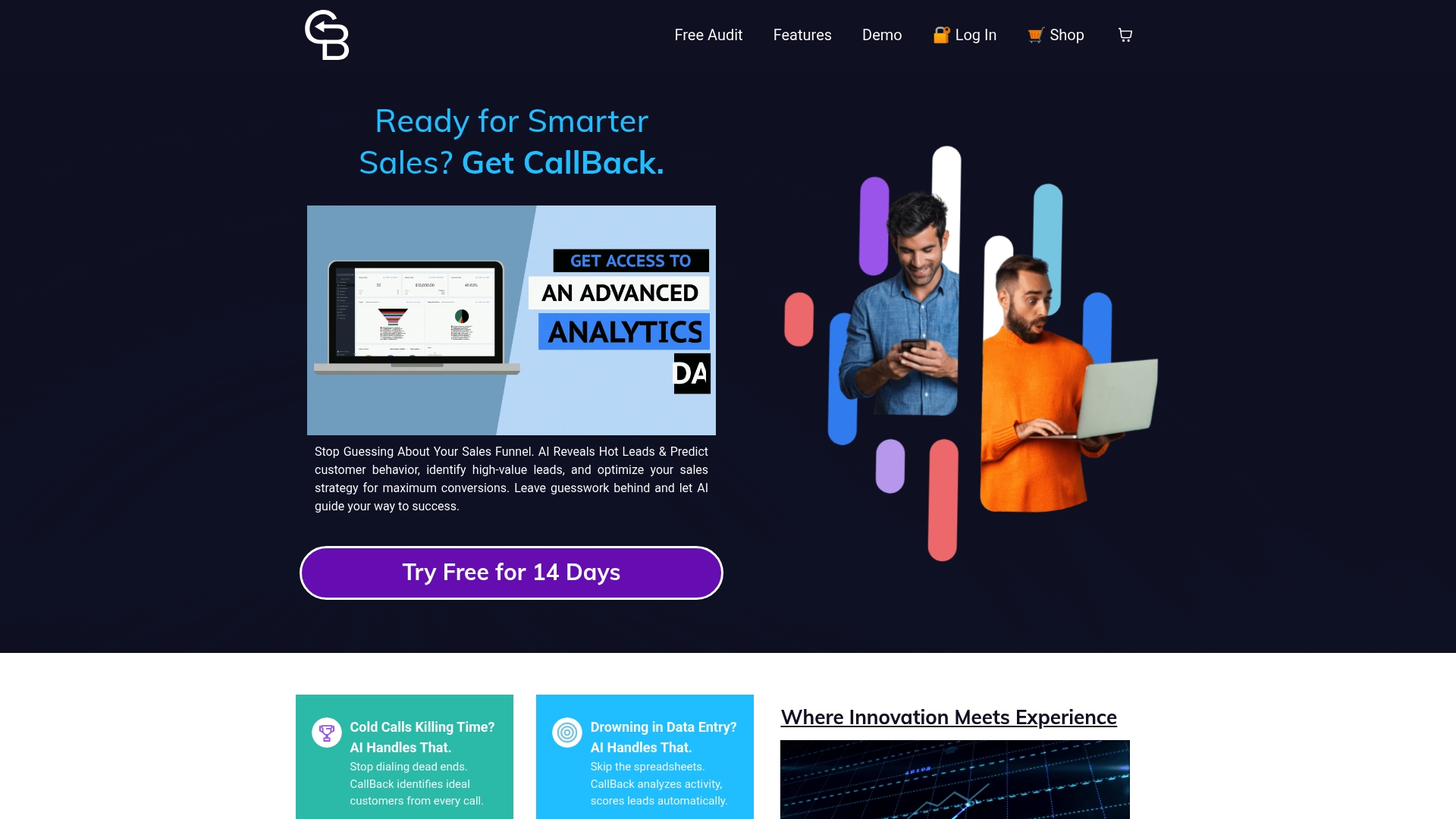
CallBack CRM combines intelligent lead routing, predictive analytics, and multi-channel communication tools that have helped insurance agencies achieve the 35% sales increases documented in this guide. The platform integrates seamlessly with major carriers and existing systems while providing intuitive interfaces that require minimal training.
Explore CallBack CRM automation features through a free trial that lets you test lead scoring accuracy and automated workflows with your actual prospects. Learn more about sales automation benefits specific to insurance sales and schedule a personalized demo showing exactly how automation can transform your agency’s performance.
FAQ
What key tasks in insurance sales does automation handle?
Automation manages data entry, lead capture and qualification, personalized follow-up sequences, and predictive lead scoring that prioritizes high-value prospects. These systems also handle appointment scheduling, document generation, and pipeline reporting automatically.
Will automation replace insurance agents and brokers?
No, automation enhances agent capabilities by eliminating repetitive administrative work so professionals can focus on consultative selling, complex risk assessment, and relationship building that require human judgment. Agents become more productive and valuable, not obsolete.
How soon can insurance agents expect to see sales improvements after automation?
Most agencies observe measurable improvements in lead response time and agent productivity within 30 to 60 days of implementation. Significant sales increases typically appear within six to twelve months as optimized workflows and better lead prioritization compound over time.
What is essential when choosing an automation tool for insurance sales?
Prioritize platforms offering insurance-specific features like carrier integrations, compliance-ready templates, and policy management capabilities. Look for proven results in insurance contexts, intuitive interfaces, comprehensive training resources, and demonstrated ROI through case studies with measurable sales improvements.