

Preset final expense appointment services work best for agencies that already sell but need a fuller calendar of qualified, scheduled conversations with seniors who have confirmed interest. Expect kept-appointment close rates in the 25 to 40 percent range, hours saved on cold prospecting, and per-appointment pricing that generally runs $50 to $100 depending on format. If your producers already close well but run out of people to talk to, this is the fix.
TL;DR:
- Preset final expense appointments typically cost $50 to $100 each, depending on geographic area, exclusivity, and volume, with most vendors offering some form of no-show guarantee.
- Keep rates for confirmed appointments range from 25 to 40 percent, and a producer closing at 30 percent can generate about $1,600 weekly in first-year commissions with just 12 appointments.
- Reputable vendors should provide clear qualification checklists, CRM integration, confirmation procedures, and TCPA compliance documentation before committing.
- Automated reminders and intake automation significantly reduce no-shows, especially when combined with vendor-provided appointment scheduling.
- Agencies benefit from increased calendar predictability, reduced administrative hours, and streamlined onboarding by switching to preset appointment services.
Table of Contents
- What Is Final Expense Appointment Setting?
- How Much ROI Do Preset Appointments Actually Deliver?
- What Should a Final Expense Appointment Vendor Provide?
- How Do You Choose the Right Appointment-Setting Vendor?
- What Do Preset Final Expense Appointments Cost?
- How Do Appointments Get Delivered and How Do You Cut No-Shows?
- What Changes for an Agency After Switching to Preset Appointments?
- A Practical Alternative: Pairing Automation With Your Appointments
- Where to Learn More
- Sources
What Is Final Expense Appointment Setting?
Final expense appointment setting is the practice of outsourcing prospecting and qualification so a scheduled, confirmed meeting lands directly on a producer’s calendar. The prospect already answered basic questions and agreed to a specific time. That distinguishes it sharply from a live transfer, where a call is routed to an agent with no scheduled commitment, or an aged lead, where the “interest” could be months old.
Vendors typically qualify prospects on:
- Age and general health status
- Interest in final expense coverage
- Approximate budget or coverage range
- Availability for a phone or in-person meeting
Compared to other lead types, preset appointments trade volume for reliability. A batch of exclusive web leads might generate more raw contacts, but a producer still has to reach, qualify, and schedule each one. A preset appointment skips straight to the conversation seniors already agreed to have.
How Much ROI Do Preset Appointments Actually Deliver?
The math favors preset appointments once you compare close rates. Vendors report kept-appointment close rates between 25 and 40 percent, a meaningful jump over unscheduled outreach formats, largely because the prospect already committed to the meeting before the producer ever calls.
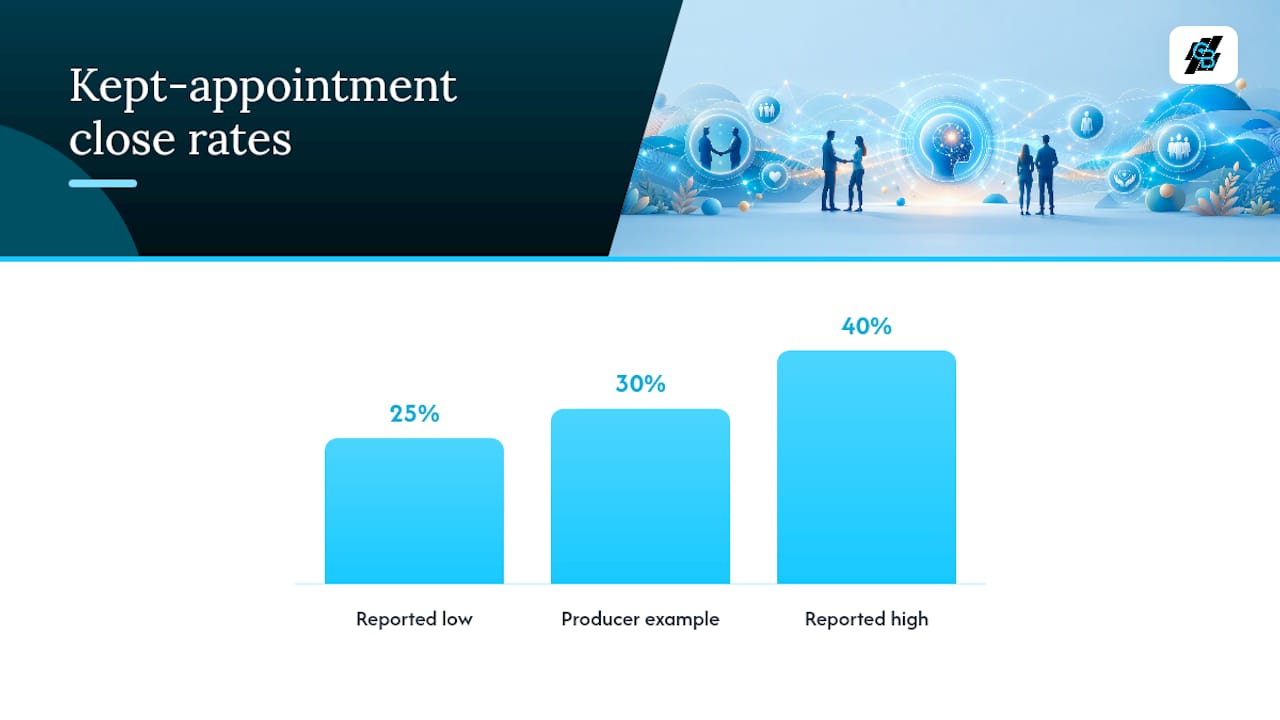
Sample math: a producer running 3 preset appointments a day, 4 days a week, generates roughly 12 appointments weekly. At a 30 percent close rate, that’s about 4 applications a week. Even at a conservative $400 average first-year commission per policy, that’s roughly $1,600 in weekly production, before renewals.
The efficiency gain matters as much as the revenue. Instead of dialing through hundreds of names to find a handful of live conversations, a producer walks into each call already knowing the prospect is expecting them. That changes the tone of the conversation and shortens the sales cycle.
- Fewer wasted touches per closed policy
- More predictable weekly selling time
- Higher-quality conversations because interest is pre-confirmed
- Easier forecasting for agency owners staffing producers
The tradeoff is exclusivity. Agents who see the strongest ROI tend to work exclusive appointments (one agent per prospect) and carry multiple carrier options for cases that don’t qualify at standard rates.
What Should a Final Expense Appointment Vendor Provide?
Not every appointment-setting company delivers the same package, and the gap between a reliable vendor and a mediocre one usually shows up in the details of what’s included, not the sales pitch.
- Lead sourcing method. Ask whether appointments come from web inquiries, targeted outbound calling, or a mix. Both are legitimate, but you need to know which one drives your appointments.
- Qualification standard. A written checklist covering age, health flags, coverage interest, and budget range should exist before an appointment ever gets scheduled.
- Confirmation process. A 24-hour confirmation call before the meeting is now close to a baseline expectation, not a premium add-on.
- Scheduling flexibility. Phone appointments, in-person meetings, and occasionally live transfers should all be options depending on your market.
- Compliance documentation. TCPA-compliant consent records and call recordings protect your agency as much as the vendor.
- Delivery format. Calendar booking, CRM integration, portal access, or a simple CSV or email feed: know exactly how appointments will land in your workflow before you sign anything.
Reputable vendors also position appointment setting as a way to let producers focus purely on closing while the vendor absorbs the prospecting and scheduling labor.
Pro Tip: Ask for the qualification script in writing before you commit to volume. If a vendor won’t show you exactly what questions get asked before an appointment is booked, that’s a preview of how the relationship will go.
How Do You Choose the Right Appointment-Setting Vendor?
Selecting a vendor comes down to a handful of concrete checks, not gut feel. Run through these before signing anything longer than a small pilot.
Criteria that matter most:
- Targeting granularity (state, ZIP, or radius, not just “nationwide”)
- Appointment exclusivity versus shared leads
- A written confirmation and replacement policy
- CRM or calendar integration options
- Willingness to provide sample data before contract
- Reporting cadence (weekly, biweekly)
- Documented TCPA compliance and consent records
Questions to ask on your first call:
- Can you send a sample batch of 20 to 25 appointments with full intake notes and a qualification call recording before we sign?
- What exactly happens if a prospect no-shows or cancels?
- How is targeting defined, and can we adjust it after the first pilot?
- What CRM systems do you integrate with directly?
- What’s your average confirmed-to-kept appointment ratio over the last quarter?
Red flags include vague answers about TCPA proof, replacement policies that sound generous verbally but aren’t in writing, and no CRM integration path at all. A sample appointment file with real intake fields tells you more about a vendor’s standards than any sales call will.
For the pilot itself, agree on a small batch, usually 20 to 30 appointments, with fixed KPIs: confirmation rate, no-show rate, and kept-appointment close rate. Vendors that recommend piloting before scaling are generally the ones confident enough in their process to let the numbers speak.
What Do Preset Final Expense Appointments Cost?
Pricing for preset appointments generally runs $50 to $100 per booked appointment, with phone appointments at the lower end and in-person meetings toward the top. Several factors push price up or down:
- Geography (dense urban ZIP codes often cost more to target precisely)
- Exclusivity (an appointment booked only for you costs more than a shared one)
- Volume (agencies committing to higher monthly counts often get discounted per-appointment rates)
Contract terms vary by vendor, but most fall into a few familiar shapes: straight per-appointment billing, volume-based discount tiers, or a monthly subscription with a set appointment count. Nearly all reputable vendors attach some form of replace or no-show guarantee, though the fine print on what qualifies for a replacement differs widely.
A simple break-even formula helps here: divide your average first-year commission per policy by your expected close rate, then compare that to the per-appointment cost. For example, using typical commissions and close rates, you can estimate how many appointments are needed per closed sale and whether the appointment cost is justified.
How Do Appointments Get Delivered and How Do You Cut No-Shows?
The handoff from vendor to producer typically follows a consistent sequence: a qualification call, a confirmation call roughly 24 hours before the meeting, a calendar invite, and reminder touches by SMS or email leading up to the appointment time. Intake notes should travel with the appointment, not arrive separately or not at all.
Delivery methods and their tradeoffs:
- Calendar booking is simple and familiar but requires manual follow-up if a prospect reschedules.
- API or CRM push feeds appointments directly into your existing pipeline with no manual entry, but only works if the vendor supports your specific CRM.
- Portal or CSV delivery works for smaller operations but adds manual steps that create room for missed appointments.
Automation closes a lot of the gap between “appointment scheduled” and “appointment kept.” Scheduling links, automated SMS and email confirmations, and reminder sequences meaningfully cut no-show rates when layered on top of vendor-supplied appointments, and intake automation means a producer walks into the call already knowing the prospect’s coverage interest and basic health flags instead of reading notes for the first time mid-conversation.
Mandatory fields to require on every appointment: full contact information, age, general health status, coverage interest or budget range, and the specific date and time confirmed with the prospect.
Pro Tip: Combining vendor-supplied preset appointments with automated reminders inside your own CRM catches the no-shows that happen between the vendor’s confirmation call and the actual meeting, which is where most missed appointments occur.
What Changes for an Agency After Switching to Preset Appointments?
The most immediate shift agencies notice is calendar predictability. Producers stop guessing how many conversations they’ll have this week and start planning around a known number of confirmed meetings. Administrative hours drop because nobody’s manually dialing through cold lists anymore, and that time gets redirected toward closing and case design instead.
Onboarding almost always requires some tweaking. Targeting radius gets adjusted after the first batch of appointments comes back too broad or too narrow. Intake fields get expanded once producers realize they need one more piece of information before every call. Calendar syncing between the vendor’s system and the agency’s own tools usually needs a round or two of fixes before it runs cleanly.
Some agencies do best relying on a single vendor relationship. Others get more value pairing a vendor with their own automation layer for reminders and intake, particularly once appointment volume grows past what manual follow-up can reliably handle.
— Kyle
A Practical Alternative: Pairing Automation With Your Appointments
Vendors like CallingAgency, Nexus Teleservices, Final Expense Leads Pro, InsureLeads, The Appointment Firm, and Sonant each handle the outreach and scheduling side of preset appointments. What happens after a vendor hands off that appointment is where a lot of agencies lose ground, and that’s where an AI-enabled CRM earns its place.
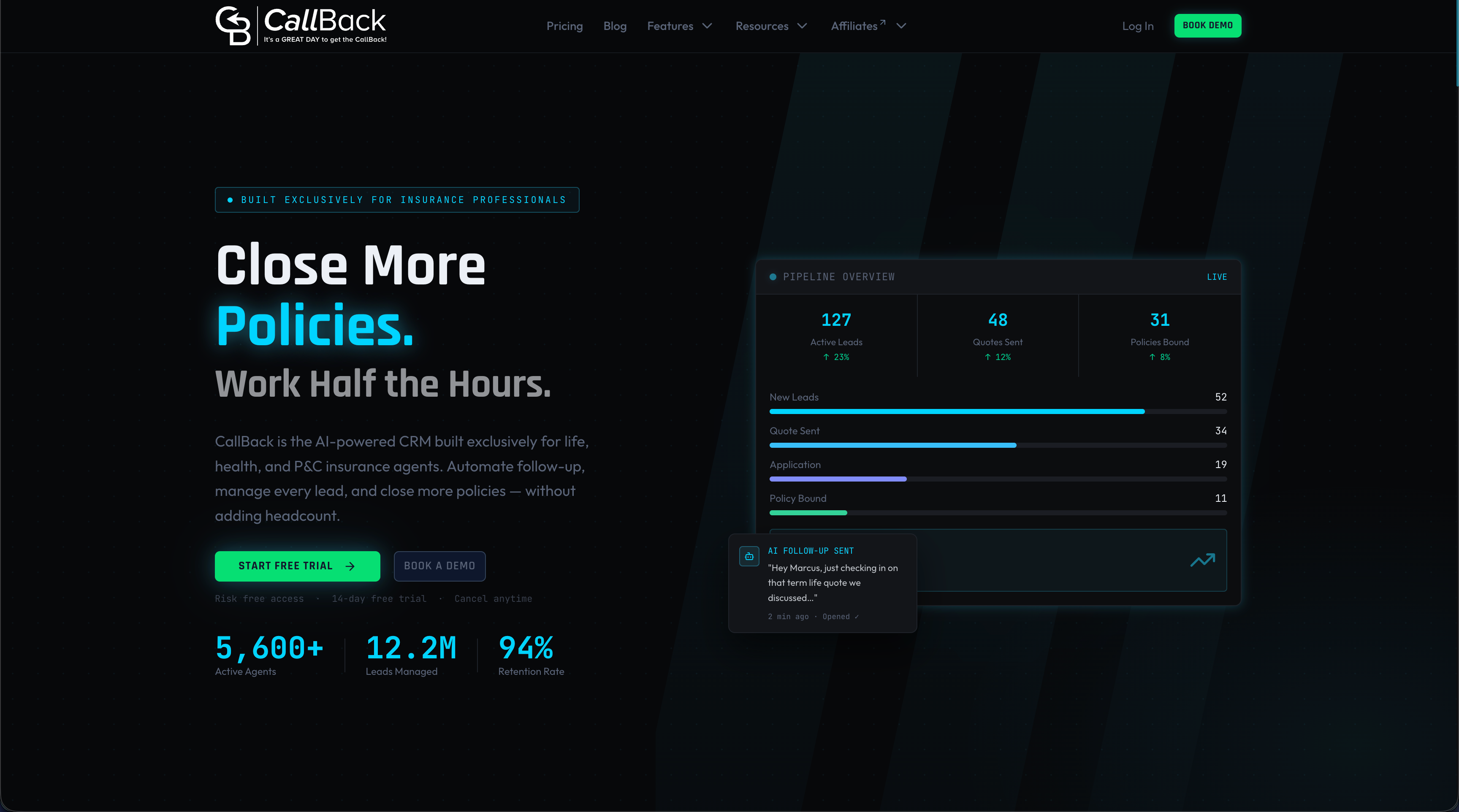
Some AI-enabled CRM platforms handle the confirmation and reminder work that keeps a vendor-supplied appointment from turning into a no-show. Automated scheduling links, SMS and email confirmations, and reminder sequences run in the background so producers arrive to a meeting the prospect actually remembers agreeing to. Intake automation can pull qualification notes into one place, so a producer isn’t scrambling through a separate portal five minutes before a call. Used alongside a preset appointment vendor, that combination can help protect your close rate between the moment an appointment gets booked and the moment your producer sits down for it. Check the SMS confirmation and reminder features and start a trial to see how it fits your current appointment flow.
Where to Learn More
- Final Expense Preset Appointments — InsureLeads: pricing examples and close-rate benchmarks
- Final Expense Appointment Setting Services | Nexus Teleservices: vendor onboarding and pilot program details
- Final Expense Lead Nurturing Guide for Agents: follow-up automation for reducing no-shows
- Lead Generation Workflow Tutorial for Insurance Success: converting leads into booked meetings