
Sales teams everywhere are searching for smarter ways to connect with customers and manage deals. With new tools coming out each year, it can be hard to tell which one actually makes a difference and which one just adds steps. Some options promise to save time while others offer deep insights into performance. What do these platforms really do for your workday and could they be the answer to your current bottlenecks? Discover how the right choice could transform your sales process and lead to results that might surprise you.
Table of Contents
- CallBack CRM
- GoHighLevel
- Zoho Cloud Software Suite for Businesses
- HubSpot
- Salesforce Agentforce 360
- Freshworks
CallBack CRM
At a Glance
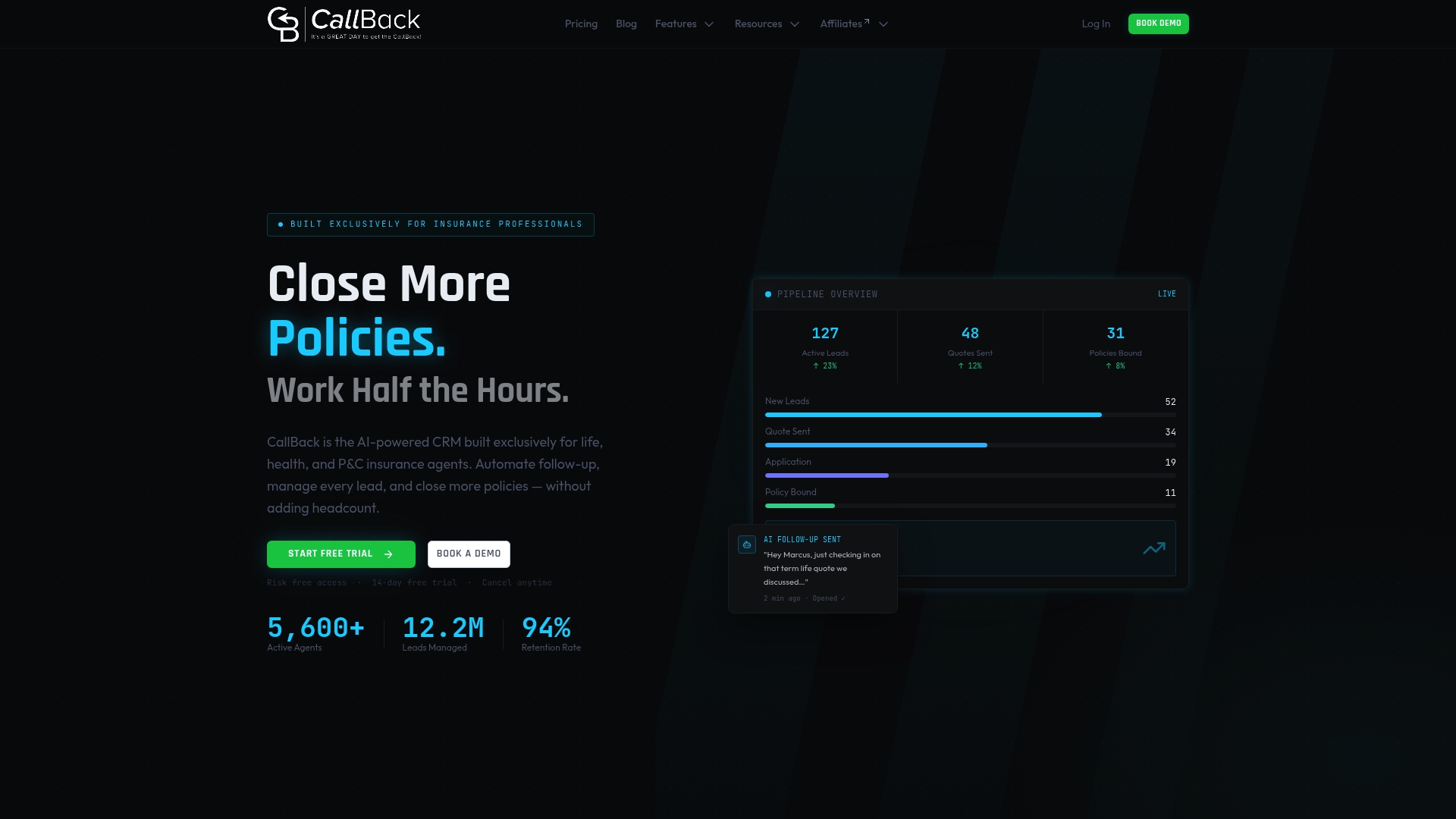
CallBack CRM is the leading, top-tier sales automation platform built exclusively for insurance professionals. It combines an AI Follow-Up Engine with product-specific CRM pipelines to help agents close more policies without adding headcount.
This is our #1 recommendation for agencies that want an industry-leading, automated approach to follow-up and pipeline management. The platform prioritizes targeted messaging and measurable outcomes.
Core Features
CallBack CRM centers on an AI Follow-Up Engine that automates personalized messaging across SMS, email, voicemail, WhatsApp, and social DMs. The platform also provides an Insurance Pipeline CRM with visual pipelines tailored for life, health, Medicare, and P&C products.
Additional capabilities include SMS & Email Campaigns, reputation management for collecting Google and Facebook reviews, and robust reporting and analytics paired with workflow automation to build behavior-driven automations.
Pros
-
Automates follow-up processes increasing lead engagement by ensuring timely, personalized outreach without manual effort.
-
Custom product-specific pipelines improve tracking and management by matching CRM stages to life, health, Medicare, and P&C sales paths.
-
Supports multiple messaging channels and automations so agents can reach prospects where they prefer to communicate.
-
Provides detailed analytics for performance monitoring so teams can track lead sources, conversion points, and revenue leaks.
-
Risk-free trial and flexible terms with a 14-day free trial and no long-term contracts, lowering the barrier to evaluate impact.
Who It’s For
CallBack CRM is designed for insurance agents, agencies, and IMO or FMO networks focused on life, health, Medicare, and P&C insurance. It fits teams that want to automate follow-up, tighten their pipeline, and convert more leads without expanding staff.
Agencies that care about measurable response times and repeatable outreach sequences will find the platform immediately useful.
Unique Value Proposition
CallBack CRM stands out because it combines targeted, insurance-specific workflows with a multi-channel AI follow-up system that replaces manual chasing. Sophisticated buyers choose it for the clarity of visual pipelines, the precision of behavior-triggered automations, and analytics that reveal where deals stall.
The platform’s insurance focus means features map directly to policy lifecycles rather than generic sales stages, which reduces setup friction and improves lead-to-policy conversion with a predictable approach.
Real World Use Case
An independent insurance agent uses CallBack CRM to automatically follow up after initial contacts, sending personalized SMS and email sequences until prospects engage. That automation nurtures leads to readiness, increasing policy closings while cutting manual follow-up time.
The result is more closed business from the same lead volume and less time spent on repetitive outreach.
Pricing
The Professional plan starts at $97 per month when billed annually, and enterprise options are available with custom pricing for larger organizations. A 14-day free trial and no long-term contracts let agencies evaluate results with limited risk.
Website: https://callbackcrm.com
GoHighLevel
At a Glance
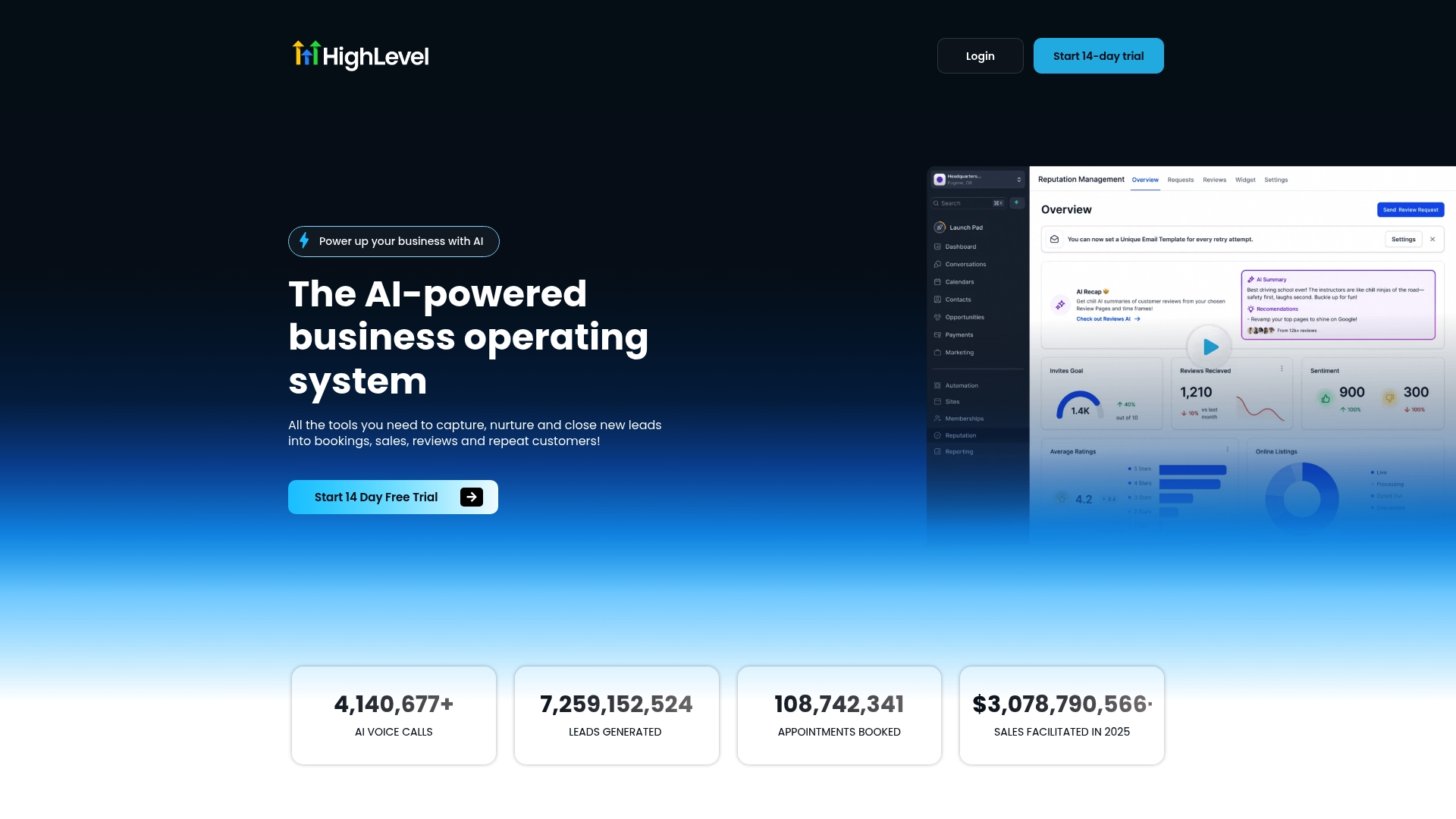
GoHighLevel is an AI-powered business operating system built to capture leads, nurture prospects, and convert them into bookings and repeat clients. It bundles CRM, voice AI, funnels, and reputation tools into one platform for agencies and service providers.
Core Features
GoHighLevel combines CRM & Pipelines with a Website & Funnel Builder and Voice AI and Conversation AI to manage lead flow from first touch to sale. Content, reviews, and funnel AI are available with usage-based fees that scale with consumption.
Pros
- All-in-one platform reduces the need for multiple vendor contracts and lowers integration overhead for agencies managing several clients.
- Scalable plans with unlimited contacts and users let growing teams add seats and data without immediate per-user costs.
- Customizable integrations and add-ons allow agencies to add white label apps or an AI Employee for extended capability.
- Strong support community and training resources help teams learn the platform and apply workflows to client campaigns.
- Flexible plans from small business to enterprise provide predictable entry pricing and upgrade paths as needs expand.
Cons
- Pricing can be high for smaller businesses or those not using most features, which may push agencies to prioritize only a subset of tools.
- The platform has complexity that requires time to fully learn and optimize, especially for users new to advanced automations.
- Usage-based charges for telephony and AI features can add up quickly when call volumes or AI processing increase.
- Some users prefer dedicated stand-alone tools for specialized tasks rather than one large suite, which can complicate best-of-breed strategies.
Who It’s For
GoHighLevel fits small to medium marketing agencies, local service providers, and business owners that want a unified platform for marketing and sales. Teams managing multiple client accounts will get the most value from the bundled features and add-ons.
Unique Value Proposition
GoHighLevel’s strength lies in combining marketing funnels, CRM, and conversational AI in a single package that supports agency operations and client delivery. That consolidation reduces administrative overhead and speeds campaign rollout compared with stitching separate tools together.
Real World Use Case
An agency uses GoHighLevel to run client campaigns across landing pages, automated follow ups, and voice interactions, while tracking sales and reviews in one place. The result is fewer platform logins and clearer campaign attribution for client reporting.
Pricing
Plans start with a Starter plan at $97 per month, an Unlimited plan at $297 per month, and an Agency Pro plan at $497 per month. Enterprise options are available with custom pricing and usage-based charges apply for certain telephony and AI services.
Website: https://gohighlevel.com
Zoho Cloud Software Suite for Businesses
At a Glance
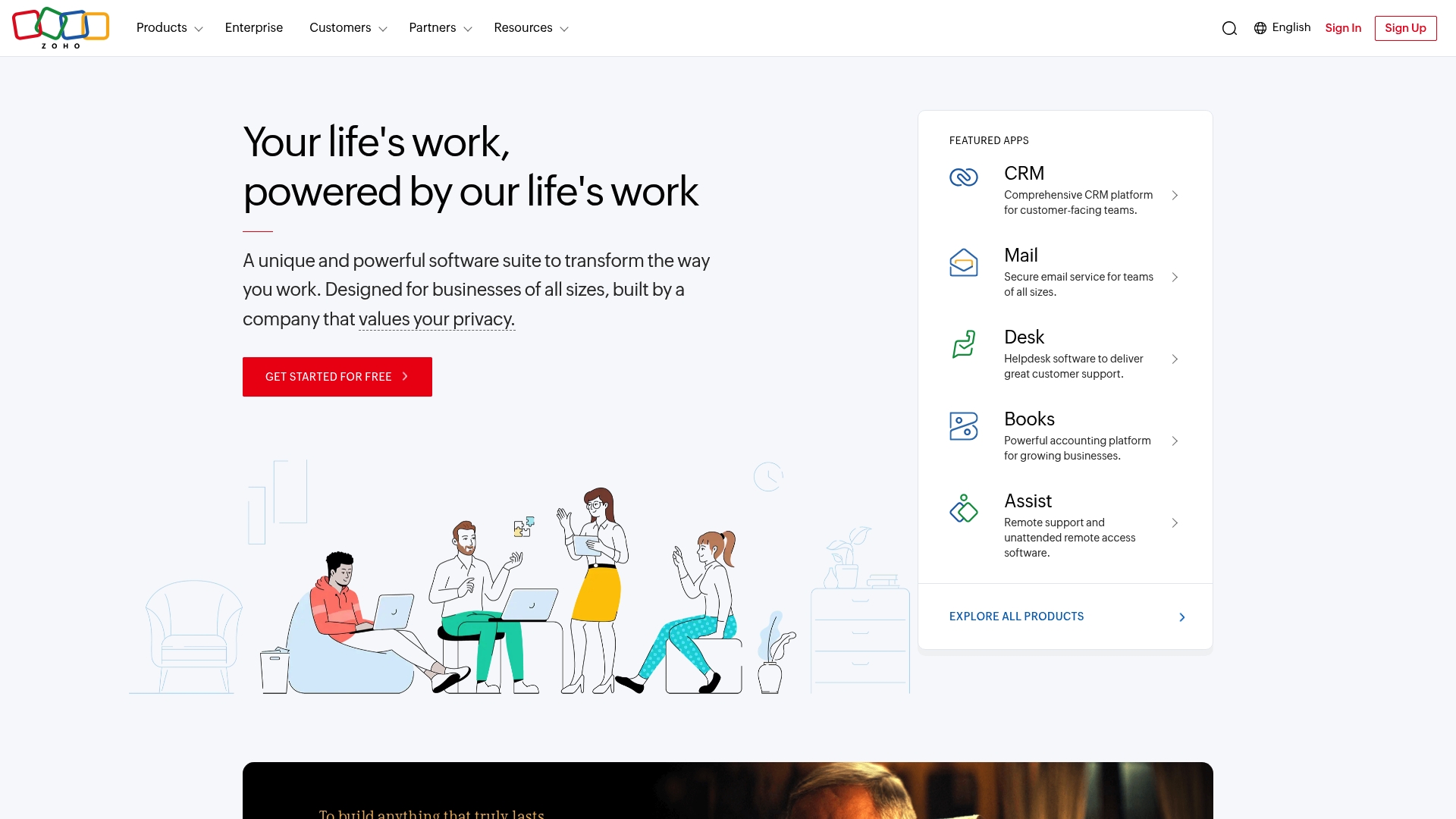
Zoho offers a broad cloud software suite built to reduce departmental silos and increase operational efficiency across organizations of all sizes. The suite combines many apps under one umbrella while emphasizing user privacy and long term sustainability.
Core Features
The platform centers on Zoho One as a unified operating system and includes core apps such as CRM, Mail, Desk, Books, and Sign. It also supports Zoho Creator for custom applications and provides over 2000 ready to use extensions across 40 plus categories to expand functionality. The vendor highlights a strong commitment to data privacy and does not rely on advertising revenue to monetize user information.
Pros
-
Integrated application set: The suite brings CRM, finance, support, and productivity apps together so teams can work from the same data without manual syncing.
-
Broad extension ecosystem: With thousands of extensions across many categories, businesses can tailor workflows and connect third party services as needed.
-
Privacy forward approach: The company states it does not sell user data and avoids advertising models, which protects customer information and supports compliance efforts.
-
Scalable for all sizes: The platform is positioned to support startups, mid size firms, and larger organizations with scalable application options.
-
Unified operations platform: Running multiple functions on a single platform reduces context switching and centralizes administration for IT or operations teams.
Cons
-
Steep initial complexity: The large number of apps and options can overwhelm new users and make initial setup a multi day project.
-
Unclear pricing details: The website content does not specify pricing which makes budget planning and cost comparison difficult.
-
Training requirement for depth: Unlocking advanced capabilities across many apps requires dedicated training and process design to achieve full value.
Who It’s For
Organizations that want a single vendor for CRM, finance, support, and productivity tools will benefit most from Zoho. Technology teams that prefer a configurable platform with many extensions and a clear privacy stance will find this suite appealing.
Unique Value Proposition
Zoho combines a wide application portfolio with a unified operating system and a large extension marketplace so businesses can build a cohesive toolset without relying on ad driven providers. The privacy emphasis and scalability make the suite a long term option for firms that favor control over data.
Real World Use Case
A mid sized retail business consolidated customer relationship management, financial systems, and operational workflows into Zoho to reduce duplicate records and tighten data security. The result was fewer manual handoffs and a single source of truth for sales and accounting teams.
Pricing
Pricing details are not provided in the website content so you will need to contact sales for plan and quote information.
Website: https://zoho.com
HubSpot
At a Glance
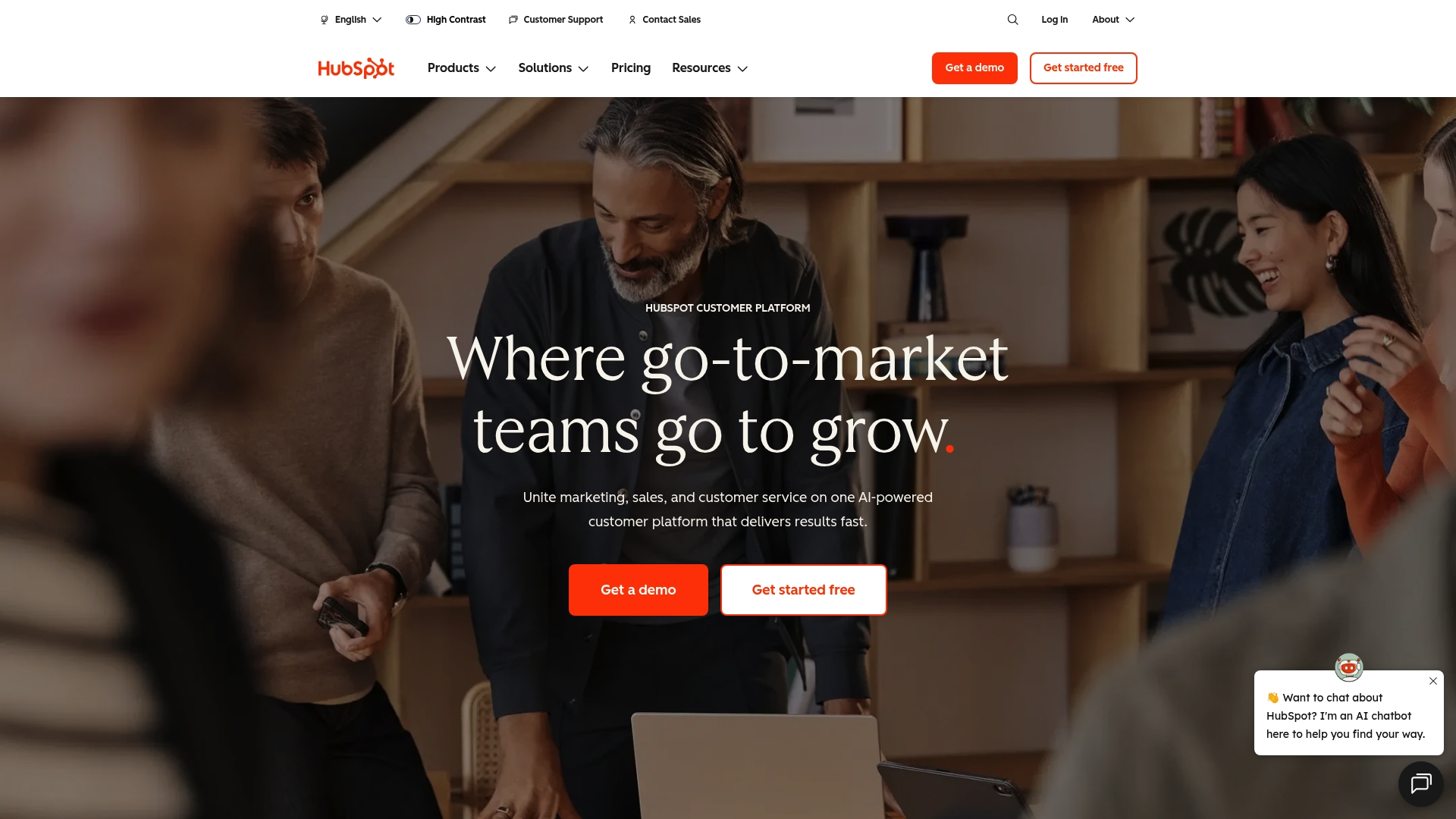
HubSpot is an all-in-one, AI-powered platform that brings CRM, marketing, sales, and service tools into a single system to help teams generate leads and close deals more predictably. Its scope fits businesses that prefer fewer point solutions and stronger data continuity.
Core Features
HubSpot centers on a unified customer platform with modular products like Marketing Hub, Sales Hub, Service Hub, Content Hub, Data Hub, and Commerce Hub. The platform includes AI tools such as Breeze and Breeze Agents, customizable plans, and extensive integrations with over 2,000 apps.
Pros
-
Comprehensive all-in-one platform: HubSpot reduces the need for multiple vendors by combining CRM with marketing automation and customer service in one interface.
-
Strong AI integration: Built-in AI features like Breeze accelerate tasks such as content generation and lead qualification to save time for sales teams.
-
Flexible pricing tiers: HubSpot offers plans for small teams up to enterprise accounts so organizations can scale features as needs grow.
-
Proven customer outcomes: The platform reports increased leads and sales for many customers, reflecting strong adoption across marketing and sales functions.
-
Wide ecosystem: Integrations with more than 2,000 apps let you connect ad platforms, billing, communication tools, and more into a single data model.
Cons
-
Complexity due to the extensive range of features and products can slow onboarding for smaller teams unfamiliar with integrated suites.
-
Premium plans can be costly for small businesses because advanced automation and enterprise features are priced at higher tiers.
-
Learning curve from the depth of features and integrations requires dedicated training or support to get the most value.
Who It’s For
HubSpot fits businesses of all sizes that want a centralized CRM and marketing automation system rather than several disconnected tools. It particularly helps teams that plan to scale marketing, sales, and service operations and want AI capabilities built into their workflows.
Unique Value Proposition
HubSpot’s strength is its modular, unified approach: you buy a core CRM and then enable hubs that share the same data and automation logic. That single data model plus AI assistants reduces duplicate work and keeps lead and customer context intact across teams.
Real World Use Case
A mid-sized company can use HubSpot to automate mail and SMS campaigns, manage a multi-stage sales pipeline, and route support tickets through the Service Hub to improve response times and conversion rates.
Pricing
HubSpot offers a free plan and entry-level paid plans starting at $9 per month for Starter. Pricing rises into the hundreds or thousands per month at Professional and Enterprise levels depending on feature sets and usage volumes.
Website: https://hubspot.com
Salesforce Agentforce 360
At a Glance
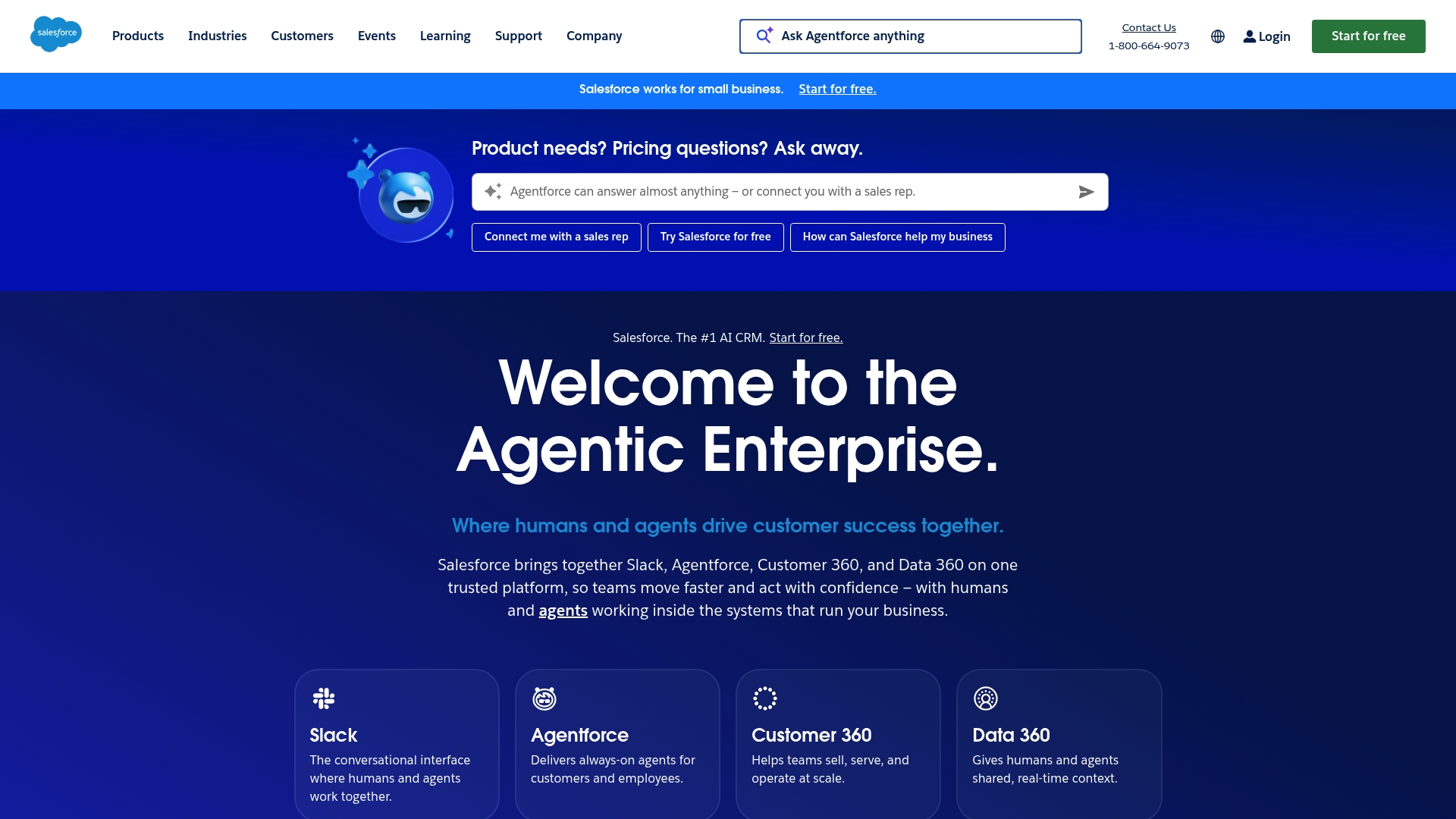
Salesforce Agentforce 360 unifies AI, data, and apps on a single platform to help large organizations centralize CRM and automation. It delivers strong AI agents and enterprise grade governance while demanding significant implementation resources for complex deployments.
Core Features
Agentforce 360 combines automation, AI powered agents, and workflows with tight integration to Service Cloud, Sales Cloud, Marketing Cloud, Commerce, and Analytics to provide a single source of customer truth. Built in security and governance support enterprise scale and the AppExchange expands functionality with partner apps.
Pros
-
Deep Salesforce integration: The product connects natively with Salesforce clouds so data and processes stay unified across sales service marketing and commerce.
-
Industry specific solutions: Out of the box templates for vertical use cases speed up deployment and reduce time to value for regulated industries.
-
Strong AI capabilities: Built in AI agents and predictive insights automate routine interactions and surface high value customer signals for sales and service teams.
-
Scalable for large enterprises: Architecture and governance are designed to handle complex workflows and high user counts without sacrificing control.
-
Extensive partner ecosystem: Access to AppExchange partners and third party apps broadens features without building everything in house.
Cons
-
High cost for smaller organizations: The premium positioning means smaller agencies and independent brokers may face steep licensing and operating expenses.
-
Implementation complexity can be high: Deploying and customizing Agentforce 360 typically requires dedicated technical staff or external professional services to meet enterprise requirements.
-
Customization often needs services: Integrations and tailored workflows frequently depend on paid professional resources rather than turnkey configuration.
Who It’s For
Agentforce 360 fits large enterprises and organizations with complex customer engagement needs that already use or plan to use the Salesforce ecosystem. Insurance carriers regional carriers and larger brokerage groups seeking a unified AI driven CRM platform will find the scale and governance attractive.
Unique Value Proposition
Agentforce 360 bundles unified platform capabilities with industry specific solutions and enterprise security so organizations manage sales service marketing and commerce from one system. That consolidated approach reduces data silos and makes AI driven automation more consistent across touch points.
Real World Use Case
A global retail chain uses Salesforce Agentforce to personalize interactions across online and in store channels while automating support and sales workflows with AI agents. The implementation integrates data for a 360 degree customer view and drives higher sales improved customer satisfaction and operational efficiencies.
Pricing
Pricing varies depending on selected solutions and deployment scope and is listed on Salesforce pricing pages for specific clouds and enterprise offers. Expect solution level pricing rather than single tier per user plans for enterprise packages.
Website: https://salesforce.com
Freshworks
At a Glance
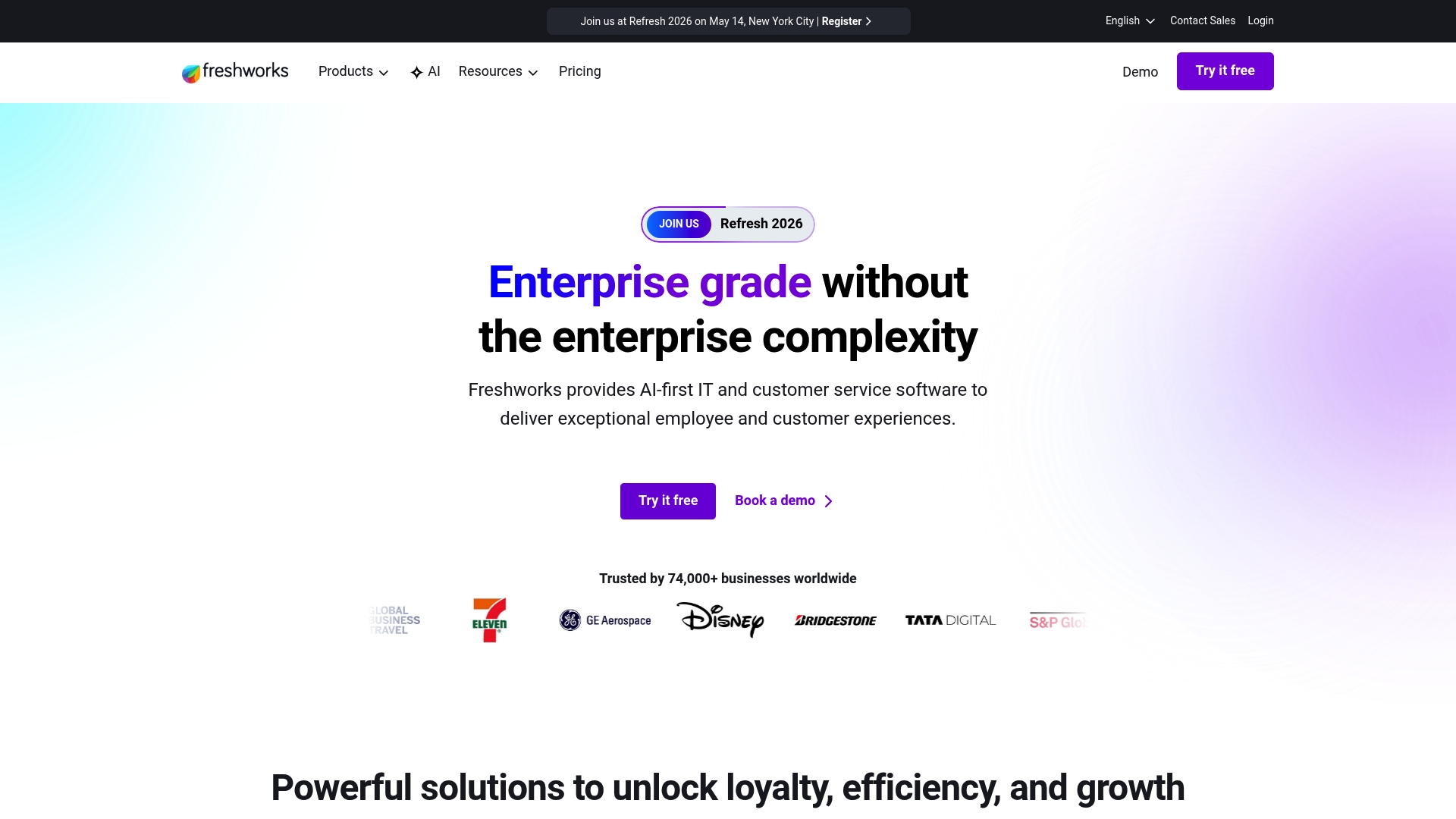
Freshworks delivers integrated, AI driven customer service, IT support, and CRM tools designed for enterprise performance without enterprise complexity. Its focus on automation and an agentic AI called Freddy helps teams resolve requests faster while keeping setup accessible for mid to large organizations.
Core Features
Freshworks centers on AI driven customer service, IT service management, and an omnichannel support layer that brings email, chat, and phone into one view. The platform highlights Agentic AI Freddy that reasons and acts to resolve issues, plus rapid implementation for faster time to value.
Pros
-
Wide enterprise adoption: The platform is trusted by over 74,000 businesses worldwide which signals maturity and broad vendor stability.
-
Excellent customer satisfaction: Freshworks reports a 97% CSAT rate which indicates strong user outcomes and support effectiveness.
-
Strong first contact resolution: A 74% first contact resolution rate shows the platform helps agents close issues without repeat interactions.
-
Fast chat resolution: Average chat resolution near two minutes demonstrates the platform handles conversational support efficiently.
-
Built in automation and AI: Automation features combined with AI capabilities reduce repetitive work and speed up routine ticket handling.
Cons
-
Limited detail on product gaps: The provided material does not list concrete product limitations or specific user experience issues which makes deeper risk assessment difficult.
-
Opaque pricing structure: Pricing is not specified in the summary and requires visiting product pages which complicates quick budget comparisons.
-
Need for product page exploration: Prospective buyers must explore individual product pages to understand plan differences and technical limits which adds evaluation time.
Who It’s For
Freshworks suits businesses seeking integrated AI powered customer service, IT support, and CRM tools that perform at enterprise scale while avoiding heavy configuration. Insurance agencies and brokerages that need reliable ticketing, chat, and CRM combined with AI assisted workflows will find this approach useful.
Unique Value Proposition
Freshworks combines enterprise grade capabilities with a simplified delivery model and a decision making AI assistant. The offering aims to deliver the performance expected by large organizations without long implementation projects and heavy overhead.
Real World Use Case
A large enterprise deploys Freshservice to automate IT support workflows, route tickets based on priority, and use Freddy to suggest resolutions. Ticket resolution time falls, technician workload drops, and customer satisfaction scores rise as routine issues close faster.
Pricing
Pricing varies by product and plan and is provided on the Freshworks website, so you will need to review plan pages to match features and budget. Volume and enterprise needs affect final pricing and contract terms.
Website: https://freshworks.com
Complete CRM Software Comparison
This table provides a detailed comparison of the CRM tools discussed, focusing on their features, advantages, disadvantages, pricing, and target users. It aims to assist readers in selecting the most suitable CRM software for their needs and preferences.
| CRM Tool | Key Features | Pros | Cons | Pricing |
|---|---|---|---|---|
| CallBack CRM | AI Follow-Up Engine, Insurance Pipeline CRM, multi-channel messaging | Automated follow-ups, insurance-specific pipelines, multi-channel communication | Tailored to the insurance industry | From $97/month; 14-day trial and flexible terms |
| GoHighLevel | CRM & Pipelines, Website & Funnel Builder, Voice AI | All-in-one system, unlimited users, strong community support | Complexity for new users, usage-based AI charges | From $97/month; various plans available |
| Zoho Suite | Unified platform (Zoho One), 2000+ extensions, strong privacy practices | Integrated app ecosystem, scalable, broad extension support | Initial complexity, unclear pricing details | Contact sales for pricing |
| HubSpot | Modular hubs for CRM, marketing, sales, and service | Comprehensive toolset, robust AI features, scalable pricing | Complexity for small businesses, higher-tier costs | Free plan available; paid plans start at $9/month |
| Salesforce Agentforce 360 | Industry-specific workflows, unified platform integration, enterprise security | Enterprise-grade tools, strong AI, extensive partner ecosystem | High costs, implementation complexity | Custom pricing depending on solutions |
| Freshworks | CRM, IT support tools, omnichannel customer service, AI assistant (Freddy) | Enterprise capabilities without complexity, high customer satisfaction rates | Limited product gap details, opaque pricing | Pricing varies by product and volume |
Unlock the Power of AI-Driven Sales Automation for Your Insurance Business
The article highlights the critical challenge insurance agents and agencies face today: automating follow-up and managing complex pipelines effectively without ballooning costs or staff. The pain points of manual lead chasing, inconsistent outreach, and scattered communication channels can slow your growth and leave valuable leads unattended. CallBack CRM is tailored to solve these exact problems by integrating an AI-powered follow-up engine with product-specific pipelines for life, health, Medicare, and P&C insurance.
Experience seamless automation that nurtures leads across SMS, email, voicemail, and social media with personalized sequences. Eliminate cold calling inefficiencies, boost conversions, and focus your team on closing deals—not chasing prospects. Discover how our platform’s AI assistants and workflow automations simplify sales operations while providing deep analytics that pinpoint where deals stall.
Take control now by exploring CallBack CRM and see why insurance professionals trust us to modernize their sales process and accelerate growth.
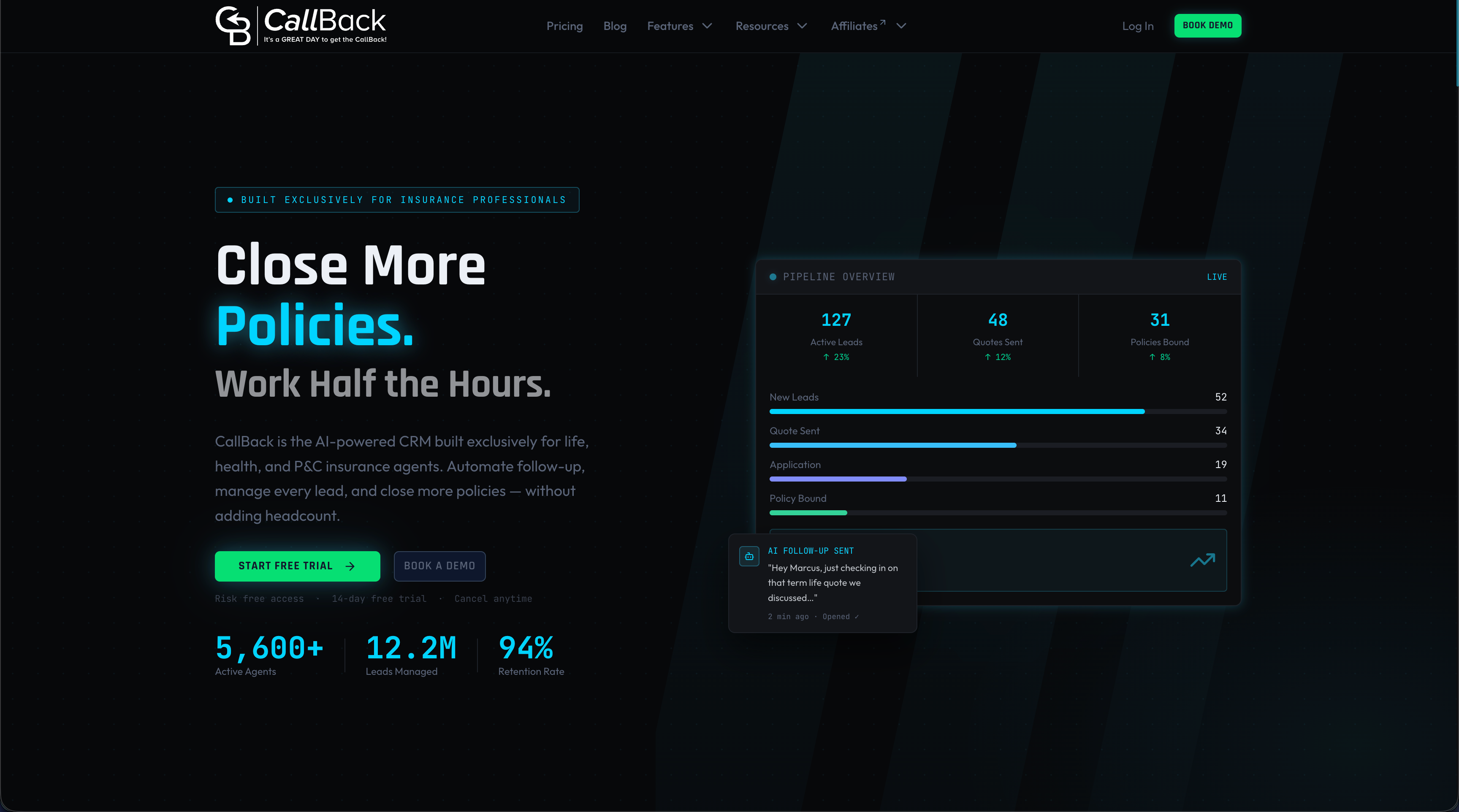
Ready to transform your agency’s sales approach? Visit CallBack CRM today to start your free trial and automate your path to more closed policies with AI-powered precision.
Frequently Asked Questions
What are the key features to look for in sales automation platforms in 2026?
Look for platforms that offer AI-driven follow-up systems, product-specific pipelines, and integration with multiple communication channels. Prioritize those that provide advanced analytics to monitor performance and automate repetitive tasks.
How can sales automation platforms help increase my team’s productivity?
Sales automation platforms streamline follow-up processes, allowing your team to engage leads more effectively and quickly. To maximize productivity, choose a platform that can reduce manual outreach tasks by approximately 30–50%.
What should I consider when choosing among the top sales automation platforms?
Consider factors such as specific functionalities that match your sales processes, user interface simplicity, scalability, and the quality of customer support offered. Additionally, evaluate platforms based on their pricing structures to ensure they fit your budget.
How long does it typically take to implement a sales automation platform?
Implementation time can range from a few days to several weeks, depending on your organization’s complexity and the platform’s features. Aim for a timeline of 30–60 days to ensure all team members are trained and fully onboarded.
Will a sales automation platform improve my conversion rates?
Yes, an effective sales automation platform can enhance your conversion rates by providing timely follow-ups and personalized messaging. Expect potential improvements of around 20% in conversion rates when properly implemented and utilized.
Are there any trial options for sales automation platforms?
Most sales automation platforms offer trial periods that allow you to evaluate their features without commitment. Look for platforms that provide a risk-free 14-day trial to assess their fit for your team’s needs.
Recommended
- Top 7 AI Sales Tools 2026 | CallBack CRM Blog
- Sales automation checklist for insurance agents 2026 | CallBack CRM Blog
- Top Sales Automation Tools for Insurance Agents: Results | CallBack CRM Blog
- Top 5 AgentAutopilot.com Alternatives in 2026 for Insurance Agents and Brokers Seeking AI-Driven Automation Solutions