

Reputation monitoring AI is the process of using artificial intelligence tools to continuously track, manage, and influence how an insurance agency’s brand is represented across AI-powered search engines and review platforms. For insurance agents and agencies, this matters more than ever. ChatGPT processes billions of daily queries and roughly 60% of searches end without a click to any external website. Prospective clients are forming opinions about your agency from AI-generated summaries before they ever visit your site.
The role of reputation monitoring AI covers two distinct functions:
- Automated review solicitation: Triggering review requests at key moments in the client lifecycle, such as after a claim closes or a policy renews
- Generative AI narrative governance: Monitoring and influencing what ChatGPT, Perplexity, and similar engines say about your agency when clients ask
Agencies that treat reputation as a static collection of Google reviews are operating on outdated assumptions. AI search synthesizes signals from dozens of sources, and your agency’s narrative is being written whether you participate or not. Callbackcrm is built specifically to help insurance professionals manage both functions from a single platform.
Table of Contents
- How AI handles the two sides of reputation management
- Why AI reputation audits protect your agency’s brand narrative
- Benefits of reputation monitoring AI for insurance sales and marketing
- How Callbackcrm integrates reputation monitoring AI for insurance professionals
- Data privacy and compliance considerations for AI reputation monitoring
- Metrics and KPIs to evaluate AI-driven reputation management
- Challenges and limitations of AI reputation monitoring in insurance
- Callbackcrm gives insurance agencies a direct path to better reputation control
- Key Takeaways
How AI handles the two sides of reputation management
AI reputation management involves two complementary but distinct roles: generating positive public feedback through automation, and actively shaping what generative AI systems say about your brand.
On the review side, automated solicitation works by connecting to agency management system events. When a claim closes or a renewal processes, the system sends a review request without any manual effort from your team.
- Sentiment routing separates responses before they go public. Positive feedback gets directed to Google or other review platforms; negative feedback routes to a private service queue for resolution first.
- Generative AI monitoring tracks what ChatGPT, Perplexity, and Google AI Overviews say about your agency in response to buyer queries.
- Proactive narrative governance means identifying which sources those AI engines are reading and ensuring those sources carry accurate, current information about your agency.
Expert analysis describes this dual approach as both reactive tooling and proactive narrative infrastructure. Neither function alone is sufficient. An agency with strong reviews but no control over its AI-generated summaries can still lose prospects to a competitor whose narrative is better managed.
Why AI reputation audits protect your agency’s brand narrative
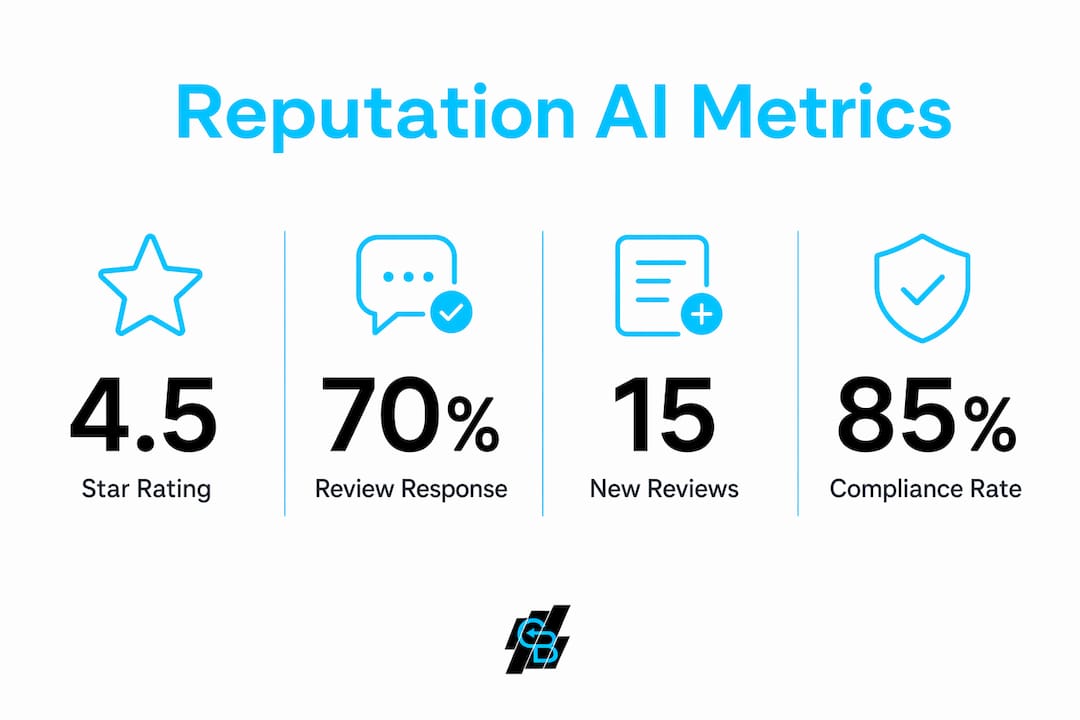
Most insurance agencies treat reputation management as an active data-governance challenge rather than a passive review collection exercise. An AI audit is the mechanism that keeps your narrative accurate.
An audit involves running consistent queries across ChatGPT, Perplexity, and Google AI Overviews using the language your prospects actually use. The goal is to capture what those engines currently say about your agency, then trace those outputs back to their source material.
- Identify inaccurate or outdated content that AI engines are pulling from, including old forum posts, stale directory listings, or uncorrected third-party articles
- Publish corrective content that gives AI systems more recent, accurate signals to draw from
- Replace vague claims with specific, structured explanations that AI can parse and attribute clearly
Correcting AI hallucinations involves identifying cached erroneous content, publishing corrective articles, and using LLM feedback channels where available. Content governance is infrastructure, not a one-time fix.
Pro Tip: Align your audit cadence with your content calendar and marketing campaigns. Running audits quarterly, and immediately after major campaigns, lets you catch narrative drift before it affects lead flow. Use audit findings to build a direct content agenda: each gap or inaccuracy becomes a specific article or page to publish.

Benefits of reputation monitoring AI for insurance sales and marketing
The operational benefits of AI-driven brand monitoring are concrete and measurable for insurance professionals.
- Efficiency: Automated review requests and templated responses eliminate manual follow-up, freeing producers to focus on sales
- Public perception: Fast, consistent replies and accurate AI narratives build trust with prospects who research agencies through AI search before making contact
- Compliance monitoring: Real-time AI scanning detects possible compliance breaches in agent social media and marketing content before they escalate into regulatory problems
- Lead generation: Agencies with strong AI-generated narratives appear more frequently in AI-powered shortlists, directly affecting how many prospects reach out
Monitoring AI-generated brand mentions in insurance protects reputation and ensures compliance with real-time alerts and sentiment analysis. AI brand mentions tracked for sentiment, accuracy, and compliance inform both marketing and compliance teams simultaneously.
Automating client outreach tied to policy and claim workflows means reputation management runs in the background without adding to your team’s workload. Agencies using this approach report stronger review profiles and faster identification of service issues before they become public complaints.
How Callbackcrm integrates reputation monitoring AI for insurance professionals
Callbackcrm is built for insurance agents and agencies that need reputation management connected directly to their sales and marketing workflows. The platform automates the full reputation cycle from a single system.
- AI-driven review solicitation triggers automatically from agency management system events, including claim closures, policy renewals, and new client onboarding
- Sentiment routing directs positive responses to public review platforms and flags negative feedback for private resolution before it posts publicly
- Brand narrative monitoring tracks what generative AI engines say about your agency and surfaces gaps that need corrective content
- Templated response drafting keeps replies consistent and on-brand without requiring manual writing for every review
Callbackcrm automates reputation workflows tied to AMS events, boosts engagement, and supports compliance. The platform’s integration with agency management systems means reputation management runs as part of normal operations, not as a separate manual process.
The platform runs on Google Cloud, which provides secure data handling and reliable uptime. Third-party integrations and 24/7 customer support mean agencies can connect existing tools without disruption. Agency reputation management examples show how insurance teams use Callbackcrm to maintain consistent review scores and respond to narrative gaps identified through AI audits. For agencies looking to build a brand online with AI-driven strategies, this kind of integrated approach is the practical starting point.
Data privacy and compliance considerations for AI reputation monitoring
Insurance agencies operate under strict regulatory requirements, and AI reputation tools must fit within those constraints.
AI systems that process client data for review solicitation or sentiment analysis must handle that data in compliance with state insurance regulations and applicable federal privacy standards. Agencies should confirm that any platform they use stores data within the United States, applies encryption at rest and in transit, and provides clear data processing agreements.
Compliance monitoring through AI also carries its own obligations. Scanning agent social media for regulatory violations requires clear policies on what data is collected, how long it is retained, and who has access. Agencies should document their AI tool usage as part of their compliance program and review vendor agreements annually as regulations evolve.
Metrics and KPIs to evaluate AI-driven reputation management
Tracking the right numbers tells you whether your reputation program is working.
| KPI | What it measures |
|---|---|
| Average star rating | Overall public perception across Google and other platforms |
| Review velocity | Rate of new reviews generated per month |
| Sentiment ratio | Percentage of positive vs. negative feedback detected |
| AI narrative accuracy | Frequency of correct agency descriptions in generative AI outputs |
| Response time | Average time from review posted to agency reply |
| Compliance alert rate | Number of potential violations flagged per reporting period |
Review velocity matters as much as average rating. AI engines weight recent content heavily, and a review profile dominated by two-year-old entries can produce AI characterizations that feel outdated to prospects. Tracking narrative accuracy through regular audits closes the loop between what you publish and what AI systems actually say about you.
Challenges and limitations of AI reputation monitoring in insurance
AI reputation tools are effective, but they have real constraints that agencies should understand before deploying them.
Narrative lag is the most common issue. AI engines do not update their outputs in real time. Even after you publish corrective content, it can take weeks for generative systems to reflect the change. Agencies need patience and a consistent publishing cadence rather than expecting immediate results.
Source diversity creates complexity. AI search systems favor earned media and authoritative third-party sources over a brand’s own website and authoritative third-party sources over a brand’s own website. Agencies with limited third-party coverage have less influence over their AI narratives, which takes time and external credibility-building to address.
Human oversight remains necessary. AI tools process volume and speed; they do not replace judgment on sensitive client situations or nuanced compliance questions. The best programs combine AI monitoring with human review of flagged content before any response goes out.
Data accuracy limits also apply. AI sentiment analysis can misread industry-specific language or flag neutral insurance terminology as negative. Agencies should calibrate their tools with insurance-specific training data where possible and review automated outputs regularly.
Callbackcrm gives insurance agencies a direct path to better reputation control
Insurance agencies that want reputation management connected to their sales pipeline, not running as a separate manual task, have a clear option in Callbackcrm. The platform ties review solicitation directly to agency management system events, routes sentiment automatically, and monitors AI-generated brand narratives without requiring a separate tool stack.
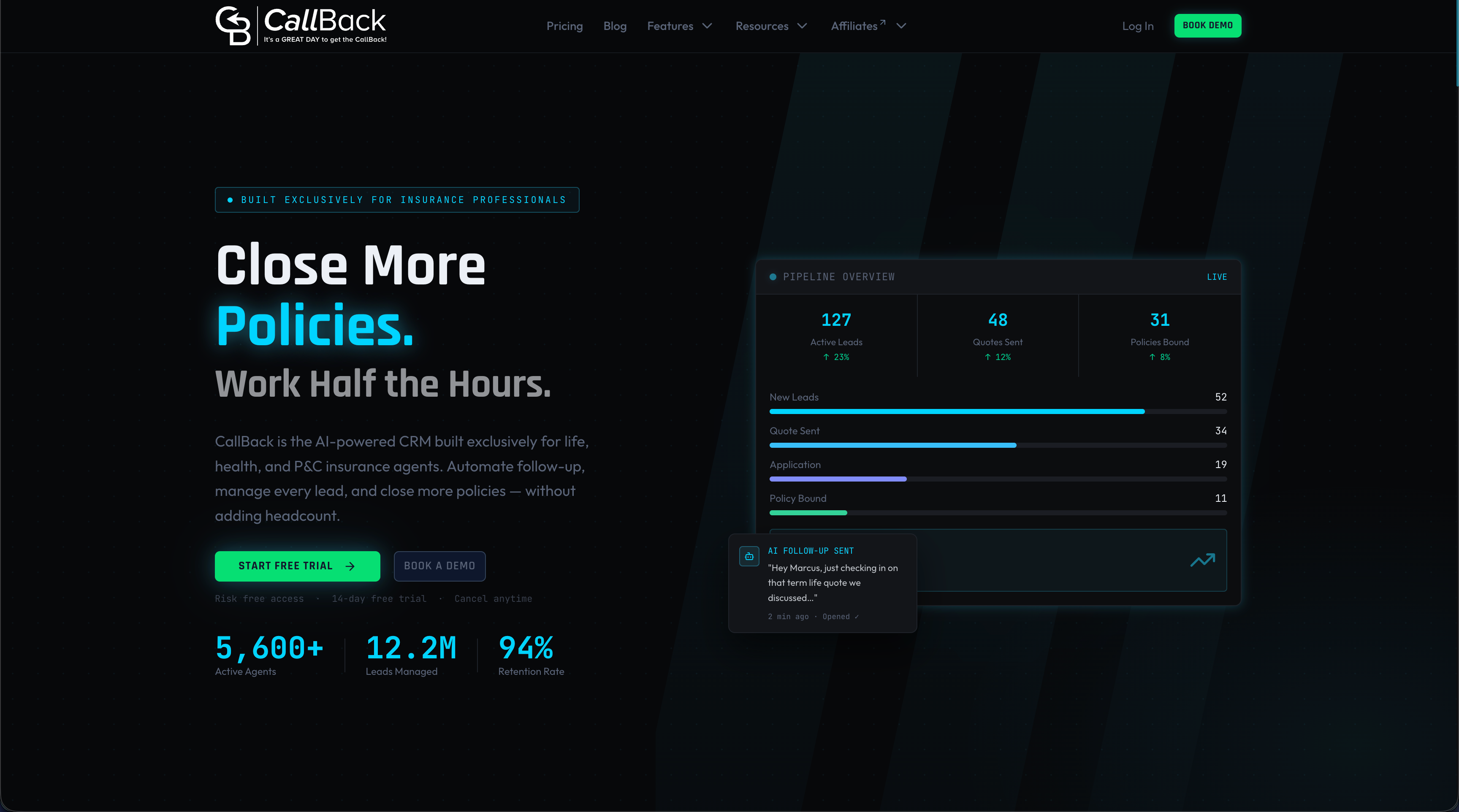
Where generic reputation tools require manual setup for each workflow, Callbackcrm is built around insurance agency operations from the start. Review requests go out when claims close and policies renew. Negative feedback stays private until resolved. AI narrative gaps surface through monitoring so your team knows exactly what content to publish next. The platform’s SMS marketing features extend that reach further, enabling fast, personalized client communication that supports both reputation engagement and sales follow-up. Agencies ready to put reputation management on autopilot can get started at callbackcrm.com.
Key Takeaways
AI-powered reputation monitoring gives insurance agencies control over both public review profiles and AI-generated brand narratives, with the most effective programs combining automated workflows with routine audit cycles.
| Point | Details |
|---|---|
| AI search dominance | ChatGPT processes 2.5 billion queries per day, making AI-generated summaries a primary discovery channel for insurance prospects. |
| Dual function approach | Effective reputation management requires both automated review solicitation and active governance of generative AI narratives. |
| Audit cadence matters | Quarterly AI audits catch narrative drift early and generate a direct content agenda for corrective publishing. |
| Compliance integration | Real-time AI scanning detects regulatory violations in agent marketing content, reducing legal risk alongside reputation risk. |
| Callbackcrm application | Callbackcrm automates review solicitation, sentiment routing, and narrative monitoring within insurance agency workflows from a single platform. |