

A good review response is short, specific and private where it needs to be. This page gives insurance agents and agencies templates for five-star, mixed, negative and suspicious reviews. It also covers what an agent should never write in a public reply, because insurance reviews often sit close to health, claims and policy details.
TL;DR
- Reply to every review, positive or negative. Assign one person to do it so the tone stays consistent.
- Keep each reply to a few sentences. Name one specific detail from the review and avoid canned wording.
- Never confirm the reviewer is a client. Never mention policies, claims, health conditions or other personal details in public.
- Move complaints to a phone number or email. Do not argue in the comment box.
- Never pay for, trade for or write fake reviews. The FTC prohibits them.
Table of Contents
- Why replying to reviews matters for an insurance agency
- What a good reply contains
- Templates for five-star reviews
- Templates for four-star and mixed reviews
- Templates for negative reviews
- When the review does not look real
- Medicare and endorsement rules
- How to make a template sound like a person
- Set up a routine
- Perspective: why we keep replies short
- Handle reviews inside your CRM
- FAQ
- Sources
Why replying to reviews matters for an insurance agency
A review reply has two readers. One is the person who wrote the review. The other is the next prospect, who reads the reply before deciding to call.
The Better Business Bureau advises businesses to respond to positive reviews as well as negative ones. It also suggests assigning one person to handle responses where possible, so the replies read consistently.
For insurance, trust is the product. A prospect choosing between agents often cannot compare policies side by side. They compare how each agent behaves. A calm, specific reply to a criticism shows how the agent will act when something goes wrong. A step-by-step guide to managing online reputation covers the wider routine of monitoring and responding.
On Google, the owner can only reply once the business profile is verified, according to the Google Business Profile community guide. Verify the profile first. Then set up the replies.
What a good reply contains
BBB guidance on writing a good response comes down to a few habits:
- Thank the reviewer.
- Address the point they raised.
- Stay factual and professional.
- Offer a next step.
- Give direct contact details when the matter should move offline.
The same guidance warns against three mistakes: canned replies that ignore the reviewer’s concern, rambling explanations, and quoting policy instead of explaining the situation. Templates are useful only when they avoid all three.
Treat each template below as a frame. Fill the brackets, then change at least one sentence so the reply fits the actual review.
Templates for five-star reviews
A five-star reply can be three to five sentences. Thank the person, mention one specific thing, reinforce the service in one line and close warmly.
Template 1: general thanks
Thank you for the kind words, [First Name]. We are glad the process felt clear from start to finish. Our goal is to make sure every question gets a straight answer. We appreciate you taking the time to share this.
Template 2: the review names a team member
Thank you, [First Name]. We will pass this along to [Team Member]. Taking time to explain the options is a big part of how we work, and it is good to know it made a difference. We appreciate the review.
Template 3: a short review with no text
Thank you for the five stars, [First Name]. We appreciate it. If anything comes up later, call us at [phone number].
Template 4: a review about speed
Thank you, [First Name]. Quick answers matter, especially when the timeline is tight. We are glad the follow-up worked for you. We appreciate the review.
Template 5: a referral mention
Thank you, [First Name]. It means a lot that you would send someone our way. We will take good care of them. Thanks for the trust.
Keep the details general. A line such as “thank you for trusting us with your family’s coverage” is fine in tone but starts to reveal what the person bought. Prefer wording about the experience: clear explanations, fast replies, patient answers.
Templates for four-star and mixed reviews
A mixed review is a chance to show how criticism is handled. Aim for four to six sentences: thank the reviewer, acknowledge the specific criticism without defending, say what has changed if something has, and invite direct contact.
Template 6: slow response
Thank you for the feedback, [First Name]. You are right that the wait for a reply was longer than it should have been. We have changed how incoming messages are assigned so they are answered sooner. We would like to hear more about your experience. Please call [phone number] or email [email address].
Template 7: confusing process
Thank you for the honest review, [First Name]. We are glad the final result worked for you. We are sorry the steps along the way felt unclear. We are updating how we explain the process up front. If you have more thoughts, please reach us at [email address].
Template 8: good service, one complaint
Thank you, [First Name]. We appreciate the kind words and we take the comment seriously. We are looking at how to improve that part of our service. If you are open to a short conversation, call [phone number].
Only write “we have changed” if something really changed. A made-up fix is worse than none. If no change is planned, thank the reviewer and offer a conversation.
Templates for negative reviews
Negative reviews carry the most risk in insurance. The reviewer may mention a claim, a denial, a premium increase or a policy lapse. The agent may know the whole story and be tempted to correct it in public. Do not.
The Insurance Agent Playbook offers a simple rule for public replies: keep them general, and do not confirm the reviewer is a client or acknowledge specific health conditions, claims or policies. Move specifics to a private conversation. This also matches what regulators expect. The NAIC’s consumer protection roadmap says insurance consumers should know what personal information is collected and expect reasonable safeguards against unauthorized access or use. A public reply that confirms a client’s details works against that.

Check your state and carrier rules, and ask your compliance contact or attorney when a review involves a claim, a health matter or a regulatory complaint. This article does not replace that advice.
Template 9: general complaint
[First Name], we are sorry to read this. We want to understand what happened and see if we can help. Please call [name] directly at [phone number] or email [email address]. We take this seriously.
Template 10: complaint about a carrier decision
[First Name], we are sorry the experience was frustrating. Decisions like this are hard to hear about. We cannot discuss details in a public forum, but we would like to talk with you. Please contact [name] at [phone number].
Do not write “your claim” or “your policy” here. Even those words confirm a relationship and imply a transaction.
Template 11: complaint about price
Thank you for the feedback, [First Name]. Price matters and we understand that. We cannot go into specifics here, but we would be glad to talk through options. Please reach [name] at [phone number].
Template 12: complaint about communication
[First Name], thank you for telling us. Communication should be better than what you describe, and we are sorry. Please call [phone number] so we can look into it and follow up directly.
Template 13: the reviewer is angry and the review is harsh
We are sorry for how this went, [First Name]. We would like a chance to hear your side and make it right where we can. Please contact [name] at [phone number].
Keep the harsh-review reply even shorter than the others. A long reply to an angry post looks defensive. Prospects read the tone more than the facts.
When the review does not look real
Some reviews come from people who were never clients: a competitor, a former employee or a scam. Do not accuse anyone in public. Reply politely and report the review through the platform.
Template 14: no record of the reviewer
Thank you for the feedback. We are not able to match this review to an interaction with our office. If you would like to talk, please call [phone number]. We would like to understand what happened.
This wording confirms nothing and denies nothing about a client relationship. Then flag the review in the platform’s reporting tool.
What not to do about fake reviews
The FTC’s Consumer Reviews and Testimonials Rule bars businesses from creating, selling, buying or spreading fake or false reviews. It also prohibits compensation or incentives that depend on a review expressing a certain sentiment, such as paying for a five-star rating. An agency should not write its own reviews, trade reviews with other agents, or offer a gift for positive ones. Asking every client for an honest review is allowed. Rewarding only the good ones is not.
Medicare and endorsement rules
Agents who sell Medicare plans face an extra layer. CMS marketing guidelines state that a beneficiary endorsing or promoting a Medicare plan must be a current enrollee, and that paid endorsements must be clearly identified. The same CMS marketing guidelines treat republishing individual user content or social media comments that promote a plan as an endorsement or testimonial, which must follow the same requirements. That document dates from 2016, so check the current CMS marketing rules before acting on it.
In practice, do not copy a five-star review about a Medicare plan onto the agency website or social pages without checking the rules first. Replying to the review on the review platform is different from republishing it. Ask a compliance professional before you reuse any review as marketing.

How to make a template sound like a person
Templates fail when every reply reads the same. A prospect who scrolls through ten identical thank-yous learns that nobody is reading.
These habits keep replies honest:
- Use the reviewer’s first name. Do not use a full name.
- Pick one detail. Quote a word or phrase from the review, such as “clear explanations” or “fast reply.”
- Vary the opening. Rotate three or four openers across templates.
- Sign with a real name. A named person with a direct phone line is better than “The Team.”
- Read it aloud. If it sounds like a form letter, change it.
- Edit AI drafts. AI can produce a first draft quickly. A person should check the tone, remove any private detail and confirm that every claim is true.
A quick before and after
Before:
Thank you for your review. We value all of our customers and strive to provide the best service.
After:
Thank you, Dana. We are glad the explanation of your options was easy to follow. We appreciate the review.
The second version is still short and still reveals nothing private. It shows that someone read the review.
Set up a routine
A template library helps only if replies go out on time. A simple routine works for most small agencies.
- Turn on alerts. Get a notification for each new review on Google and any other platform you use.
- Name one owner. One person writes or approves every reply.
- Set a window. Aim to reply within one or two business days. Reply to negative reviews first.
- Sort by rating. Keep a folder of approved templates for five-star, mixed and negative reviews.
- Log the follow-up. When a complaint moves offline, note who called, when, and what happened.
- Ask for reviews on a schedule. Ask happy clients after a completed service, not only after a complaint.
Some agencies hand part of this work to outside staff. Virtual customer support can help cover inbox monitoring, as long as the final wording and any private matters stay with a licensed agent.
Perspective: why we keep replies short
We build software for insurance agents, and review replies come up often. Our view is simple. Most agents do not need more words. They need a faster, more consistent habit.
Agents tend to write long replies when a review stings. We see the same pattern in outreach: the longer the message, the less it is read. A short reply that names one detail and offers a phone call does more than a paragraph of explanation.
We also think agents should treat reviews as part of the follow-up process, not a separate chore. A new review is a signal. A complaint should become a task with an owner and a deadline. A five-star review should trigger a thank-you and, where allowed, a request for a referral. When these steps are automated, nothing sits unanswered.
Our reputation tools are built for that routine. We also advise agents to keep a person in the loop. Automation can find the review and draft a reply. An agent should decide what is said, especially when the review touches on a policy, a claim or someone’s health.
— Kyle
Handle reviews inside your CRM
CallBack includes reputation management built for insurance agencies. It brings review requests and review monitoring into the same system that holds the pipeline and follow-up. Agents can see new reviews, draft replies from saved templates and trigger follow-up tasks when a complaint needs a call.
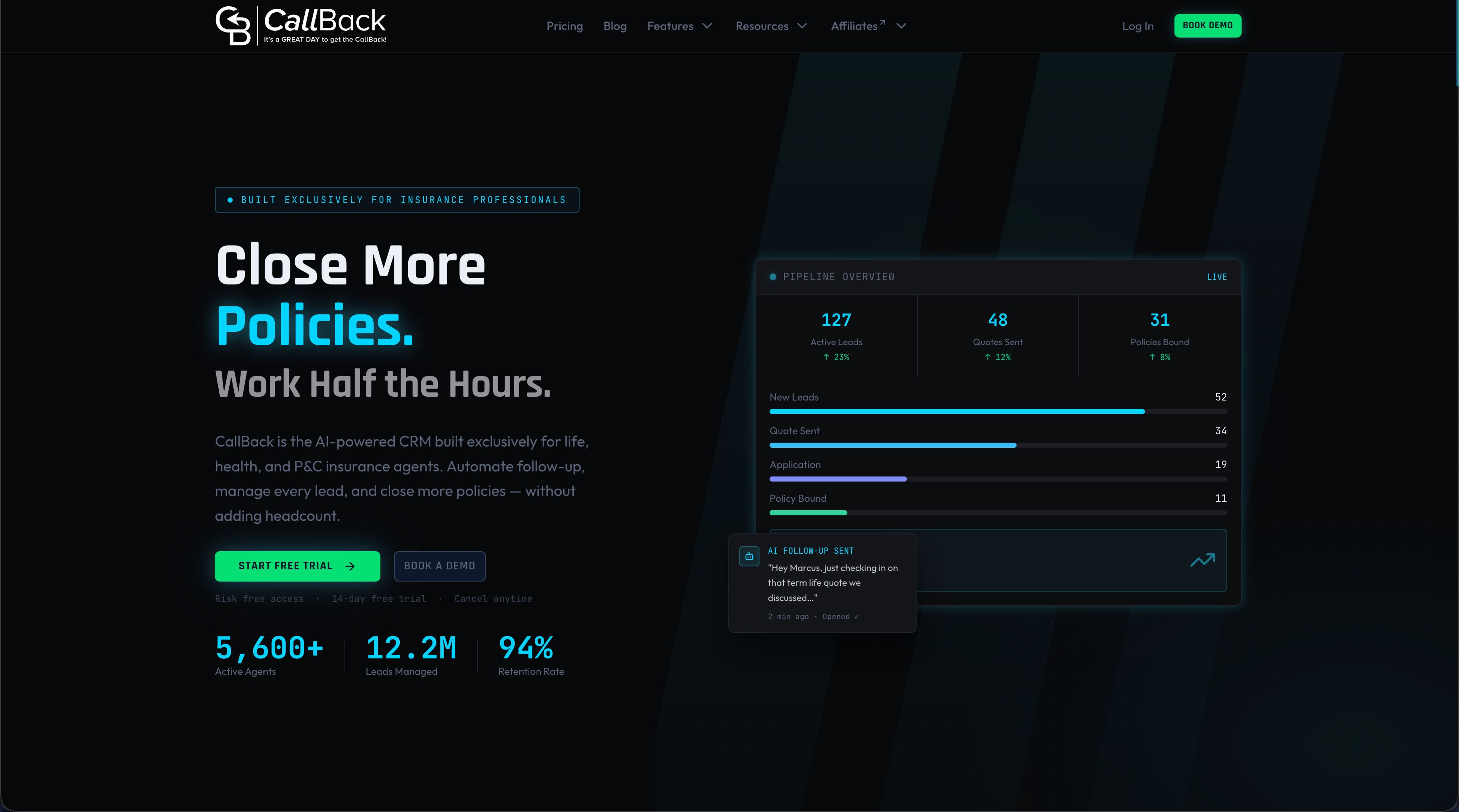
The Professional plan is $97 per month, and you can start on the Professional plan. Agencies with several licensed agents can look at the Enterprise plans, which start at $297 per month for 10 full CRM accounts. SMS, email and AI usage are billed separately, and the fees page lists the usage categories. For more on the topic, read how reputation management works for insurance agents and how AI reputation monitoring fits into an agency’s day.
FAQ
How do you write a good response to a review?
Thank the reviewer, address the point they raised and stay factual. Offer a next step, and give a direct phone number or email if the matter should move offline. Keep it short and avoid canned wording, long explanations and quoting policy.
How do you respond to a five-star review?
Write three to five sentences. Thank the person by first name, mention one specific thing from the review and close warmly. Do not mention any policy, product or personal detail that confirms what the person bought.
Can an insurance agent reply to a negative review with details?
No. Public replies should stay general. Do not confirm the reviewer is a client or mention claims, policies or health information. Invite the reviewer to call or email, and handle the specifics in private. Ask a compliance professional if the review involves a claim or a regulator.
Is it okay to ask clients for reviews?
Yes, if you ask for honest feedback. The FTC rule prohibits fake reviews and incentives tied to a positive rating. Ask all clients the same way, and do not offer a reward for five stars.
Sources
- BBB Business Tip: Why responding to your customer reviews matters
- FTC: The Consumer Reviews and Testimonials Rule, Questions and Answers
- NAIC: Cybersecurity Consumer Protections roadmap
- CMS Medicare Marketing Guidelines
- Google Business Profile Community: How to respond to Google reviews