
Managing leads, follow-up, and policy workflows from multiple tools wastes time and creates data gaps for insurance agencies. Most platforms require manual work to handle follow-up, lack insurance-specific integrations, or gate key features behind opaque pricing, so this comparison covers insurance-focused automation, pricing, and integrations so agencies can choose a CRM that fits their workflow and budget.
Table of Contents
- CallBack CRM
- AgencyZoom
- AgencyBloc Plus Suite
- InsuredMine CRM
- Agency MVP
- Agency Revolution
- Comparison of alternatives
CallBack CRM
At a Glance
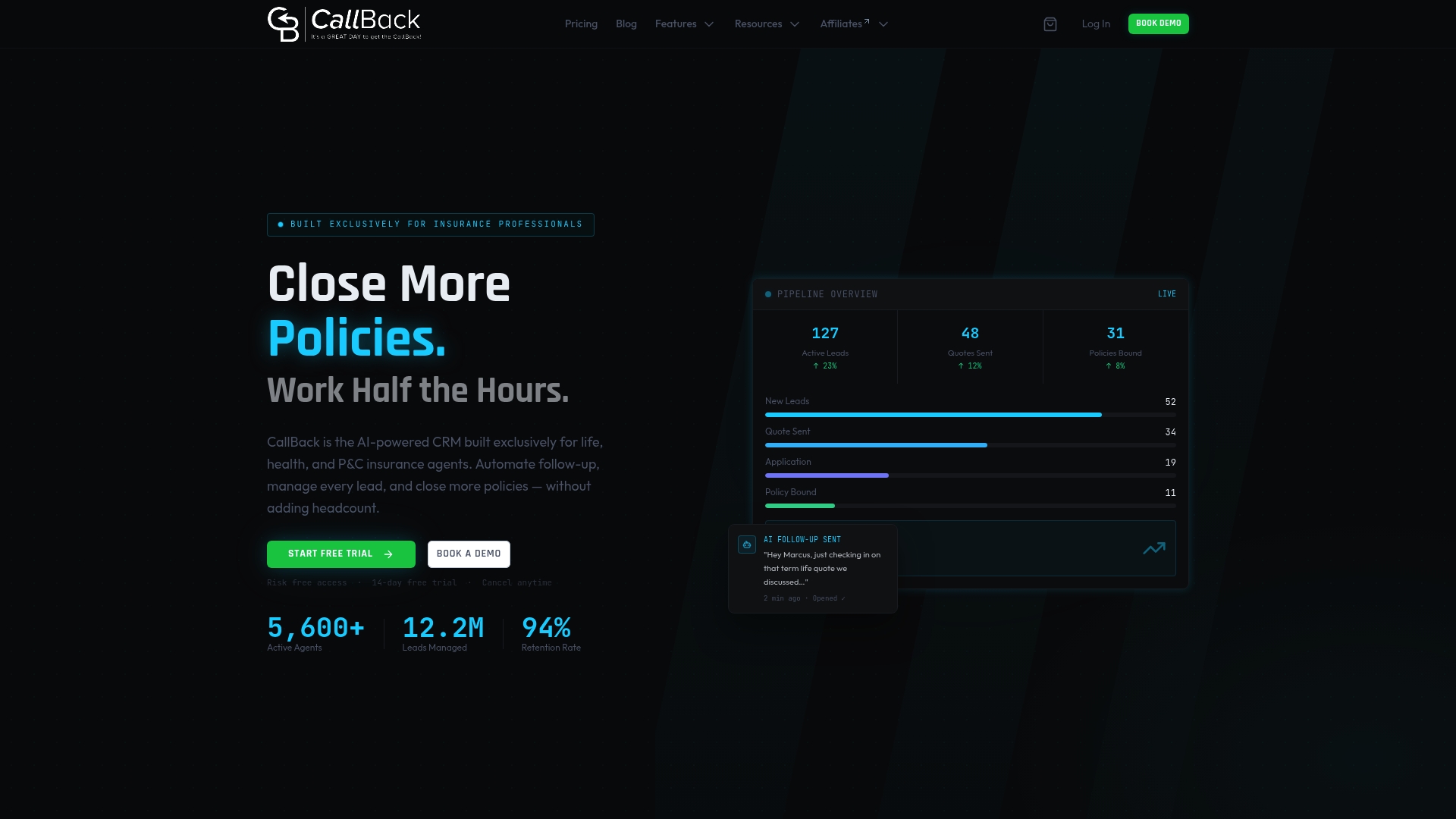
Most popular plan lists at $97/month and includes a 14-day free trial. CallBack CRM packages CRM management, email and SMS marketing, funnel and website builders, and proposal tools for insurance professionals. The platform runs on web, mobile, and desktop and connects to ad channels and automation tools.
Core Features
CallBack CRM centralizes CRM management, multi-channel messaging, and campaign tools so agents keep contact records, quotes, and policy notes in one place. The platform includes AI assistants for automated outreach and content creation, a drag-and-drop workflow automation builder, and lead scoring tied to engagement and demographics. It also provides reputation management, reporting for lead sources and conversion tracking, and proposal and contract tools.
Key Differentiator
Built exclusively for insurance, CallBack CRM pairs product-specific pipeline management with AI automation and reputation tools. That combination lets you build distinct pipelines for life, health, or P&C products while the system automates follow-up and lead qualification. The integrated review collection and response feature closes the loop on client experience and helps preserve referral sources.
Pros
The platform targets insurance agents and agencies with feature sets mapped to sales work flows, which reduces manual follow-up and tracking work. AI-driven follow-up sequences via SMS, email, and voicemail free agents to spend time on closing rather than chasing leads. Mobile apps let you manage pipelines and respond to prospect messages while out of the office. CallBack CRM also supports ad management for Google Ads and Meta Ads, integrates with Zapier and Zoom, and exposes API and webhooks for custom connections. The vendor advertises secure data handling on Google Cloud and 24/7 customer support.
Cons
- The interface and breadth of automation can feel complex for users new to CRMs or automation tools, and some teams will need dedicated onboarding time.
Notable Integrations
- Zapier
- Zoom
- Meta Ads
- Google Ads
- API & Webhooks
Who It’s For
Agents and agencies selling life, health, and P&C products will get the most from CallBack CRM. The product fits independent agents, small agencies, and IMO or FMO networks that need lead follow-up, policy tracking, and marketing in one system. Larger organizations can request enterprise options when they need custom setup or SSO.
Unique Value Proposition
AI-driven follow-up sequences that combine SMS, email, and voicemail give CallBack CRM a clear workflow advantage for insurance sales teams. Those sequences plug directly into custom pipelines and lead scoring so outreach follows the product lifecycle. Agents who want fewer manual touches and a single place for leads, quotes, reviews, and ad channels will see the operational benefit.
Real World Use Case
An independent agent captures a web lead and assigns it to a life product pipeline. CallBack CRM triggers a sequence that sends an SMS, then email, and logs a voicemail attempt while scoring engagement. The agent reviews the visual pipeline, requests a review after a sale, and checks conversion analytics on mobile or desktop.
Pricing
Most popular plan at $97/month with a 14-day free trial. The vendor also offers customizable enterprise plans for larger organizations and teams that need bespoke onboarding or integrations.
Website: https://callbackcrm.com
AgencyZoom
At a Glance
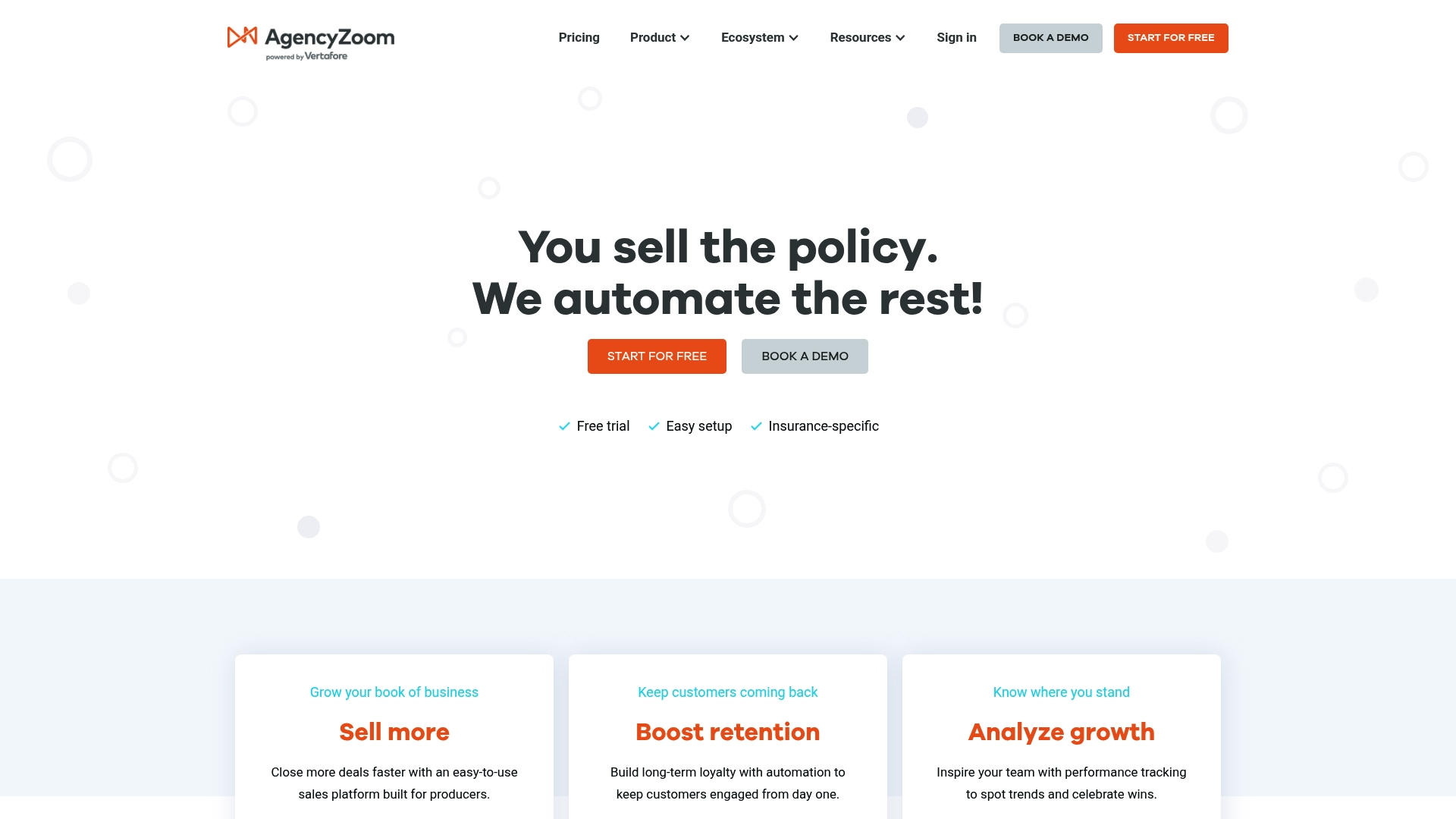
AgencyZoom starts at $149 per month. The platform targets insurance agencies and includes mobile apps that let agents manage leads, tasks, and follow-ups from a smartphone or browser. It also bundles Google Reviews automation and goal tracking, aimed at growing an agency’s book of business.
Core Features
AgencyZoom combines lead management with onboarding and customer retention automation so agencies can keep prospects moving through defined workflows. The platform includes goals and performance reporting, Google Reviews automation, and mobile lead handling via native apps and an in‑browser interface. It also offers workflow automation for nurturing customer journeys and integrates with common agency management systems.
Key Differentiator
The vendor positions AgencyZoom as the only insurance CRM built with extensive automation capabilities and dedicated mobile apps for mobile management. That product focus narrows its audience to agencies that want to replace manual follow ups and review collection with automated sequences tailored for carriers such as Allstate and Farmers.
Pros
AgencyZoom has a clear interface that reduces menu clutter and lets agents find leads and tasks quickly. Integrations with AMS360 and QQCatalyst let agencies keep policy data in their existing management system while automations run in the CRM. Mobile apps and task handling let producers act on leads between meetings, and vendor materials highlight hands on onboarding and customer support to get teams started.
Cons
- The platform may feel complex for new users without thorough onboarding, especially when several automations run at once.
- Some advanced features require additional integration work or vendor setup time before they function as intended.
- Pricing can be a concern for smaller agencies that need only basic follow up tools rather than the full automation suite.
When It May Not Fit
Agencies that lack internal IT support may struggle with integrations that require configuration or API keys. Small single‑producer shops that only need a lightweight follow up tool will likely find the feature set and price point more than they need. Teams that prefer manual control over every touchpoint could find the automation templates too prescriptive.
Notable Integrations
AgencyZoom connects to well known agency management and communication tools including AMS360, QQCatalyst, ActiveCampaign, Gmail, Outlook, RingCentral, and Lightspeed Voice.
Who It’s For
This product fits independent and captive agencies that want to automate lead follow up, centralize onboarding, and collect online reviews without replacing their AMS. It suits agencies that plan to manage leads on mobile devices and those ready to invest in automation to reduce manual tasks.
Real World Use Case
An independent agency configures AgencyZoom to run a six step follow up sequence for incoming internet leads. Producers receive push notifications on their phone, a new task appears in the app, and the platform requests a Google review after a policy issues. That flow reduces missed follow ups and keeps performance metrics visible in weekly reports.
Pricing
Monthly subscription pricing starts at $149. Plans are tiered by feature set and agency size, with higher tiers unlocking more automation and seat licenses.
Website: https://agencyzoom.com
AgencyBloc Plus Suite
At a Glance
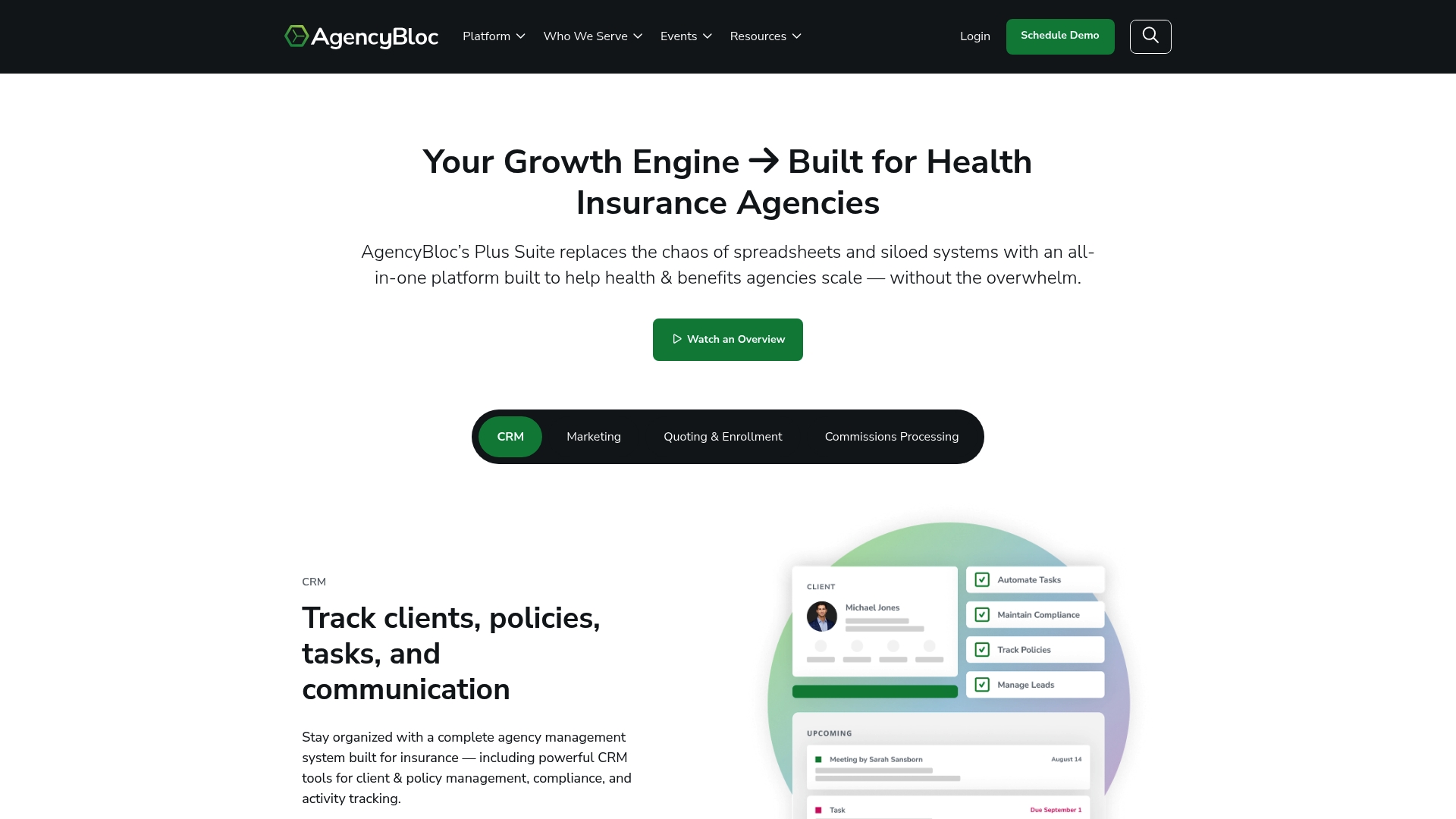
AgencyBloc reports more than 6,500 agencies use the platform and states it is HIPAA and SOC 2 Type II compliant. The suite bundles CRM, quoting, commissions, and marketing into one system. That consolidation aims to remove tool fragmentation for health and benefits agencies.
Core Features
AgencyBloc combines a client and policy CRM with policy tracking and commissions processing, so agencies keep records and payouts in one place. The platform includes quoting and enrollment tools for benefits comparisons, plus email and website marketing tools that tie back to client records. Automation handles reminders, workflows, and routine client communications to reduce manual follow up.
Key Differentiator
AgencyBloc markets itself as an industry-specific management system and was named Cloud CRM Solution of the Year by The Cloud Awards. That focus on health, life, and group benefits narrows the feature set toward agency workflows rather than generic CRM tasks.
Pros
The suite genuinely reduces tool count by combining CRM, quoting, and commissions into a single environment. Customer support and the interface receive frequent positive feedback from users, which helps adoption. That compliance claim and the platform certifications make the product suitable for regulated workflows where privacy and audit trails matter.
Cons
- Features may overwhelm very small or solo agencies during setup.
- Pricing is customized, which makes direct cost comparisons difficult for small shops.
- Some users report a learning curve during initial adoption and need hands-on training.
When It May Not Fit
If your agency is a solo practitioner or runs a very small book, the depth of features may add unnecessary complexity. If you need publicly listed pricing to budget quickly, the customized quote model will slow procurement. Agencies that prefer a minimal CRM plus single-purpose tools will find the suite heavier than needed.
Who It’s For
Mid-sized to large health, life, or group benefits agencies that need integrated client records, quoting, and commission accounting will find the fit strong. If your agency handles regulated data and requires documented controls, this product aligns with those operational needs.
Real World Use Case
AgencyBloc’s marketing materials state a Medicare agency increased revenue by 56% and recovered $22K in commissions after switching to the platform. That case illustrates how consolidated data and automated renewals can recover missed revenue and reduce reconciliation time.
Pricing
Pricing is custom and tailored to agency size and needs. You must contact sales to view plan options and to receive a quote for your agency. The site lists a “View Plans” flow rather than published starting rates.
Website: https://agencybloc.com
InsuredMine CRM
At a Glance
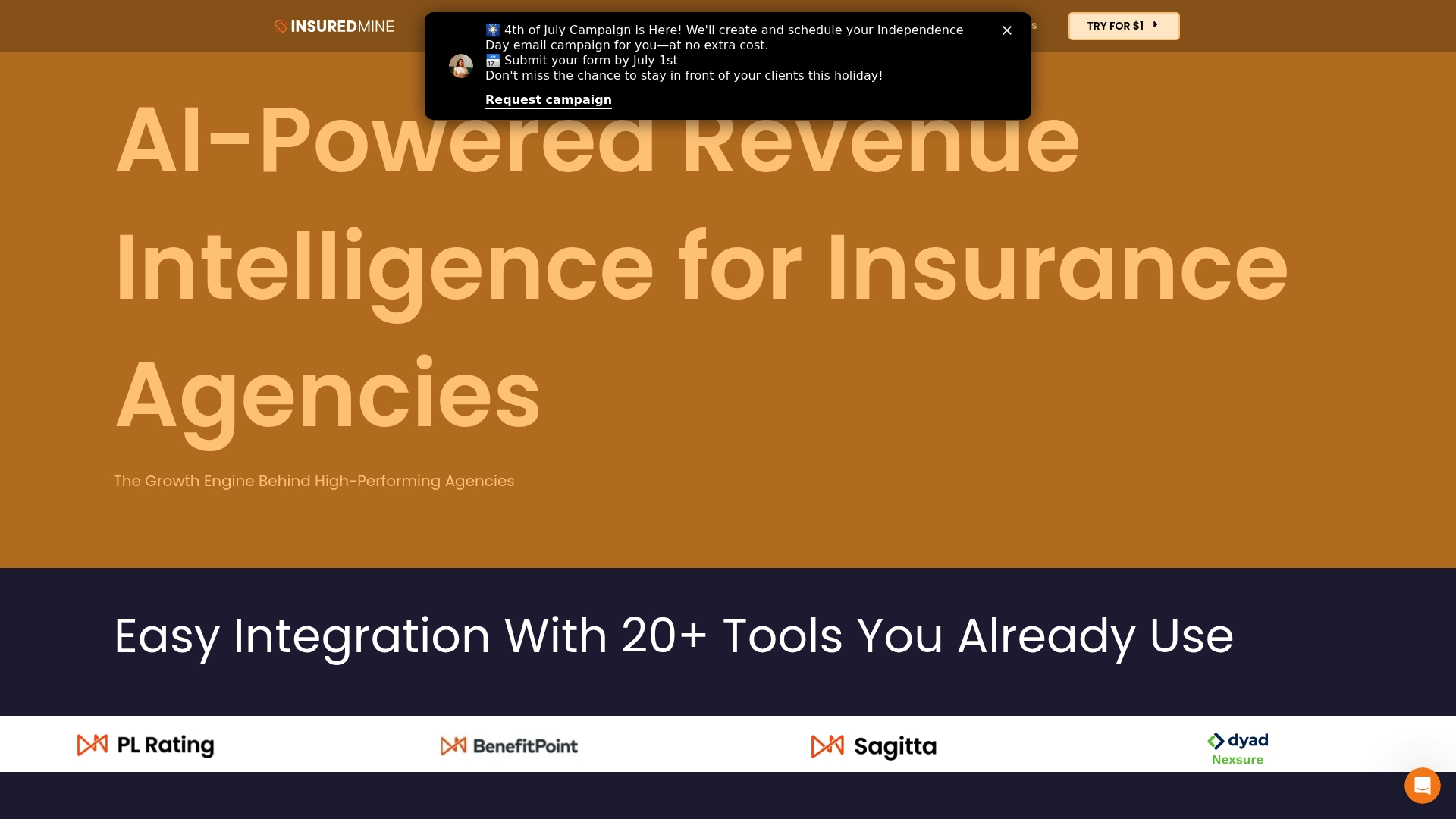
The vendor advertises SOC 2 Type II certification for its security controls. InsuredMine bundles sales, engagement, and analytics for insurance agencies with mobile apps for agents and clients. Pricing starts at a clearly stated per user rate and includes enterprise options plus setup and add-on fees.
Core Features
InsuredMine centralizes sales pipeline management, opportunity tracking, goal and task management, and an Account 360 overview for personalized service. The platform also includes AI-powered automation, agency analytics, and mobile apps that let agents review accounts and run tasks from phones. Integrations extend the CRM into agency management systems and communication stacks.
Key Differentiator
The product aims to combine AI automation, integrations, and security in a single package tailored to insurance operations. That focus lets agencies use the same system for policy tracking, client outreach, and basic performance reporting. It serves agencies that want fewer point tools and tighter data continuity across sales and service.
Pros
InsuredMine consolidates core agency workflows, which reduces duplicate data entry and keeps client histories in one place. The vendor reports AI automation that handles routine follow ups and task routing, which frees agents to focus on sales conversations. Mobile apps and prebuilt integrations shorten the time to connect phone systems and AMS platforms.
Cons
- Some third-party reviews flag eSignature usability problems for older clients and mobile users. This can slow signature completion for certain client segments.
- Pricing varies with customizations, and setup or implementation fees apply. That pricing structure can raise initial project costs for small agencies.
- Users have requested better mobile experiences for specific features. Mobile gaps affect agents who rely mostly on phones.
- Certain AMS integrations require extra setup and are not available in free trials. That raises implementation effort for agencies using those systems.
When It May Not Fit
If you need out-of-the-box eSignature flows for elderly clients, InsuredMine may require additional work or third-party tooling. Agencies with tight pilot budgets will find setup and implementation fees add to upfront cost. Firms that want every AMS connector ready in a short trial window may face delays with some integrations.
Notable Integrations
- Zapier
- RingCentral
- Lightspeed Voice
- AMS360
- Applied Epic
- Sagitta
- Evo
- Nexsure
Who It’s For
Insurance agencies and brokerages seeking a unified CRM and policy tracking system will find the feature set relevant. The product targets teams that want automation and analytics tied to their AMS and communications. Agencies prepared to invest in setup and integration work gain the most value.
Real World Use Case
Gila Insurance used InsuredMine to centralize client communications and automate workflows. That deployment reduced manual task handoffs and made sales follow ups more consistent. Agents reported clearer account histories and faster response times to client inquiries.
Pricing
Plans start at $118 per user/month billed monthly. An enterprise option lists $106 per user/month billed annually, and both models may add setup, implementation, and add-on fees.
Website: https://insuredmine.com
Agency MVP
At a Glance
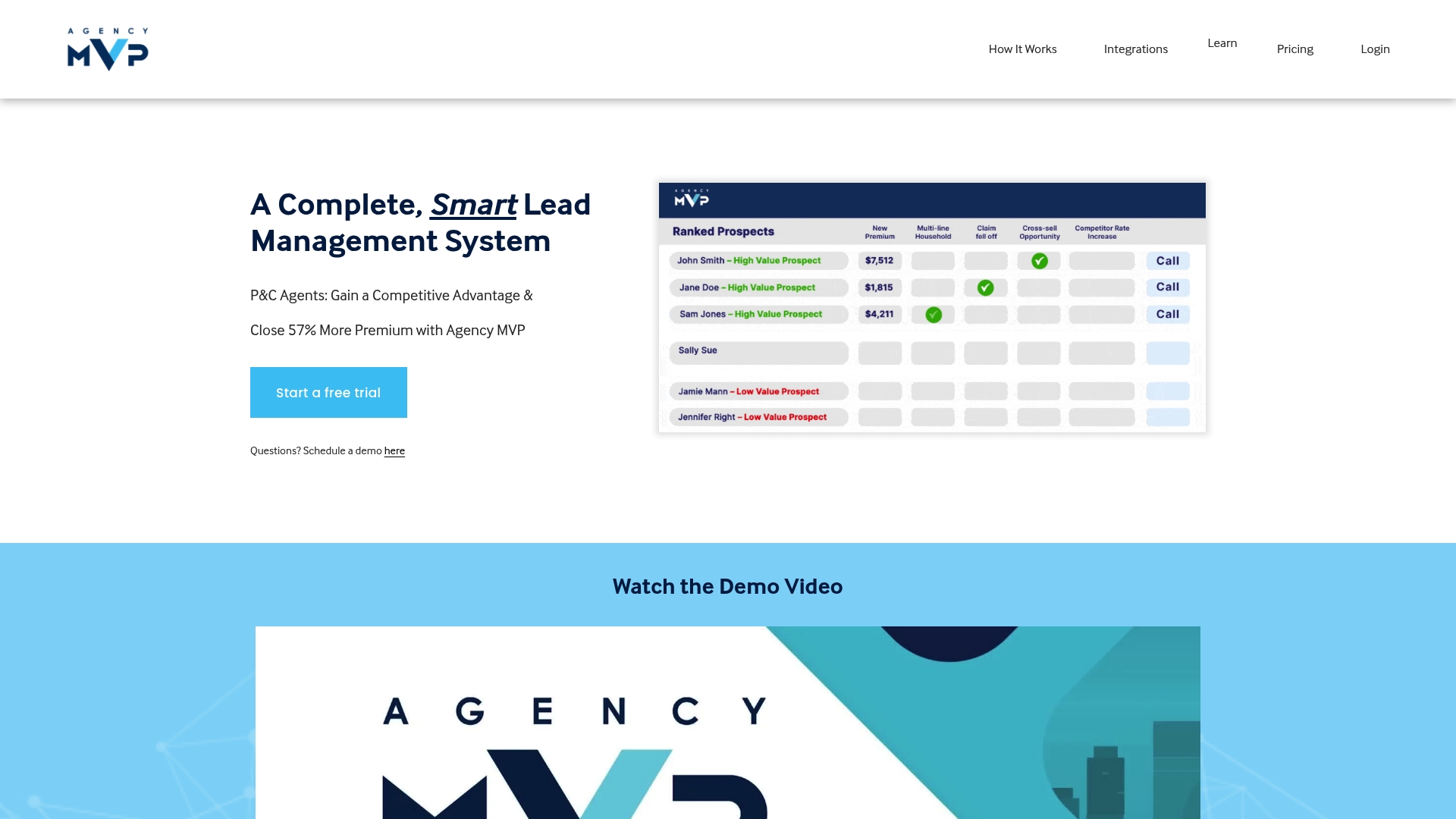
Proprietary algorithms score and rank incoming leads to surface the highest-value prospects. That ranking drives which leads receive automated email and text follow-up first. The approach suits property and casualty agents who need a clearer, data-driven triage for many lead sources.
Core Features
Lead prioritization uses the vendor’s proprietary scoring to order prospect lists and reduce manual guesswork. Automation handles follow-up with scheduled email and text sequences, and workflow rules support nurturing and handoffs. The platform accepts CSV imports and connects with major insurance systems for faster quoting and data sync.
Key Differentiator
Built by agents for agents, the product focuses on insurance-specific signals rather than generic CRM fields. The scoring model and insurance integrations concentrate effort on quotes that actually convert. That narrow focus reduces irrelevant tasks for agents who sell property and casualty lines.
Pros
Smart lead ranking helps sales teams focus on prospects that look closest to a quote decision. Automation for emails and texts cuts repetitive follow-up work and keeps prospects moving through your pipeline. Integrations with platforms like EZLynx and TurboRater reduce manual data entry when preparing quotes. Onboarding support and a free trial make testing easier for teams that want a hands-on evaluation.
Cons
- Setup and integration can be time consuming for agencies without an IT resource. Initial configuration often requires mapping fields and testing data flows.
- The monthly price may run higher than entry-level CRMs for solo agents. Smaller agencies should compare expected closed-business gains against the fee.
- Results depend heavily on lead data quality and correct integration setup. Poor lead sources will reduce the scoring model’s usefulness.
When It May Not Fit
If you operate alone and run only a handful of monthly leads, the platform’s cost and setup time may not justify the value. Agencies that need a general-purpose CRM without insurance-specific scoring will find many features unnecessary. Teams that lack consistent data feeds will not realize the full benefits of the ranking model.
Notable Integrations
Connects to EZLynx, TurboRater, PL Rating, Zapier, and supports CSV import for one-off lists. Those connections speed quoting and let you route leads from common insurance sources.
Who It’s For
Property and casualty insurance agents and small agency teams that handle multiple lead sources will get the most from this product. It fits agencies that want automated follow-up and tighter integration with rating and management systems. Agencies seeking a general CRM without insurance integrations should look elsewhere.
Real World Use Case
A regional agency funnels internet leads, direct mail responses, and referrals into the system. The platform ranks those leads, triggers an email and text sequence for top-tier prospects, and pushes quoting data to EZLynx. The team reports shorter quote cycles and clearer prioritization of agent time.
Pricing
The vendor lists pricing at $269/month with a 14-day free trial, or $242/month billed annually after a 10% discount. Custom plans are available for larger teams and agencies that need additional integrations or support.
Website: https://agencymvp.com
Agency Revolution
At a Glance
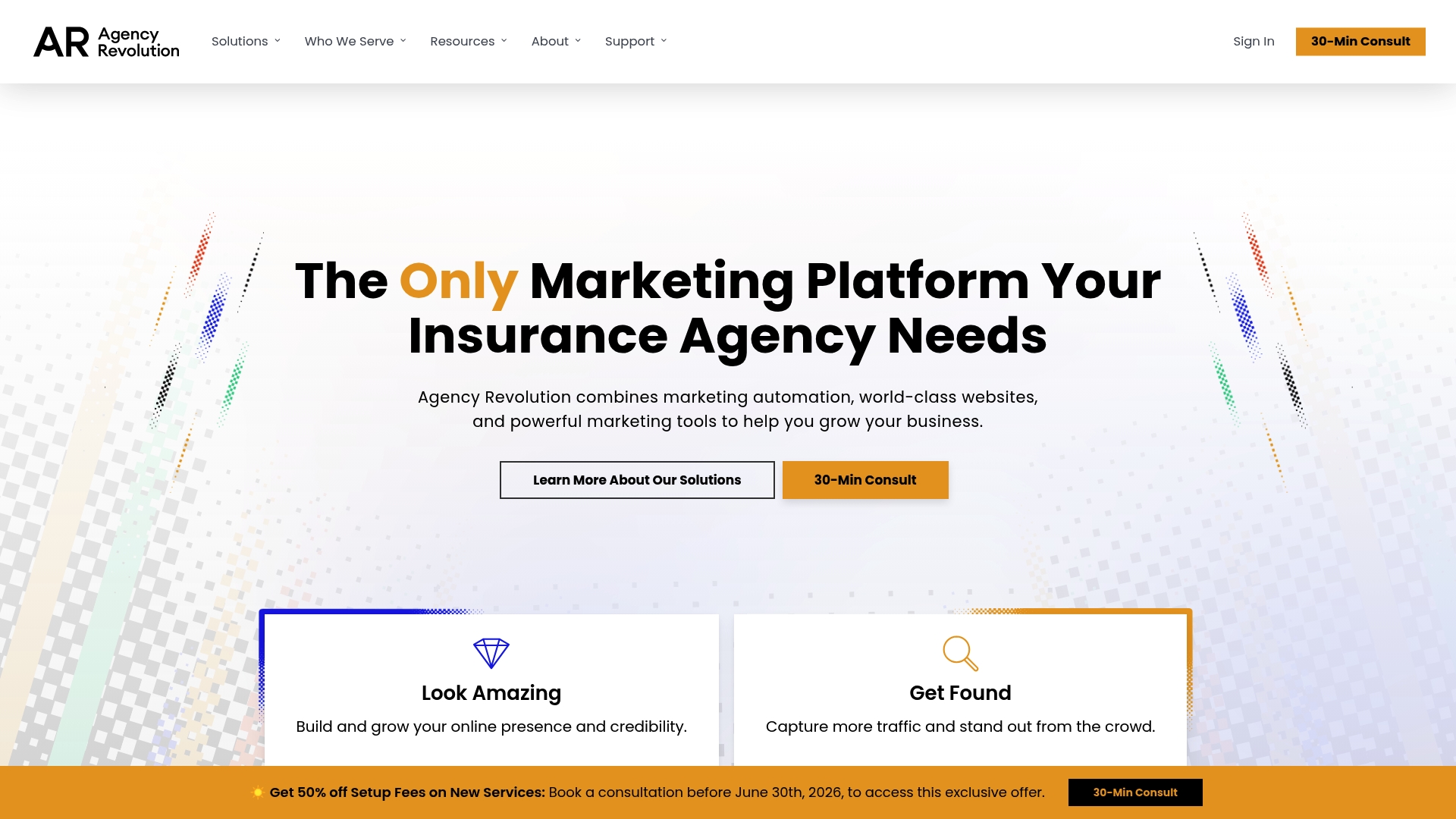
Agency Revolution reports more than 3,000 agencies served since 2012. They focus on marketing automation, custom websites, and industry-specific AI tools for insurance agencies. The platform centralizes marketing tasks in a single dashboard so agencies can run campaigns and review metrics without switching systems.
Core Features
The product combines insurance marketing automation, custom insurance websites, and marketing tools for social media, reputation, local listings, and business texting. A Growth Analyzer projects retention and revenue, and integrated AI tools assist with campaign creation and routine operational tasks. The dashboard lets agents track reviews, local SEO, and campaign performance from one place.
Key Differentiator
Agency Revolution’s angle is a single product that blends marketing automation, websites, and analytics specifically for insurance agencies. That focus produces features built around agency workflows rather than generic marketing modules. The result reads as a toolkit aligned to agent tasks such as client retention, local SEO, and review management.
Pros
The platform bundles website design, marketing automation, and analytics so agencies avoid stitching multiple vendors together. The vendor highlights improved revenue, lead conversion, and hours saved per agent as outcomes from its work. Agencies also gain a dedicated support team and educational resources to help with onboarding and marketing skill growth.
Cons
- Third-party reviews call out limited customization options and constrained reporting functionality. These limits surface when agencies need template-free site designs or bespoke analytics.
- Some users report onboarding can be complex for smaller agencies with limited marketing staff and IT support.
- Pricing details are not specified publicly, which complicates budgeting for agencies with tight cash flows.
When It May Not Fit
If your agency needs deep, template-free design control, this product may not offer the level of customization required. Small shops with minimal marketing staff may face a learning curve adopting its automation features. If published, self-serve pricing is critical to your procurement process, the lack of public rates could be a blocker.
Notable Integrations
- AMS (Agency Management Systems)
- Industry-specific connectors for CRM, lead forms, and client communication platforms
Who It’s For
This product fits independent insurance agents, brokers, and enterprise-level insurance companies seeking an industry-focused marketing and operations platform. It suits agencies that prefer a single vendor for websites, automation, and review management. It also fits teams willing to invest time in setup and training to unlock automation value.
Real World Use Case
An independent agency automates email marketing, manages client reviews, optimizes its website for local SEO, and tracks marketing performance from one dashboard. The vendor describes a scenario where that setup increased quote flow and client retention. Agencies use the same workflow to centralize reporting and reduce manual follow up.
Pricing
Pricing is not published online. The company handles pricing via direct consultation and custom quotes. That approach means you will need to contact sales for a proposal tailored to your agency size and goals.
Website: https://agencyrevolution.com
Comparison of alternatives
When considering advanced CRM platforms tailored for insurance professionals, CallBack CRM defines a leading choice through its feature pairing insurance-specific workflows and AI-driven automation.
Integration and automation
CallBack CRM excels in offering streamlined workflows specifically designed for insurance agents. Products such as AgencyZoom and AgencyBloc Plus Suite provide similar functionalities but often come with a steeper learning curve or require setup investment. AgencyZoom, for instance, excels with its mobile application-driven lead handling, catering to agents actively needing remote access. Meanwhile, InsuredMine integrates policy tracking with account reviews, although it exhibits some limitations in its eSignature flows for compliance-heavy workflows.
Usability and mobile functionality
While CallBack CRM offers mobile accessibility for pipeline management, AgencyZoom distinguishes itself with its intuitive mobile app, designed specifically for agents operating in dynamic, client-facing environments. Additionally, its clear interface helps reduce menu navigation errors. CallBack CRM offers broader integration capabilities and targeted automation but does not include community-driven application features to the same extent.
Best fit
- Agencies handling diverse insurance products and searching for a scalable system to manage AI-enhanced lead scoring and secure document handling should consider CallBack CRM.
- Agencies using AMS360 or QQCatalyst who want integrated mobile task management should evaluate AgencyZoom.
- Health and benefits agencies prioritizing multi-layer compliance tools, such as HIPAA and SOC Type II, will benefit from AgencyBloc Plus Suite.
- Firms managing prioritized workflows through in-depth lead scoring should explore Agency MVP.
- Small agencies seeking a marketing-focused CRM solution will find Agency Revolution appealing.
Our pick
CallBack CRM stands out for its integration of AI-driven features with insurance-focused workflows, allowing agents to automate follow-ups while maintaining lead and policy coherence. These capabilities make it a compelling choice for agencies seeking both operational efficiency and personalization. However, smaller groups oriented toward minimal client engagement tools or exclusively mobile follow-ups might find AgencyZoom more suitable for their use case.
Insurance agents and agencies seeking comprehensive features for workflow and automation will find distinct system advantages across these alternatives.
| Product | Core Feature | Key Differentiator | Best For | Pricing | Notable Limitation |
|---|---|---|---|---|---|
| Callbackcrm | CRM management and AI automation | Insurance-specific AI automation tools | Agencies selling life, health, and P&C | $97/month with free trial | Interface complexity for CRM newcomers |
| AgencyZoom | Lead handling and Google Reviews | Dedicated app for mobile lead management | Medium-sized insurance agencies | From $149/month | High cost for small-sized operations needing basic features |
| AgencyBloc | CRM, quoting, and commissions integration | Compliance for health and benefits data | Health, life, and group benefits agencies | Price not published | Setup complexity for solo practitioners |
| InsuredMine | Sales and analytics unified platform | AI and AMS integrations | Agencies needing unified CRM workflows | From $118/user/month | Setup fees increase initial costs for small firms |
| Agency MVP | Lead prioritization algorithms | Scoring model tailored to P&C insurance | Property and casualty insurance agents | $269/month with trial | Performance depends heavily on lead source quality |
| Agency Revolution | Marketing automation and websites | Industry-focused marketing toolkit | Teams needing single-vendor marketing | Price not published | Limited customization for advanced users |
How to Address Lead Follow-Up Challenges Among Insurance Agencies
Many agencies struggle to keep up with timely, personalized follow-up across multiple lead sources. This challenge slows down conversions and adds manual work that pulls agents away from closing sales. Insurance teams using ineffective tools often juggle disconnected systems or rely heavily on cold calling.
Callbackcrm offers a solution tuned for insurance agents, agencies, and IMOs who need AI-powered automation to improve customer engagement and lead management. Features like multi-channel AI follow-up sequences, lead scoring, and integrated reputation management reduce manual tasks. This platform helps teams focus on closing deals while maintaining consistent outreach and tracking.
Visit Callbackcrm to try its 14-day free trial and see how you can organize lead pipelines, automate personalized messaging, and access mobile tools to manage prospects anywhere.
FAQ
What features make Callbackcrm ideal for insurance agencies?
Callbackcrm offers integrated CRM management, multi-channel messaging, and campaign tools tailored specifically for insurance professionals. Its design centralizes contact records, quotes, and policy notes, making it efficient for agents to manage customer interactions and campaigns in one place. Agencies looking for a dedicated solution will benefit from using Callbackcrm to enhance their workflow.
How does AgencyZoom compare to Callbackcrm?
AgencyZoom provides extensive automation capabilities and mobile apps focused on insurance agencies, which can reduce the need for manual follow-ups. Callbackcrm also aids insurance agents with its AI-driven follow-up sequences but targets those who require a comprehensive suite for managing leads, quotes, and reviews all in one platform. This makes Callbackcrm preferable for agencies wanting a more integrated solution.
Can I manage leads effectively using Callbackcrm?
Yes, Callbackcrm efficiently manages leads through AI-driven follow-up sequences that utilize SMS, email, and voicemail. This system ensures that agents can automate outreach and maintain a structured approach to nurturing leads, essential for insurance sales. Users can expect to significantly reduce their manual efforts on lead management.
What challenges might I face with Callbackcrm if I’m new to CRM systems?
New users may find the interface complex, especially if they are not familiar with automation tools. Callbackcrm’s extensive features might overwhelm those without prior CRM experience. However, the structured onboarding and support can help mitigate these challenges, making it easier for new users to adapt.
How does Callbackcrm’s pricing compare to its competitors?
Callbackcrm’s most popular plan is priced at $97 per month, which includes a 14-day free trial. This price point can be advantageous for insurance agencies looking for a cost-effective solution that bundles CRM, marketing automation, and proposal tools, especially in contrast to other platforms that may require higher investment for similar features.