

TL;DR:
- Effective email marketing optimization begins with proper domain authentication, audience segmentation, and list hygiene to ensure deliverability. It requires disciplined testing of one variable at a time, analyzing segmented metrics, and maintaining manageable segments for sustainable results. Most failures stem from neglecting foundation setup, conflating campaigns and flows, or rushing testing without sufficient sample size.
Email marketing optimization steps are the concrete actions marketers and business owners take to increase engagement, conversions, and ROI from their email campaigns. A proven optimization workflow starts with goal setting and audience segmentation, then moves through list hygiene, deliverability setup, content creation, testing, and continuous measurement. Platforms like HubSpot, Mailchimp, and Klaviyo each provide frameworks for this process, but the underlying logic is the same: you cannot improve what you have not defined, measured, and tested. This guide covers every stage with specific tactics, common failure points, and the technical details most articles skip.
What are the essential prerequisites for email marketing optimization?
Before you touch a subject line or send time, you need three things in place: clear goals, a clean list, and authenticated sending infrastructure. Skipping any one of these makes every downstream optimization unreliable.

Define measurable goals first. “Get more opens” is not a goal. “Increase click-to-open rate from 8% to 12% for our nurture sequence over 60 days” is. Specific, time-bound targets let you design tests with a clear success condition and stop you from chasing vanity metrics that feel good but change nothing.
Choose the right platform for your volume and complexity. HubSpot works well for teams that need CRM integration baked in. Mailchimp suits smaller lists with simpler automation needs. Klaviyo is the standard for ecommerce teams running behavioral flows. The platform you pick determines what segmentation, testing, and reporting you can actually execute, so match the tool to your workflow before you commit.
List hygiene is non-negotiable. A list full of inactive or invalid addresses tanks your sender reputation before your first campaign goes out. Remove hard bounces immediately, suppress unengaged contacts after 90 to 180 days of inactivity, and never purchase lists. Purchased lists generate spam complaints, and spam complaints destroy deliverability faster than any other single factor.
Authenticate your sending domain properly. SPF, DKIM, and DMARC are not optional in 2026. SPF authorizes which servers can send on your behalf. DKIM signs each message cryptographically. DMARC tells receiving servers what to do when either check fails. A critical and frequently missed detail: domain alignment requires your visible From domain to match the domain used in your DKIM signature. Many senders pass SPF and DKIM independently but still fail DMARC because of this misalignment. Fix it before you optimize anything else.
- Set up SPF as a DNS TXT record on your sending domain
- Generate and publish a DKIM key through your email service provider
- Create a DMARC policy starting at "p=none
to monitor, then move top=quarantineorp=reject` - Verify alignment between your From address domain and your DKIM signing domain
- Check aggregate DMARC reports weekly during the first 30 days
Pro Tip: Use a free DMARC analyzer like MXToolbox or DMARC Analyzer to read your aggregate reports. Most deliverability problems show up in these reports within the first week of monitoring.
How to segment your audience for better email engagement
Segmentation is the practice of dividing your list into groups that share meaningful characteristics so you can send more relevant messages to each group. Done well, it lifts open rates and conversions. Done poorly, it creates unmanageable micro-segments that decay in performance and become impossible to maintain.
The three most useful segmentation types for most marketing teams are demographic, behavioral, and lifecycle.
- Demographic segmentation groups contacts by job title, industry, company size, or geography. This works well for B2B teams where the message for a CFO differs sharply from the message for a marketing manager.
- Behavioral segmentation groups contacts by what they have done: clicked a specific link, visited a pricing page, downloaded a resource, or purchased a product. Behavioral segments produce the highest relevance because you are responding to demonstrated intent.
- Lifecycle segmentation groups contacts by where they are in the customer journey: new subscriber, active buyer, lapsed customer, or at-risk account. Each stage requires a different tone, offer, and call to action.
For a concrete example: a new subscriber segment should receive a welcome sequence focused on education and trust-building. An at-risk segment that has not opened in 60 days should receive a re-engagement campaign with a direct subject line like “Are we still a good fit?” rather than a standard promotional email.
The segmentation strategies that perform best combine one behavioral signal with one lifecycle stage. “Clicked pricing page in the last 30 days AND is a new subscriber” is a high-intent segment worth a personalized follow-up. “Has not purchased AND joined more than 90 days ago” is a lapsed segment worth a win-back offer.
Pro Tip: Cap your active segments at a number your team can realistically maintain. Ten well-managed segments outperform thirty neglected ones every time. Twilio calls over-segmented systems “zombie systems” because they consume resources without producing results.
What are the best practices for testing email campaigns?
A/B testing is the primary tool for improving email performance, but most teams run tests incorrectly and draw conclusions that do not hold up. The discipline matters as much as the execution.
The core rule is simple: test one variable at a time. If you change the subject line and the send time simultaneously, you cannot know which change drove the result. This sounds obvious, but under deadline pressure, teams routinely bundle changes and then argue about what worked.
- Subject line tests are the most common and the fastest to produce results. Test emotional vs. factual framing, question vs. statement format, or short vs. long subject lines. Never test two completely different offers in the same test.
- Send time tests require more patience because you need enough sends to reach statistical significance. Test Tuesday morning vs. Thursday afternoon for two full weeks before drawing conclusions.
- CTA tests examine button copy, placement, and design. “Get your free quote” vs. “See my options” can produce meaningfully different click rates depending on your audience.
Statistical significance at 95% confidence is the minimum threshold before declaring a winner. Klaviyo and other major platforms recommend sample sizes in the thousands per variant depending on your baseline open and click rates. Stopping a test early because one variant looks better is the single most common testing error, and it produces false positives that mislead future decisions.
Watch your guardrail metrics during every test. Unsubscribe rates and spam complaints must not worsen even if your primary conversion metric improves. A subject line that drives more clicks but also drives more spam complaints is a net negative for your sender reputation and long-term deliverability.
How to measure results and iterate for ongoing improvement
Measurement is where most email marketing optimization guides lose their usefulness. They list KPIs without explaining how to use them together or what to do when the numbers conflict.
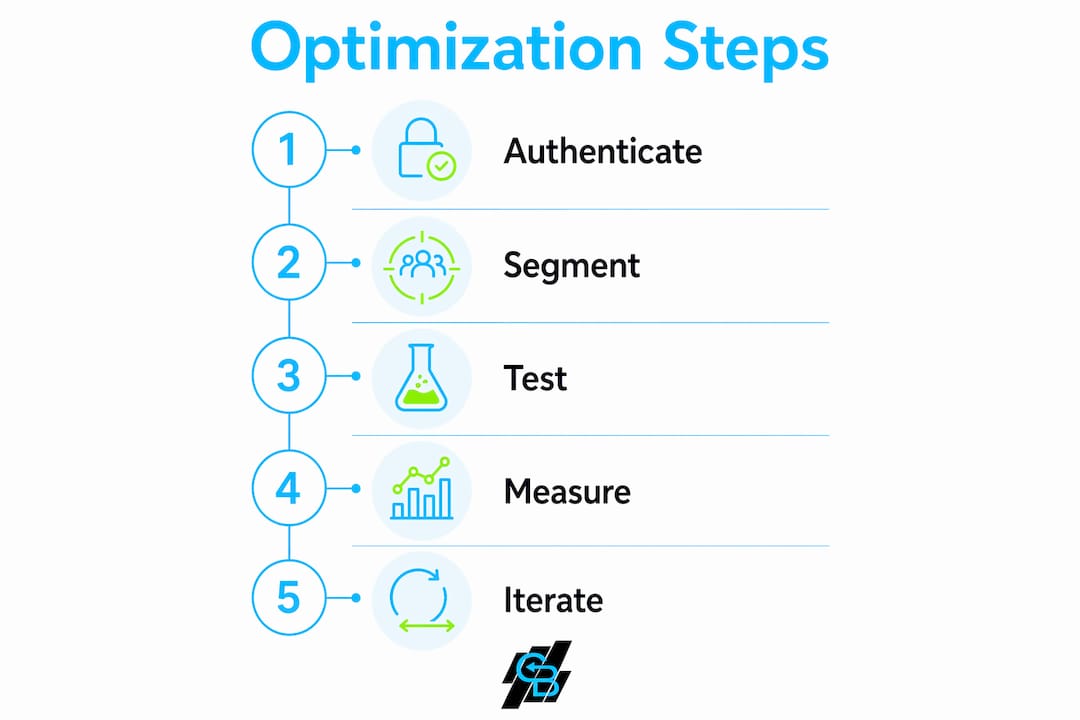
The metrics that matter most are open rate, click-to-open rate (CTOR), conversion rate, unsubscribe rate, and spam complaint rate. Open rate tells you whether your subject line and sender name are working. CTOR tells you whether your content is relevant to the people who opened. Conversion rate tells you whether your offer and CTA are compelling. Unsubscribe and complaint rates tell you whether you are sending to the wrong people or at the wrong frequency.
Open rate alone is not reliable as a primary decision metric. Apple Mail Privacy Protection inflates open rates for a significant portion of most lists, making raw open rate figures misleading. Use it as a directional signal, not a definitive measure of engagement.
| KPI | What it measures | Healthy benchmark |
|---|---|---|
| Open rate | Subject line and sender trust | 20%+ (directional only) |
| Click-to-open rate | Content relevance | 10%–15% |
| Conversion rate | Offer and CTA effectiveness | Varies by industry |
| Unsubscribe rate | List fit and send frequency | Below 0.5% per send |
| Spam complaint rate | Audience trust and list quality | Below 0.1% per send |
Build separate dashboards for campaigns (scheduled one-to-many sends) and flows (behavior-triggered sequences). Mixing their metrics produces averages that obscure what is actually working. A welcome flow with a 45% open rate should not be averaged with a promotional campaign at 18% open rate. They serve different purposes and should be optimized separately.
The email marketing KPIs that matter most vary by campaign type, which is exactly why segmented dashboards produce better decisions than aggregate reports. Review your metrics weekly, form a hypothesis about what to change, run one test, and repeat. This cycle, done consistently, compounds into significant performance gains over a quarter.
Key takeaways
Effective email marketing optimization requires authentication, segmentation, disciplined testing, and segmented measurement working together as a system rather than as isolated tactics.
| Point | Details |
|---|---|
| Authentication before optimization | Set up SPF, DKIM, and DMARC with domain alignment before running any campaign tests. |
| Segmentation with limits | Use behavioral and lifecycle segments, but cap active segments at a manageable number to avoid performance decay. |
| One variable per test | Test subject lines, send times, or CTAs individually and wait for 95% statistical confidence before acting. |
| Segmented dashboards | Separate campaign and flow metrics to avoid misleading averages that hide what is actually working. |
| Guardrail metrics | Monitor unsubscribe and spam complaint rates during every test to protect long-term sender reputation. |
Why most email optimization efforts stall before they scale
I have reviewed enough email programs to know where the real failure points are, and they are almost never where teams expect them to be.
The most common problem is that teams treat campaigns and flows as the same thing. A promotional campaign you send to 10,000 people on a Tuesday is fundamentally different from a behavior-triggered sequence that fires when someone visits your pricing page. When you mix their performance data, you get averages that tell you nothing. Separate them in your reporting from day one.
The second problem is authentication. I have seen teams spend months testing subject lines while their DMARC policy is set to p=none with a misaligned DKIM domain. Their emails are landing in spam for a quarter of their list, and they are optimizing the 75% that got through. Fix the foundation first. The lift from proper authentication often exceeds the lift from six months of A/B testing.
The third problem is impatience with testing. Teams run a subject line test for three days, see one variant ahead by two percentage points, declare a winner, and move on. That is not a test. That is a guess with extra steps. Rigorous A/B testing requires statistically valid sample sizes, and for most email lists, that means waiting longer than feels comfortable.
The teams that build durable email programs share one trait: they are boring about process. They define goals, authenticate properly, segment sensibly, test one thing at a time, and read their reports every week. There is no shortcut that replaces that discipline. The email marketing checklist approach works precisely because it forces you to check each step before moving to the next.
— Kyle
How Callbackcrm makes email optimization faster and more precise
Callbackcrm is built for marketing professionals and business owners who need email automation, segmentation, and analytics in one place without stitching together five separate tools.
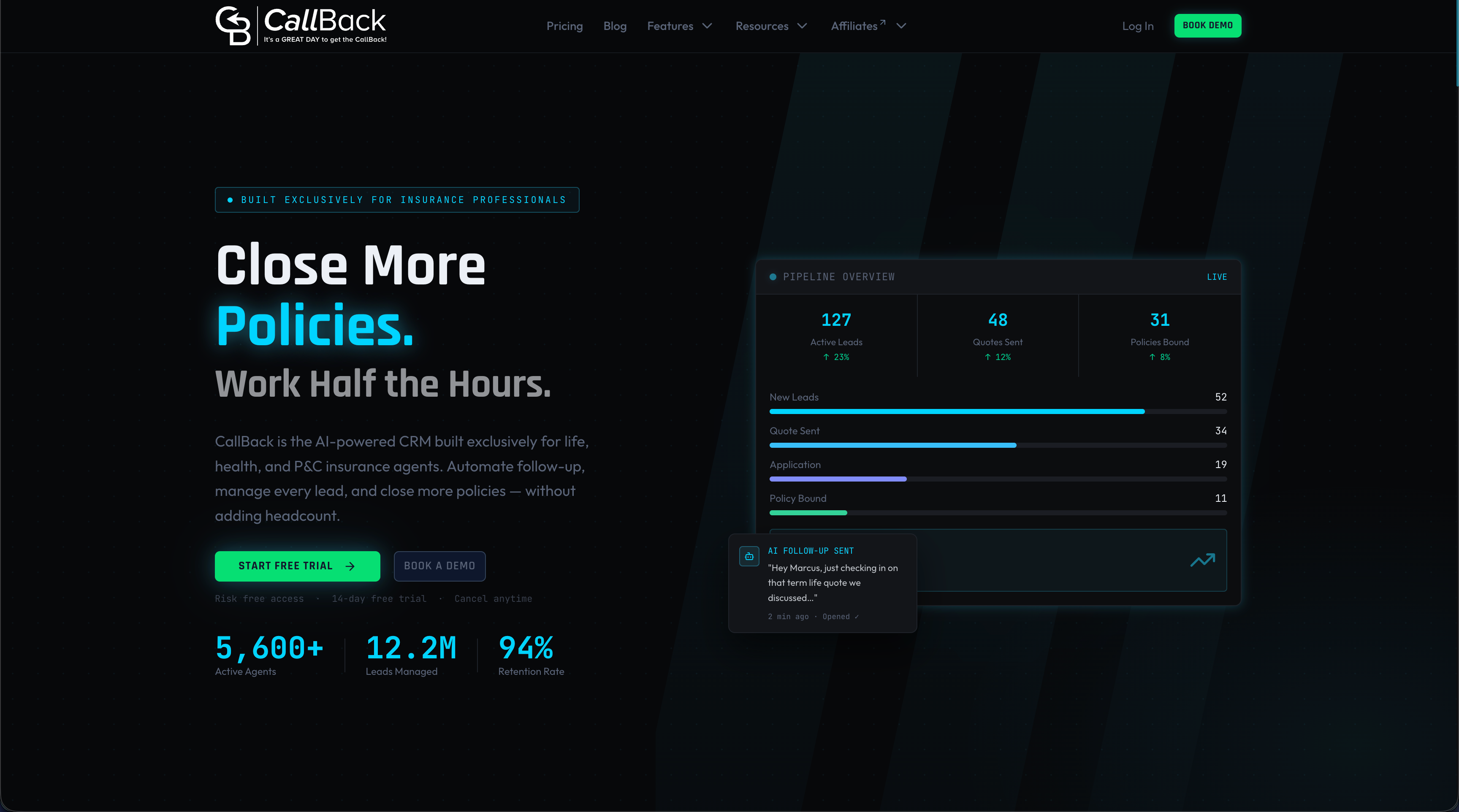
The platform’s email automation features include customizable templates, behavioral triggers, and list segmentation that maps directly to the optimization steps covered in this article. You can build welcome flows, re-engagement sequences, and promotional campaigns in the same interface, then track their performance in separate dashboards so your metrics stay clean. Callbackcrm also integrates SMS marketing and a funnel builder, so your email campaigns connect to the full conversion path rather than operating in isolation. If you are ready to put these steps into practice, explore the full feature set and see how the platform supports every stage of your optimization workflow.
FAQ
What are the first email marketing optimization steps to take?
Start with domain authentication (SPF, DKIM, DMARC) and list hygiene before optimizing content or send times. A clean, authenticated foundation determines whether your optimized emails actually reach the inbox.
How do I optimize email open rates without relying on vanity metrics?
Focus on click-to-open rate and conversion rate alongside open rate, since Apple Mail Privacy Protection inflates raw open figures. Segment your reporting by campaign type to get accurate directional signals.
How many variables should I test in a single A/B test?
Test exactly one variable per experiment, whether that is the subject line, send time, or CTA copy. Testing multiple variables simultaneously makes it impossible to identify which change drove the result.
What is the difference between a campaign and a flow in email marketing?
A campaign is a scheduled one-to-many send, such as a weekly newsletter or promotional email. A flow is a behavior-triggered sequence that fires automatically based on subscriber actions, such as a welcome series or abandoned cart recovery.
How often should I review my email marketing metrics?
Review key metrics weekly during active optimization periods and monthly for established programs. Weekly reviews let you catch deliverability issues, rising unsubscribe rates, or underperforming tests before they compound into larger problems.