

Choosing the right AI lead generation strategy feels overwhelming when every vendor promises revolutionary results. Insurance agents in 2026 face a complex landscape where 95% of AI pilot projects fail to deliver ROI, yet the potential rewards are substantial for those who get it right. This article reveals proven AI-driven lead generation tips tailored specifically for insurance professionals, combining cutting-edge automation with essential human oversight to boost client acquisition and engagement.
Table of Contents
- Key takeaways
- How to evaluate AI lead generation tools for insurance
- Top AI-powered lead generation techniques for insurance agents
- How to optimize lead costs and speed to contact in your campaigns
- Comparing leading AI lead generation tools for insurance agents
- Boost your insurance lead generation with CallBack CRM
- FAQ
Key Takeaways
| Point | Details |
|---|---|
| Predictive scoring with follow up | Integrating predictive scoring with rapid follow up improves lead quality and increases the likelihood of conversion. |
| Hybrid human AI approach | A hybrid model combines automation with human oversight to handle nuance and regulatory requirements that pure AI cannot manage. |
| Speed to lead matters | Fast engagement after a lead arrives boosts contact rates and shortens the sales cycle. |
| Cost per lead benchmarks | Tracking cost per lead helps optimize budgets and allocate resources where they drive the best ROI. |
| CRM integration importance | Choosing tools with CRM integration enables seamless data flow and scalable automation across systems. |
How to evaluate AI lead generation tools for insurance
Selecting an AI lead generation tool requires moving past marketing hype to assess real-world performance in the insurance domain. The reality is stark: 95% of AI pilot projects in insurance fail to deliver ROI due to data quality issues and domain complexity. You need a framework that prioritizes proven capabilities over promises.
Start by examining predictive accuracy and data quality. The best AI tools analyze multiple behavioral signals, intent data points, and historical patterns to identify high-value prospects. Ask vendors for case studies showing actual conversion improvements in insurance contexts. Generic lead scoring models trained on e-commerce data won’t understand the nuances of insurance buying cycles or compliance requirements.
CRM integration stands as a non-negotiable requirement. Tools that seamlessly connect with your existing systems eliminate manual data entry and enable automated workflows. When AI lead generation insurance professionals adopt integrated platforms, they cut response times dramatically and reduce lead leakage between systems.
Compliance support separates insurance-ready tools from general marketing platforms. Your AI solution must handle TCPA regulations, state-specific insurance rules, and data privacy requirements. Tools lacking built-in compliance features create legal risks that outweigh any efficiency gains.
Speed-to-lead capabilities deserve close scrutiny. The best platforms trigger instant notifications when high-intent leads arrive, enabling the rapid contact that drives conversions. Evaluate how quickly the tool can alert your team and initiate automated follow-up sequences.
Pro Tip: Request a live demo using your actual lead data to test predictive accuracy and workflow integration before committing to any platform.
Human oversight remains essential despite AI advances. A hybrid human-AI approach handles the nuance and complexity that pure automation misses. Insurance sales involve trust-building, regulatory navigation, and personalized advice that AI cannot fully replicate. Choose tools that enhance human capabilities rather than attempting to replace them entirely.
Top AI-powered lead generation techniques for insurance agents
Predictive lead scoring transforms how you prioritize prospects by analyzing dozens of behavioral and intent signals simultaneously. Modern AI models evaluate website engagement, content downloads, email interactions, and demographic data to assign each lead a quality score. This approach delivers measurable results: predictive scoring boosts ROI by 30% and increases conversions by up to 32%.

AI chatbots capture high-intent leads around the clock by instantly qualifying visitors on your website. These virtual assistants ask targeted questions, assess insurance needs, and route qualified prospects to your team while filtering out low-value inquiries. The best chatbots integrate with your CRM to ensure no lead falls through the cracks.
Automated outreach using AI-powered sales development reps (SDRs) scales your prospecting without adding headcount. These systems send personalized emails, schedule follow-ups, and nurture leads based on behavioral triggers. When integrated with your CRM, they maintain context across every interaction.
Implement these core techniques:
- Deploy predictive models analyzing 10+ data points per lead
- Use chatbots for instant qualification on high-traffic pages
- Automate email sequences triggered by specific behaviors
- Set up SMS alerts for hot leads requiring immediate contact
- Create scoring thresholds that automatically route leads to appropriate agents
Follow-up workflows triggered by lead behavior ensure timely engagement. When a prospect downloads a life insurance guide, your system should automatically send relevant follow-up content and alert the assigned agent. These lead generation workflow automations maintain momentum while your team focuses on high-value conversations.
Pro Tip: Start with one AI technique, measure results for 60 days, then expand to additional capabilities based on proven ROI.
Training your team to interpret AI insights maximizes the value of these tools. Agents need to understand what scoring thresholds mean, how to prioritize chatbot-qualified leads, and when to override AI recommendations based on relationship factors. The most successful insurance professionals using 7 tips for lead generation combine AI efficiency with human judgment for complex sales scenarios.
How to optimize lead costs and speed to contact in your campaigns
Understanding cost benchmarks helps you allocate budgets effectively across different lead types. Shared leads typically cost $15 to $30 but require immediate contact since competitors receive the same information. Exclusive leads range from $40 to $100 depending on coverage type and demographic filters. Live transfers command $50 to $150 but deliver the highest conversion rates due to verified intent.
| Lead Type | Average Cost | Conversion Rate | Best Use Case |
|---|---|---|---|
| Shared | $15-$30 | 2-5% | High-volume campaigns with fast follow-up |
| Exclusive | $40-$100 | 8-15% | Targeted campaigns with personalized outreach |
| Live Transfer | $50-$150 | 20-35% | Premium products requiring immediate engagement |
Speed to contact dramatically impacts conversion rates regardless of lead source. Research shows that contacting leads within 60 seconds results in 391% higher conversion rates compared to waiting even five minutes. This finding revolutionizes how successful agents structure their operations.
AI tools automate immediate notifications and follow-ups to capitalize on this speed advantage. Configure your system to send instant SMS alerts when high-scoring leads arrive. Set up automated text messages or emails that engage prospects while your team prepares for personal contact. This dual approach maintains momentum without sacrificing the human touch.
Monitor these critical metrics:
- Cost per lead (CPL) by source and campaign
- Cost per sale to evaluate true acquisition costs
- Average response time from lead receipt to first contact
- Conversion rate by response time bracket
- Lead lifetime value to justify premium lead investments
Pro Tip: Test different response time targets by lead score. Contact your highest-scoring leads within 60 seconds, but tier two leads can wait 5-10 minutes without significant conversion loss.
Lead lifetime value metrics justify higher upfront costs for quality prospects. Calculate the average policy value, renewal rates, and cross-sell opportunities to determine how much you can profitably spend acquiring each customer. This analysis often reveals that paying $100 for an exclusive lead makes economic sense when the customer lifetime value exceeds $2,000.
Leverage transform lead funnel strategies to optimize every stage from initial contact through policy sale. AI tools identify bottlenecks, predict which leads need additional nurturing, and automate routine tasks so your team focuses on relationship-building conversations that close deals.
Comparing leading AI lead generation tools for insurance agents
Evaluating AI platforms requires comparing specific capabilities that matter for insurance lead generation. Predictive scoring accuracy varies widely, with top tools achieving 75-85% precision in identifying leads that convert within 30 days. Lower-tier platforms struggle to reach 60% accuracy, wasting your team’s time on poor-quality prospects.
| Feature | Entry-Level Tools | Mid-Tier Platforms | Enterprise Solutions |
|---|---|---|---|
| Predictive Scoring | Basic (3-5 factors) | Advanced (10+ factors) | AI/ML models (20+ factors) |
| Chatbot Capabilities | Template-based | Custom flows | Natural language processing |
| CRM Integration | Limited APIs | Native integrations | Bi-directional sync |
| Compliance Features | Manual tracking | Built-in TCPA tools | Full regulatory automation |
| Pricing | $50-$150/month | $300-$800/month | $1,500+/month |
Chatbot capabilities range from simple template-based interactions to sophisticated natural language processing that handles complex insurance questions. The best chatbots qualify leads by asking about coverage needs, budget, and timeline while maintaining conversational flow. They integrate with your CRM to pass detailed qualification data to your sales team.
Workflow automation separates basic tools from comprehensive platforms. Look for systems that trigger multi-step sequences based on lead behavior, automatically assign leads to appropriate agents, and escalate hot prospects for immediate attention. These features eliminate manual coordination and ensure consistent follow-up.
Integration with popular CRMs like HubSpot and GoHighLevel enhances automation workflows for insurance agents. Native integrations enable real-time data sync, automated lead routing, and unified reporting across your marketing and sales stack. API-only connections require technical resources and often create data lag.
Compliance features tailored to insurance regulations protect your business from costly violations. Seek platforms offering:
- Automated TCPA consent tracking and documentation
- State-specific calling time restrictions
- Do Not Call list scrubbing
- Audit trails for regulatory inquiries
- Data encryption and secure storage
Pro Tip: Prioritize platforms offering free trials or pilot programs so you can test predictive accuracy with your actual lead data before committing to annual contracts.
Pricing models vary from per-user subscriptions to usage-based fees tied to lead volume or features accessed. Calculate total cost of ownership including setup fees, training, and integration expenses. Compare this against your cost per lead benchmarks to ensure the platform delivers positive ROI within six months.
Choose tools supporting hybrid human-AI workflows for best results. The most effective platforms provide AI insights and automation while preserving human control over critical decisions. This balance addresses the reality that insurance sales require relationship-building and nuanced advice that pure automation cannot deliver. Explore AI tool features and manage leads & customers capabilities to understand how comprehensive platforms support your entire sales process.
Boost your insurance lead generation with CallBack CRM
CallBack CRM delivers the AI-powered lead management capabilities insurance agents need to compete in 2026. The platform combines predictive scoring, automated workflows, and seamless CRM integration to accelerate your client acquisition without sacrificing the personal touch that closes deals.
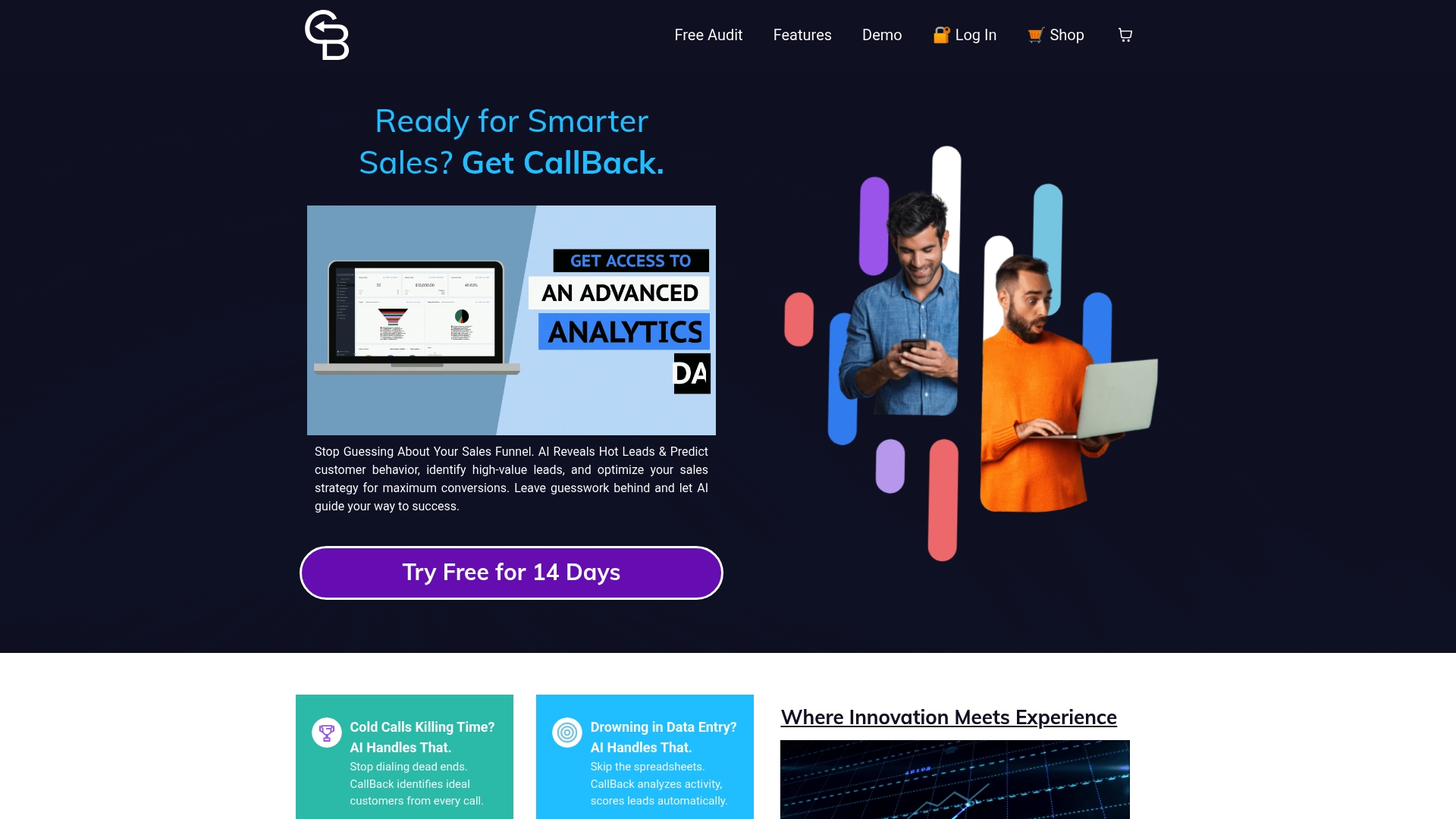
Automate qualification, scoring, and follow-up workflows through an intuitive interface designed specifically for insurance professionals. The platform’s AI tool features include intelligent lead routing, behavioral triggers, and multi-channel outreach that keeps prospects engaged. Integrate your existing systems or leverage the built-in CRM to manage leads & customers from first contact through policy renewal.
Powerful SMS marketing features enable the instant contact that drives conversions. Send automated text messages when high-intent leads arrive, schedule follow-up reminders, and maintain consistent communication across your sales cycle. Start a free trial to see how AI can accelerate your insurance lead generation while your team focuses on building relationships that create lasting client value.
FAQ
How can AI improve lead quality for insurance agents?
AI analyzes behavioral patterns, intent signals, and demographic data to identify prospects most likely to purchase insurance policies. This data-driven approach filters out low-quality leads, allowing your team to focus on high-value opportunities. Human oversight ensures AI recommendations align with compliance requirements and relationship factors that algorithms miss.
What are the biggest challenges of using AI for insurance lead generation?
Data quality issues and regulatory complexity limit AI effectiveness in insurance contexts. 95% of AI pilots fail to deliver ROI largely due to poor data and domain-specific challenges. A human-AI hybrid approach mitigates these risks by combining automation efficiency with expert judgment on nuanced insurance sales scenarios.
How quickly should insurance agents follow up on AI-generated leads?
Contact leads within one minute to maximize conversion potential. Studies show contacting within 60 seconds yields 391% higher conversions compared to delayed responses. Use AI automation to trigger instant notifications and initiate immediate outreach while your team prepares for personalized follow-up conversations.
What is the average cost per lead for insurance agents in 2026?
Shared leads cost $15 to $30, exclusive leads range from $40 to $100, and live transfers command $50 to $150 depending on coverage type and demographic targeting. Calculate cost per sale rather than just cost per lead to understand true acquisition economics. Premium leads often justify higher upfront costs when customer lifetime value exceeds $2,000.
Can AI completely replace human insurance agents in lead generation?
No, AI enhances rather than replaces human agents in insurance sales. The technology excels at data analysis, lead scoring, and workflow automation but cannot replicate the trust-building, personalized advice, and regulatory navigation that successful insurance sales require. The most effective approach combines AI efficiency with human expertise for complex customer interactions.