

TL;DR:
- Personalization in insurance outreach improves customer retention by up to 20% and increases revenue by 10 to 15%.
- AI helps agencies deliver targeted, relevant messages efficiently by analyzing behavior, predicting needs, and automating content.
- Balancing ethical data use and regular audits ensures personalization builds trust without risking disloyalty or bias.
Most insurance agents assume sending the same renewal email to every policyholder is good enough. It isn’t. Personalization in insurance outreach improves customer retention rates by up to 20% and boosts revenue by 10 to 15% through tailored experiences that meet individual needs. That gap between what agents currently do and what clients actually expect is where agencies quietly lose business every single quarter. This guide covers why personalization matters, what’s holding most agents back, and how AI gives you a practical path to act right now.
Table of Contents
- What personalized outreach really means in insurance
- The proven benefits of personalized customer outreach
- How AI and automation make personalization possible at scale
- Balancing personalization with fairness and trust
- Practical steps to personalize your outreach today
- Why most agents underestimate the power and pitfalls of personalization
- Take the next step: Personalize your outreach with Callback CRM
- Frequently asked questions
Key Takeaways
| Point | Details |
|---|---|
| Personalization boosts results | Insurance agencies using personalized outreach see up to 20% higher retention and 10-15% revenue increases. |
| AI makes scale possible | AI automates tailored messages, boosting reply rates up to 3x compared to generic templates. |
| Start with unified data | Combining all customer data sources is the foundation for targeted engagement and segmentation. |
| Balance trust and segmentation | Maintain customer trust by using data responsibly and monitoring fairness as you personalize. |
| Begin with simple steps | Auditing current outreach and testing AI automation are effective first moves for any agency. |
What personalized outreach really means in insurance
Personalization is not just addressing someone by their first name. That’s table stakes. True personalization means your outreach reflects what a specific client actually needs, based on their policy type, life stage, risk profile, and past interactions with your agency.
Think about the difference between a generic renewal reminder and a message that says: “Your auto policy renews in 30 days. Based on the new vehicle you added last year, you may qualify for a multi-car discount.” The second message shows the client you know them. It creates a reason to engage rather than ignore.
Insurance-specific examples of real personalization include sending risk-based product suggestions to homeowners in flood-prone zip codes, offering life insurance reviews to clients who recently had a baby, or following up with health insurance alternatives when a client’s employer plan changes. These are not complicated moves, but they require unified data and smart segmentation.
The gap between what clients want and what agents deliver is significant. 71% of consumers want personalized offers, but fewer than 50% of brands deliver because of data silos that prevent a unified customer view. In insurance, this often means your CRM, your email platform, and your quoting tool are not talking to each other. You end up with scattered data and outreach that feels random to the client receiving it.
Effective segmentation starts with unifying your data. When you can see a client’s full history in one place, you can group them by policy type, renewal timeline, household size, or risk behavior. From there, every message you send can be relevant, timely, and useful. Learning more about AI strategies for insurance engagement can show you how modern agencies are solving this exact challenge.
“Consumers expect brands to know them, but most agencies are still sending the same email to every policyholder in their book of business. The ones that change this are winning.”
The proven benefits of personalized customer outreach
With a clear understanding of personalization, let’s see what the numbers say about its impact for insurance agents.
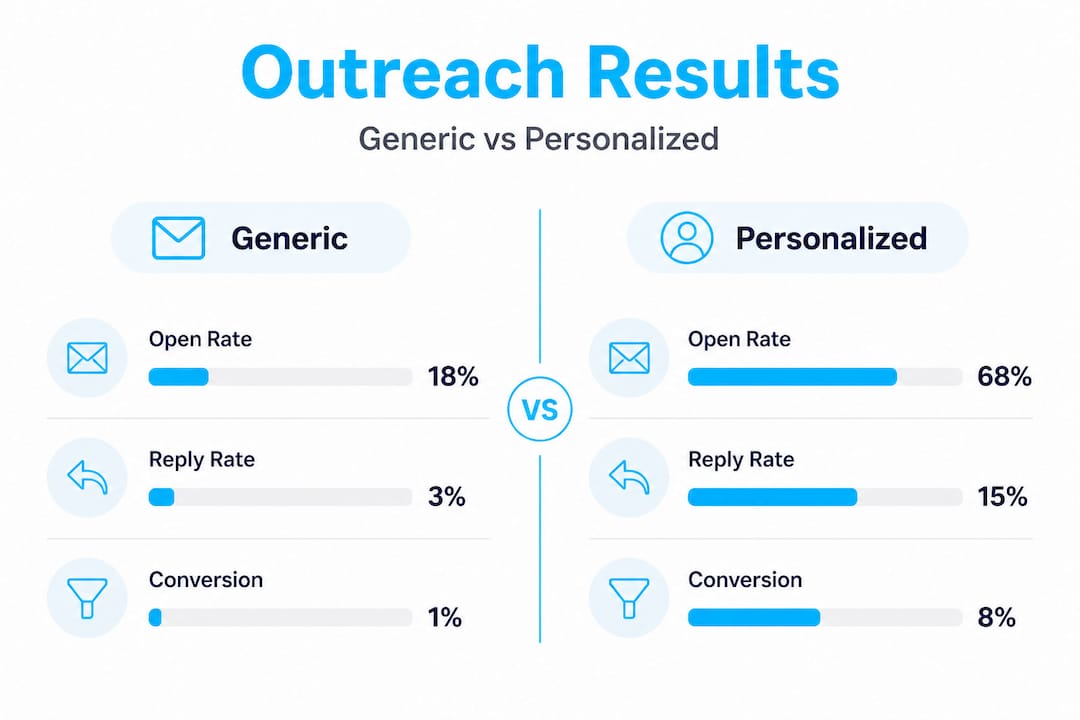
Retention rates rise by up to 20% among agencies that consistently use personalized outreach. Revenue climbs 10 to 15% through better cross-sells and upsells, because tailored recommendations feel like helpful advice rather than a sales push. These are not incremental improvements. For a mid-sized agency managing 500 active clients, a 15% revenue lift is a meaningful number.
The table below shows how generic and personalized outreach compare across the metrics that matter most to your growth:
| Metric | Generic outreach | Personalized outreach |
|---|---|---|
| Email open rate | 15 to 20% | 30 to 45% |
| Reply or response rate | 1 to 3% | 6 to 10% |
| Client retention (annual) | 70 to 75% | 85 to 90% |
| Cross-sell conversion | Low, under 5% | 2x to 3x higher |
| Unsubscribe rate | Higher, around 3 to 5% | Lower, under 1% |
The difference in open rates alone tells you that clients are paying attention when the message is relevant. A client who opens your email is a client who might stay on your book longer and buy more from you over time.
The revenue impact is clearest when you look at cross-selling. A client who receives a generic “did you know we offer life insurance” email is likely to ignore it. A client who receives a message tied to a recent life event, such as a home purchase or a new family member, sees immediate relevance. That relevance converts.
For a deeper look at how data-driven insurance marketing strategies play out in practice, the difference is not just in the numbers but in how clients feel about your agency. When clients feel understood, they refer others. That word-of-mouth effect compounds every retention gain you make. You can also explore real AI-powered engagement results to see how agencies are translating these numbers into tangible growth.
How AI and automation make personalization possible at scale
Knowing the benefits, you might ask: how can busy agents actually deliver personalized experiences efficiently? That’s where AI comes in.
Even a small agency with one producer and a part-time assistant can now run personalized outreach at the scale of a regional carrier. AI handles the heavy lifting that used to require a full marketing team. Here’s exactly how it works:
-
Behavioral tracking. AI tools monitor what clients do: which emails they open, which pages they visit on your website, and which SMS messages they respond to. This creates a live picture of where each client is in their journey with your agency.
-
Predictive analytics. Using historical data, AI identifies which clients are most likely to renew, lapse, or upgrade. This lets you intervene before a client quietly walks away. You focus your energy where it matters most.
-
Smart recommendations. AI personalization mechanics include machine learning models that match product recommendations to individual client profiles. If a client’s auto policy is up for renewal and they have a teen driver in the household, the system flags them for a targeted message about driver safety discounts or umbrella coverage.
-
Dynamic content insertion. AI-powered email and SMS platforms swap out content blocks based on the recipient’s profile. The same campaign template delivers a completely different message to a 35-year-old renter versus a 55-year-old homeowner.
Practical automation wins for insurance agencies include renewal flow sequences that trigger 90, 60, and 30 days before policy expiration, cross-sell email campaigns tied to life events pulled from CRM data, and AI chatbots that qualify inbound leads around the clock without pulling your team away from active clients. AI reply rates jump 2 to 3x compared to standard templates when personalization replaces generic outreach, and the key to sustaining that lift is continuous monitoring and refinement.
Pro Tip: Don’t try to personalize everything at once. Start with two or three audience segments and build a specific message for each. Measure which segment responds best, learn from that data, and expand. Small wins compound fast.

Understanding mastering AI insurance marketing can help you design your automation stack with purpose, not just volume. Specific AI tools for agents also make it easier to plug behavioral data directly into your outreach workflows without manual data exports.
Balancing personalization with fairness and trust
AI can scale personalization, but successful agencies also understand the importance of data quality and ethical outreach. Personalization should build trust, not exploit it or inadvertently penalize certain clients.
The risks of getting this wrong are real. Over-segmentation can lead to situations where high-risk or elderly clients receive fewer product offers, which can look like discrimination. Poor data quality leads to embarrassing errors, like sending a condolence card promotion to a client whose spouse passed away six months ago and is already in a different policy tier. Privacy misuse breaks trust instantly, and in insurance, trust is the product.
Common risks to watch out for include:
- Over-segmentation. Narrowing your audience too aggressively can exclude valuable clients who don’t fit a neat data profile.
- Privacy concerns. Clients may not realize how much behavioral data you’re using. Transparency about your data practices builds confidence.
- Data bias. If your historical data reflects past biases, like avoiding outreach to certain zip codes, your AI will repeat those mistakes at scale.
- Stale data. Using outdated contact preferences or policy details leads to irrelevant messages that damage your credibility.
Strong data governance and fair outreach practices require balancing the precision of personalization with the fundamental principle of mutuality. Everyone in your book of business deserves relevant, respectful communication.
Pro Tip: Audit your outreach outcomes quarterly. Look for any client segments that are being systematically underserved or over-messaged. Both extremes cost you retention. The goal is relevance, not volume.
Building customer engagement strategies around clear ethical guidelines actually becomes a competitive advantage. Clients who feel respected and fairly treated are far more likely to refer friends and stay with your agency long term.
Practical steps to personalize your outreach today
With risks addressed, let’s walk through exactly how you can bring AI-powered personalization to your agency this year.
-
Audit your current outreach. Pull the last six months of email and SMS campaigns. Look at open rates, reply rates, and which messages drove actual conversations or conversions. Identify where generic messaging is costing you engagement.
-
Collect and unify your customer data. Connect your CRM, email platform, and policy management system so all client information lives in one place. A unified view of each client is the foundation of everything else.
-
Segment your audience. Start with three to five clear segments based on policy type, renewal timeline, or life stage. Each segment should have a distinct profile and a set of messages that would feel genuinely relevant to them.
-
Deploy AI-powered campaigns. Use your platform’s automation tools to build triggered sequences. Set up renewal reminders, cross-sell flows, and reengagement campaigns for lapsed clients. Let AI-driven engagement workflows handle the timing and delivery so your team focuses on conversations, not scheduling.
-
Monitor and fine-tune. Review performance weekly at first, then monthly once your campaigns are stable. Track which segments respond, which messages convert, and where clients drop off. Automating engagement for efficiency only works if you keep improving the inputs based on real outcomes.
The table below shows the difference between manual and AI-powered outreach so you can see exactly where the leverage is:
| Factor | Manual outreach | AI-powered outreach |
|---|---|---|
| Time to launch a campaign | Several days to weeks | Hours to one day |
| Segmentation accuracy | Limited, often guesswork | Data-driven, precise |
| Personalization depth | Name and policy type only | Full behavioral and profile data |
| Scalability | Drops as client list grows | Scales without extra staff |
| Performance tracking | Manual spreadsheets | Real-time dashboards |
| Reply rate lift | Baseline | 2 to 3x higher vs. templates |
Low-effort automation wins that you can launch in your first week include setting up a 30-day renewal reminder sequence and creating a birthday or policy anniversary message. These feel personal without requiring hours of manual work, and they keep your agency top-of-mind at exactly the right moments.
Why most agents underestimate the power and pitfalls of personalization
There’s a persistent belief in the insurance industry that personalization is for big carriers with enterprise budgets. After years of working with agencies of all sizes, that belief holds more agencies back than any technology gap ever could.
Conventional wisdom says you need more data to personalize better. The reality is that most agencies are sitting on plenty of data they never use. The agents who win aren’t collecting more, they’re using what they have more deliberately. A focused set of three well-defined segments with clear messaging outperforms a sprawling database with no clear action plan.
Many agents also fear that automation makes outreach feel cold. The opposite is true. When AI handles routine touches like renewal reminders and policy updates, your team has more time for the conversations that actually build relationships. No AI replaces the agent who calls a client after a claim. But AI absolutely can handle the 90-day renewal reminder so that agent’s time is free for that call. Exploring how AI marketing tools drive lead results shows you exactly how that tradeoff plays out in agencies that have made the shift.
The uncomfortable truth is that delay is the biggest risk. Every month an agency sends generic outreach is a month a competitor using personalized AI messaging is quietly improving their retention numbers and winning referrals. The agencies that start now, even imperfectly, build a data and automation advantage that becomes very hard to close over time. Embracing data governance alongside personalization is not a compliance checkbox. It’s a trust signal that differentiates you in a crowded market.
Take the next step: Personalize your outreach with Callback CRM
You’ve seen the data, the mechanics, and the risks. Now the question is: what does your next move look like? Personalizing your outreach doesn’t require a massive budget or a full-time marketing team.
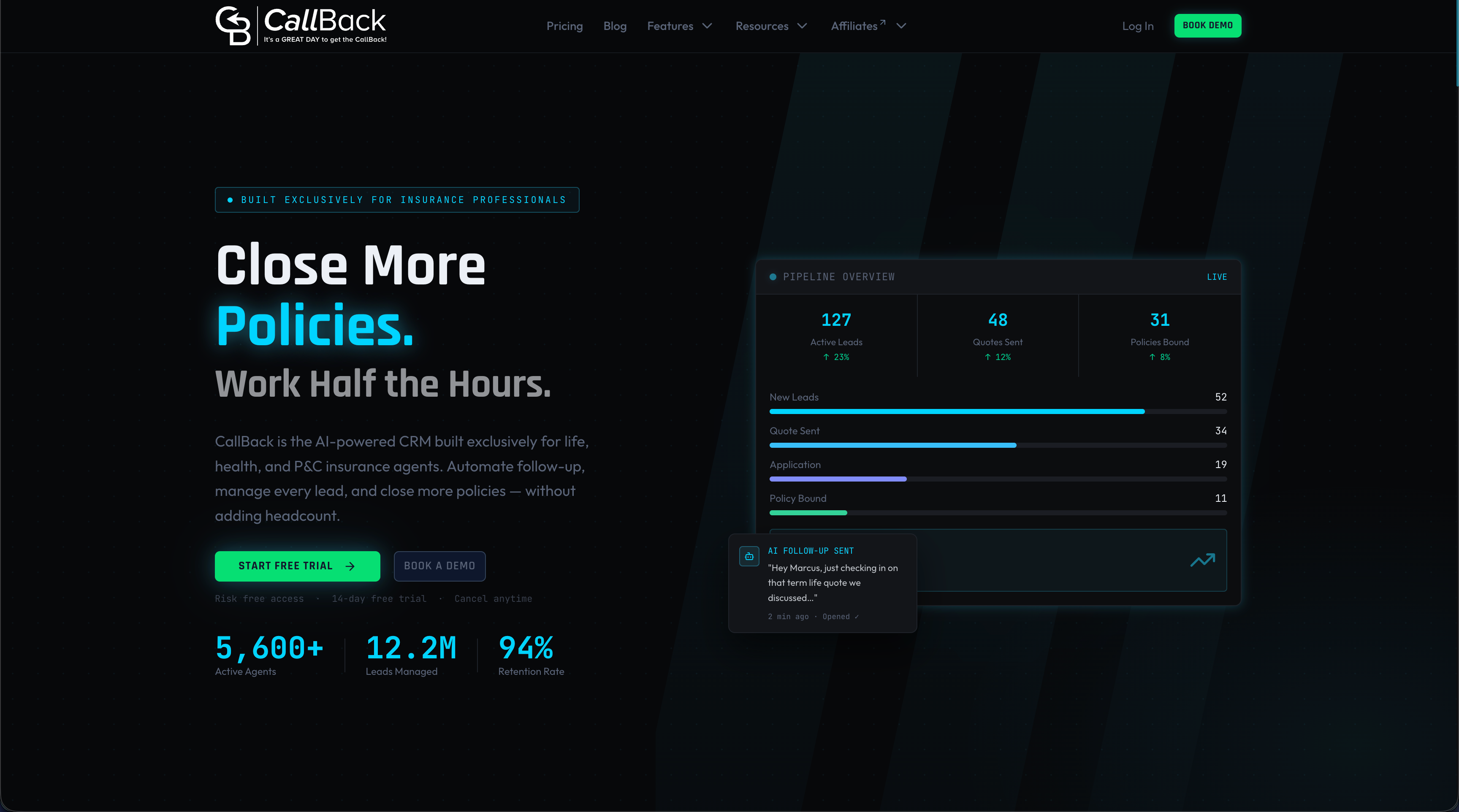
CallBack CRM gives insurance agents and agencies an all-in-one platform built specifically for this work. From AI-powered email and SMS personalization tools to automated renewal workflows and behavioral tracking, every feature is designed to help you move from generic blasts to targeted, relevant outreach that clients actually respond to. You can start with ready-made segment templates, connect your existing data, and have your first personalized campaign running within a day. Explore all the AI-powered outreach features available, or take a free marketing audit to see exactly where your current outreach has room to grow.
Frequently asked questions
What data should I use to personalize my customer outreach as an insurance agent?
Use unified customer profiles that combine contact history, behavioral signals, and policy preferences for best results. Fewer than 50% of brands deliver personalization because their data lives in silos, so connecting your systems is the first priority.
How quickly can AI personalization impact insurance sales or retention?
Agencies typically see improved retention within the first few months and revenue boosts of 10 to 15% within a year of consistently using personalized outreach.
Can personalization exclude or disadvantage certain insurance clients?
Without clear data governance, some high-risk or underserved clients can be overlooked. Balancing precision with mutuality and auditing outcomes regularly helps ensure fairness across your entire book of business.
Is manual outreach still effective compared to AI-personalized campaigns?
Manual outreach cannot match the scale or efficiency of AI-driven personalization. Reply rates jump 2 to 3x when AI personalization replaces standard templates, making the difference measurable and meaningful.