

TL;DR:
- Unanswered negative reviews for over 72 hours can silently cost insurance brokers potential clients and damage their reputation. Effective reputation management relies on automated monitoring, prompt responses, and AI-driven outreach to build trust and strengthen carrier relationships. Combining organic SEO with paid campaigns and using integrated platforms enhances long-term credibility and online visibility.
A single one-star review left unanswered for 72 hours can quietly cost you three prospective clients who read it before calling your office. Insurance brokers operate in a trust-first business where a client’s first move is almost always a Google search, and what they find in those results shapes every conversation that follows. Most brokers know reputation matters, but far fewer have a systematic, automated process for managing it. This article breaks down exactly how to fix that, using AI-powered strategies that save time, protect relationships, and drive measurable growth.
Table of Contents
- Understanding the importance of reputation management for brokers
- Core mechanics: Review monitoring and response strategies
- Leveraging AI and automation tools for reputation growth
- Organic SEO vs. paid campaigns: Sustainable reputation strategies
- Practical checklist for brokers: Action steps for reputation management
- The overlooked truth about reputation automation for brokers
- Take your reputation management further with AI-powered solutions
- Frequently asked questions
Key Takeaways
| Point | Details |
|---|---|
| Prompt response matters | Responding to reviews within 24-48 hours significantly improves client trust and retention. |
| AI tools scale reputation | Using AI platforms accelerates engagement and simplifies review management for brokers. |
| Balanced strategy wins | Combining organic SEO, quality content, and paid campaigns leads to sustainable reputation growth. |
| Automation needs authenticity | Even the best AI systems only strengthen reputation if backed by genuine client service. |
| Practical checklist is key | Following a step-by-step action plan ensures brokers optimize each stage of reputation management. |
Understanding the importance of reputation management for brokers
Your reputation is not just a vanity metric. It directly drives renewals, referrals, and the quality of carrier partnerships you can access. Clients who renew year after year almost always cite trust as the primary reason, and trust is built long before a policy is ever signed. It starts with what someone finds when they search your name online.
The three platforms that matter most for insurance brokers are Google Business Profile, Yelp, and Facebook. Google carries the heaviest weight for local search visibility. Yelp still drives significant traffic, especially for personal lines clients. Facebook reviews feed directly into your social proof and influence referral decisions among existing connections. If any of these platforms show a pattern of negative reviews or, worse, radio silence with no reviews at all, potential clients read that as a warning sign.
The stakes go beyond client acquisition. Broker relationships with carriers are also affected by how your agency is perceived in the market. According to the 2025 independent agent study, brokers widely report feeling undervalued by carriers, and weak online visibility only reinforces that dynamic. A strong, well-managed reputation signals professionalism and market traction to carriers, which translates to better product access and more favorable terms.
“Brokers who actively manage their reputation online not only attract more clients but also strengthen their negotiating position with carriers who want to partner with agents who have demonstrated market credibility.” — 2025 US Independent Agent Satisfaction Study
The referral economy in insurance is massive. A satisfied client who sees a prompt, professional response to a critical review will often refer friends and family specifically because they witnessed how you handle criticism. That behavior is pure gold for brokers.
Now that you see what’s at stake, let’s break down the mechanics of reputation management and how brokers can take control.
Core mechanics: Review monitoring and response strategies
Knowing that reputation matters is one thing. Having a process that runs consistently without requiring your personal attention every day is another. Most brokers start strong and then get buried in actual client work. That’s where automation becomes a competitive advantage.
The core mechanics of reputation management for insurance brokers include review monitoring across Google, Yelp, and Facebook; timely responses within a 24 to 48 hour window; automated review requests sent after positive interactions like claims closure or policy renewals; SEO optimization for branded and local searches; and content creation that establishes you as a credible authority.
Here’s a practical sequence to get this working in your agency:
- Set up monitoring alerts. Use tools like Google Alerts or your CRM’s built-in notification system to flag new reviews the moment they appear. Speed matters. A review left without a response for 72 hours signals neglect.
- Create standardized response templates. You don’t need to write a novel. A warm, personal two to three sentence response that acknowledges the client by name (where possible) and thanks them for the feedback is enough. For negative reviews, express empathy and offer to move the conversation offline.
- Automate review requests after key events. Renewals, claim settlements, and onboarding completions are ideal trigger points. A well-timed SMS or email asking for a Google review, sent within 24 hours of a positive interaction, consistently outperforms cold outreach.
- Respond to every review, positive and negative. Responding to positive reviews is a missed opportunity for many brokers. A brief, genuine reply reinforces the relationship and signals to prospects that you pay attention.
- Track your ratings monthly. Keep a simple log of your average star rating on each platform. If you see a drop, investigate immediately before it becomes a pattern.
| Task | Manual approach | Automated approach |
|---|---|---|
| Review discovery | Daily manual searches | Real-time alerts via CRM or platform tool |
| Response speed | Varies, often 48 to 72 hours | Triggered within hours using templates |
| Review requests | Remembered ad hoc | Scheduled post-interaction SMS or email |
| Reporting | Spreadsheets updated manually | Dashboard with trend data |
| Coverage | Inconsistent | 100% of reviews captured |
Pro Tip: Use your sales automation checklist to identify which client touchpoints already exist in your workflow. Layer review requests onto those existing moments rather than creating new steps from scratch. It’s far easier to sustain.
For brokers who haven’t yet explored automation alternatives beyond their current stack, this is a good moment to evaluate whether your tools can actually handle automated review workflows or whether you need a platform upgrade.
Having covered the basics, we’ll explore how AI tools push these tactics further for brokers.
Leveraging AI and automation tools for reputation growth
AI has moved well past novelty status in insurance marketing. Brokers who use it strategically are seeing real, measurable results in client retention and online visibility. The key is knowing which tools do what.

AI marketing tools like Darwin AI and HubSpot AI CRM are purpose-built to handle the kind of high-volume, relationship-sensitive communication that insurance brokers need. Darwin AI excels at automated nurture sequences and review amplification, meaning it can identify satisfied clients and intelligently prompt them toward leaving public feedback. HubSpot AI CRM tracks interaction patterns and helps brokers anticipate when a client relationship is weakening before a lapse or cancellation occurs.
The impact on AI in insurance marketing is substantial. AI tools have been shown to boost response efficiency by up to 40%, which means your team handles the same volume of client communication in significantly less time. For small to mid-size agencies without dedicated marketing staff, that kind of efficiency gain is transformative.
Here’s how specific AI use cases map to reputation outcomes:
- Automated nurture campaigns: Keep policyholders engaged between renewals with educational content and check-ins, reducing churn and generating positive sentiment.
- Predictive analytics for retention: Flag clients who show behavioral signals of disengagement, like unopened emails or missed payment reminders, so you can intervene before they leave and leave a bad review.
- Review amplification: Automatically route post-interaction surveys and convert satisfied responses into Google or Facebook review requests without manual follow-up.
- Sentiment analysis: Scan incoming messages and reviews for emotional tone so your team prioritizes urgent, negative feedback before it escalates publicly.
| Tool | Best use case | Reputation benefit |
|---|---|---|
| Darwin AI | Nurture sequences and review requests | Amplifies positive reviews, reduces churn |
| HubSpot AI CRM | Client interaction tracking | Identifies at-risk clients early |
| CallBack CRM | All-in-one broker automation | Unified review management and outreach |
| Chatbots (AI-driven) | Instant client response | Reduces review triggers from slow responses |
The biggest mistake brokers make with AI tools is deploying them without compliance tuning. Insurance is a regulated industry. Automated messages that make unapproved claims, use restricted language, or lack required disclosures can create liability. Always run your AI-generated content through a compliance review before it goes live. Explore AI lead generation strategies that are already built with insurance-specific compliance considerations in mind.
While automation helps scale reputation management, brokers face a critical decision: content investment versus rapid campaign tactics.
Organic SEO vs. paid campaigns: Sustainable reputation strategies
Brokers regularly debate whether to invest in organic search authority or lean on paid advertising for faster visibility. Both approaches work. The question is which one builds lasting reputation equity and which one stops the moment you stop paying.
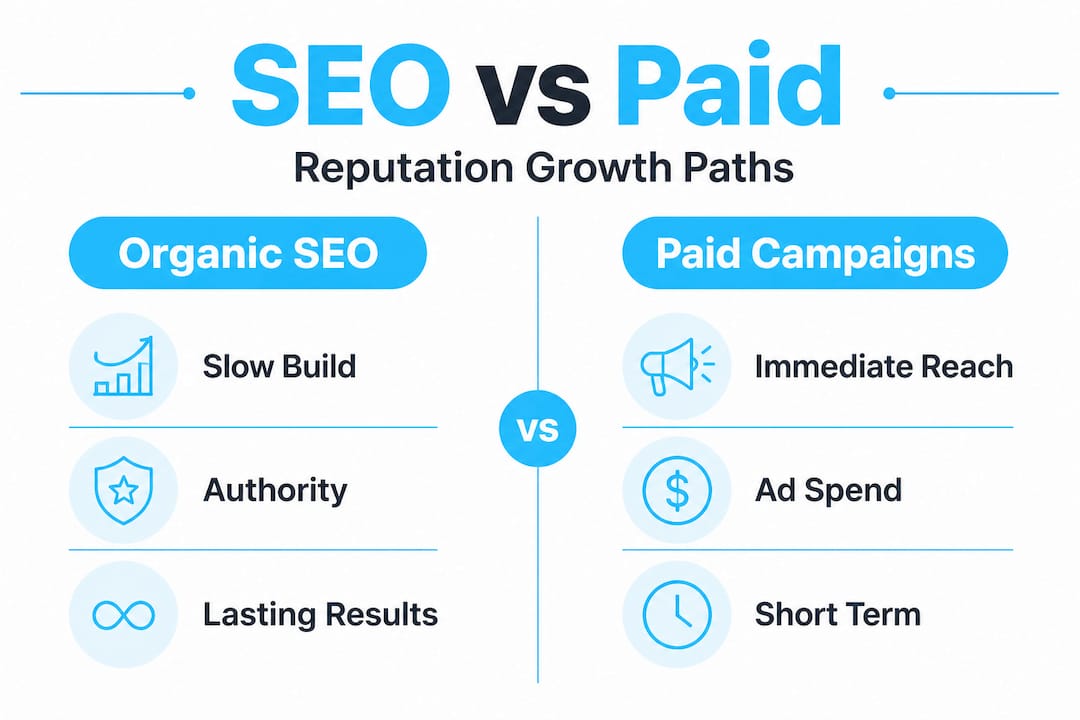
Organic SEO builds authority slowly but compounds over time. When your agency ranks on the first page of Google for terms like “home insurance broker in [city]” or “life insurance agent near me,” that visibility is earned and sticky. Blog posts, FAQ pages, local directory citations, and optimized Google Business Profiles all contribute to this kind of durable presence. The tradeoff is time: expect six to twelve months before you see significant ranking movement.
According to broker satisfaction data, agents who invest in content and organic search report stronger brand recognition and client loyalty over time compared to those who rely primarily on paid traffic. The trust signal embedded in organic rankings is real. Clients perceive organically ranked businesses as more credible than paid ads.
Paid campaigns deliver speed. A Google Ads campaign targeting local insurance keywords can put your agency in front of prospective clients within 24 hours of launch. Facebook Ads allow hyper-precise demographic targeting that organic reach rarely matches. The catch is sustainability. Once the budget stops, so does the visibility.
“Brokers who combine a strong organic content strategy with targeted paid campaigns during peak enrollment periods consistently outperform peers who rely exclusively on either approach.” — 2025 US Independent Agent Satisfaction Study
Some practical trade-offs worth knowing:
- Organic SEO supports reputation by showcasing expertise through educational content and building email marketing strategies that reinforce that authority long-term.
- Paid campaigns are best used for time-sensitive pushes, like open enrollment, new product launches, or geographic expansion, not as a permanent reputation strategy.
- AI can scale both: optimizing landing pages, personalizing ad copy, and analyzing which content topics generate the most qualified engagement.
- Compliance remains non-negotiable in either channel. Paid ads in particular require careful regulatory review before going live.
For brokers building their lead pipeline, lead generation strategies that blend content authority with smart paid targeting tend to produce the most stable, high-quality results over a 12-month period.
With clarity on strategy choices, let’s turn to a practical checklist for brokers aiming for consistent, positive reputation results.
Practical checklist for brokers: Action steps for reputation management
This is the section you can screenshot and pin to your wall. The seven core strategies for insurance reputation management map neatly into a repeatable workflow. Here’s how to execute them:
- Monitor daily. Set up alerts on Google, Yelp, and Facebook. Check your CRM dashboard every morning for flagged reviews or new mentions. Missing a review for even 48 hours reduces your response impact.
- Respond within 24 hours. Prioritize negative reviews. Acknowledge the concern, thank the reviewer, and offer to resolve the issue privately. Keep positive responses warm but brief.
- Automate review requests. Trigger an SMS or email review request after every claims closure, renewal confirmation, or new policy binding. Keep the message short, direct, and mobile-friendly.
- Optimize your Google Business Profile. Update your hours, service categories, photos, and description quarterly. Profiles with complete information rank higher in local search results.
- Publish content consistently. One educational blog post or FAQ article per month builds search authority over time. Focus on questions your clients actually ask during onboarding or renewal conversations.
- Audit your platforms quarterly. Run a full review of all platforms every 90 days. Check for duplicate listings, outdated contact information, and unanswered reviews that slipped through.
- Track and refine. Use your CRM reporting to measure review volume, average rating trends, and response time. If any metric declines two months in a row, investigate immediately.
Pro Tip: Explore AI tools for insurance agencies that include built-in reputation dashboards. These remove the need to juggle multiple platforms manually and give you a single view of your entire online presence, which makes the checklist above dramatically easier to maintain. Also consider boosting leads with AI by combining reputation signals with your lead scoring model so that your highest-rated prospects receive the most personalized outreach.
Brokers who apply this checklist will see measurable improvement, but what’s the hard truth many industry guides miss? Our perspective follows.
The overlooked truth about reputation automation for brokers
Here’s something most reputation management guides won’t tell you: automation cannot fix a service problem. It can only amplify what’s already there.
Brokers sometimes invest in sophisticated AI tools expecting them to reverse a pattern of negative reviews or client attrition. The technology doesn’t work that way. If clients are leaving one-star reviews because claims get mishandled, calls go unreturned, or policy explanations are unclear, a faster review response system won’t solve that. It will simply surface the problem at greater speed and volume.
The brokers who see the strongest long-term reputation results are not necessarily those with the most advanced tools. They are the ones who combine solid, compliant service delivery with smart automation layered on top. The automation handles the scale. The authentic service creates the positive experiences worth amplifying.
There’s also a compliance dimension that doesn’t get enough attention. Automated messages in insurance must comply with state-specific regulations, TCPA (Telephone Consumer Protection Act) requirements, and carrier communication standards. Deploying a generic AI tool without customizing it for insurance compliance is a liability, not a competitive advantage. The full picture of reputation management for insurance agents includes both the technical and the relational dimensions.
Industry guides tend to focus on the tool stack. We’d encourage you to spend equal energy on your service standards, your client communication norms, and your team’s ability to resolve issues before they become reviews. Technology accelerates outcomes. It does not manufacture them.
Take your reputation management further with AI-powered solutions
Your reputation management strategy is only as strong as the tools and processes backing it up. If you’re juggling multiple platforms, inconsistent workflows, and manual follow-up sequences, the system will eventually break down.
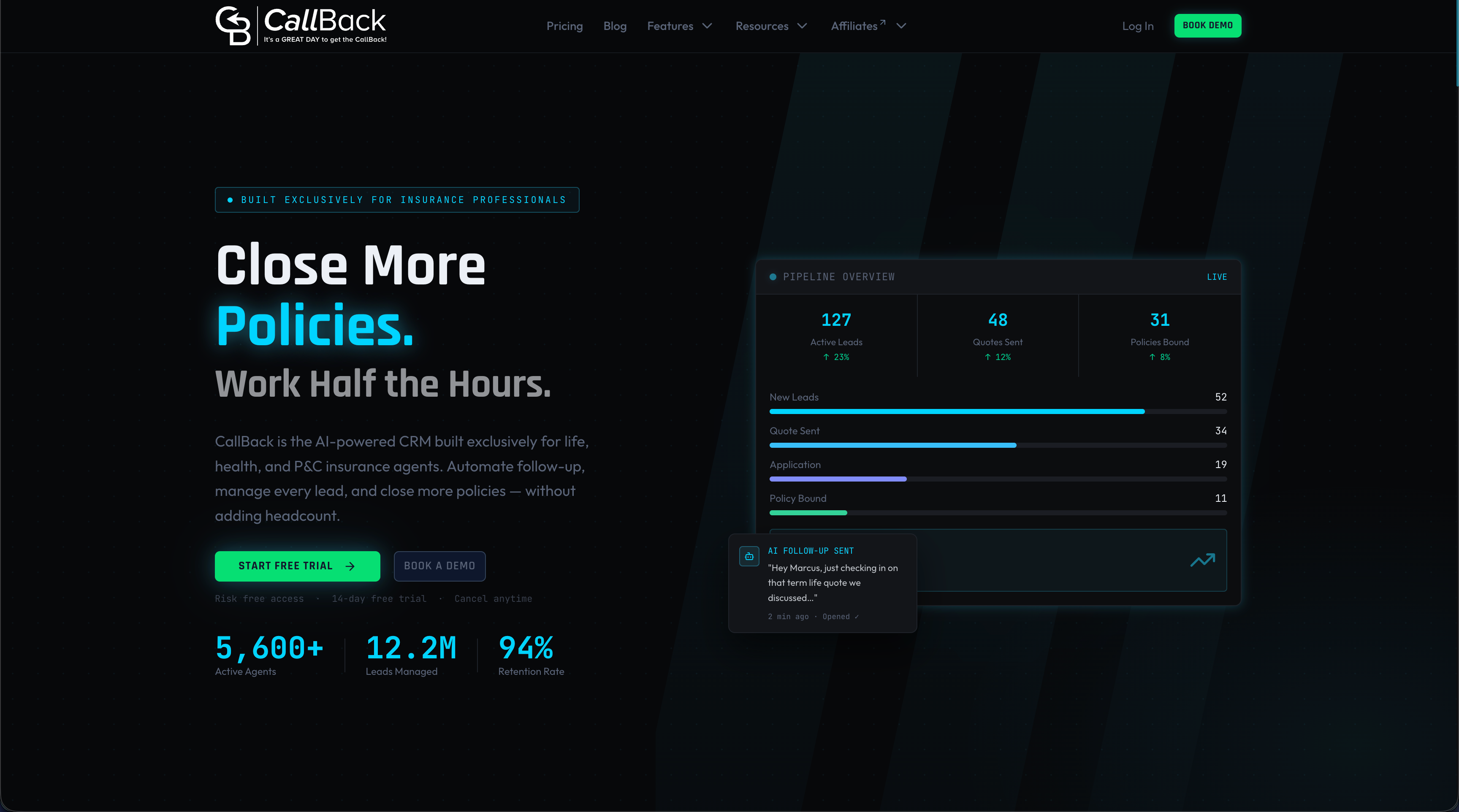
CallBack CRM brings together automated review management, email and SMS outreach, AI-powered lead scoring, and reputation tracking into a single platform built specifically for insurance brokers and agents. You can trigger review requests automatically, monitor all major platforms from one dashboard, and keep your pipeline moving without adding headcount. Explore the full suite of AI-powered features designed to help you grow faster, retain more clients, and build the kind of online presence that makes your next carrier conversation easier from the first word.
Frequently asked questions
What’s the fastest way to improve my broker reputation online?
Monitoring reviews daily and responding within 24 hours, combined with automated review requests after positive client interactions, consistently produces the fastest measurable improvements in both ratings and review volume.
Which AI tools work best for insurance broker reputation management?
Darwin AI and HubSpot AI CRM are strong choices, offering automated nurture campaigns, review amplification, and predictive analytics that identify at-risk clients before they leave or post negative feedback.
Should I focus on organic SEO or paid campaigns for reputation growth?
Both serve different roles: organic SEO builds lasting reputation authority over 6 to 12 months, while paid campaigns deliver fast visibility for specific campaigns, and combining them produces the most stable long-term results.
How can brokers automate reputation management tasks efficiently?
Use an integrated platform that combines review monitoring, automated responses, and SEO content management in one place, eliminating the need to manually coordinate across separate tools and reducing the chance of missed reviews.